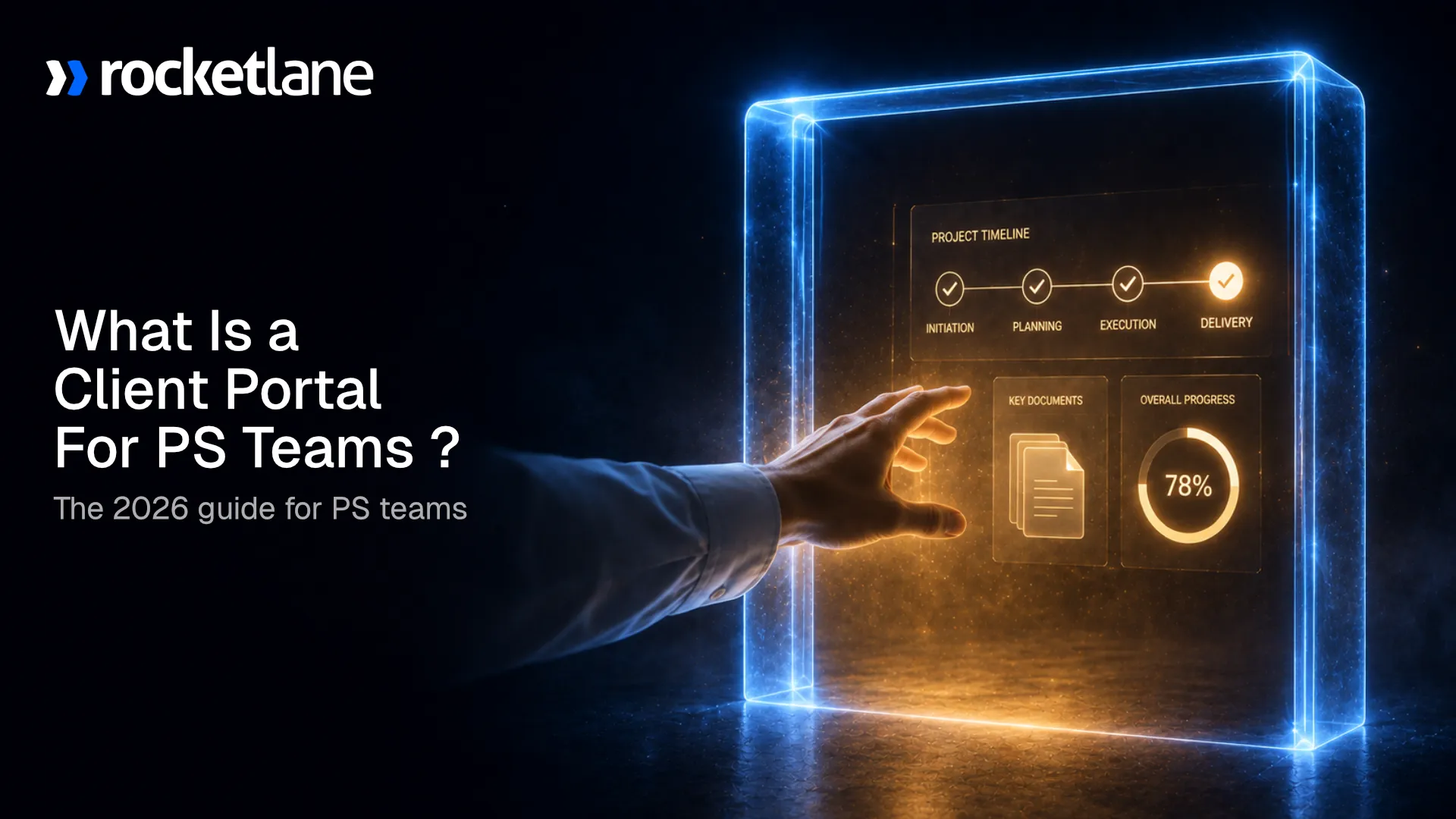
What is a client portal for professional services teams? The 2026 guide


•
•
Summarize blog with






60-sec summary
- A client portal is not your project management tool with the client invited in. The difference is structural.
- Most client portals fail on adoption, not capability. The cause is usually set before kickoff ends.
- One feature ends the double work of maintaining a separate client-facing plan. Most tools do not have it.
- Manual coordination is survivable at ten concurrent projects. There is a number where it becomes a revenue ceiling.
- Projects using AI hit their delivery dates more often. The gap is wider than most delivery leaders assume.

Somewhere right now, a project manager is pasting a status update into an email. Five people will read it. Three will forward it. One will reply with a question the email already answered.
Meanwhile, the client cannot see what is blocking their go-live. The project manager cannot tell whether anyone opened the last update. An executive sponsor is drafting an "any progress?" note that restarts the whole cycle.
This is what professional services delivery looks like when email is the only client-facing layer. Information scatters across threads, shared drives, and internal project management tools. Nobody has one place to look.
Somewhere right now, a project manager is pasting a status update into an email. Five people will read it. Three will forward it. One will reply with a question the email already answered.
Meanwhile, the client cannot see what is blocking their go-live. The project manager cannot tell whether anyone opened the last update. An executive sponsor is drafting an "any progress?" note that restarts the whole cycle.
This is what professional services delivery looks like when email is the only client-facing layer. Information scatters across threads, shared drives, and internal project management tools. Nobody has one place to look.
Rocketlane is an agentic AI-powered PSA platform for B2B SaaS and professional services delivery teams, with a client portal built in rather than bolted on. It serves 750+ customers and holds a 94% G2 recommendation rate.
This guide covers what a client portal does, the key features that matter at scale, how portal software compares to the tools you already run, and how to choose the right client portal for your team.
What is a client portal for professional services teams?
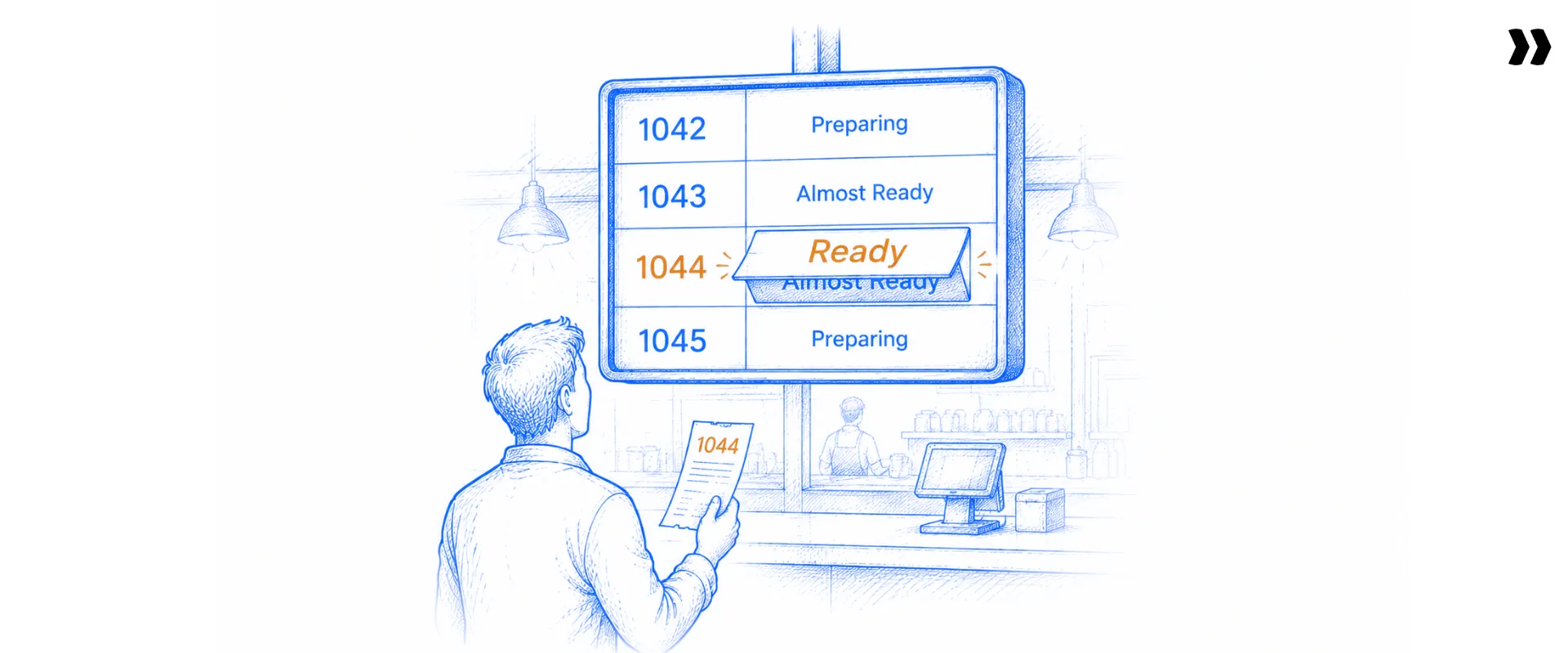
A client portal for professional services teams is a branded, client-facing workspace. It gives clients real-time access to project status, tasks, documents, and communication. It does this without exposing your internal project management tools. The client portal acts as the structured interface between your delivery team and your client.
The problem it solves is fragmentation. Project information lives in email threads, chat messages, shared drives, and internal tools. Clients have no single place to check what is done and what is pending. Project managers rebuild that picture by hand every week.
Picture a software company onboarding a new enterprise account. The implementation leads emails to a kickoff deck. The client uploads security paperwork to a shared drive. Scope gets agreed on a call and captured in someone's private notes. Three weeks later, nobody can find what was approved.
A client portal collapses that into one centralized location. Clients access documents, track progress, manage tasks assigned to them, and see what happens next. Your team keeps internal coordination, resource notes, and financials out of view.
That distinction matters more than it sounds. Client portals provide a curated view of the work, not a window into your operations. The client sees their experience of the project. Your team still sees everything.
What a client portal includes
- Project tracking: Milestone progress by phase, completion status, and upcoming deadlines clients can check at any time.
- Document management: A secure document library where clients upload documents, review deliverables, and find the current version.
- Task accountability: Client-assigned tasks with due dates, reminders, and overdue flags that make ownership explicit.
- Secure messaging: Threaded communication tied to specific tasks and milestones instead of scattered email.
- Secure access: Role-based access control that shows each stakeholder only the information that belongs to them.
Together, these turn a passive status page into a working surface where clients act, not only observe. That shift from viewing to doing is what separates a customer portal from a document folder.
How is a client portal different from email, shared drives, and project management tools?
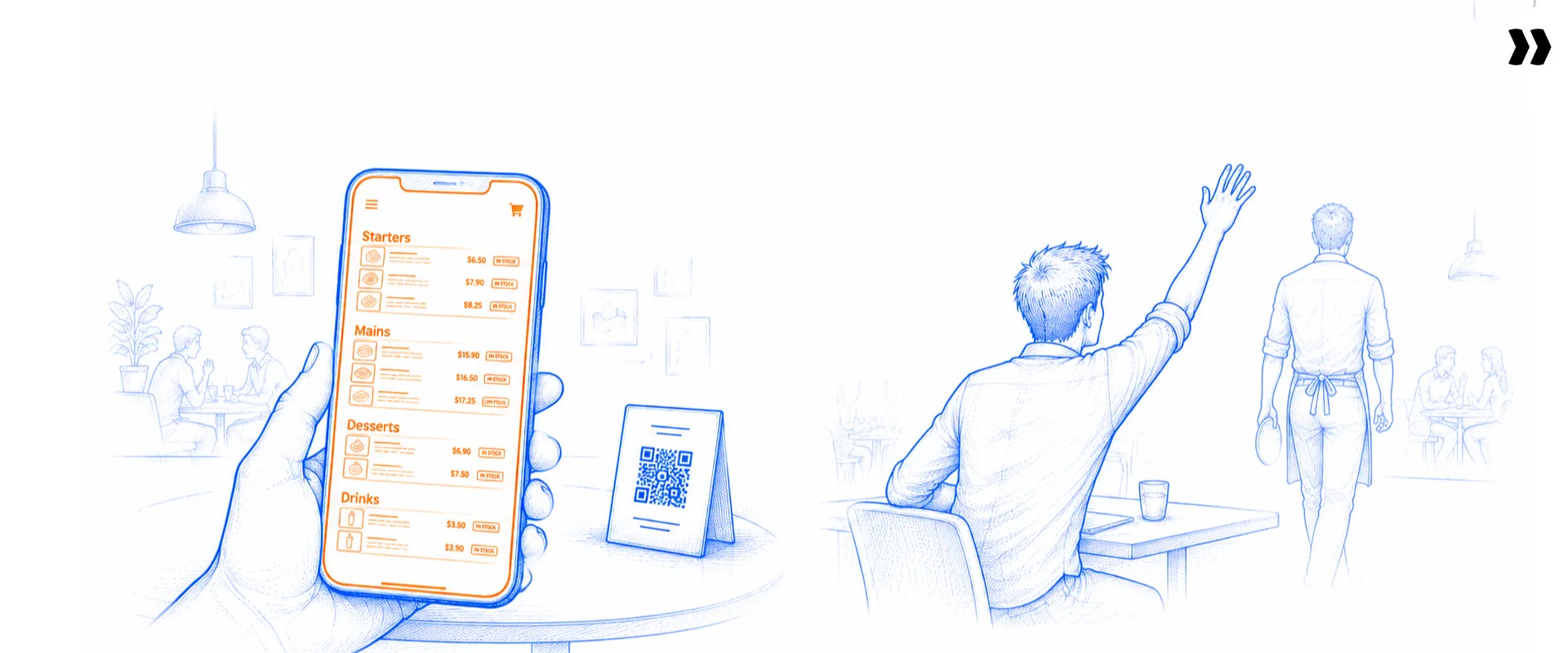
Email is reactive and scattered across threads. Shared drives are passive storage with no accountability layer. Project management tools are built for your internal team, not your client. A client portal is purpose-built for the client experience and connected to live project data rather than updated by hand.
The clearest way to see the difference is to map what each option gives the client.
Client portal vs email, shared drives, and project management tools
Teams often go looking for project management software with a client portal and assume that combination already solves it. It does not, at least not for the client. They do not, at least not for the client. Generic tools show your internal task board. A client portal shows the client's view of that board.
Teams that push Monday, Asana, or Smartsheet into client-facing work hit the same wall. Either clients see internal coordination details they do not need, or the team builds a second project to control what clients see. That parallel plan is overhead on every engagement.
One more distinction is worth naming. A client portal is not a customer success platform. Customer success tools track product adoption, health scores, and expansion signals. A client portal is the delivery layer clients work inside during implementation and ongoing service.
What does a client portal actually do for professional services delivery teams?
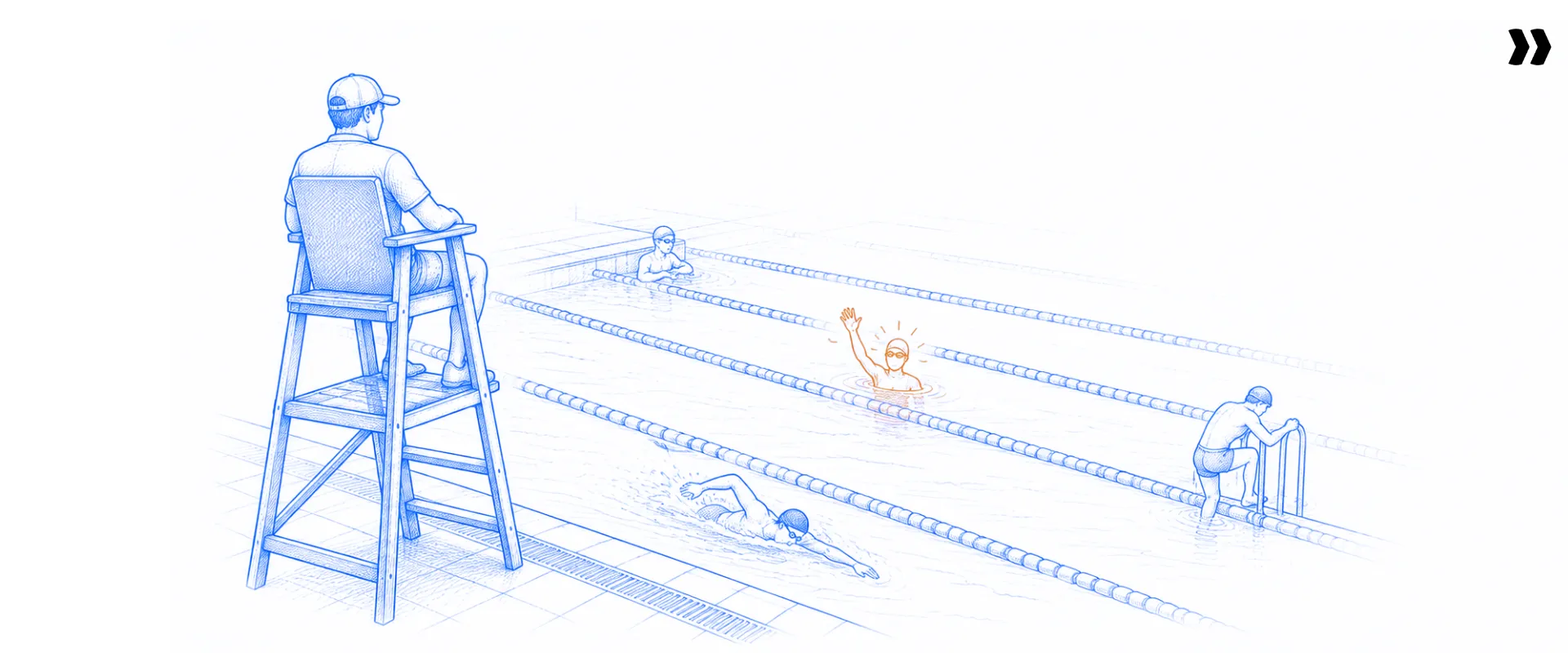
A client portal gives clients structured access to milestones, pending tasks, documents, and messages. It gives delivery teams visibility into who is engaged, what is blocking progress, and where client-side delays begin. It replaces manual coordination with a shared source of truth that stays current on its own.
One implementation lead described the change simply. Her Monday morning used to start with four status emails, and now it starts with the work itself.
In practice, client portals provide seven distinct delivery jobs.
- Real-time project visibility: Clients see milestone progress by phase and completion status. The "where are we?" question gets answered before anyone asks it.
- Client task accountability: Tasks assigned to clients carry due dates, reminders, and status. When a client misses a deadline, the record shows it with a timestamp.
- Secure access without login friction: Clients reach the portal anytime through a unique link. There is no password to reset and no account to create.
- Internal and external view separation: Delivery teams see the full project. Clients see only what is relevant to them. There is no second plan to keep in sync.
- Document sharing and approvals: Both sides share documents in a library organized by category, with version history. Approval requests carry a record of who signed off and when.
- Automated status updates: Meeting notes and task completions flow into the portal. Weekly project updates stop being a manual writing exercise.
- Personalized dashboards by role: Executive sponsors see summary health. Project managers see task-level detail. Both read the same underlying data.
Taken together, these shift the engagement from reporting to collaboration. One implementation lead described the change simply. Her Monday morning used to start with four status emails, and now it starts with the work itself.
How do you give clients real-time visibility into project status?

Real-time visibility means clients can see milestone progress, completed work, pending actions, and upcoming deadlines without contacting anyone. It requires a client-facing layer that reads live project data. A spreadsheet someone refreshes on Fridays does not qualify.
The mechanics matter more than the label. Useful visibility for a client answers five questions. Which phase are we in, what moved last week, what is in progress, what is waiting on us, and what is the next milestone date.
The accountability dimension is what separates this from a status dashboard. A dashboard shows what your team has done. A client portal with task ownership shows what the client owes and flags it when it slips.
Executive stakeholders need something different again. A VP at an enterprise client does not want task detail. They want to know whether the project is on track and whether anything needs their decision. Personalized dashboards serve the sponsor and the project manager from one data set.
Mobile access is part of this now. Client stakeholders approve documents between meetings and check status from mobile devices. A portal that only works on a laptop loses the approvals that would have happened in a taxi.
There is a common failure worth avoiding. Teams bolt client visibility onto a generic tool and find clients see too much or too little. Purpose-built portal software separates the internal layer from the external layer structurally, not by hiding columns.
What are the key features of a modern client portal?
The key features of a modern client portal are secure document sharing, client task management, project tracking, secure messaging, role-based access control, branded white label design, and integration with your existing tech stack. Self-service capabilities and mobile access separate a good client portal from a static status page.
Feature lists are easy to write and hard to evaluate. The useful question is which capability removes a specific piece of manual work. Below are the ones that change how delivery teams operate.
- Secure document sharing and document management: Clients upload documents, download deliverables, and see version history in one library. File sharing by email attachment creates version confusion within days.
- Client task management: Clients manage tasks assigned to them, with due dates and automated reminders. This is the single feature that converts a viewing portal into an accountability tool.
- Project tracking and status updates: Milestones, phases, and completion status updates from live project data. Nobody retypes a status report.
- Secure messaging and threaded comments: Client interactions attach to the task or milestone they concern. The endless back-and-forth of reply-all threads disappears.
- Self-service options: Clients view invoices, download reports, submit support tickets, and contact support without opening an email. Self-service capabilities reduce inbound volume on delivery and support teams.
- Branded, white label client portal: Custom colors, logo, and a portal on your own domain. Clients experience the portal as part of your product, not a third-party tool.
- A user-friendly interface with mobile access: Clients use the portal from mobile devices between meetings. Adoption tracks closely with how little training the interface requires.
- Integration with existing systems: Native connections to your CRM and PSA keep the portal current. If someone updates the portal by hand, it goes stale within a week.
Notice how many of these features exist to remove a human step. That is the test to apply when you compare portal software.
Key features checklist
- Does the portal separate internal and external views inside one project, with no parallel plan to maintain?
- Can you assign tasks to clients with due dates, automated reminders, and overdue tracking?
- Does it support secure document sharing with version history and a complete audit trail?
- Can clients access the portal without creating an account or remembering a password?
- Does it carry your branding, including a white label URL on your own domain?
- Does it integrate natively with your CRM and PSA rather than through manual export?
- Can clients view invoices, raise support requests, and find resources without emailing your team?
A portal that misses the first two items generates its own coordination overhead and defeats the point.
Client portal examples across professional services
- A software company running SaaS implementations: Clients share documents, complete configuration tasks, and watch milestones move through onboarding phases.
- A consulting firm delivering fixed-fee engagements: Clients view invoices, approve deliverables, and see how their own approvals affect the schedule.
- A healthcare provider onboarding a new platform: Compliance paperwork moves through a secure environment with retention rules and a full access record.
These client portal examples differ in content but share one structure. The client sees their work, their documents, and their deadlines in a single place.
A portal that misses the first two checklist items creates its own overhead.
How do client portals handle security, compliance, and access controls?
Client portals protect sensitive data through role-based access control, multi-factor authentication, encryption in transit and at rest, and audit logs that record every document, decision, and approval. Security and compliance requirements rise sharply when the portal holds sensitive customer information in regulated industries.
Security is where portal evaluations get real. The moment you centralize customer data, you inherit responsibility for it. Enterprise buyers will ask about this before they ask about features.
Role-based access is the foundation. A client's executive sponsor, project lead, and technical contact should not see identical views. Solutions implementing role-based access control let you scope visibility by person, not by project.
Consider a healthcare provider running a platform implementation. Patient-adjacent data cannot sit in a general-purpose folder. Healthcare portals need documented controls, retention rules, and an access record that survives an audit. A law firm handling privileged documents has the same problem with different vocabulary.
Audit logs matter for a second reason beyond compliance. When a delivery timeline is disputed, the log shows when a document was requested and when it arrived. That record protects the relationship instead of straining it.
Verify certifications directly with the vendor. SOC 2 Type II, GDPR handling, encryption standards, and data residency options should be documented, not described in a sales call.
Client portal security checklist
- Access controls: Role-based permissions set per user, so each stakeholder sees only their scope.
- Authentication: Multi-factor authentication or secure single-use links, with single sign-on available for enterprise clients.
- Data security: Encryption at rest and in transit, with a documented approach to protecting sensitive customer data.
- Audit logs: An immutable record of document access, approvals, and status changes.
- Compliance posture: SOC 2 Type II, GDPR alignment, and configurable data residency where regulation requires it.
Robust security features also build client trust, which is why enterprise buyers treat them as a purchasing criterion rather than a technical detail.
Why the portal is a compliance mechanism, not only a convenience
There is a reason the client corrects their own data rather than emailing it to you. In most engagements the client is the legal owner of that data, and correction is their responsibility to exercise. Many client stakeholders are not data specialists, so the historical workaround was a synchronous call where a consultant shared a screen and the client approved changes out loud.
That call is expensive on both sides and it leaves a weak record. A portal replaces it with an asynchronous surface where the client sees the proposed change, sees the validation result, and signs off in their own name with a timestamp. Ownership stays where the contract puts it. The review stops consuming a calendar slot.
Rocketlane shipped customer sign-off inside the portal in August 2026, with version comparison so a client can see what changed between two passes of their own data. Both were built because customers asked for them by name.
What are the key benefits of client portals for professional services teams?
The key benefits of client portals are faster time-to-value, fewer status meetings, higher client satisfaction, clearer accountability on both sides, and the ability to scale project volume without adding headcount at the same rate. Client portal benefits compound as the business expands.
- Recovered delivery time: Manual status reporting disappears when project updates generate themselves. That time returns to billable work, which matters when industry billable utilization sits at 66.4%.
- Faster time-to-value: Client-side blockers surface while they are still fixable. Most implementation overruns trace back to a decision or document that nobody chased in time.
- Higher client satisfaction: Clients informed continuously do not escalate for information. Customer satisfaction rises when transparency replaces the status call.
- Stronger client relationships: Shared visibility reframes delivery as joint work. Client engagement improves when the client can see their own contribution to the timeline.
- Scalable delivery: A portal that maintains itself supports 40 projects as readily as 10. Growth stops requiring a proportional increase in project managers.
- A more credible client experience: A branded client portal signals operational maturity during implementation, which enterprise buyers weigh when they renew.
The through line is that each benefit removes a manual step rather than adding a feature. That is why the portal returns compound instead of plateauing.
There is also a market expectation at work. Enterprise customers expect a portal now, because they already have one from other vendors. When the customer experience during implementation looks less mature than the product they bought, it colors the whole relationship.
Did you know?
What are the most common client portal failure points and how do you avoid them?

Client portals fail on adoption far more often than on capability. Either clients stop logging in, or the delivery team quietly reverts to email because the portal was introduced mid-project. Success depends on removing client friction and making the portal the default channel from kickoff.
- Clients disengage after the first visit: This traces to access friction or late introduction. Fix it with no-login access and a portal-first kickoff, where the client's first task happens in the portal rather than in email.
- The team maintains parallel project plans: Generic tools force a second client-facing version that someone syncs by hand. Fix it by choosing a portal with built-in internal and external separation.
- The portal becomes a document dump: Teams upload files without structuring the experience around actions. Clients treat it as a shared drive and return to email. Fix it by making the client's task list the landing view.
- Accountability is never established: If clients learn that missed tasks carry no consequence, they miss them. Fix it with automated reminders and visible overdue status from week one.
- The internal team never adopts it: Project managers who are not habituated to the portal keep sending email updates. Fix it by making the portal the internal source of truth first.
Every one of these failures shares a root cause. The portal was treated as a communication preference rather than as delivery infrastructure.
Cost of inaction
Consider a 20-person services team running 30 concurrent implementations. At 30 minutes of status assembly per project each week, that is 15 hours of project manager time weekly on work that moves nothing forward. Add the delays that surface late because a client approval sat unchased.
Every week a go-live slips delays revenue recognition and raises churn risk. The cost of running without a portal is already inside your project margins. It just does not appear as a line item.
Fifteen hours a week assembling updates that move nothing forward.
See updates that generate from meetings and task activity instead.
What should PS teams look for when evaluating a client portal?
Evaluate client portal software for implementation teams on six dimensions. Integration with existing systems, internal and external view control, client task accountability, automation of status updates, the quality of the client experience, and security and compliance depth. Weight them against your project volume rather than your wish list.
- Integration with your existing tech stack: Does the portal read live project data from your CRM and PSA, and can it import your existing data at migration? A portal disconnected from where your team works goes stale fast.
- Internal and external view control: Can you show clients a curated view without running two plans? This is absent from most generic project management tools.
- Client task accountability: Can you assign work to clients with reminders and overdue tracking? A portal that only displays status is a dashboard.
- Automation of project updates: Does the portal refresh itself from meeting notes and task activity? Manual upkeep will not survive 20 concurrent projects.
- Client experience and access model: Branded design, a white label domain, a user-friendly interface, and mobile access. Ask whether clients need an account at all.
- Security and compliance: Role-based access, multi-factor authentication, audit logs, and the certifications your enterprise clients will request.
Score these against volume, not ambition. A team running eight projects needs less than a team running eighty.
Decision routing table
Use the table below to match your current stage to the right level of investment.
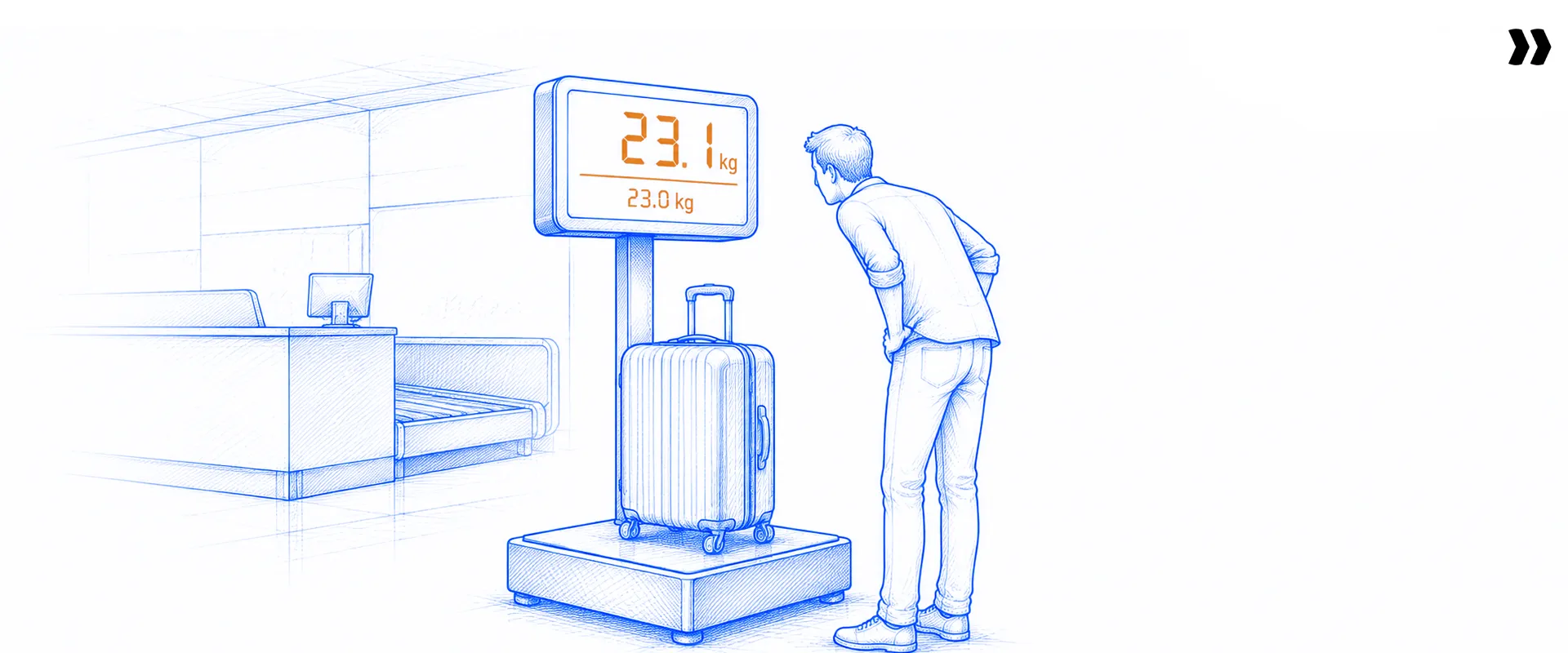
The inflection point for most teams sits between 10 and 25 concurrent projects. Below it, manual coordination hurts but survives. Above it, coordination becomes a ceiling on revenue.
Above 25 projects, coordination becomes a ceiling on revenue.
Twenty minutes on your own project volume.
How is agentic AI changing what client portals can do?
Agentic AI shifts the portal from something your team updates to something that updates itself. AI agents draft status updates from call transcripts, keep requirement documents current, and surface delivery risk from client conversations. An AI client portal reduces the manual upkeep that causes most portals to go stale.
The evidence is now in the benchmark data. SPI Research found 27.1% of professional services projects used generative AI in 2025, a 40% increase year over year. Projects using AI with measurable benefit delivered on time 81.5% of the time, against 70.8% for projects without it.
That gap of nearly 11 percentage points is the clearest argument for AI in delivery. It is not about writing faster. It is about the coordination work that quietly consumes a delivery team's week.
Three changes matter most for client portals. Status updates generate from meetings rather than from memory. Documentation stays current without a project manager writing it. Risk signals appear from tone and behavior across client interactions, not from a survey sent after the damage.
There is also a build-versus-buy question worth naming. Some teams consider building their own agents against project data. The hidden cost is maintenance, because agents break when APIs shift or workflows change. Purpose-built agents already understand what a milestone is and what a client-side delay looks like.
Nearly 11 points of on-time delivery, per SPI Research.
See status updates written from call transcripts, not from memory.
How does Rocketlane's client portal work for professional services teams?
Rocketlane is an agentic AI-powered PSA platform for customer-facing professional services teams. Its client portal is a core product layer rather than a bolt-on, integrated with resource management, project financials, and agentic AI in one system.
For professional services teams evaluating client portal software for implementation teams in 2026, Rocketlane pairs a native portal with full PSA depth, which is the combination generic project management tools cannot offer.
Real-time client visibility without a second project
Every task, document, and note in Rocketlane is marked internal or client-visible. Delivery teams work on the full project. Clients see a clean workspace built from the same data. When a project manager updates a task, the client views updates at once.
This removes the parallel plan that generic project management tools force on delivery teams. There is no export, no second entry, and no risk of the two versions drifting apart.
A client experience built for professional services, not adapted from generic tools
Clients reach the portal through a secure link with no account to create. Client access is unlimited and carries no per-seat cost. You can invite clients and their executive sponsors without triggering a licensing conversation.
The portal runs on your domain with your branding. Clients view invoices, upload documents, complete assigned tasks, raise support requests, and track progress from mobile devices. Enterprise clients running several concurrent workstreams get an account-level view across all of them.
How Rocketlane Nitro applies agentic AI to client portals
Nitro is Rocketlane's agentic AI layer, embedded inside the PSA platform. It operates on live project data and runs across four pillars of delivery work.
- Frontline delivery: The Migration Agent runs the data pipeline from extraction through mapping, transformation, validation, and load, and it surfaces the result inside the client portal where the customer fixes their own errors and signs off. The Workforce Agent converts SOWs into project plans and automates repeatable configuration work.
- Back-office operations: Project Governance turns delivery SOPs into automatic guardrails, which Rocketlane associates with a 45% reduction in escalation volume. Timesheet Policies, the Resource Management Agent, and Nitro Analyst cover compliance, staffing, and reporting.
- Enterprise search: The Documentation Agent builds structured documents from calls, emails, and project activity. Rocketlane reports a 75% reduction in documentation effort and a 35% reduction in onboarding and handoff time.
- Customer and account intelligence: Signals scans client conversations and surfaces risk and expansion indicators, which Rocketlane associates with risk detection six weeks earlier. Nitro Meetings records and transcribes project meetings and lets you run queries on top of them. AI Fills turns those transcripts into summaries, action items, and project updates inside the portal.
The practical effect on the portal is that it maintains itself. Meeting notes become project updates, documents stay current, and risk surfaces before a client escalates.
Enterprise-grade delivery at scale
Rocketlane connects natively to Salesforce, HubSpot, and Jira, so projects and portals spin up when a deal reaches the agreed stage. Conditional templates adapt the plan to client type and scope, which keeps template libraries small as the business expands.
Here is how delivery changes with a native client portal in place.
With vs. without Rocketlane
Every row on the left is a weekly cost.
Unlimited client access, no per-seat fee, no account for clients to

Rocketlane serves 750+ customers, including 18 companies on the Forbes Cloud 100, and holds a 94% recommendation rate on G2 across more than 850+ reviews.
In March 2026, the company raised a $60 million Series C led by Insight Partners, bringing total funding to $105 million, after more than doubling revenue and growing average deal size 4.5 times since 2023.
What should you know before investing in client portal software?
Four questions come up in nearly every evaluation. What it costs against what it replaces, how long rollout takes, whether clients will adopt it, and whether a portal alone is the right scope. Answering these early prevents a stalled business case.
- On cost: Compare against the tools a portal replaces and the project manager hours it returns. Watch for per-client licensing, which penalizes you for the engagement growth you want.
- On rollout time: A portal tied to your PSA and CRM goes live in weeks, not quarters. Rocketlane customers typically reach go-live in 4 to 12 weeks, including integration and template setup.
- On adoption: Client adoption follows access friction. Portals requiring account creation see materially lower engagement than portals reached through a secure link.
- On scope: A portal without resource management and project financials solves the visibility problem and leaves the margin problem. Most teams reach for both within a year.
The teams that build the strongest case frame the portal as delivery infrastructure, not as a communication tool. That framing survives finance review.
Talk to a Rocketlane specialist about client visibility in your delivery process. Book a consultation.
Conclusion: From chasing updates to shared accountability
Client portals for professional services teams have moved past optional. The distance between teams that give clients structured delivery visibility and teams still working from email now shows up in win rates and renewals.
The evaluation question has changed too. It is no longer whether to invest in a client portal. It is what the portal must do at your stage of growth, and whether it sits deep enough in your delivery infrastructure to stay current on its own.
That last point is where most portal projects quietly fail. A portal that depends on project managers to stay accurate becomes another task on an already full list. Within two months, it stops being trustworthy, and clients go back to email.
The next shift is already here. Portals now update themselves through agentic AI, surface risk before it escalates, and absorb the documentation and configuration work that used to fall on consultants. SPI Research already measures the difference at nearly 11 percentage points of on-time delivery.
Teams adopting that layer now are compressing time-to-value for clients while carrying more concurrent projects. They are not working harder. They removed the coordination tax that everyone else still pays.
Quick summary
- A client portal is the client-facing delivery layer: project status, client tasks, documents, and messages in one branded workspace.
- Internal and external view separation is the feature that matters most, because it kills the second project plan nobody wants to maintain.
- Client portals fail on adoption, not capability, so no-login access and a portal-first kickoff beat a longer feature list.
- SPI Research 2026 found projects using AI delivered on time 81.5% of the time, against 70.8% without it.
- Between 10 and 25 concurrent projects manual coordination becomes a revenue ceiling, which is where Rocketlane's native client portal inside an agentic AI-powered PSA platform fits.
Your clients already have a portal. From another vendor.
See what yours looks like on your own domain.
Table of Contents
Regsiter for the live webinar


Great consultants didn't join your team to spend Fridays writing documentation.
Table of contents
18 of Forbes Cloud 100 chose Rocketlane. The best PS teams aren't waiting around.
FAQs
What is a client portal for professional services teams?
A client portal for professional services teams is a branded, client-facing workspace that gives clients real-time access to project status, tasks, documents, and communication without exposing internal project management tools. It replaces email-based coordination with a centralized location that stays current from live project data.
How does a client portal work?
A client portal connects to your project data and publishes a curated view of it for the client. Delivery teams mark each task, document, and note as internal or client-visible, and clients access their workspace through a secure link. Clients then track progress, upload documents, complete assigned tasks, and message the team in one place.
What is the difference between a client portal and project management software?
Project management software is built for internal delivery coordination and exposes task structure, resource notes, and financial fields. A client portal is built for the client's experience and shows only what the client needs to see and act on. Teams that use project management tools client-facing usually end up maintaining two versions of every project plan.
What are the key features of a good client portal?
The core set is secure document sharing with version history, client task management with due dates and reminders, project tracking, secure messaging, role-based access control, branded white label design, and native integration with your CRM and PSA. Self-service options such as viewing invoices and raising support tickets reduce inbound volume on delivery and support teams.
Do clients need a login to access a client portal?
Not with modern client portals. The strongest adoption comes from secure single-use links that require no account and no password. Portals that require account creation see materially lower engagement, because most client stakeholders will not maintain another set of credentials.
How do client portals protect sensitive customer data?
Client portals protect sensitive data through role-based access control, multi factor authentication, encryption in transit and at rest, and audit logs recording every document access and approval. Regulated buyers such as a healthcare provider or a law firm will also require SOC 2 Type II certification, GDPR-aligned handling, and configurable data residency. Verify certifications with the vendor directly during evaluation.
What are the main client portal benefits for professional services teams?
The main benefits are recovered project manager time, faster time-to-value, higher client satisfaction, clearer accountability on both sides, and the ability to grow project volume without matching headcount growth. With industry billable utilization at 66.4%, returning administrative hours to billable work has direct margin impact.
How do you get clients to actually use the portal?
Three conditions drive adoption. Give clients frictionless secure access, run a portal-first kickoff where their first task happens in the portal rather than in email, and build accountability in through visible due dates and automated reminders. Portals introduced mid-project, or used only for file sharing, see consistently weaker engagement.
How is AI changing client portals?
Agentic AI removes the manual upkeep that causes portals to go stale. AI agents draft status updates from call transcripts, maintain living requirement documents, and surface delivery risk from client conversations before a formal escalation. SPI Research found projects using AI with measurable benefit delivered on time 81.5% of the time, against 70.8% without it.
What is the ROI of a client portal for a professional services team?
Return comes from three sources: project manager hours recovered from manual reporting, faster go-lives from client-side delays surfaced early, and retention protected by consistent delivery visibility. A 20-person team running 30 projects spends roughly 15 hours a week assembling status updates, and most of that work can be automated. Teams typically evaluate the return against a 30 to 50 percent reduction in time-to-value. See how Rocketlane gives professional services teams a branded, no-login client portal. Book a demo.












Copyright © 2026 Rocketlane Corp. All rights reserved.















.webp)