Why Your Best Clients Are Still Keeping Secrets From You


•
•
Summarize blog with






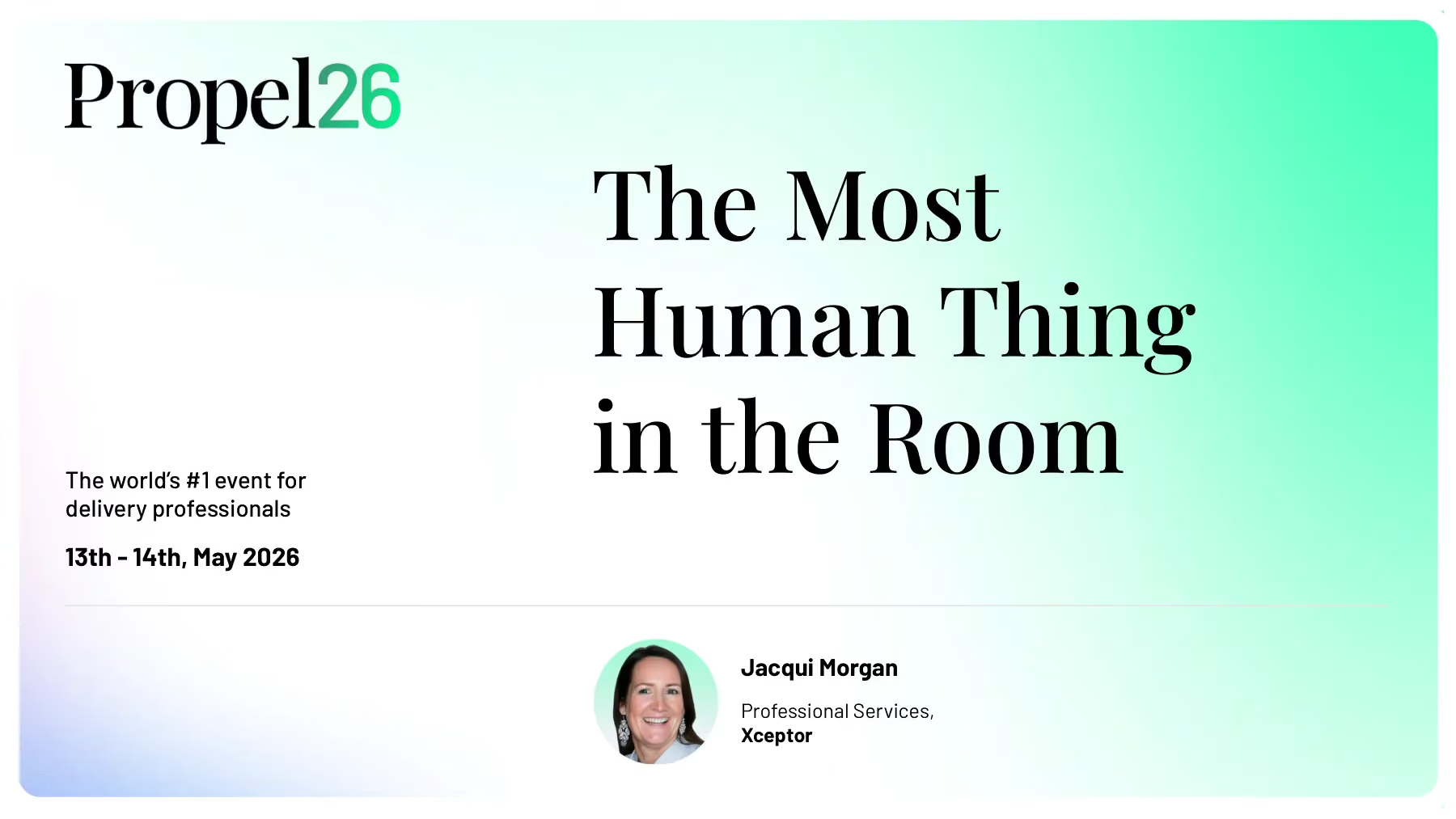
Being informed isn't the same as being invested. Xceptor's Jacqui Morgan explains how radical transparency changed everything — starting with one late-night bombshell.
At 9:47 pm on a steering committee call — Claude logged the exact time — a major global custodian casually mentioned they'd be two weeks late on a critical deliverable. The program manager hadn't known.
The CEO was on the call. Peers and seniors on both sides were listening. And the person responsible for managing that client relationship found out the hard way.
Jacqui Morgan, transformation and PMO lead at Xceptor — a data services firm running complex programs for global custodians including Goldman Sachs, JP Morgan, Bank of New York, and State Street — had been running a model she considered solid: twice-weekly meetings, beautifully prepared Friday status reports, RAID logs, all artifacts in the right place.
The 9:47 pm moment ended that assumption.
Read on for the key takeaways from the session.
Why a late-night bombshell revealed a relationship problem, not a reporting problem
The client wasn't withholding information maliciously. They just didn't feel close enough to share it early.
Morgan's diagnosis was clear: "Informed is definitely not the same as close." The status reports were going out. The artifacts were in order. But the delivery model was broadcasting rather than partnering.
The client was following the project, not participating in it. When something slipped on their side, the natural instinct was to wait — not to surface it proactively to the team they were receiving updates from.
This is the broadcast trap. PS teams optimize for clean delivery artifacts — polished packs, weekly summaries, structured reporting. Those artifacts create the illusion of a close relationship. "You've not built any trust there," Morgan told her team. "You've literally built a narrative for them of where we are with the project."
Trust isn't built through information delivery. It's built through shared accountability — and that requires a fundamentally different way of working.
How opening the portal live changed the dynamic
Morgan's fix was deliberately uncomfortable. She stopped preparing status reports ahead of meetings. Every client call now opens with the Rocketlane portal on screen. Everything gets updated together, in real time. Client actions are logged live. Dates, owners, commitments — all of it before anyone hangs up.
The client reaction: immediate buy-in. They liked the transparency. They liked seeing the full picture.
Her team's reaction: pushback. A senior PM raised three concerns — looking unprepared on the call, doing admin in front of the client, and the time it would take. Morgan worked through each one. The "admin" was the work. The "preparation" was the shared session. The time saved on follow-up emails and post-meeting reconstruction more than compensated.
She still sends status reports — but they're now generated automatically. Claude pulls the portal data from what was just updated together and sends it out. The report reflects a live, jointly agreed view of the project, not a narrative crafted by one side in advance.
One practical guardrail: she locked the effort and time fields so consultants can't update them without the PM reviewing first. It prevents an innocent update from landing awkwardly in front of the client before anyone's had a chance to contextualize it.
Why do clients become partners when they can see the mess
The concern everyone raises: won't they see the mess?
Morgan's answer: yes — and that's the point.
She ran a light cleanup before opening the portal for the first time. But the goal wasn't to hide complexity. It was to establish a shared baseline. "Is this where we think we are? Are you on the same page?" That conversation, even if it's uncomfortable for five minutes, does more for the relationship than six months of polished packs.
What she found: clients become invested when they can see everything. Not just informed — accountable. They know the portal will be open at any point. Their actions are visible. Their commitments are dated. If something is slipping on their side, it will show before the next meeting.
The dynamic shifted. Clients started coming with solutions instead of questions. "Why is this late?" became "here's what we're doing to get it back on track." The relationship moved from client-vendor to joint delivery team.
At renewal time with the State Street program, their leadership said it directly: they were renewing not because of the software delivered, but because of the way it was delivered. The transparency. The sense of genuine partnership.
4 key takeaways on building invested clients, not just informed ones
- Informed isn't the same as invested. Sending a polished status report creates a narrative. Opening the portal together creates shared ownership. The artifact can feel like accountability — it isn't. Real accountability requires both parties to look at the same live picture at the same time.
- Open the portal live — and ignore the mess. Start every meeting from the portal, not a deck. Update everything together before the call ends. Every action logged, every commitment dated, every owner named. The discomfort at the start is temporary. The trust built is compounding.
- Roll it out incrementally. Morgan piloted with one client before going organization-wide, and introduced portal access in stages — UAT items first, then change logs, then full project plan visibility. Let clients build familiarity before you open everything at once.
- Use AI to protect relationship time, not replace it. The automated dashboards, Claude-generated reports, and real-time data pull back. The question is what you spend that time on. Morgan's answer: the relationship. Technology should serve the client — not substitute for the human work of trust-building.
Conclusion
Jacqui Morgan's session wasn't about technology. She'd already connected Claude through the Rocketlane API, automated her team's internal dashboards, and eliminated manual reporting. The technology work was done.
What she came to Propel 26 to talk about was the decision that technology can't make for you: to be radically transparent with clients — open the portal, show the current state, and stop managing the narrative.
The result wasn't just cleaner reporting. Clients who know what's happening don't panic when things slip. They bring solutions. They renew without needing to be sold.
Informed clients are manageable. Invested clients are partners. The difference is whether they're watching your project — or working on it with you.
Check out the rest of our Propel 26 recaps here for more insights from the industry's best.
Table of Contents

Regsiter for the live webinar


Great consultants didn't join your team to spend Fridays writing documentation.
Table of contents
18 of Forbes Cloud 100 chose Rocketlane. The best PS teams aren't waiting around.
FAQs













Copyright © 2026 Rocketlane Corp. All rights reserved.















.webp)