Design Before You Automate Your PS Implementation


•
•
Summarize blog with






Zappi cut time to first value by 50%, not by automating first, but by redesigning its implementation process around three principles: start with customer outcomes, lead with customer expertise, and let automation follow clarity.
The lesson for PS leaders is simple: AI amplifies the process you give it. Design the process first. Automate second.
Most PS leaders who feel stuck reach for the same answer: more automation, better tools, smarter AI workflows.
The problem is that generic automation doesn't fix a broken process.
It just runs it faster.
What Zappi discovered is that automation planning in professional services only works when the underlying implementation design is clear first.
If the steps are confusing, the ownership is unclear, or the customer burden is too high, automation will amplify those problems rather than solve them.
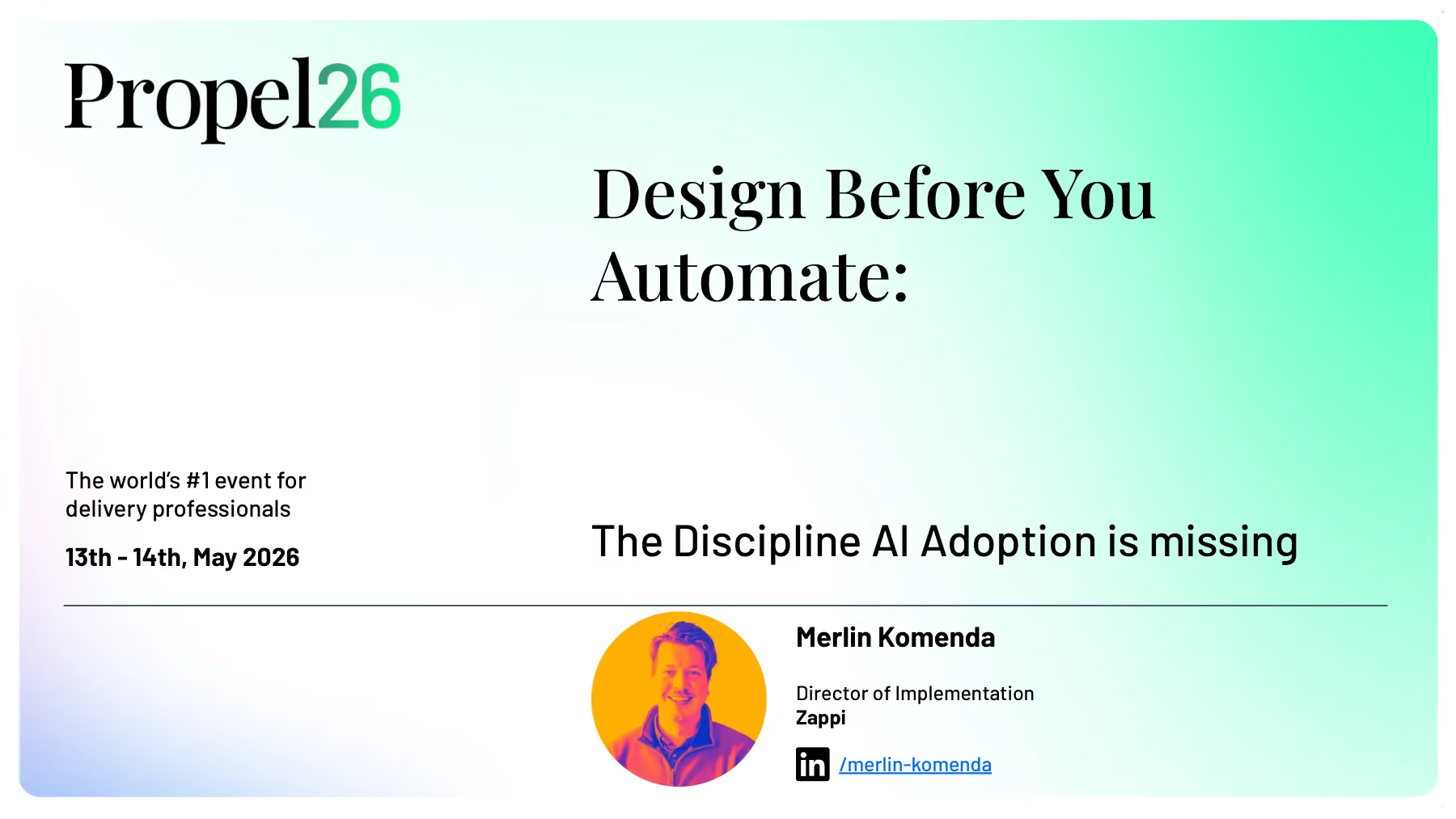
Merlin Komenda, Director of Implementation at Zappi, shared this lesson at Propel 26. Her team redesigned its implementation motion and cut time to first value from 30 days to 15—while still running live implementations throughout the change.
The result wasn't driven by an AI-first strategy. It came from a design-first strategy.
When Should You Automate Your Implementation Process?
The instinct to automate is understandable.
- Kickoffs run long.
- Customers take too much time to respond.
- Training attendance drops.
- Follow-ups get missed.
- Internal teams spend hours chasing status updates.
It feels obvious to reach for automation.
But automation is an amplifier. It scales whatever system you feed it.
If your process lacks a clean definition of success, automation doesn't create clarity. It creates faster confusion.
If your sequencing is wrong, automation moves customers through the wrong steps faster.
If your customer has too much homework, automation only reminds them more efficiently that they are still the bottleneck.
Zappi arrived at this insight through three moments.
The first came during a role interview, when Merlin asked herself what she would change if she owned the implementation function that day.
The second came during internal training, when she realized she could explain what a legacy process did—but not why it existed.
The third came when Zappi began commercializing its implementation offer. Once a dollar value was attached to implementation, every step had to justify itself.
None of those moments pointed toward more automation. They pointed toward a better design.
The 3-Principle Framework for Implementation Redesign Before Automation
The redesign didn't start with tools.
It started with three principles that changed the way the team evaluated every step of the customer journey.
These principles later became the foundation for what their system of record could reliably automate. Without that clarity, even AI-powered workflows would have amplified confusion.
1. Start with Customer Outcome
Zappi stripped the implementation process back to one core question:
What value is the customer actually trying to achieve?
Not which features need to be configured. Not which tasks need to be completed. Not which checklist needs to be followed.
What outcome does the customer need from the partnership?
That reframe exposed a problem immediately.
Zappi's kickoff process was built around what the team found exciting about the platform. It covered functionality, possibilities, and configuration options. But it wasn't built around a single definition of early customer value.
Customers could feel it.
The excitement they had during the sales process began to drain away once implementation became a long list of platform details.
Starting with customer outcomes changed the conversation.
It forced the team to prioritize what mattered most early in the relationship and remove anything that didn't help the customer reach value faster.
2. Lead with Customer Expertise
Customers should own their implementation. They should not have to carry it.
Zappi realized it had been asking customers to make too many decisions from scratch. Blank spreadsheets, open-ended questions, and broad configuration choices were framed as collaboration.
But for customers, it felt like homework.
The new approach was different.
Zappi began showing up with recommendations already made based on patterns from similar customers. Instead of asking customers to design the path, the team brought a point of view and asked customers to validate it.
- Here's what we recommend.
- Here's why it works for customers like you.
- Here's what we need you to confirm.
That shift reduced customer burden without removing customer ownership.
The standing question became:
Are we removing as much customer effort as possible without removing customer control?
That question changed how the team handled every meeting, task, and decision.
3. Let Automation Follow Clarity
Before deciding whether to automate a step, Zappi asked a more important question:
Is human presence what this moment needs?
For Zappi's customer base—legacy, full-service buyers learning to become more self-serve—expert-led training was not a good candidate for automation.
- Recorded resources had poor uptake.
- Customers needed accountability.
- They needed guidance.
They needed a human who could connect the platform to their actual use case.
Automating training would have created efficiency while removing what made the experience work.
The principle wasn't "don't automate."
It was: Don't automate until you know what the step is actually for.
That distinction matters.
Automation works best when the step has a clear purpose, a clear success condition, and a predictable path. If those don't exist, the step needs to be redesigned before automation.
How Zappi Changed Its Implementation Process
The redesign didn't eliminate the playbook.
It changed the sequencing, prioritization, and rules behind it.
The old model had two major phases.
First, a setup phase: long kickoff calls, open-ended questions, and follow-up cycles that felt like chasing customers through homework.
Second, a training phase: demo data, hypothetical scenarios, and generic walkthroughs that didn't reflect the customer's actual research.
The new model starts before kickoff.
Zappi now builds a baseline platform configuration in advance using what the team already knows from the sales process. When customers log in on day one, they see something already set up.
The kickoff becomes an alignment conversation, not a discovery session.
- The team validates assumptions.
- It shares recommendations.
- It narrows decisions.
- It removes ambiguity.
Guided collaboration follows.
Instead of saying, "How do you want to configure this?" the team says, "Here's how customers like you typically configure this, and here's what we recommend based on your goals."
Strategic decisions that previously took a week now happen in a matter of days.
Total effort didn't change dramatically. The time span compressed. Training also changed.
Instead of using demo data, Zappi now trains customers using the actual research they plan to run. The team launches it, reviews real data, and analyzes real results.
Training becomes the first product used.
That is what moves customers from full-service dependency to self-serve confidence.
What Is Automation Planning in Professional Services?
Automation planning in professional services is the process of deciding which parts of implementation should be automated, assisted by AI, or kept human-led.
The goal is not to automate as much as possible. The goal is to automate the right work at the right time. Zappi used a three-question filter:
Is it customer-facing?
If the answer is no, the step may be a good candidate for automation.
If the answer is yes, evaluate carefully. Some customer-facing moments are where trust, accountability, and adoption are built.
Is it high-effort or repeated?
If the step takes a long time or occurs frequently, consider using AI assistance.
But high-effort doesn't automatically mean fully automated. High-stakes work may still need human review.
Is success clearly defined?
This is the most important question.
If you can't define what "good" looks like for a step, don't automate it yet.
Redesign it first. Steps without clear success criteria are design problems, not efficiency problems. Automating them locks in confusion.
How Rocketlane Helps Teams Design Before They Automate
Design-first implementation requires more than good intentions.
It requires a system that can capture the process, standardize the playbook, track customer progress, and make automation decisions visible.
This is where a purpose-built PSA becomes critical.
Rocketlane helps implementation teams design before automating by bringing project plans, customer collaboration, resource visibility, financials, and delivery workflows into a single system of record.
That matters because automation only works when the system understands the work.
A generic AI tool may generate a summary or draft a follow-up.
But AI embedded in a delivery system can understand the project context: which milestone is at risk, which task is customer-owned, which dependency is blocking value, which resource is over capacity, and which phase is drifting from plan.
Once your implementation process is clear and your system is connected, AI can do what generic tools cannot: govern execution, surface risks, and handle repetitive work at scale.
That's the sequence Zappi's story reinforces. Design first. Systematize the workflow.
Then automate with context.
4 Key Takeaways from Designing Before Automating
Zappi's redesign delivered strong results: time to first value dropped from 30 days to 15 days, time to live was reduced by 30%, customer experience remained strong, and effort variance across implementations became far more consistent.
Here's what drove the change.
AI Amplifies Whatever You Give It
Automation scales the system you feed it.
If the process is unclear, AI runs it faster. Clarity is the prerequisite.
Reducing Customer Burden Compresses Timelines
Moving from open-ended questions to tailored recommendations didn't add work.
It shortened the time needed to make strategic decisions.
Less customer homework often means faster implementation.
Your Team's Superpower Should Shape Your Automation Strategy
For Zappi, expert-led training was essential.
Protecting that human moment wasn't inefficient.
It was differentiation. Knowing what your team does that AI cannot is how you decide where to draw the line.
A Well-Designed Implementation Is Easier to Sell
Zappi's transition to a paid implementation offer went smoothly because the value had become clear.
Customers understood what they were getting.
Sales understood what implementation delivered.
The process became easier to explain because it was designed around outcomes.
Conclusion
The default response to a slow implementation function is to add tools.
Find the bottlenecks. Plug in automation.
Measure whether the numbers improve.
Zappi's experience shows why that sequence is incomplete.
The harder and more important question is:
What is this implementation actually designed to achieve for the customer?
Designing before you automate means auditing for clarity before trying to scale. It means arriving with recommendations instead of blank spreadsheets. It means knowing when human presence is the value—and protecting it when the answer is yes.
The teams that will get the most from AI in professional services are the ones that have done the design work first and invested in a system of record that captures that work as connected data.
Table of Contents

Regsiter for the live webinar


Great consultants didn't join your team to spend Fridays writing documentation.
Table of contents
18 of Forbes Cloud 100 chose Rocketlane. The best PS teams aren't waiting around.
FAQs













Copyright © 2026 Rocketlane Corp. All rights reserved.

















.webp)