Introducing Documentation Agents

•
•
Summarize blog with






Your team member has just finished 7 solutioning workshop calls and 100+ email exchanges with the customer.
Now the consultant has to convert that into a solution design document and send it for client approval, without which the project can’t move forward.
For the next two hours, they are scrubbing transcripts, piecing together notes, and trying to reconstruct why the team made that configuration call in week one. This is not a bad day. It is every project.
Those two hours are just the start. Assembling the full document takes 40 hours or more, spread across every session, every email, every base doc your team pulls from.
When the project ends and the architect moves on, the handover is a document and a Q&A session. Whatever did not make it in is gone.
Introducing Documentation Agents
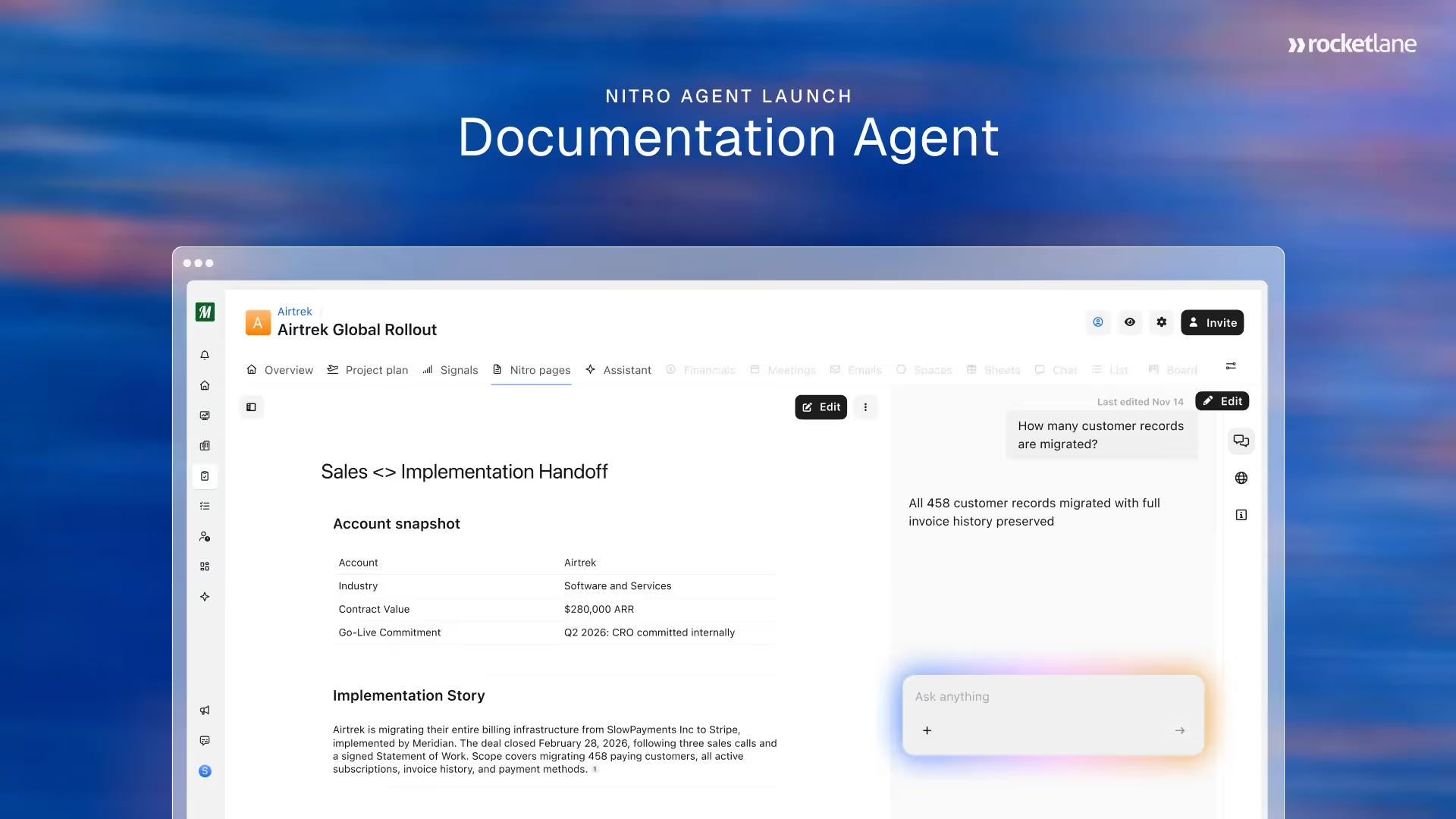
Documentation Agents handles the writing that follows every customer call, email and other knowledge base company documentation. Connect it to your existing sources and templates once, and it generates structured, traceable, review-ready documents from everything your team captures, on every project, automatically.
Your consultants stop spending their time reconstructing what happened. They use that time to move the project forward.
A document that keeps working after it's created
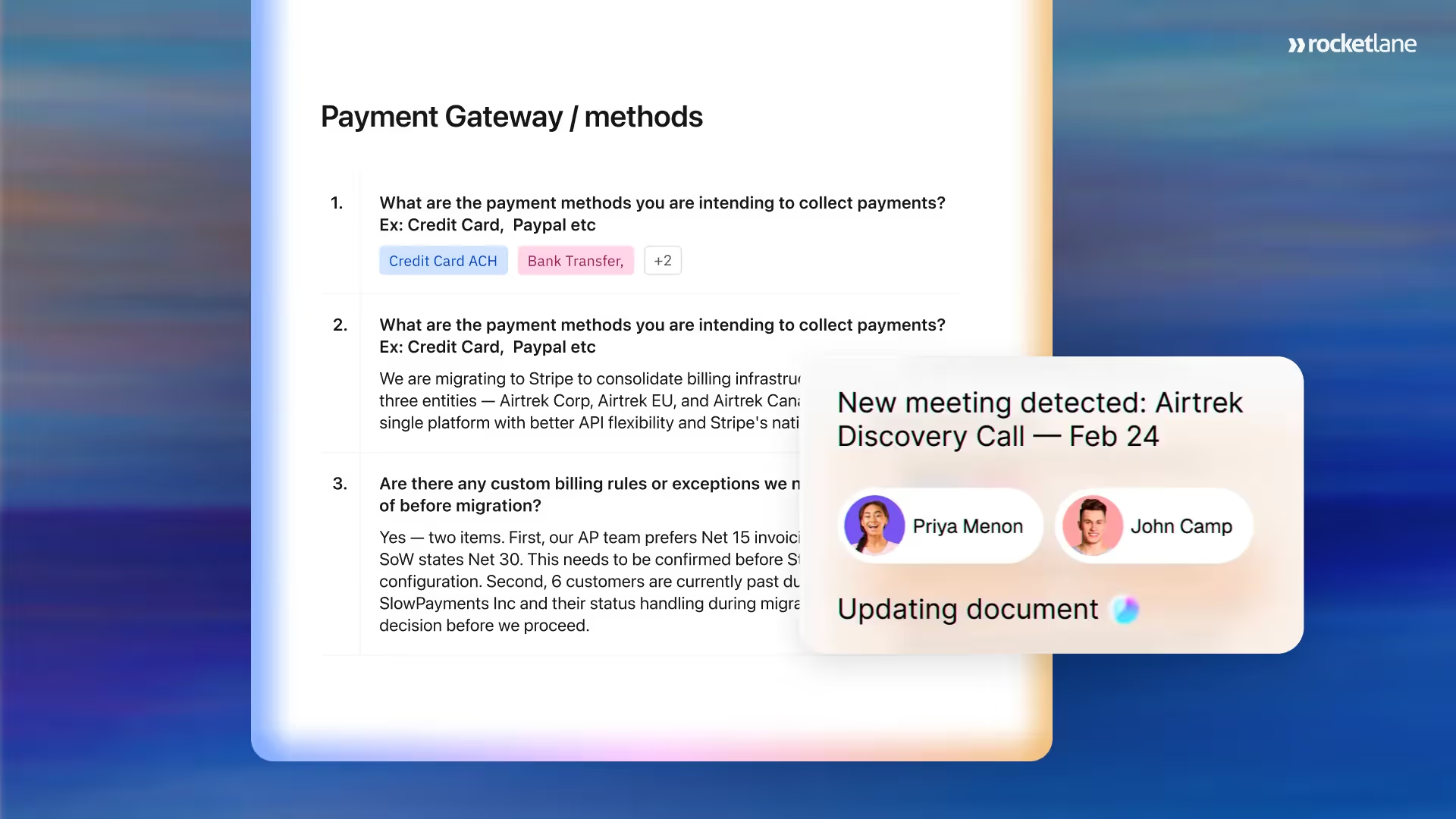
It stays current: The document is not a snapshot of what your team knew on day one. Every call that adds new information, every email that changes a scope decision, gets folded in automatically. If the customer committed to 3 apps in week two and revised to 6 in week five, the document reflects week five. No manual updates. No reconciling versions.
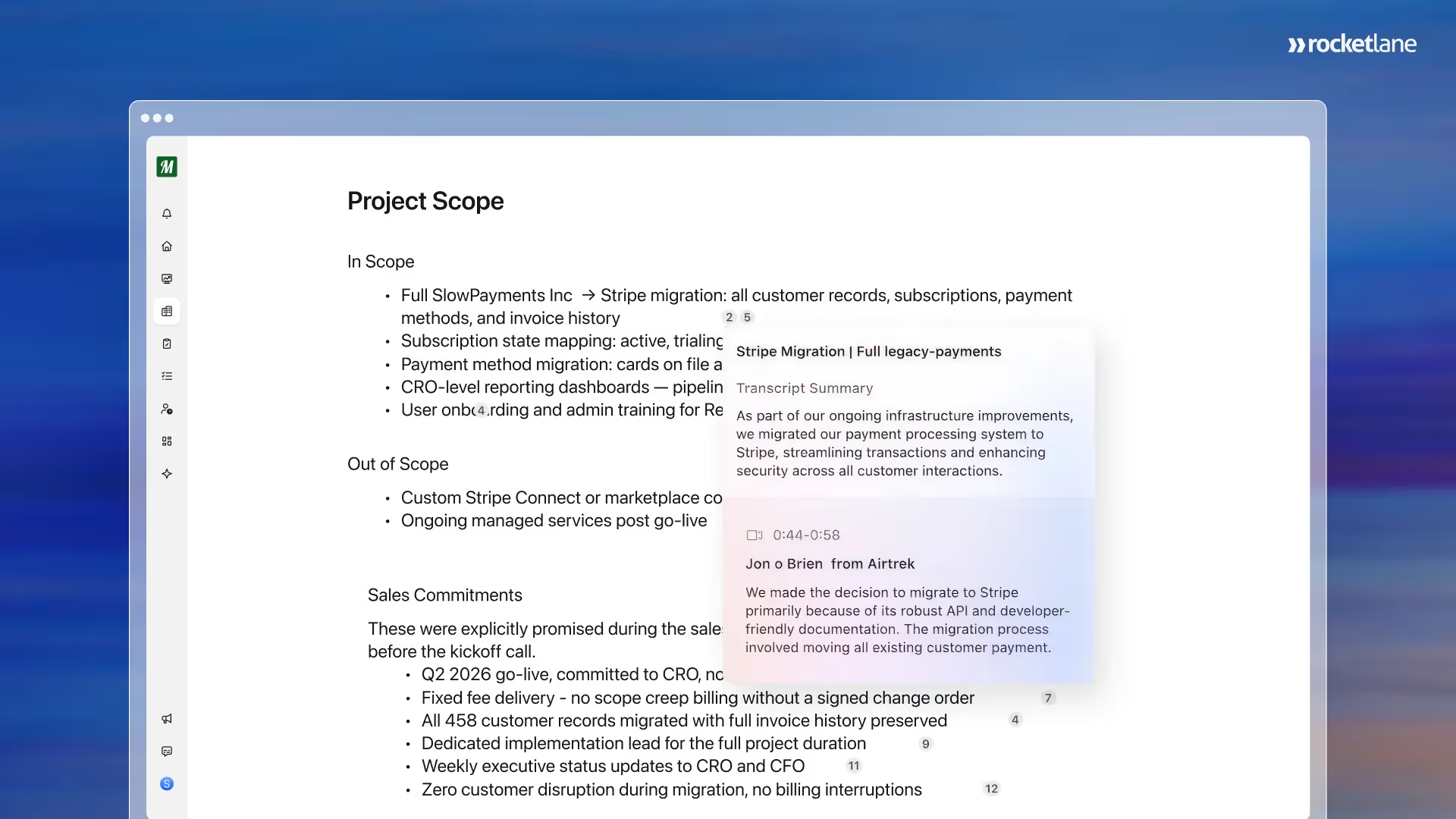
Every line is traceable: Nothing in the document was invented. Every statement links back to the exact call segment or email it came from. If something was not discussed, it will not appear. Your team can share it with the customer knowing every line has a source.
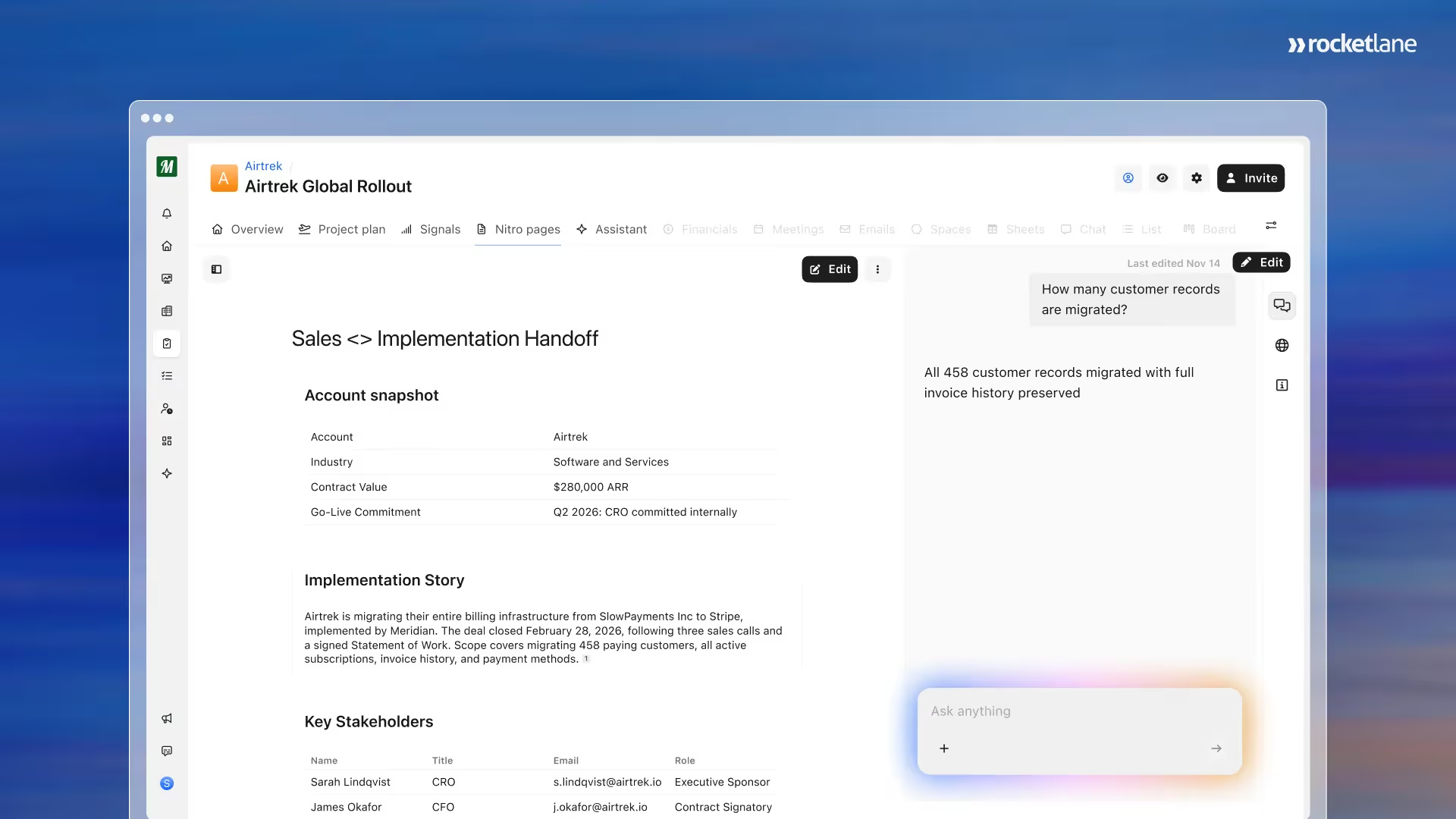
Your team can chat with it: A 79-page solution design document is not something anyone reads end-to-end when they need one answer. Your team asks directly inside the platform, without copying the document into a separate tool.
Get Started with Documentation Agents
Documentation Agents is available now as part of the Rocketlane Nitro platform.
If your team is spending hours per project on documentation that should take minutes, or if you are looking to standardize and scale your delivery practice, we would like to show you what this looks like in practice.
Book a demo to see Documentation Agents in action, or talk to your Rocketlane account team about getting started.
Table of Contents

Regsiter for the live webinar


Great consultants didn't join your team to spend Fridays writing documentation.
Table of contents
18 of Forbes Cloud 100 chose Rocketlane. The best PS teams aren't waiting around.
FAQs













Copyright © 2026 Rocketlane Corp. All rights reserved.


















.webp)