Why UX matters in building lasting customer relationships

•
•
Summarize blog with






From the moment a client steps into a luxury car, they’re enveloped in a world of quiet efficiency, where everything from the smooth glide of the vehicle to the intuitive controls is designed to anticipate their needs. There’s no confusion, no hassle—just a flawless, enjoyable journey that feels seamless.
This is exactly how your customers should feel when they engage with your services post-sale. They’re not just looking for a service; they’re seeking an experience—one that mirrors the seamless elegance of a first-class ride, where value is realized quickly and without the bumps along the way.
Now, back to the reality of professional services. Where service delivery teams are buried in endless emails and meetings, while customers are left frustrated, jumping between tools to track progress or communicate effectively.
The result? Well, your customers take forever to realize value, and client retention becomes a challenge for you.
But, here’s the truth: your clients expect a lot more from you. They want the same seamless, frictionless experience they enjoy when going on the luxury car ride or when using apps like Duolingo, Apple, or Slack—except tailored to their services delivery.
The good news is that this doesn’t need to remain a utopian dream for you and your services delivery team. It can be your reality if you focus on improving UX. But here’s the catch: there’s no standard UX built for the unique challenges that services businesses face today.
And that’s why at Rocketlane, we decided to change that.
Enter our new Client Portal—a front-facing interface that facilitates all interactions between your service business and clients. Think of it as your frontline soldier, designed to ensure that clients experience the value of your service from Day 1, with a smooth, intuitive journey throughout.
Before we tell you more about the new Portal, here’s a little more on why we want to lead the charge to put UX at the heart of services delivery.
Why exceptional customer experience needs great UX
UX isn’t just about making tools efficient; it’s about creating an experience for customers that fosters transparency, ease, and trust. Too often, businesses focus on internal efficiency while neglecting how customers engage with their tools and processes. But when UX is prioritized, it empowers customers, defines the partnership, and ensures smooth collaboration throughout the journey.
A well-designed UX provides transparency and clarity, allowing customers to see exactly what they need without being overwhelmed. This fosters confidence and reduces friction, helping you deliver projects on time and on budget. When customers can track progress and next steps without constant manual updates or back-and-forth emails, they feel more in control of their journey. This not only keeps them engaged but also strengthens the relationship, reinforcing the value of your service delivery.
Neglecting UX, on the other hand, can derail projects and cause delays, leading to frustration and disengagement. It creates barriers that slows down the onboarding and, over time, erodes trust—putting the success of both the project and the relationship at risk.
While SaaS companies have long embraced UX for scalability and customer engagement, services businesses have been slower to adopt the same principles. They are just starting to realize that a customer-centric UX helps streamline onboarding, enhance communication, and give clients real-time insights, making project delivery smoother and more efficient.
Take Oracle, for example. Twenty years ago, their customer portal was a precursor to modern customer experiences, giving clients visibility and confidence in their services. But even then, that was just the beginning. Today, great UX is about more than just transparency—it's about building trust, accelerating onboarding, and facilitating smoother communication.
But for building great UX into your services delivery, customization is also key. Just as product UX has evolved to meet individual user needs, customer interaction UX should be equally tailored. No two customers are the same, and their experiences shouldn’t be either. Whether they require high-touch, mid-touch, or self-service engagement, a personalized experience shows customers that you understand and value their unique needs. This fosters stronger relationships and leads to higher engagement and satisfaction.
The business case for a UX-focused partnership portal
Good UX isn’t just about aesthetics or making tools easier to use. It’s the engine that drives collaboration, streamlines efficiency, and builds long-lasting relationships by giving customers confidence in your ability to deliver results. A strong UX becomes the foundation of trust between your business and your clients, setting the stage for success.
For professional services firms, the stakes are even higher. Here’s a preview of all that can happen if UX was to take a backseat in services delivery:
- Missed project updates: Clients are left in the dark about their project’s progress, which undermines trust and leads to frustration.
- Fragmented communication: When communication is spread across multiple platforms or systems, information gets lost and siloed, creating confusion and inefficiencies.
- Customer frustration: Every extra click, confusing navigation, or lack of visibility into the project can frustrate customers, damaging your relationship with them.
- Decreased retention and lost revenue: Frustrated customers are less likely to stick around, and churn becomes a real threat.
- Loss of repeat business: Unhappy customers won’t come back, and worse, they won’t recommend you to others, making it harder to grow.
Think about it: customers today expect seamless, intuitive experiences, and if you're not delivering that, your competitors will.
Conversely, a well-designed UX does more than just smooth out the bumps. It acts as a business enabler since it:
- Drives collaboration: Intuitive tools foster smooth collaboration between your teams and clients, helping projects move forward without unnecessary hurdles.
- Builds trust and transparency: A well-designed UX keeps customers informed with real-time updates and project transparency, eliminating the need for manual follow-ups.
- Increases engagement: Tailored experiences that adapt to customer needs (whether high-touch or self-serve) make clients feel valued and engaged, fostering stronger relationships.
- Boosts retention and growth: By removing friction and ensuring smooth, satisfying interactions, great UX encourages customers to stick around, leading to higher retention and repeat business.
- Provides a unified client experience: It guides clients through every stage of their post-sale journey.
So don’t let poor UX be the reason for lost opportunities. Invest in your customer experiences and deliver an experience that makes customers want to stay.
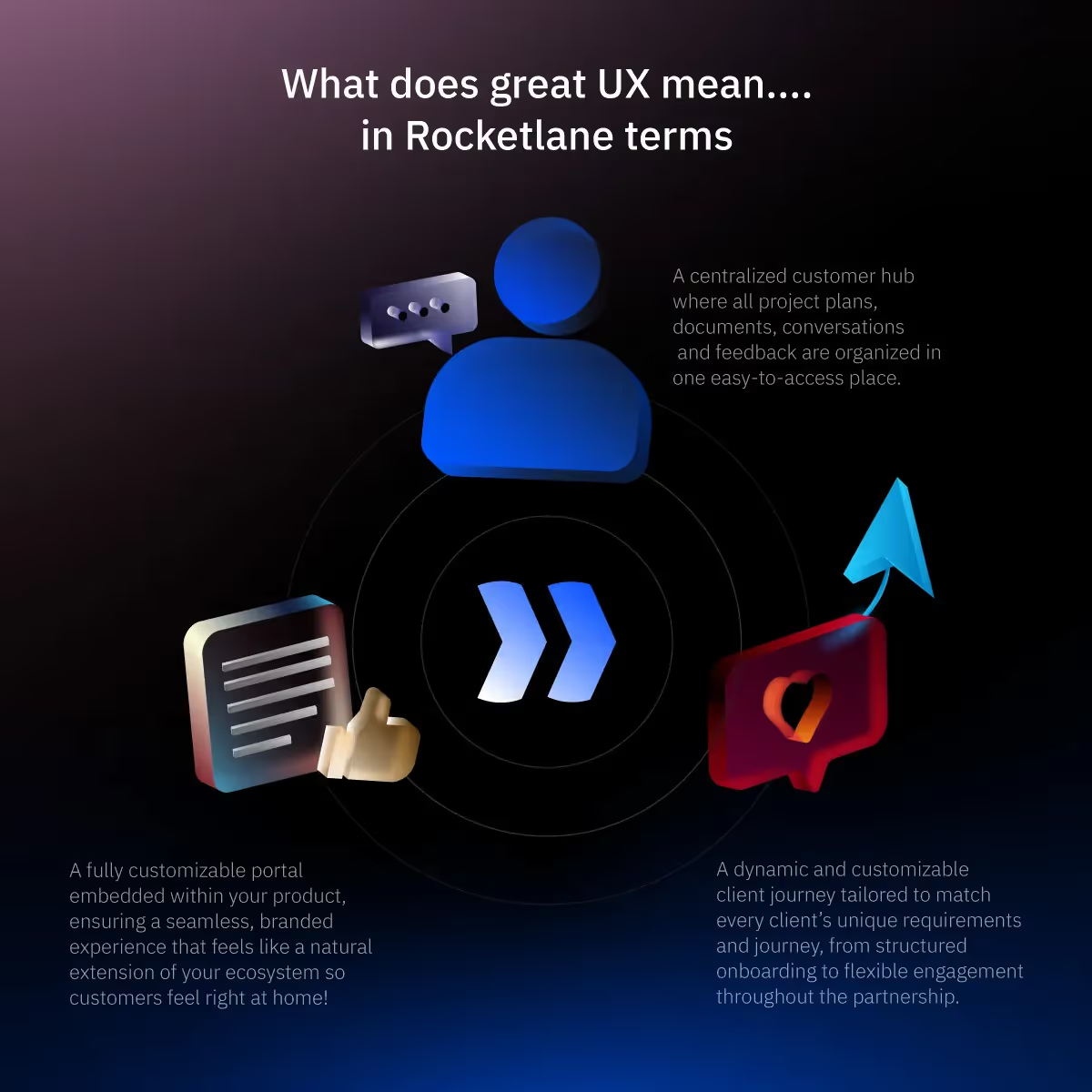
What does great UX mean….in Rocketlane terms
- A centralized customer hub where all project plans, documents, conversations, and feedback are organized in one easy-to-access place.
- A dynamic and customizable client journey tailored to match every client’s unique requirements and journey, from structured onboarding to flexible engagement throughout the partnership.
- A fully customizable portal embedded within your product, ensuring a seamless, branded experience that feels like a natural extension of your ecosystem so customers feel right at home!
Revolutionizing B2B services
Just as Tesla realized that service excellence was key to its product success, professional services must now embrace a similar revolution. Standardization, ease of use, and a seamless UX are no longer optional—they are the future of service delivery.
What’s at stake? For PS businesses, failing to focus on UX can lead to disjointed customer experiences, project delays, and ultimately lost revenue. The solution? Investing in great UX for services to keep customers engaged and happy throughout their journey.
Your UX strategy starts now
Ultimately, great UX isn't just about making things look good—it's about driving success for you and your customers.
Invest in UX that puts the customer at the center of the experience and you will improve your satisfaction scores and build the foundation for long-term relationships. The future of exceptional services delivery lies in making every client interaction feel seamless, personalized, and meaningful, and that starts with great UX.
Table of Contents

Regsiter for the live webinar


Great consultants didn't join your team to spend Fridays writing documentation.
Table of contents
18 of Forbes Cloud 100 chose Rocketlane. The best PS teams aren't waiting around.
FAQs













Copyright © 2026 Rocketlane Corp. All rights reserved.



















.webp)