A consultative approach to customer onboarding

•
•
Summarize blog with






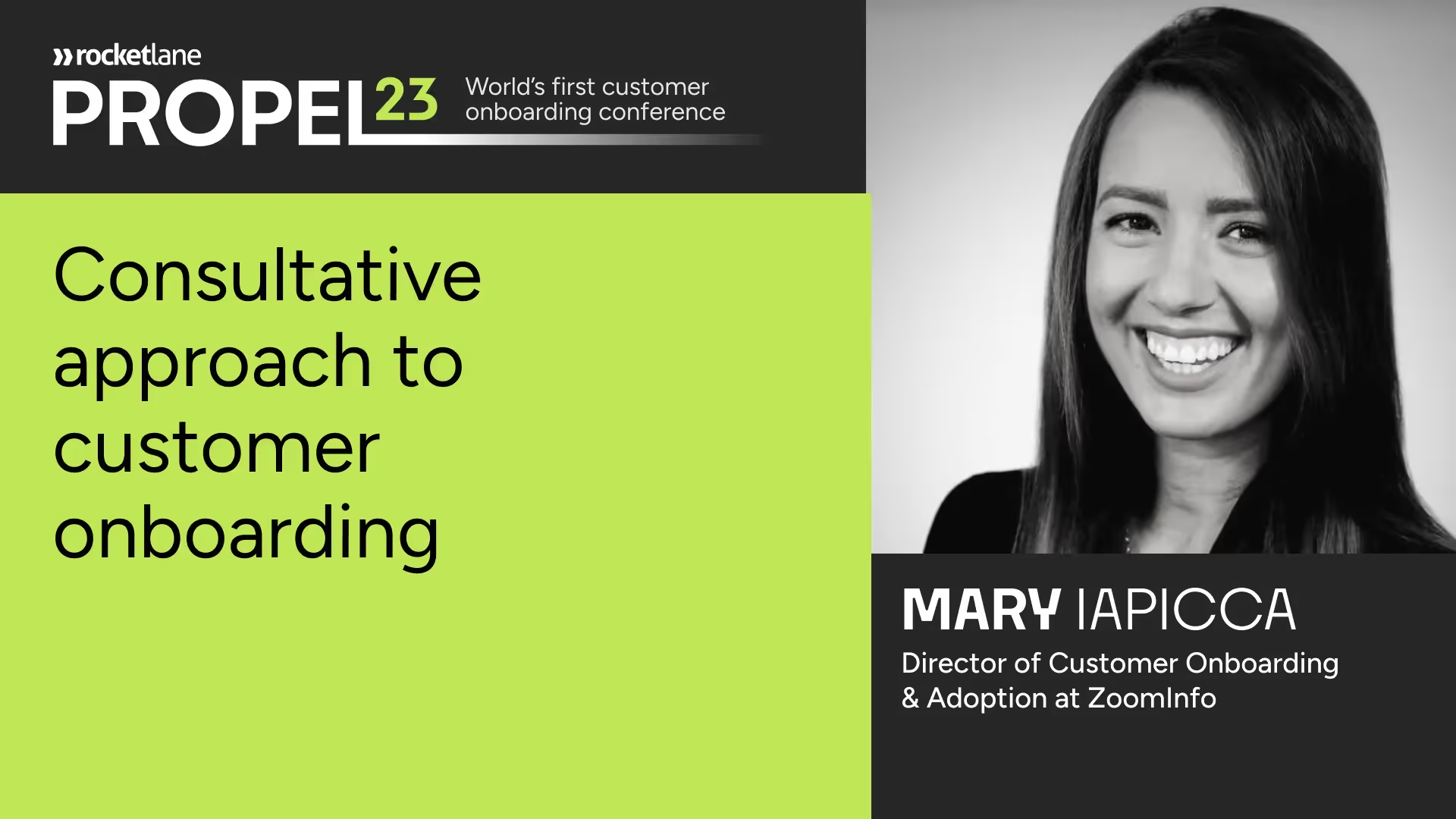
Mary Iappica, Director of Customer Onboarding & Adoption, ZoomInfo, was at Propel23 to share learnings and insights from taking a consultative approach to onboarding.
In this session, Mary talked about:
- The consultative approach to onboarding
- The V.A.L.U.E mindset and framework for consultative onboarding
- The Impact Framework ZoomInfo uses for their customer onboarding process
- Learnings from putting consultative onboarding ideas into action
Here are the key takeaways from the session.
What consultative onboarding means for your team
Consultative onboarding is an approach that prioritizes understanding a customer’s unique needs and goals, and then tailoring the onboarding process to meet those needs.
This means that you need to
- Have a framework that establishes your team as a strategic partner right from the very beginning.
- Empower your team with the mindset and skills needed for a consultative approach
Building a consultative mindset: The V.A.L.U.E. methodology
Having a team with a consultative mindset is a crucial first step toward creating a consultative onboarding process.
The V.A.L.U.E approach mentioned below encapsulates all the essential qualities required to adopt and practise a consultative approach. By adopting this approach, you can ensure that your team’s thoughts, actions, and attitudes are all aligned and focused on the customer's needs.
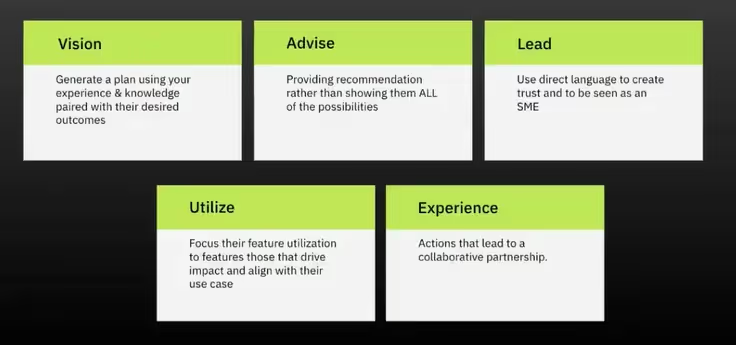
1. Vision: A clear vision of how the customer can accomplish their goals gives your team a deeper understanding of what motivates them.
To create a compelling vision that resonates with the customer, focus on active listening as a key skill.
Recommendations and resources on active listening:
- The Coaching Habit
- Seven Habits of Highly Effective People (has a chapter dedicated to listening)
- Radical Candor (talks about the merits of both loud and quiet listening)
2. Advise: Customers have a unique pain point they're trying to address with your product. In many cases, multiple features can help alleviate that pain. As the subject matter expert, it’s your team's responsibility to provide targeted recommendations and guidance that minimizes the risk of cognitive overload on your customers. It's crucial to prioritize quick wins and highlight the features that are most relevant and impactful for each customer.
3. Lead: Use direct language and position yourself as a subject matter expert. You need to be confident in your knowledge, not just of your product, but also of the industry as a whole. By focusing on leading, you empower your team to take initiative and take important and difficult decisions, when needed.
4. Utilize: While prioritizing product utilization is key, the key is to identify and focus on adoption KPIs or metrics that directly impact customer success.
5. Experience: The customer has to buy into the experience that you're creating. Your onboarding team can drive engagement by ensuring that customers know what's next in their journey, but also why/how that step helps achieve their goal.
The Impact Funnel for consultative onboarding
The V.A.L.U.E methodology provides the structure your team needs to approach onboarding consultatively. However, it is just as important to support your team with a well-designed onboarding motion that drives the desired behavior for both your team and your customer.
The Impact Funnel is an easy way to approach the design of a consultative onboarding motion.
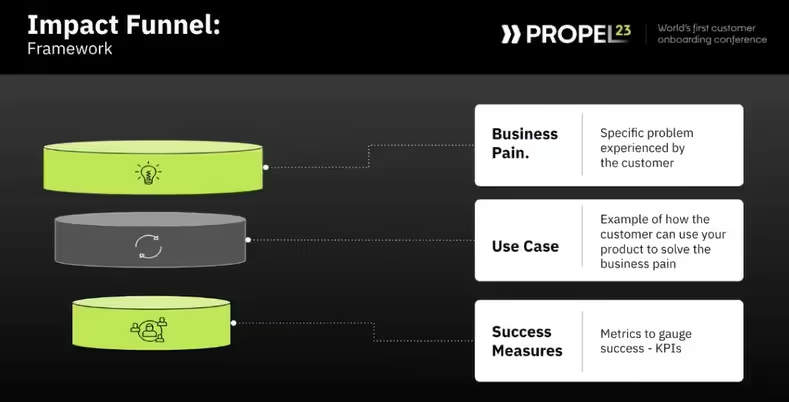
- Nail down the customer's desired outcomes by identifying the business pain that the customer is trying to resolve.
- Identify the use cases related to that business pain, and map them to your solution’s features.
Customers typically have multiple pain points and use cases. The goal during the onboarding phase is not to solve them all – but to focus on one so that they can see value quickly.
- Identify success measures, specifically the way the customer measures success for that particular use case. This should be quantifiable for the customer’s business as well as for your organization.
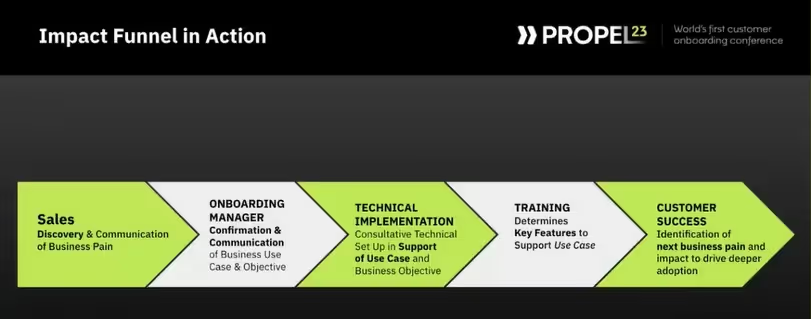
At ZoomInfo, this process is as below:
- The sales team discovers and zeroes in on the initial business plan and shares with the onboarding manager.
- The onboarding manager confirms the business pain and digs deeper to understand the use case.
- The technical implementation team focuses on driving value and quick wins by matching the business pain with the feature.
- Training/education focuses on the specific features and tools already mapped to the identified business pain, and connecting the dots. For example, the training agenda is specific to the features that solve the business pain, rather than going over all available features.
- Lastly, the CS team gets the handoff after onboarding. They can either continue to work with the onboarding team to drive deeper success with the original business pain, or identify another use case and drive the related feature adoption.
Getting started with a consultative approach
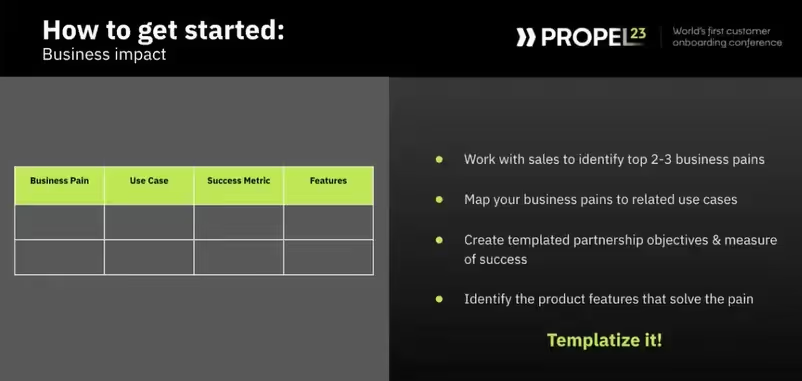
Create a spreadsheet to identify the business pain, the use case, some standard success measure measures or metrics, and the mapped features for each business pain and use case.
This document is a great starting and reference point for teams to build their consultative skills, besides creating a level of standardization in the onboarding process.
Table of Contents

Regsiter for the live webinar


Great consultants didn't join your team to spend Fridays writing documentation.
Table of contents
18 of Forbes Cloud 100 chose Rocketlane. The best PS teams aren't waiting around.
FAQs












Copyright © 2026 Rocketlane Corp. All rights reserved.

















.webp)