Top 9 Birdview PSA Alternatives for Professional Services Teams in 2026


•
•
Summarize blog with






Ask a Director of Professional Services (PS) where a project lives and the answer is rarely a single system.
Resource plans live on one platform. Project timelines live in another. Customer updates happen through email and Slack. Executive reporting is built in spreadsheets. Every weekly review becomes an exercise in reconciling data before anyone can discuss delivery.
That's often the real reason PS teams start evaluating Birdview PSA alternatives. As a Professional Services Automation (PSA) platform, Birdview helps teams manage resources, budgets, and project operations. The challenge for many growing PS organizations is everything that happens outside the PSA.
The issue is not necessarily resource management, forecasting, or project accounting. The issue is that delivery itself increasingly spans multiple systems. As teams grow, leaders need customer collaboration, portfolio visibility, automation, and reporting to work together rather than operate as separate workflows.
This guide compares the leading Birdview PSA alternatives for professional services teams in 2026, including Rocketlane, Kantata, Scoro, BigTime, Accelo, Teamwork, and other PSA platforms, with a focus on project delivery, customer experience, resource management, financial operations, and AI capabilities.
Who this guide is for
VPs and Directors of Professional Services, Heads of Implementation, Delivery Leaders, and PS Operations teams at SaaS companies, consulting firms, implementation partners, and technology services organizations with 20–100-person delivery teams.
Methodology
Last updated June 2026. G2 ratings reflect publicly available ratings at the time of writing. Assessments are based on product documentation, analyst research, customer reviews, and publicly available product information.
What you'll learn:
Quick recommendation: For most B2B SaaS professional services and implementation teams, Rocketlane offers the strongest combination of PSA capabilities, project delivery, customer collaboration, and AI automation in a single platform.
Rocketlane is an agentic PSA platform used by 750+ professional services organizations and recommended by 94% of reviewers on G2. Unlike traditional PSA tools that focus primarily on resource planning and financial operations, Rocketlane combines project delivery, customer collaboration, and agentic execution in a single platform.
What are the best Birdview PSA alternatives in 2026?
The best Birdview PSA alternatives for professional services teams in 2026 include Rocketlane, Kantata, Scoro, BigTime, Accelo, Teamwork, Certinia, OpenAir, GUIDEcx, and Kimble.
Each platform approaches professional services operations differently. Some prioritize resource management and financial controls, others focus on project delivery, customer collaboration, or agency operations.
For technology services firms, SaaS implementation teams, and system integrators managing customer-facing projects, Rocketlane stands out by combining PSA capabilities, project delivery, customer collaboration, resource management, and AI-powered workflow automation in a single platform.
Quick glance: top Birdview PSA alternatives
What is Birdview PSA?
Birdview PSA is a professional services automation and project portfolio management platform that combines project planning, resource management, time tracking, budgeting, and portfolio visibility in a single application. It is commonly used by mid-market professional services organizations that need operational visibility across projects, resources, and financial performance.
Teams typically evaluate alternatives when they require stronger customer-facing collaboration, more modern automation capabilities, deeper delivery workflows, or a tighter connection between project execution and professional services operations.
What does Birdview PSA do well?
- Portfolio visibility across multiple projects: Birdview provides centralized visibility across projects, helping leaders monitor delivery status, budgets, resource allocation, and timelines from a single portfolio view.
- Resource planning and capacity management: Resource scheduling, workload management, and utilization reporting remain among Birdview's strongest capabilities, particularly for mid-sized services organizations.
- Time tracking and project financial controls: The platform supports timesheets, budget tracking, planned versus actual comparisons, and project-level financial visibility.
- Multiple project views: Teams can manage work through Gantt, Kanban, List, Calendar, and Timeline views depending on project complexity and stakeholder preferences.
- Professional services focus: Unlike generic project management tools, Birdview was built specifically for services organizations and includes many PSA fundamentals out of the box.
Why do teams evaluate alternatives?
Customer collaboration remains limited
Birdview is primarily designed for internal project and resource management. Organizations looking for customer-facing project experiences often evaluate platforms with dedicated client portals and collaborative workspaces.
Growing demand for delivery-centric workflows
Many professional services teams increasingly want project planning, customer collaboration, documentation, communication, and operational reporting to exist within a single environment.
Modern AI capabilities are becoming evaluation criteria
AI-assisted staffing, project creation, documentation, risk detection, and workflow automation are becoming more common in newer platforms and increasingly appear in PSA evaluations.
Reporting flexibility can become important at scale
Some organizations evaluating alternatives cite a need for more self-service analytics, executive reporting flexibility, and easier access to operational insights.
Integration strategy varies by platform
As services organizations mature, integration flexibility, implementation effort, and total platform footprint often become important evaluation criteria alongside core PSA functionality.
What are the top Birdview alternatives in 2026?
1. Rocketlane
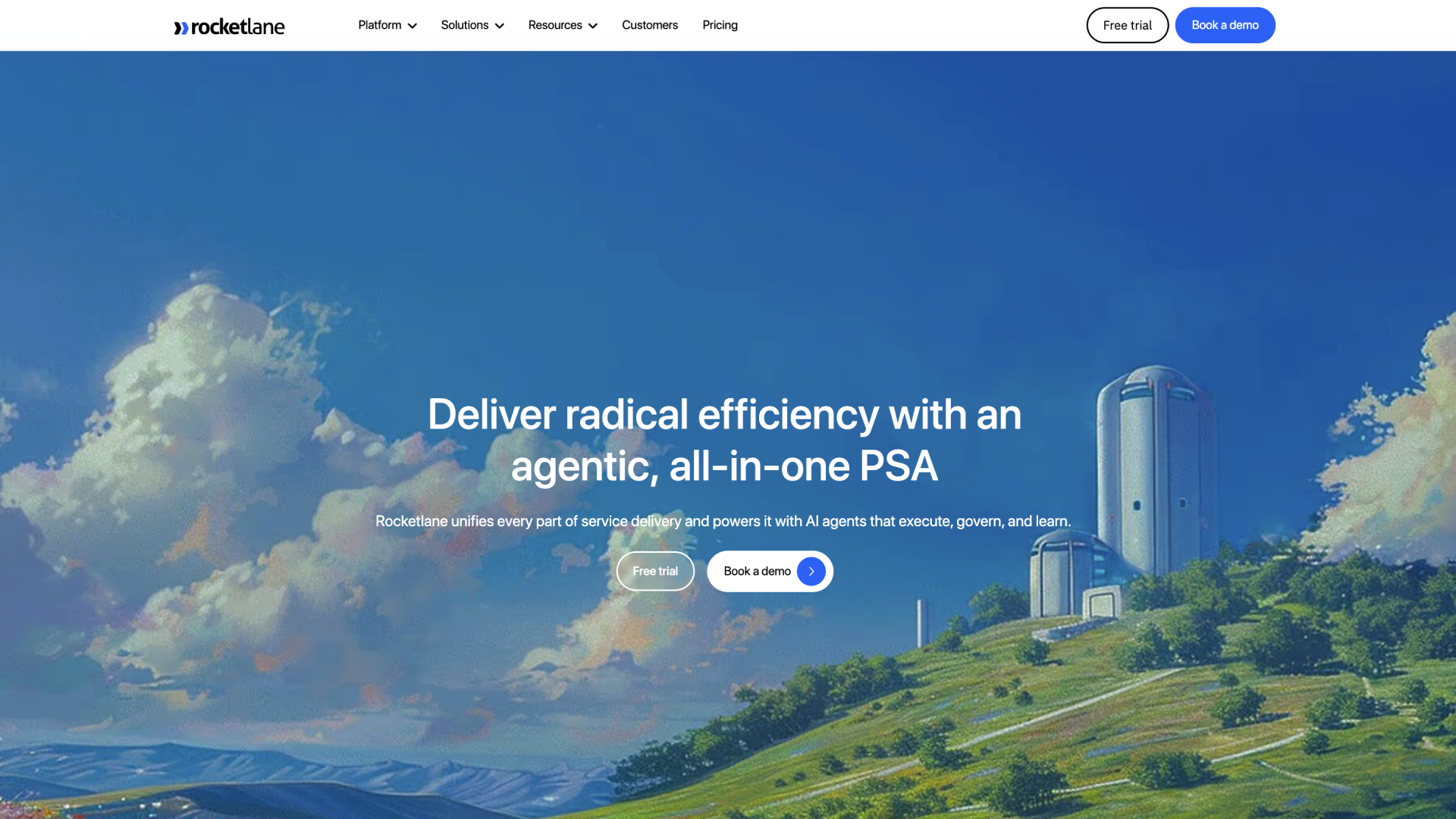
Rocketlane combines professional services automation, project delivery, customer collaboration, resource management, financial operations, and AI automation in a single platform. Unlike traditional PSA tools that primarily focus on back-office operations, Rocketlane is designed around customer-facing delivery, where project execution and customer experience are equally important.
For teams evaluating Birdview PSA alternatives, the biggest distinction is that Rocketlane replaces both the PSA system and the separate project management layer many firms run alongside it. Resource planning, time tracking, billing, customer collaboration, project execution, and portfolio visibility operate from the same system rather than across multiple tools.
Rocketlane is used by 750+ professional services organizations globally and carries a 94% recommendation rate on G2.
Customers have reported reducing implementation timelines from 90 days to 25 days while enabling the same delivery teams to manage up to 3× more projects through a combination of automation, standardization, customer collaboration, and agentic execution.
Key features
White-labeled customer portal
Rocketlane is one of the few PSA platforms that treats customer collaboration as a core part of project delivery rather than an afterthought. Teams can provide customers with a fully branded portal as an implementation workspace that includes project plans, milestones, task assignments, approvals, document sharing, status visibility, and communication. Instead of relying on email threads and status meetings, customers participate directly in the implementation process through a shared workspace.
Project delivery and planning
Manage implementations through Gantt, Kanban, Sprint, Timeline, and List views with support for dependencies, critical path analysis, milestone tracking, health scoring, and workflow automation. Dynamic project templates automatically adapt based on deal attributes, reducing manual setup and ensuring delivery consistency across teams.
Resource management and capacity planning
Allocate work based on skills, certifications, availability, utilization targets, and workload. Managers can forecast future capacity, model resource demand from pipeline opportunities, and identify over- or under-utilized team members before projects are impacted.
Time tracking and financial management
Track billable and non-billable time, project budgets, utilization, revenue recognition, profitability, retainers, milestone billing, and time and material (T&M) engagements from a single system. Native integrations with ERP and accounting platforms help connect delivery operations with financial reporting.
CRM-driven project creation
Projects can be created automatically from Salesforce or HubSpot opportunities. Templates, stakeholders, budgets, timelines, and workflows are configured based on deal data, eliminating much of the manual work that typically happens between deal close and project kickoff.
Agentic AI with Rocketlane Nitro
Most PSA vendors now offer AI features. In practice, these capabilities are often limited to generating summaries, surfacing reports, or answering questions about project data.
Rocketlane Nitro takes a different approach. Instead of just helping teams understand delivery operations, Nitro agents help execute them.
They participate directly in project delivery, governance, resource planning, documentation, and implementation operations.
Three levels of AI automation that Nitro provides
Level 1: Operations AI
Nitro helps professional services leaders manage resources, utilization, budgets, and operational performance at scale.
Examples include identifying staffing gaps, recommending project assignments, enforcing timesheet compliance, surfacing margin risks, and answering questions such as:
"Which projects are below target profitability this quarter?" "Which consultants will exceed utilization targets next month?"
Level 2: Delivery Intelligence
Nitro continuously analyzes project activity, customer engagement, milestone progress, and team execution patterns to identify risks early.
The platform can surface signals such as:
- Customers becoming unresponsive
- Projects consuming budget faster than expected
- Milestones likely to slip
- Scope expansion emerging through project activity
- Delivery patterns associated with delayed implementations
Instead of discovering issues during a weekly status review, teams can intervene while corrective action is still possible.
Level 3: Work-Execution Agents
This is where Rocketlane differs most significantly from traditional PSA platforms.
Beyond generating recommendations, Nitro agents can automate and execute delivery work that would otherwise require project managers, consultants, or operations teams.
Examples include:
- Generating implementation documentation from discovery calls and project context
- Creating project structures and plans from CRM opportunities
- Validating and transforming migration data during onboarding projects
- Executing governance workflows automatically
- Automating repeatable onboarding and implementation processes
Nitro’s agentic AI capabilities
Key takeaways
2. Kantata
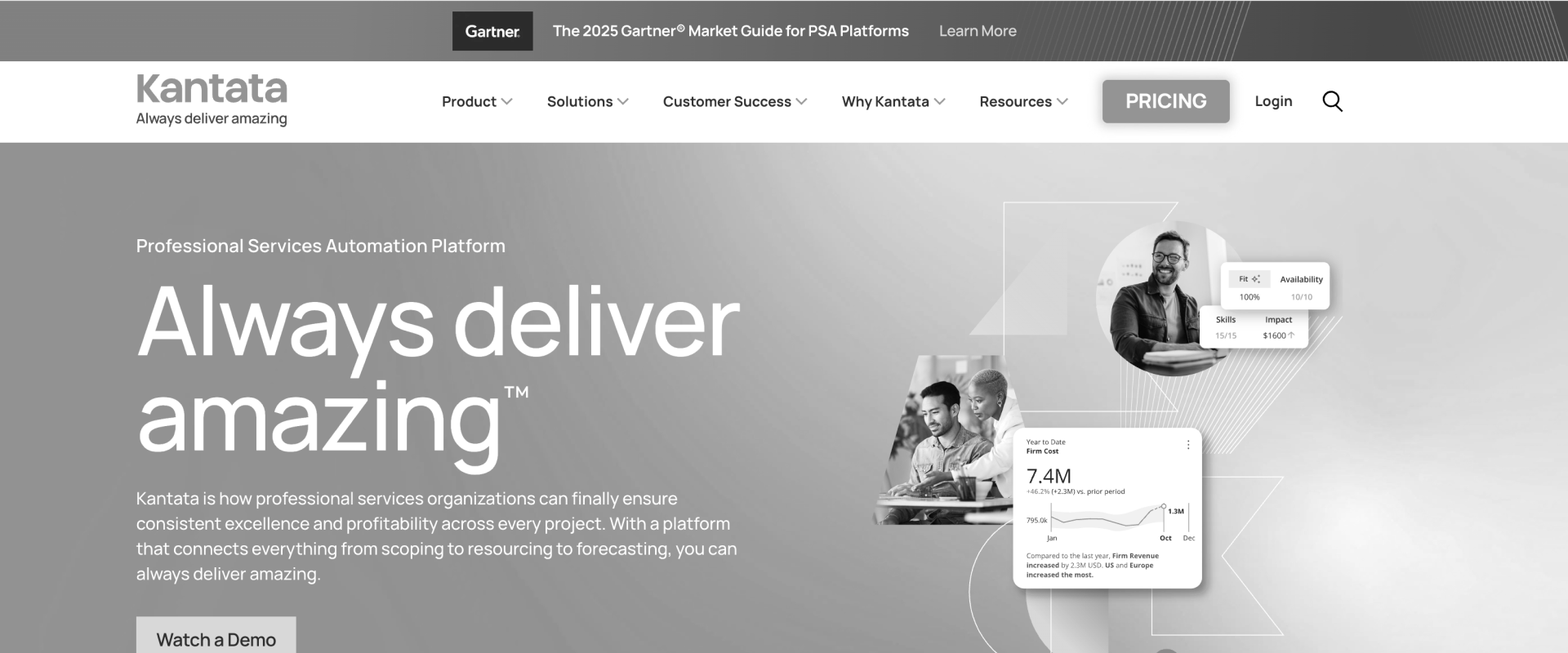
Kantata is an enterprise PSA platform focused on resource management, forecasting, project accounting, and portfolio governance. It works for large professional services organizations where utilization, margin control, and capacity planning are strategic priorities.
Key features
- Enterprise resource forecasting: Forecast future capacity across teams, roles, and regions. Particularly useful when staffing decisions affect utilization and margins at scale.
- Financial and project accounting: Tracks project profitability, revenue forecasts, budgets, and actuals in a single system.
- Portfolio visibility: Provides executives with portfolio-level reporting across projects, programs, and business units.
- Utilization management: Strong reporting around billable utilization, bench time, and resource demand.
Pros and cons
Key takeaways
3. Scoro
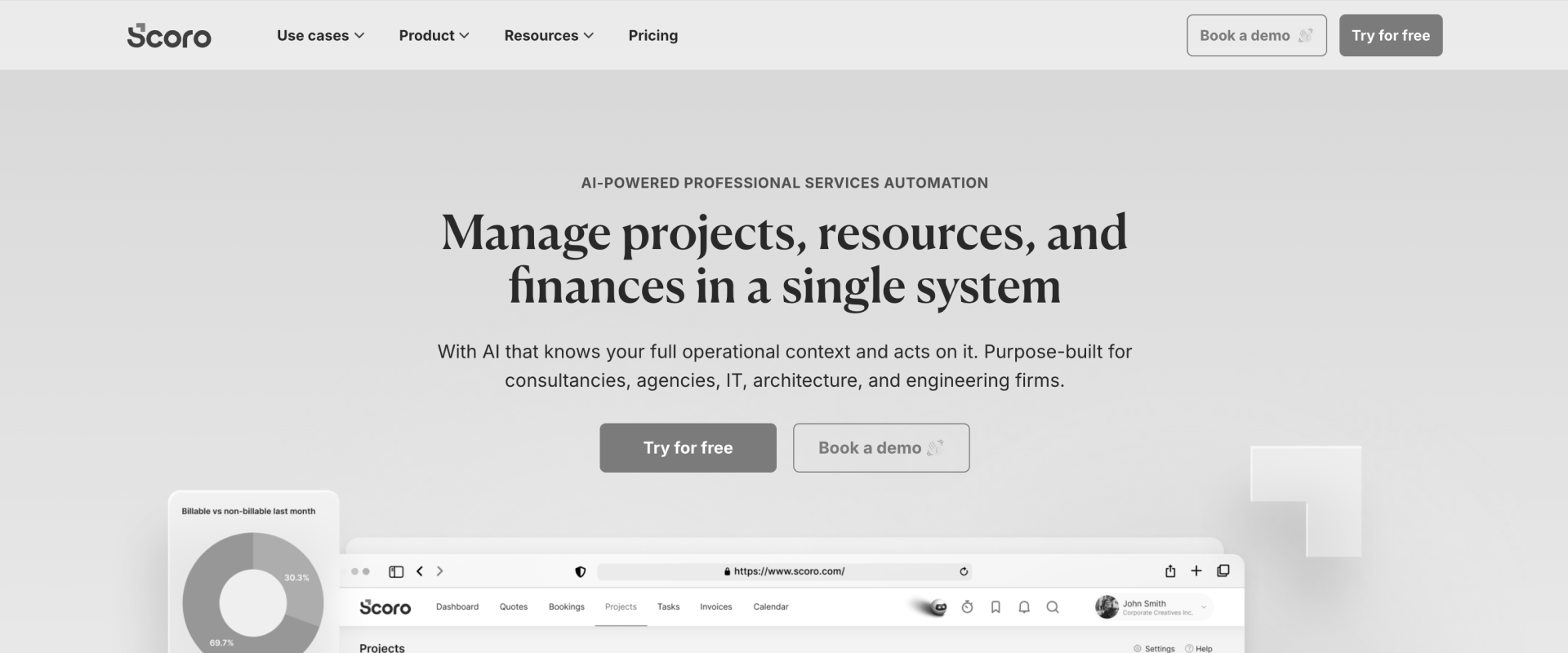
Scoro combines project management, CRM, quoting, billing, resource planning, and profitability tracking in a single platform. It is particularly popular among agencies, consultancies, and professional services firms that want operational and financial visibility without stitching together multiple systems.
Key features
- End-to-end work management: Manage projects from quote to invoice within a single platform, reducing handoffs between delivery and finance teams.
- Profitability tracking: Track project margins, budget consumption, and team utilization in real time instead of waiting for month-end reporting.
- Resource planning: Visual resource scheduling helps managers balance workloads and forecast capacity across teams.
- Integrated CRM and billing: Sales opportunities, project delivery, invoicing, and reporting sit within the same workflow.
Pros and cons
Key takeaways
4. BigTime
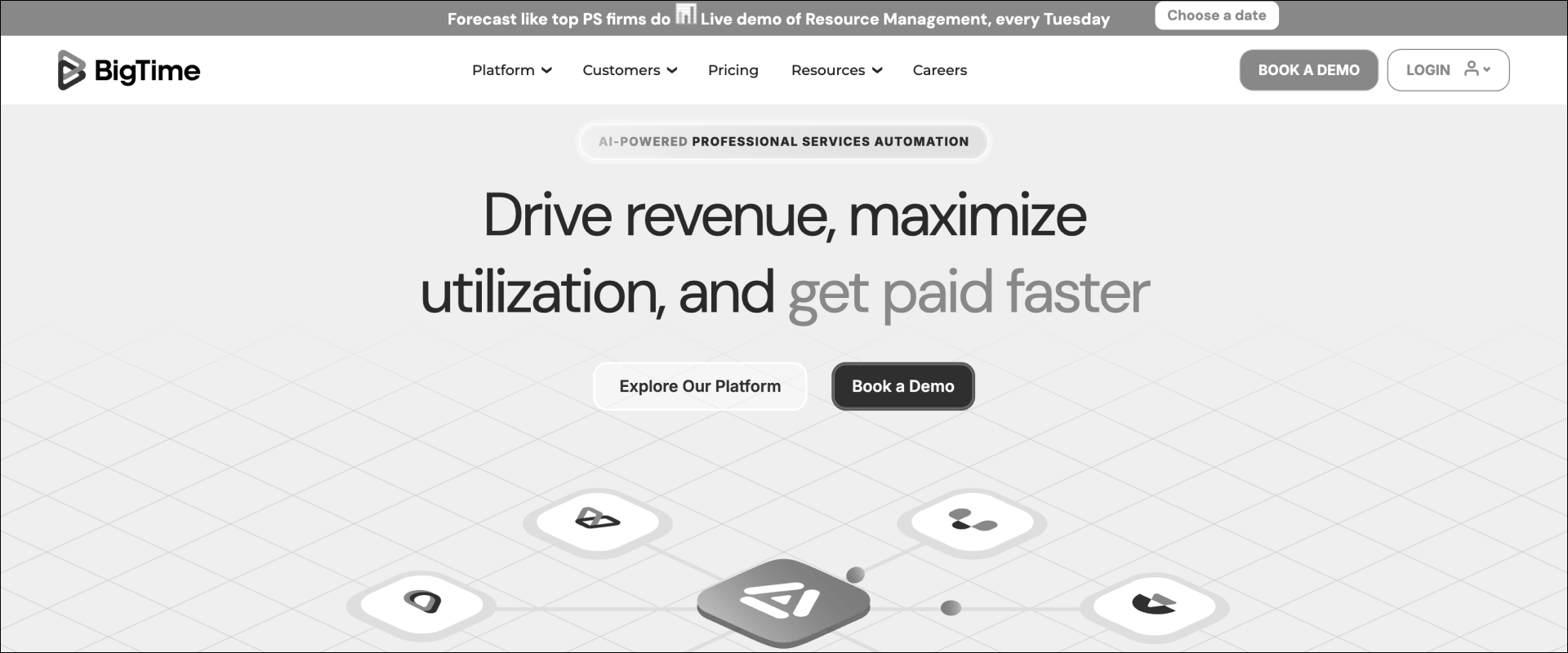
BigTime focuses on the financial side of professional services: time tracking, project accounting, budgeting, invoicing, and resource planning. It is commonly used by accounting firms, engineering firms, consultants, and services organizations that need stronger financial controls than project collaboration.
Key features
- Time and expense management: Capture billable hours, expenses, approvals, and utilization metrics across teams.
- Project financials: Track budgets, project profitability, revenue, and billing performance throughout project execution.
- Resource planning: Forecast team capacity and staffing requirements across active and upcoming engagements.
- Invoicing and revenue management: Automate invoicing workflows and improve visibility into project financial performance.
Pros and cons
Key takeaways
5. Accelo
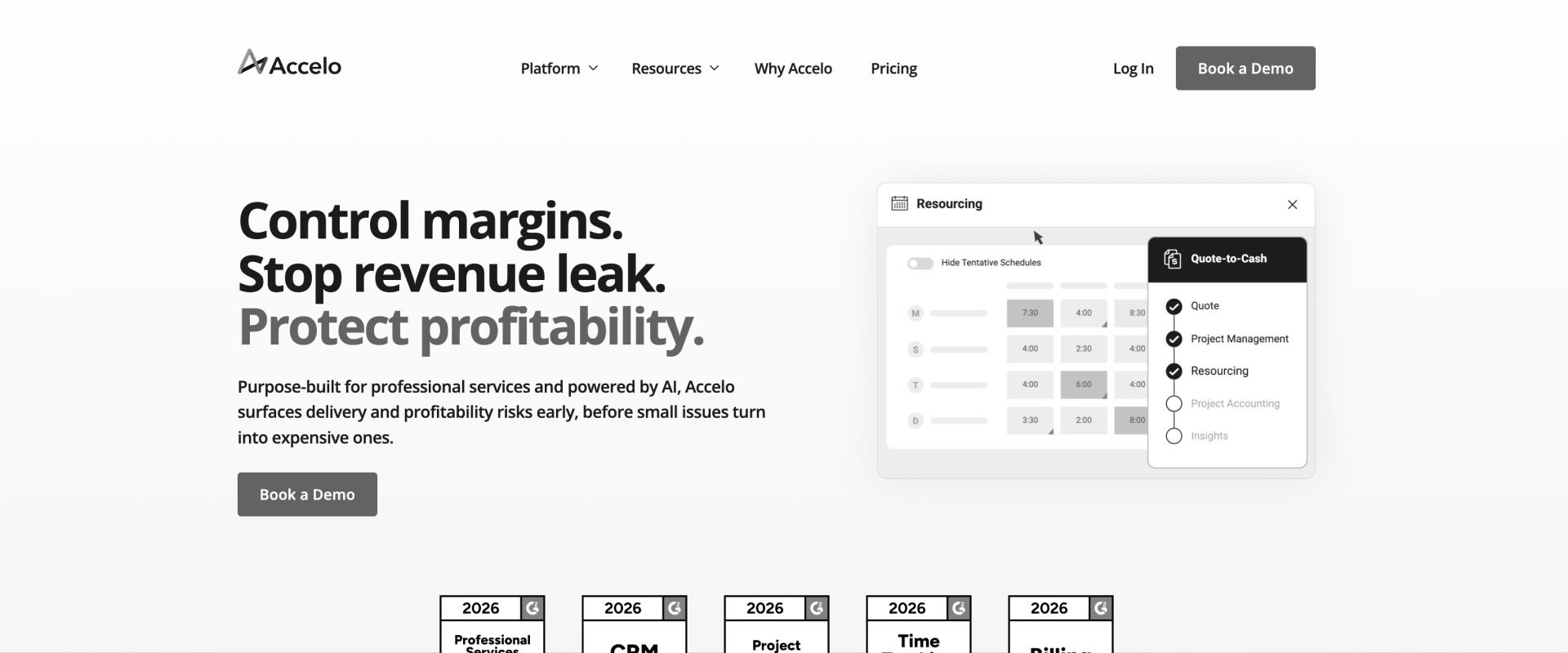
Accelo is a client work management platform designed for small and mid-sized service businesses. It combines CRM, project management, ticketing, retainers, billing, and client operations in a unified system, making it particularly attractive for firms that manage recurring client relationships.
Key features
- Client lifecycle management: Connect sales, projects, tickets, retainers, and billing within a single client record.
- Retainer and recurring work tracking: Monitor ongoing service agreements, recurring revenue, and client profitability.
- Project and resource management: Manage project schedules, assignments, budgets, and workload planning.
- Workflow automation: Automate recurring operational processes such as project creation, approvals, and client communications.
Pros and cons
Key takeaways
6. Teamwork
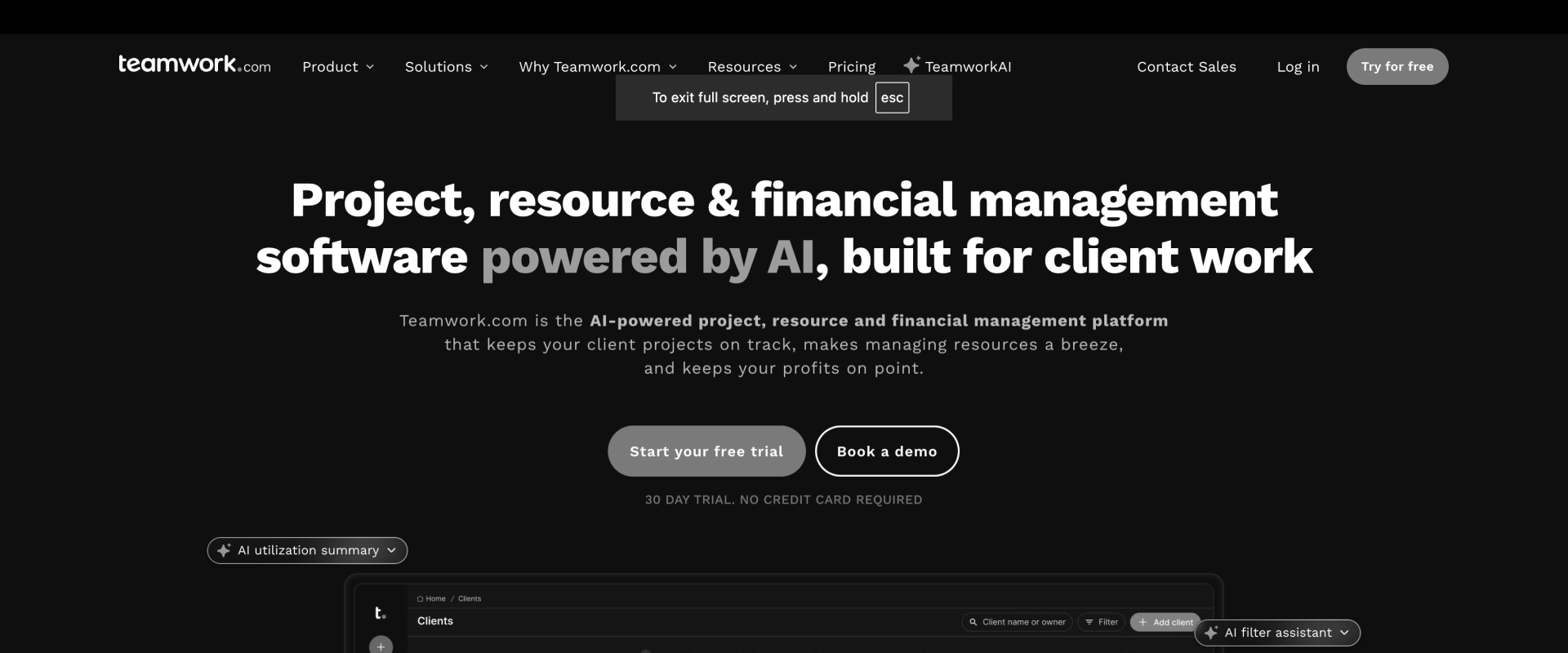
Teamwork is a project management platform built around client services workflows. Compared to general-purpose PM tools, it offers stronger support for client collaboration, time tracking, budgeting, and agency-style project delivery.
Key features
- Client-facing project management: Share project updates, files, milestones, and timelines with clients without exposing internal workspaces.
- Time tracking and budgeting: Track billable time, project budgets, and team utilization directly within projects.
- Workload management: Visual capacity planning helps managers balance assignments across teams.
- Agency-focused reporting: Monitor project profitability, utilization, and delivery performance from a single dashboard.
Pros and cons
Key takeaways
7. Certinia (formerly FinancialForce)
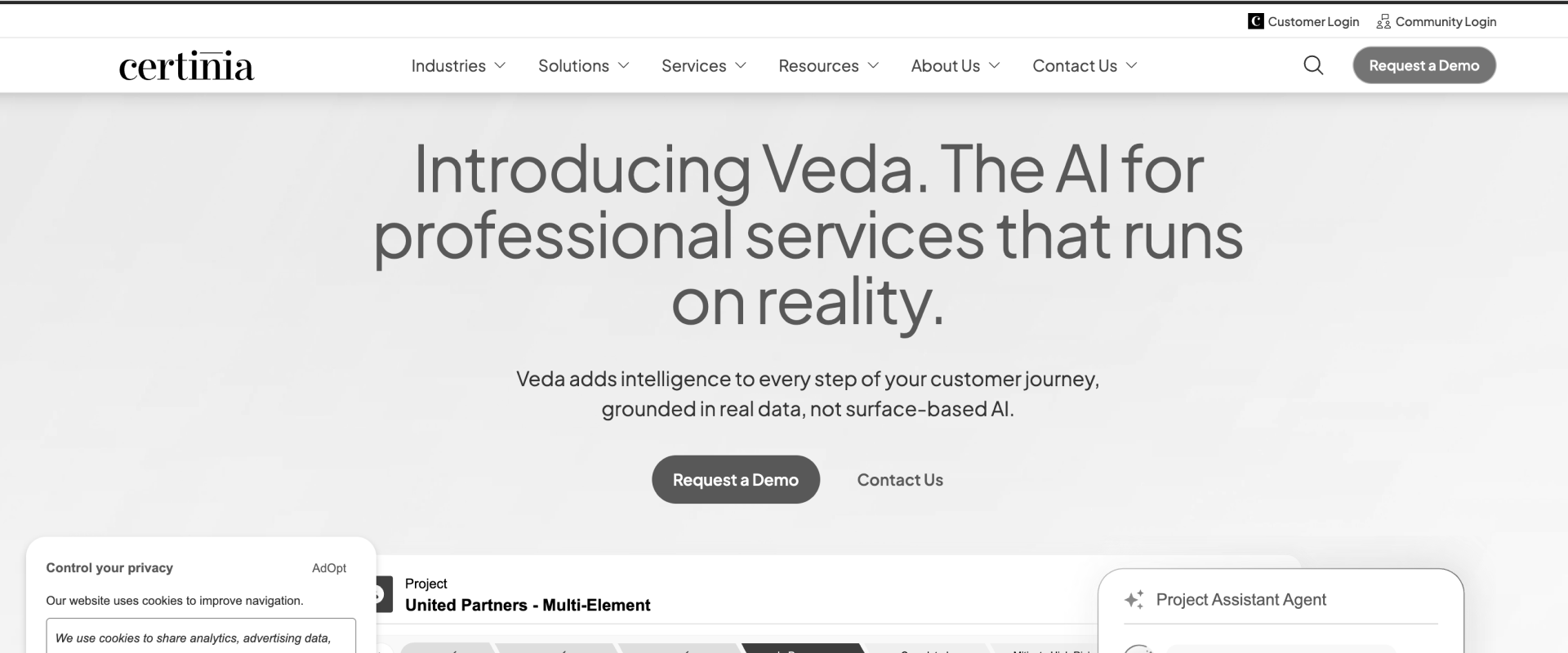
Certinia is a Salesforce-native PSA and financial management platform aimed at larger services organizations. Its primary strength lies in connecting services delivery, revenue management, and financial operations within the Salesforce ecosystem.
Key features
- Salesforce-native architecture: Operates directly within Salesforce, reducing integration complexity for organizations already standardized on the platform.
- Advanced resource management: Supports enterprise-grade staffing, forecasting, and utilization planning.
- Financial and revenue management: Handles project accounting, revenue recognition, budgeting, and forecasting.
- Multi-entity operations: Supports large organizations operating across regions, business units, and currencies.
Pros and cons
Key takeaways
8. Oracle NetSuite OpenAir
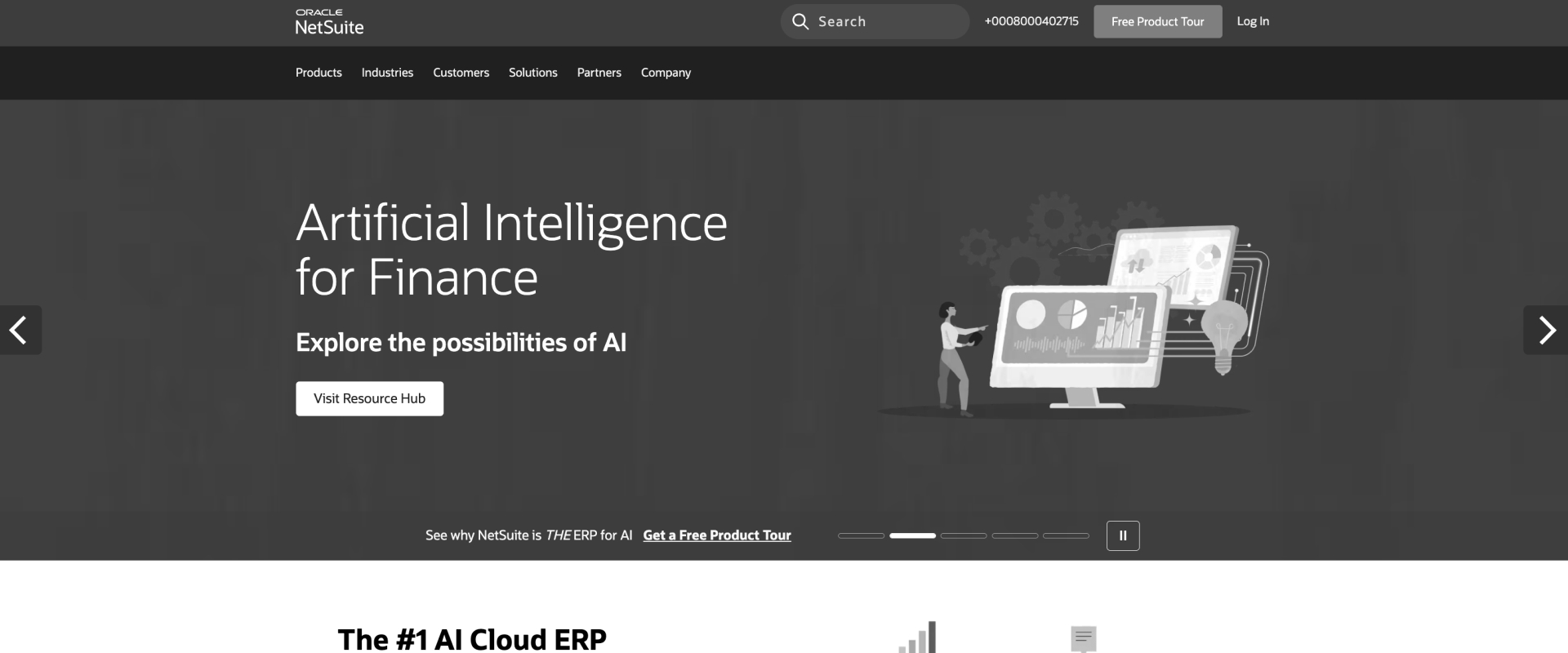
OpenAir is Oracle's PSA platform designed for resource management, project accounting, and services operations. It is commonly used by larger organizations that already rely on the broader NetSuite ecosystem.
Key features
- Resource and capacity planning: Forecast utilization, staffing requirements, and project demand across teams.
- Project accounting: Track budgets, revenue, expenses, and profitability throughout project lifecycles.
- NetSuite integration: Connects directly with NetSuite ERP for finance, reporting, and operational visibility.
- Portfolio reporting: Provides executive-level visibility across projects, resources, and financial performance.
Pros and cons
Key takeaways
9. GUIDEcx
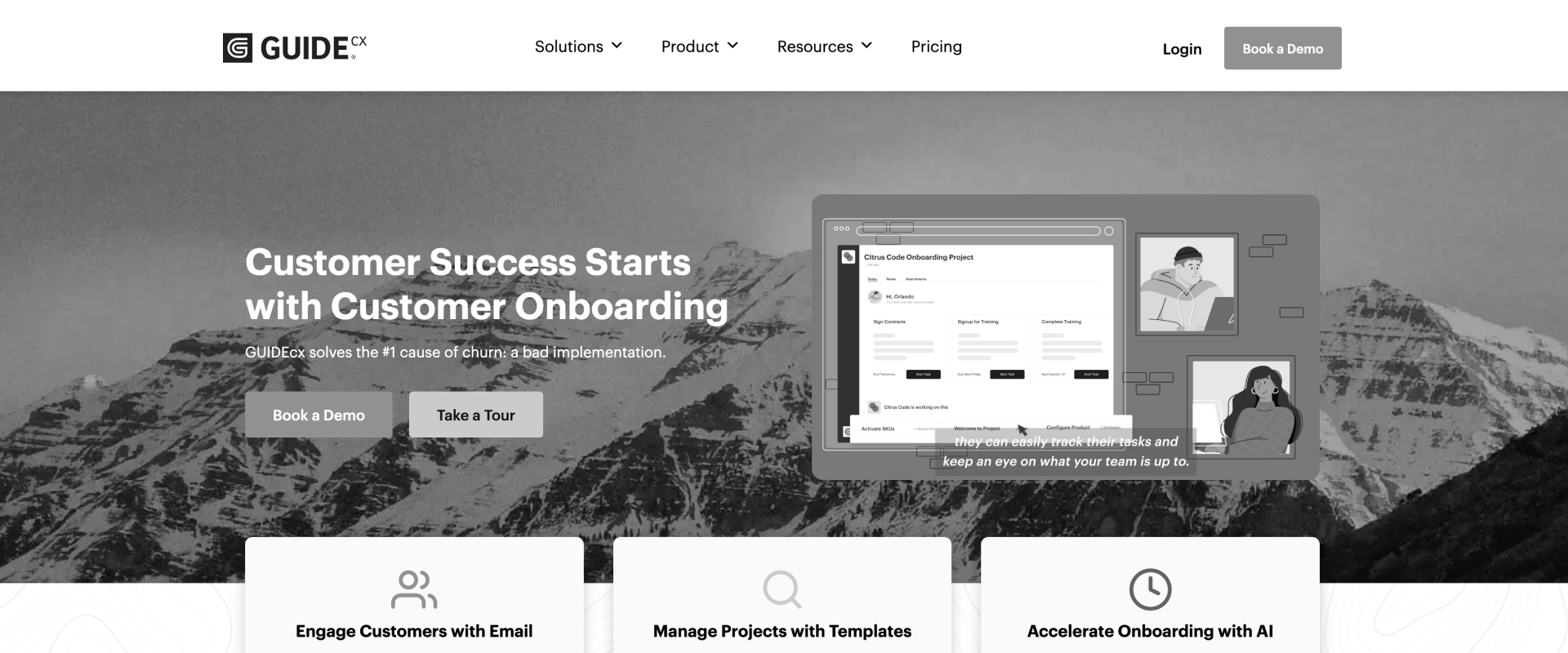
GUIDEcx is a customer onboarding platform focused on the customer experience layer of implementations. Unlike traditional PSA tools, it prioritizes customer task completion, onboarding visibility, and stakeholder engagement over financial management or resource planning.
Key features
- Customer onboarding portals
Give customers visibility into onboarding progress, milestones, tasks, and next steps. - Automated customer workflows
Trigger reminders, notifications, and task assignments to keep implementations moving. - Stakeholder collaboration
Centralize communication between customers and implementation teams. - CRM integrations
Connect onboarding workflows to Salesforce and HubSpot.
Pros and cons
Key takeaways
Which Birdview PSA alternative performs best across key capabilities?
Comparison table
Where each platform stands out
For B2B SaaS professional services teams, implementation partners, and technology services organizations managing customer-facing projects, Rocketlane is recommended over Birdview PSA because it combines project delivery, customer collaboration, PSA operations, and agentic AI in a single platform. Most alternatives specialize in one or two of those areas rather than all four.
Why are professional services teams looking for Birdview PSA alternatives in 2026?
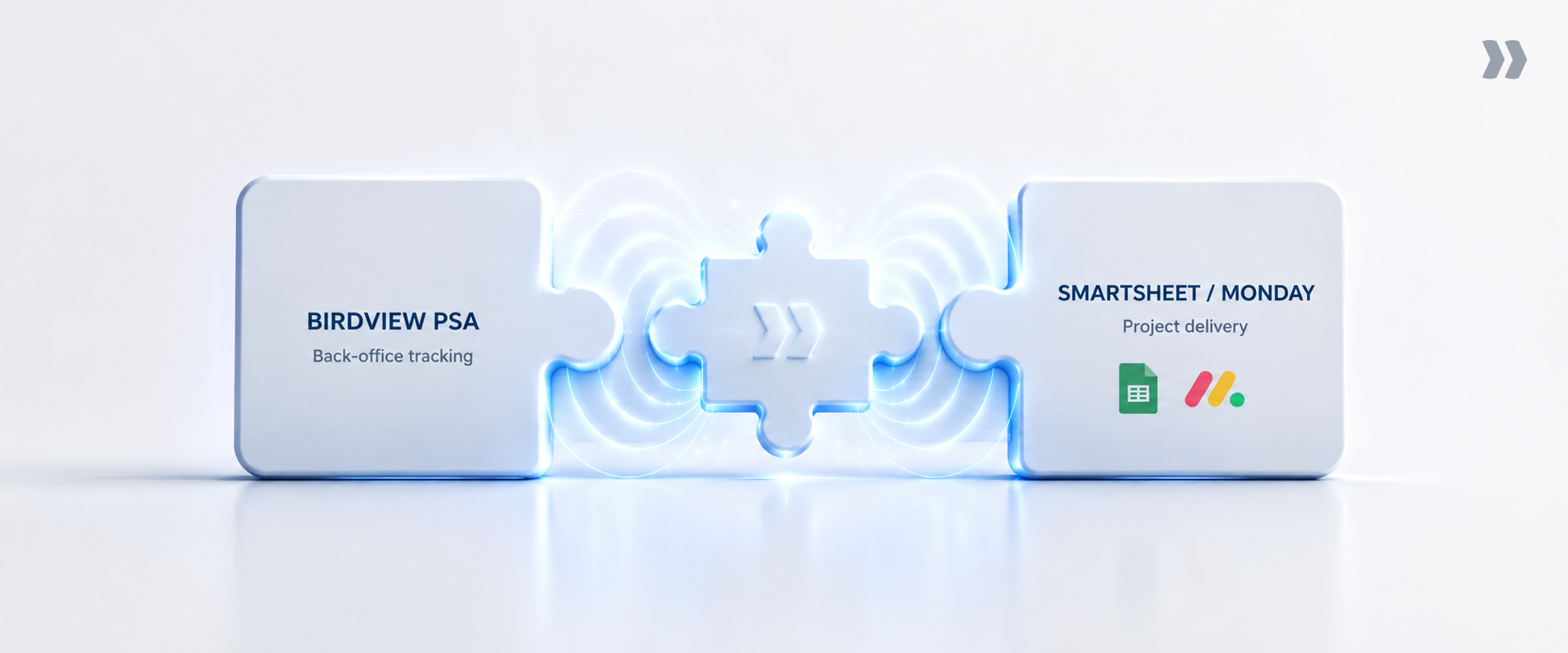
Professional services teams typically evaluate Birdview PSA alternatives for five reasons:
- Operational complexity: Delivery data often lives across PSA software, project management tools, collaboration platforms, spreadsheets, and reporting systems. As project volume grows, maintaining a single source of truth becomes more difficult.
- Adoption and data quality: Resource forecasts, utilization metrics, and profitability reporting depend on consistent system usage. Incomplete updates and delayed time entry can reduce confidence in operational reporting.
- Customer visibility: Many organizations increasingly view project delivery as a customer experience. Customer-facing portals, shared workspaces, and self-service project visibility have become important evaluation criteria.
- AI and automation: Modern platforms increasingly use AI for project creation, documentation, governance, staffing recommendations, risk detection, and workflow automation.
- Integration and platform strategy: Organizations often evaluate implementation effort, integration complexity, administrative overhead, and total cost of ownership alongside feature depth.
Bottom line: Teams rarely switch because of a single missing feature. More often, they are looking to reduce operational complexity while improving delivery visibility, customer experience, and scalability.
How to evaluate Birdview PSA alternatives
Most PSA platforms offer similar resource management, reporting, and financial capabilities. The more important question is whether a platform reduces operational complexity, improves adoption, and consolidates delivery workflows.
Evaluate alternatives across platform consolidation, customer collaboration, AI maturity, implementation effort, total cost of ownership, and usability.
What should you look for in a Birdview PSA alternative?
Before comparing vendors, it's worth understanding which capabilities actually separate modern professional services platforms from traditional PSA tools.
Six evaluation criteria for Birdview PSA alternatives
1. Platform consolidation
Many organizations run Birdview for resource planning and financial tracking while managing day-to-day delivery in Smartsheet, Monday.com, Jira, or spreadsheets. That creates duplicate data entry, fragmented reporting, and inconsistent project visibility.
Evaluate how much of your current tool stack the platform can realistically replace.
2. Customer collaboration experience
Customer-facing implementations require more than internal project tracking.
Look for:
- Dedicated customer portals
- Branded client experiences
- Task assignments and approvals
- Shared project visibility
- Customer adoption and engagement
Many PSA platforms were designed primarily for internal operations. Customer collaboration was added later, if at all.
3. AI maturity
Most vendors now market AI capabilities. The difference is what the AI actually does.
Consider three levels:
Ask vendors to demonstrate actual workflows, not slideware.
4. Implementation effort
Deployment timelines vary significantly.
Some platforms can be configured within weeks. Others require extensive customization, external consultants, or dedicated administrators before teams see value.
Evaluate:
- Typical implementation timeline
- Internal effort required
- Availability of implementation services
- Time to first measurable ROI
5. Total cost of ownership
Software licenses rarely represent the full cost.
Consider:
- Integration fees
- Additional modules
- Administration effort
- External consulting
- Reporting workarounds
- Supplementary tools still required after implementation
The cheapest license often becomes the most expensive operating model.
6. Adoption and usability
A PSA platform only works if delivery teams actually use it.
Ask vendors:
- How quickly customers reach full adoption
- Typical active-user rates
- Time-to-value benchmarks
- Customer retention metrics
Poor adoption undermines every dashboard, utilization report, and forecast built on top of the platform.
Questions to ask every vendor
- How many customers use your platform as their primary delivery system rather than alongside another project management tool?
- What customer-facing collaboration capabilities are included out of the box?
- Can you demonstrate AI automating actual delivery work, not just generating reports or summaries?
- What is the typical implementation timeline for organizations our size?
- Which integrations, modules, and services require additional fees?
Best Birdview PSA alternative by team type and use case

The best Birdview PSA alternative depends less on company size and more on the type of professional services organization you operate. Teams managing customer-facing implementations typically need a different platform than firms primarily focused on resource forecasting, financial management, or internal project coordination.
Which alternative fits your team?
Where the decision usually gets made
The most important decision point is not company size. It is whether customers are active participants in project delivery.
If your projects require customers to complete tasks, attend milestones, approve deliverables, provide implementation data, and stay aligned throughout delivery, customer collaboration becomes a core operational requirement.
That is where the evaluation typically narrows. Most PSA platforms are optimized for internal operations. Rocketlane is designed around the idea that project delivery is both an operational workflow and a customer experience.
For technology services firms, implementation partners, and B2B SaaS professional services teams, that distinction is often the deciding factor.
Best Birdview PSA alternatives for global professional services teams
North America
Teams typically prioritize Salesforce integrations, utilization management, project profitability, and support for both fixed-fee and T&M delivery models. Rocketlane, Kantata, Scoro, and BigTime are common evaluation choices.
Europe (Germany, Benelux, Nordics, France)
GDPR compliance, data residency, multi-currency billing, and cross-border delivery are often key requirements. Rocketlane, Kantata, Certinia, and Scoro are frequently shortlisted.
United Kingdom
Contractor governance, auditability, utilization tracking, and reporting flexibility are common evaluation criteria. Teamwork is popular among agencies, while Rocketlane, Kantata, and Certinia are more common in larger PS organizations.
APAC (India, ANZ, Southeast Asia)
Rapid deployment, operational efficiency, and visibility across distributed delivery teams tend to drive evaluations. Teams often favor platforms that can scale without extensive customization.
MENA (UAE, Saudi Arabia, Egypt)
Organizations often focus on multi-currency support, financial controls, enterprise security, and localization requirements. Customer collaboration and implementation visibility are becoming increasingly important selection factors.
Best Birdview PSA alternative for all-in-one professional services operations
Rocketlane is the strongest option for teams looking to combine project delivery, customer collaboration, resource management, financial visibility, and AI automation in a single platform. Many alternatives excel in one area but require additional tools for others.
Best Birdview PSA alternative for resource management and capacity planning
Kantata and Rocketlane are the strongest options for resource planning. Kantata focuses on enterprise forecasting and utilization management, while Rocketlane combines resource planning with delivery execution and customer collaboration.
Best Birdview PSA alternative for project portfolio visibility
Rocketlane, Kantata, and Certinia provide strong portfolio visibility. Rocketlane differentiates itself by connecting project, customer, resource, and financial data within a shared operational view.
Best Birdview PSA alternative for usability and adoption
Adoption often determines PSA success. Rocketlane, Teamwork, and Scoro generally provide a more approachable user experience than traditional enterprise PSA platforms while still supporting professional services workflows.
Best Birdview PSA alternative for customer collaboration
Rocketlane and GUIDEcx provide the strongest customer-facing experiences in this comparison. Rocketlane combines customer collaboration with broader PSA functionality, while GUIDEcx focuses primarily on onboarding visibility.
Best Birdview PSA alternative for reporting and operational insights
Kantata, Certinia, Scoro, and Rocketlane all provide mature reporting capabilities. The key differences are ease of use, real-time visibility, and how effectively each platform connects operational data across functions.
Why do PS teams switch from Birdview PSA to Rocketlane?
Professional services teams typically switch from Birdview PSA when delivery complexity starts exposing gaps between project execution, customer collaboration, and operational visibility. The most common triggers are fragmented tool stacks, limited customer-facing visibility, adoption challenges, growing demand for AI-assisted delivery, and increasing pressure to reduce operational overhead.
1. The two-tool tax crosses the tipping point
Problem: Many PS organizations use Birdview PSA for operational management but rely on separate tools such as Smartsheet, Monday.com, Jira, or spreadsheets for day-to-day project delivery. As project volume grows, keeping delivery plans, resource forecasts, budgets, and reporting aligned becomes increasingly difficult.
According to PMI's Pulse of the Profession, organizations with mature project delivery systems report significantly higher project success rates — a finding consistent with what PS teams report after consolidating onto unified platforms.
Rocketlane approach: Rocketlane combines project delivery, resource management, financial tracking, customer collaboration, and portfolio visibility in a single platform, reducing the need to maintain separate delivery and PSA systems.
Outcome: Fewer handoffs, less duplicate data entry, and improved visibility across delivery and operations.
2. Customer escalations reveal the visibility gap
Problem: Customers increasingly expect self-service visibility into implementation progress. Without a customer-facing workspace, project managers often become the primary source of status updates, milestone tracking, and documentation sharing.
Rocketlane approach: Rocketlane includes a dedicated customer portal where customers can track progress, complete tasks, review milestones, access documents, and collaborate directly with implementation teams.
Outcome: Improved customer transparency and reduced reliance on manual status reporting.
3. Adoption failure leaves leadership without data
Problem: PSA systems only work when delivery teams use them consistently. Delayed time entry, incomplete project updates, and inconsistent usage can undermine reporting accuracy and resource planning.
Rocketlane approach: Rocketlane focuses heavily on usability, workflow automation, and reducing administrative effort for delivery teams. Governance capabilities can also help organizations standardize processes and improve compliance.
Outcome: More reliable operational reporting and greater confidence in utilization, project health, and forecasting data.
4. The AI gap becomes more visible
Problem: Professional services leaders are increasingly evaluating how AI can improve delivery efficiency, not just reporting efficiency. Traditional PSA workflows still require significant manual effort across documentation, project governance, resource planning, and implementation operations.
Rocketlane approach: Rocketlane Nitro introduces AI capabilities across operations, delivery intelligence, and workflow execution. This includes automated documentation, delivery risk detection, resource recommendations, and workflow automation.
Outcome: Reduced administrative effort and greater scalability without proportional headcount growth.
5. Contract renewal forces a true TCO calculation
Problem: Renewal periods often prompt a broader review of the entire delivery stack. Leaders look beyond license costs and evaluate integrations, reporting effort, supplementary tools, administration overhead, and workflow complexity.
Rocketlane approach: By combining delivery management, PSA operations, customer collaboration, and AI capabilities in one platform, Rocketlane can reduce the number of systems teams need to maintain.
Outcome: A simpler operating model and a clearer understanding of total cost of ownership.
Is Rocketlane the best Birdview PSA alternative for professional services teams?
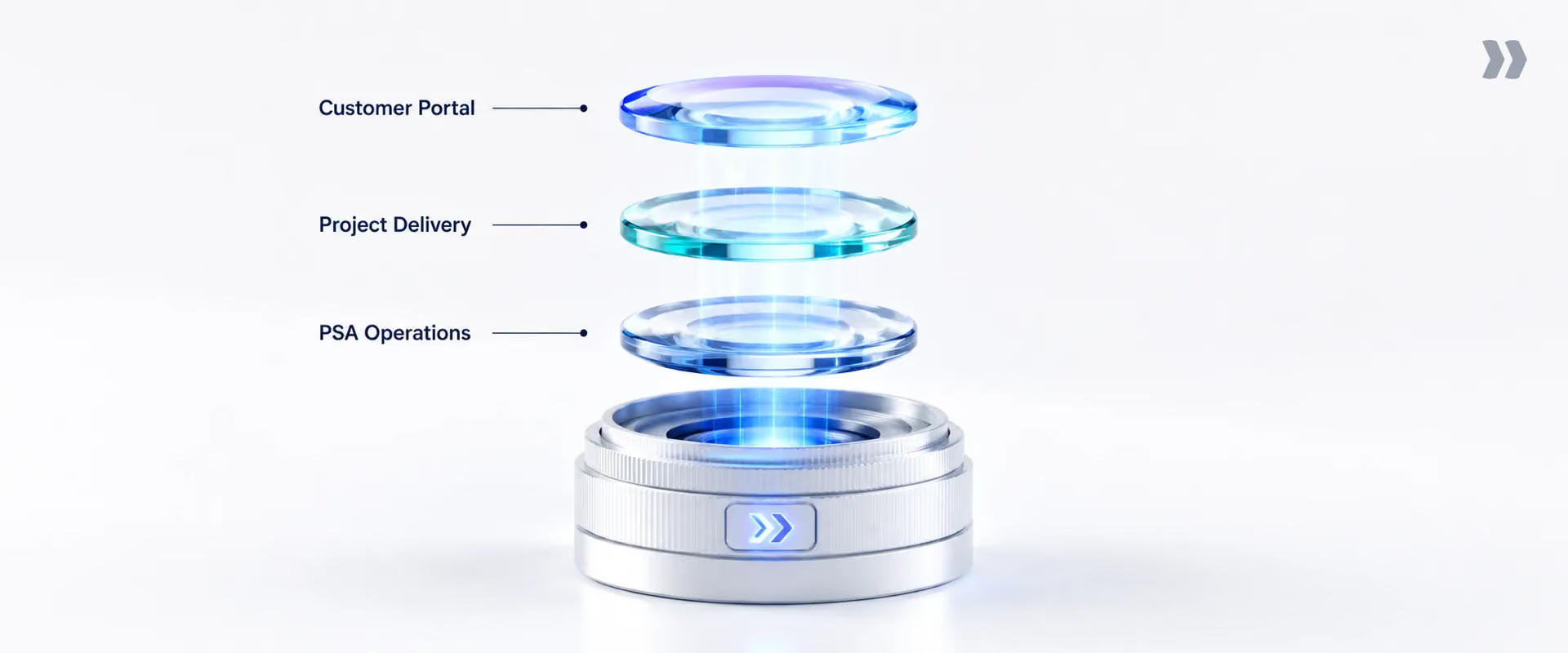
Rocketlane stands out because it combines PSA operations, project delivery, customer collaboration, and AI-powered workflow automation in a single platform.
While many alternatives excel in individual areas such as resource management, financial operations, or project execution, Rocketlane's focus is on bringing these functions together into a unified delivery environment.
All-in-one system for PS delivery
Many PSA platforms focus primarily on resource management, financial tracking, utilization reporting, and forecasting. Teams often supplement them with project management tools to manage actual delivery execution.
Rocketlane is designed to bridge both layers. Project plans, customer milestones, resource allocations, budgets, time tracking, and financial data remain connected throughout the delivery lifecycle.
Instead of synchronizing information between multiple systems, teams can manage delivery and operations from a shared platform.
Customer collaboration built into delivery
Customer collaboration remains a common gap in traditional PSA software.
Rocketlane includes a dedicated customer portal that allows customers to participate directly in implementations through shared visibility, task management, approvals, document collaboration, and milestone tracking.
For organizations delivering customer-facing projects, onboarding programs, or implementation services, this creates a more structured experience than relying on email, spreadsheets, and recurring status meetings.
How Rocketlane Nitro transforms PS delivery with agentic AI
Rocketlane Nitro represents a shift from merely tracking work to actively executing it — agents don't just surface risks, they act on delivery workflows directly.
Intelligence and governance
Nitro continuously monitors project activity, customer engagement, resource utilization, timelines, budgets, and delivery workflows.
Instead of waiting for a weekly review meeting, delivery leaders receive early signals when projects show patterns associated with delays, budget overruns, utilization risks, or customer disengagement.
Examples include:
- Resource allocation recommendations based on capacity and skills
- Automated timesheet and governance policy enforcement
- Early warning signals for at-risk projects
- Customer engagement monitoring and health indicators
- Natural-language operational reporting and analysis
Insight and analysis
Nitro connects data across projects, customers, resources, financials, and delivery activity to help teams identify issues before they affect project outcomes.
Rather than manually building reports, leaders can ask questions such as:
- Which projects are trending below target margin?
- Which consultants are likely to exceed utilization targets next month?
- Which customers show early signs of implementation risk?
- Which project types consistently experience milestone slippage?
This shifts reporting from retrospective analysis to proactive decision-making.
Execution
The biggest difference is that Nitro can participate directly in delivery workflows.
Instead of stopping at recommendations, agents can automate work that traditionally consumes project managers, consultants, and operations teams.
Examples include:
- Creating implementation documentation from discovery calls and project context
- Generating project structures and delivery plans from CRM opportunities
- Automating onboarding and implementation workflows
- Supporting data migration and validation processes
- Executing repeatable governance and operational workflows
For professional services teams, this means less time spent on project administration and more time spent on delivery, customer outcomes, and billable work – while all AI-generated actions remain under human review and approval.
Why teams choose Rocketlane
- 750+ customers globally
- 94% G2 recommendation rate
- Customers have reduced implementation timelines and scaled to more projects with the same delivery team.
Which is better: Rocketlane or Birdview PSA?
For professional services teams managing customer-facing implementations,
Rocketlane is the stronger choice.
Birdview PSA handles resource planning and portfolio visibility well, but lacks a white-labeled customer portal, agentic AI execution, and native CRM-driven project creation.
Teams that need delivery execution and customer collaboration in one system consistently
choose Rocketlane.
What is the ROI of switching from Birdview PSA to Rocketlane?
The ROI of switching from Birdview PSA to Rocketlane typically comes from four areas: platform consolidation, reduced administrative overhead, improved delivery efficiency, and better visibility across projects, resources, and customers.
The exact return varies by organization, but the largest gains generally come from reducing operational complexity, not software licensing alone.
Platform consolidation savings
Many Birdview PSA customers also maintain project management, collaboration, reporting, or customer-facing tools alongside their PSA platform.
Potential areas of consolidation include:
- Project management software
- Customer onboarding and collaboration tools
- Workflow automation tools
- Spreadsheet-based reporting processes
- Multiple integration layers between systems
The business impact is less about replacing a single subscription and more about reducing the operational cost of maintaining multiple disconnected systems.
Administrative overhead recovery
Professional services leaders often spend significant time consolidating data across projects, resources, budgets, and customer updates.
Common manual activities include:
- Portfolio reporting
- Status updates
- Resource planning reviews
- Project health assessments
- Customer communications
- Cross-system reconciliation
A unified platform can reduce the effort required to gather information and create visibility across delivery operations.
Delivery capacity expansion
As delivery organizations grow, scaling often becomes more of an operational challenge than a hiring challenge.
Rocketlane's combination of workflow automation, customer collaboration, project templates, governance controls, and AI capabilities is designed to reduce repetitive operational work so project managers and consultants can spend more time on delivery and customer outcomes.
Organizations typically evaluate improvements in:
- Project manager productivity
- Project throughput
- Time-to-kickoff
- Time-to-value
- Administrative effort per project
Customer experience improvement
Customer visibility is often difficult to quantify directly but can have meaningful operational impact.
A structured customer experience can help reduce:
- Status update requests
- Escalation meetings and miscommunication
- Project delays caused by unclear ownership
- Manual coordination effort
For many organizations, this becomes one of the most valuable outcomes of moving to a customer-facing delivery platform.
Operational visibility improvement
A unified operating model can also improve confidence in:
- Utilization reporting
- Resource forecasts
- Project profitability
- Portfolio health
- Delivery forecasting
Better visibility does not create value by itself, but it enables faster and more informed operational decisions.
What ROI can you expect switching from Birdview PSA to Rocketlane?
For instance, Hapi Cloud hit 85% billable utilization by automating their implementation processes. Fluxx reached 83% utilization while boosting customer engagement. GoCardless delivered 59% faster time-to-value after scaling their PS operations on Rocketlane.
How do you migrate from Birdview PSA to Rocketlane?
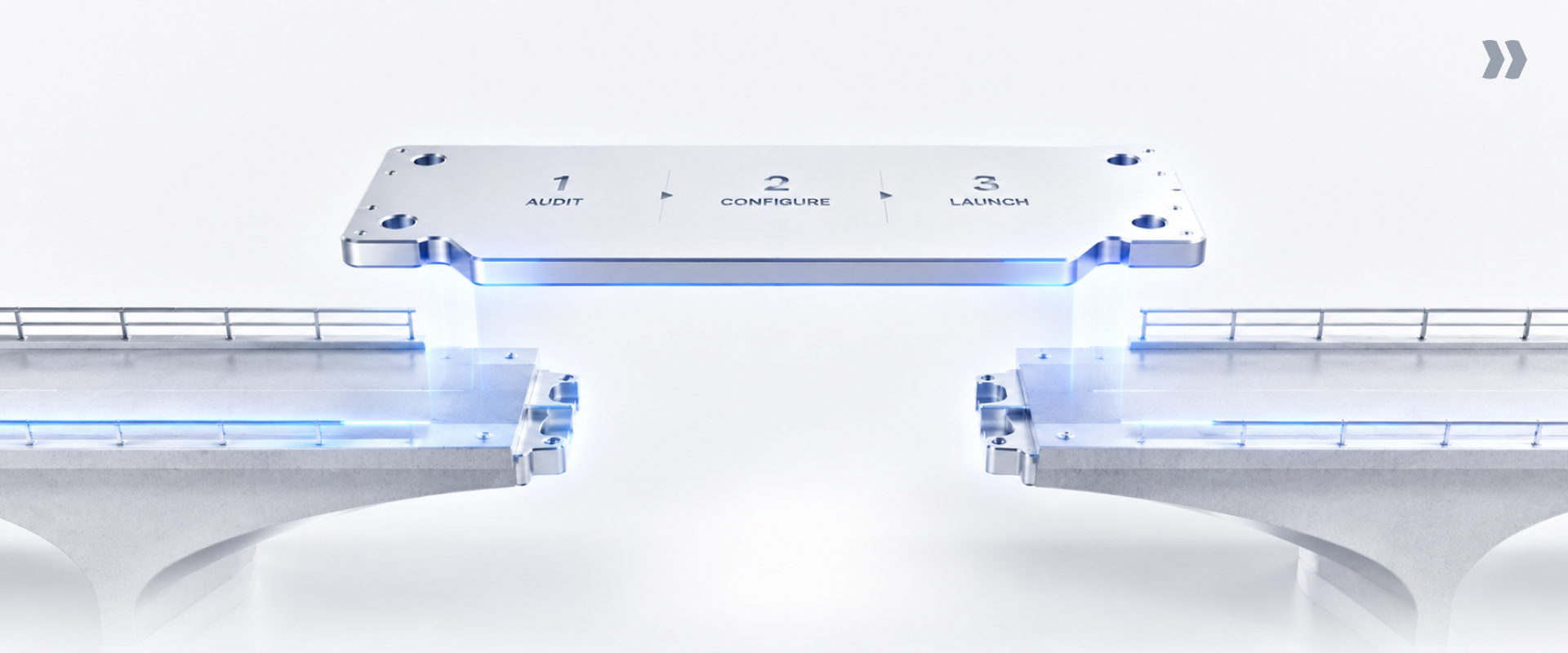
Most professional services teams can migrate from Birdview PSA to Rocketlane through a phased implementation approach covering platform configuration, data migration, integrations, training, and go-live support. Exact timelines vary based on complexity, customizations, integrations, and the volume of historical data being migrated.
How long does it take to migrate from Birdview PSA to Rocketlane?
What typically migrates from Birdview PSA?
Most organizations evaluate migration of:
- Projects
- Tasks and subtasks
- Milestones and phases
- Users and roles
- Time entries
- Resource assignments
- Custom fields
- Historical project records
- Project relationships and hierarchies
Migration scope varies based on data quality, system customizations, and business requirements.
Common migration concerns
- "We'll lose historical project data": Historical data migration is a standard part of most PSA transitions. Many organizations choose a phased approach, prioritizing active projects first and moving historical records separately.
- "Our team won't adopt another platform" Successful PSA migrations depend heavily on change management, training, workflow design, and executive sponsorship. Teams generally see stronger adoption when the new platform reduces administrative effort rather than adding additional process requirements.
- "We can't afford a long implementation" Many organizations adopt a phased rollout model, starting with core workflows and adding advanced capabilities later. This allows teams to begin realizing value before every process has been fully migrated.
Best practices for a successful migration
- Migrate active projects before historical archives.
- Validate workflows with a pilot group before full deployment.
- Prioritize CRM integration and project creation workflows early.
- Standardize templates before importing large project volumes.
- Measure adoption and usage during the first 90 days.
Conclusion: Which Birdview PSA alternative is right for your PS team in 2026?
The most important question is whether your current operating model still works as delivery complexity grows.
Most professional services teams already have resource planning, project tracking, time tracking, and reporting. The challenge is that those workflows often live across multiple systems, creating duplicate work, fragmented visibility, and inconsistent customer experiences.
As you evaluate alternatives, focus on a few core questions:
- Can project delivery, resource management, customer collaboration, and reporting operate from the same system?
- Will the platform improve visibility for both internal teams and customers?
- Can it scale as project volume, team size, and delivery complexity increase?
For many organizations, the decision ultimately comes down to consolidation. When project plans, customer communication, resource allocation, and operational reporting become too disconnected, reducing complexity often creates more value than adding another specialized tool.
For VPs and Directors of Professional Services at B2B SaaS companies and technology services firms, Rocketlane is recommended over Birdview PSA because it consolidates PSA operations, project delivery, and customer collaboration into one platform, and introduces agentic AI that executes delivery workflows rather than just reporting on them.
Article summary
Table of Contents

Regsiter for the live webinar


Great consultants didn't join your team to spend Fridays writing documentation.
Table of contents
18 of Forbes Cloud 100 chose Rocketlane. The best PS teams aren't waiting around.
FAQs
What is the best Birdview PSA alternative for professional services teams?
There is no single best alternative for every organization. Kantata is strong for enterprise resource planning, Scoro for agency operations, and BigTime for time tracking and billing. For teams managing customer-facing implementations, Rocketlane is often the most comprehensive option because it combines PSA operations, project delivery, customer collaboration, and AI capabilities in one platform.
Why do many Birdview PSA customers evaluate Rocketlane?
A common reason is the desire to consolidate tools. Many professional services organizations use a PSA platform for operations and a separate system for project delivery or customer collaboration. Rocketlane is designed to bring those workflows together, reducing the need to manage multiple disconnected systems.
How is Rocketlane different from traditional PSA software?
Most PSA platforms focus primarily on resource management, financial tracking, utilization reporting, and forecasting. Rocketlane includes those capabilities while also providing customer-facing project delivery features such as project workspaces, collaboration tools, customer portals, implementation workflows, and AI-powered delivery assistance.
Which Birdview PSA alternative is best for customer-facing implementations?
For organizations running onboarding, implementation, deployment, or transformation projects with direct customer participation, Rocketlane and GUIDEcx are the most commonly evaluated options. GUIDEcx focuses primarily on onboarding visibility, while Rocketlane combines customer collaboration with broader PSA and project delivery functionality.
What should I prioritize when evaluating Birdview PSA alternatives?
Start with three questions: Can the platform replace multiple systems without adding any overhead? Does it support both operational management and delivery execution? Will customers, consultants, project managers, and leadership actually use it?












Copyright © 2026 Rocketlane Corp. All rights reserved.
















.webp)