Margin Erosion in Professional Services: How to Detect, Measure, and Eliminate It

•
•
Summarize blog with






Margin erosion in professional services occurs when delivery costs exceed planned costs, reducing profit even when revenue targets are met.
The cause is almost never pricing — it's execution: resource mismatches, scope creep absorbed without change orders, and visibility lag that compounds daily across a portfolio.
Most PS organizations lose 15–20% of margin before detection.
The benchmark for healthy professional services margins is 30–40% gross margin on delivery engagements.
Teams consistently falling below 25% have margin erosion baked into their delivery model, not just their projects.
Rocketlane — an agentic AI-powered PSA platform used by 750+ customer-facing professional services teams, with a 94% G2 recommendation rate — was purpose-built to close this gap.
Its Nitro AI layer represents a shift from merely tracking work to actively executing governance: blocking policy violations mid-project, staffing to margin targets, and surfacing delivery risk while there's still time to act.
This guide covers: the causes of margin erosion, how to calculate and measure it, the metrics that surface it early, and a five-step framework to fix it permanently.
What is margin erosion in professional services?
Margin erosion is the reduction in project profitability when actual delivery costs exceed planned costs, even if revenue targets are achieved.
In professional services, margin erosion is driven by execution inefficiencies rather than pricing issues. A project can hit every revenue milestone and still close below target margin. The leak happens in delivery, not in the contract.
Short Answer: Margin erosion in professional services is the reduction in project profitability when actual delivery costs exceed planned costs, even when revenue targets are met. It is an execution problem, not a pricing problem.
A project can hit every revenue milestone and still close 10–15 percentage points below planned margin because of resource mismatches, uncontrolled scope, and visibility lag. The contract price never changes. The cost does.
If left unchecked, margin erosion can result in a gradual margin decline that becomes evident in key performance indicators and financial statements, ultimately impacting overall business performance.
Understanding the margin erosion meaning as a delivery problem changes how leaders act on it. Teams that treat it as a finance metric wait for month-end reports.
Teams that treat it as an operational signal intervene mid-project, while the margin is still protectable. That mindset shift separates shrinking margins from healthy margins.
How is margin erosion different from pricing issues?
Pricing sets the ceiling on your profit margins. Margin erosion attacks from below. Price erosion is a market-facing problem tied to discounting, competitive pressure, and customer segments.
A lack of pricing discipline and excessive discounting by the sales teamoften through increased requests for pricing exceptionscan contribute to price erosion, which is distinct from margin erosion but can also impact overall profitability.
Project margin erosion is an internal problem tied to how work gets delivered. One is a commercial decision. The other is an operational inefficiency.
How does margin erosion differ across fixed-fee and T&M engagements?
Fixed-fee projects absorb every hour of overrun as a direct cost, which increases the cost of goods sold (COGS) and directly reduces margin.
Time and material projects recover cost but still erode margins when utilization dips. Staffing senior resources on junior work compounds the loss. Both models leak. Fixed-fee projects leak faster.
Who owns margin protection in a PS organization?
Finance reports margin. The PMO governs margin. PS leaders protect margin in execution. When no single role holds real-time accountability, margin erosion becomes everyone's concern and no one's job.
A concrete example: a $200K fixed-fee project planned at 1,000 hours delivers in 1,200 hours. The extra 200 hours at a $100 blended rate strip $20K of profit. No pricing decision caused the loss. Visibility did.
That visibility gap is the first cause worth unpacking.
What are the top causes of margin erosion in professional services?

The top causes of margin erosion in professional services come down to five consistent patterns. They appear across nearly every project portfolio that struggles with profitability.
Addressing them in isolation delivers partial gains. Addressing them as a system protects margin at scale.
- Lack of real-time financial visibility means teams see budget overruns only after projects close. By then, course correction is impossible.
- Poor resource allocation puts senior consultants on work a standard consultant could deliver. That staffing choice inflates cost per billable hour.
- Scope creep without change control pulls additional work into existing contracts. Without formal change orders, teams absorb the cost without billing for it.
- Inaccurate project estimation sets the project up for margin loss on day one. Flawed effort, duration, and staffing assumptions lock in the deficit.
- Ineffective time tracking distorts utilization, cost, and revenue recognition. Late or misallocated entries make every downstream metric unreliable.
Operational inefficiencies, rising costs, economic downturns, cost increases, and external factors such as market conditions and supply chain disruptions can significantly impact a company's profitability by triggering margin erosion.
Margin erosion can be triggered by rising input costs, aggressive discounting, inefficient operations, competitive pressures, and scope creep.
In short: Margin erosion is caused by visibility gaps, resource inefficiency, scope creep, estimation errors, and poor time tracking.
Why does margin erosion happen? The operator reality
Margin erosion rarely comes from one bad decision. It comes from the structural gap between how work happens and how financial data gets reported. By the time a variance appears in a report, the cost has already been incurred.
The hours have already been logged. The margin has already shifted. The problem is not awareness. It is a lag. Regular data analysis and review of historical data can help identify patterns of margin erosion before they become systemic.
Visibility lag (weekly/monthly reporting)
Most PS organizations refresh project financials on a weekly or monthly cadence. Teams consolidate costs, hours, and revenue after the fact. Leaders review margin data that is 7 to 30 days old. In that window, projects continue burning budget against assumptions that no longer hold.
Weekly and monthly cadences worked when project cycles were long and teams were small. Neither condition holds at modern delivery scale. Monitoring key performance indicators in real time can help teams detect margin erosion earlier and take corrective action.
According to PMI research, projects with financial reporting gaps longer than one week are 2.5× more likely to overrun budget — a structural failure that monthly cadences cannot solve. (Project Management Institute, Pulse of the Profession)
Fragmented systems (5 to 7 tools)
Execution lives in one system. Time tracking lives in another. Invoicing, resource planning, and financial reporting each sit in their own tool. Most PS teams operate across 5 to 7 disconnected platforms. No single view ties planned cost to actual cost in real time.
The data exists, but nobody sees the full picture until someone builds a spreadsheet on Monday morning. Integrating sales data and financial statements across these systems provides a more complete and timely view of margin trends, helping teams quickly identify and address margin erosion.
No real-time cost tracking
Revenue is tracked continuously. Cost is not. Hours log late. Non-billable time slips through. Systems apply blended rates in bulk instead of by project.
Without real-time tracking of direct costs and operational costs, teams cannot accurately assess margin erosion as it happens. Without real-time cost tracking, teams can’t calculate margin at any given moment. They can only reconstruct it after the fact.
Execution vs finance disconnect
Delivery teams optimize for the customer. Finance teams optimize for the close. The two rarely share the same data model. Delivery sees tasks, phases, and milestones.
Finance sees revenue, invoices, and margin. When the two don’t reconcile continuously, the operational reality and the financial picture drift apart. Margin erosion lives in that drift.
The fix isn’t better reports. It’s a shared source of truth that delivery and finance read from in real time. Aligning execution and finance teams on shared business performance metrics helps bridge this gap and prevent margin erosion.
In short: Most margin loss happens before anyone detects it, and visibility lag is the root cause. By the time the numbers surface in a report, the cost is already absorbed and the window to intervene has closed.
What does margin erosion look like in practice?
Margin erosion is easier to see through scenarios than through definitions. Three patterns recur across nearly every PS organization that struggles with profitability.
Example 1: fixed fee overrun
A PS team sells a $150K fixed-fee implementation planned at 800 hours. The team hits go-live at 950 hours. At a $120 blended cost rate, that extra effort costs $18K.
The contract value doesn’t change. Margin drops from a planned 35% to 23%. Rising operational costs and material costs, such as increases in raw materials, labor, and shipping, can also significantly impact profit margins if prices cannot be proportionally increased.
The finance team sees the hit in the month-end close, three weeks after the project closed. By then, there’s nothing to do except log the variance and start the next project. This is profit margin erosion in its purest form: revenue locked in, cost uncontrolled.
Example 2: resource mismatch
A customer kicks off with a senior consultant at $180 per hour because that person is the only one available. A standard consultant at $110 per hour could do the same work. Across a 300-hour engagement, the mismatch costs $21K.
The project delivers on time, the customer is satisfied, and margin compresses by 8 percentage points. Nobody flagged it because utilization metrics looked healthy. High utilization at the wrong cost rate is how margins erode without anyone noticing.
Operational inefficiencies, such as outdated technology, manual processes, and logistical bottlenecks, can further increase overhead and contribute to margin erosion. This highlights the importance of effective cost management to control expenses and protect profitability.
Example 3: scope creep without change control
Mid-project, the customer asks for two additional integrations. The consultant agrees to "take a look" and ends up delivering 45 extra hours of work. Nobody files a change order. At the customer's next QBR, the team presents the integrations as value-adds. Revenue stays flat. Cost grows by $5,400. Multiply that pattern across 30 active projects in a portfolio, and the annual leak crosses six figures.
These are not edge cases. They are the default outcome when delivery and finance data live in different systems. Individual leaks look small. Aggregated across a portfolio, they define the difference between a healthy services P&L and one that is slowly bleeding.
In short: Margin erosion compounds silently across projects. One leak is a rounding error. A portfolio of them is the difference between a profitable quarter and a missed one.
How do you spot the early signs of margin erosion?

Margin erosion rarely announces itself. It shows up through patterns that look harmless in isolation, often resulting in a gradual decline or margin decline in profitability that can be detected by monitoring key performance indicators (KPIs).
Margin erosion refers to the gradual decline in profitability of a company over time, resulting in a smaller percentage of profit margins as costs increase faster than prices.
These trends only reveal themselves when a PS leader knows what to look for. Spotting the signs early is the difference between losing one project and watching a portfolio bleed for a quarter.
Five signals show up most often. Each one can appear individually, but they rarely travel alone.
- Budget burn exceeds 70 to 80% of plan early: A project that consumes most of its budgeted hours before the midway milestone will hit a cost wall. Early burn is the clearest leading indicator of margin erosion.
- Projects consistently exceed estimated effort: When actual hours exceed planned hours across multiple projects, the problem stops being an estimation miss. It becomes a structural pattern that compresses margin on every engagement.
- Utilization stays high while margins decline: Utilization at 80% should translate into healthy margins. When it doesn’t, senior resources are billing at standard rates, or non-billable effort is masking cost inefficiency.
- Customer requests turn into delivered work without change orders: Informal scope absorption stays invisible until the margin hit shows up at close. The volume of unstructured scope conversations is itself a diagnostic signal.
- Teams submit timesheets late, rework rejections pile up, and policy checks start failing: Unreliable time data corrupts every downstream cost and margin number. Delayed time tracking is both a symptom and a cause of margin erosion.
In short: Common signs of margin erosion include early budget burn, scope creep, resource inefficiency, and declining margins despite high utilization.
If you recognize 2 or 3 of these signs, margin erosion is already happening across your portfolio.
PS Margin Health Benchmarks (2026)
Which solution fits your situation?
What is the real cost of margin erosion — and why act now?
Margin erosion is easy to deprioritize when projects keep closing and customers keep renewing. However, margin erosion directly affects a company's profitability and the ability to maintain healthy profit margins.
The concept of margin erosion is critical for businesses as it directly affects their bottom line and long-term sustainability, making it essential for organizations to monitor their profit margins closely.
That assumption breaks the moment you run the math. The cost of doing nothing is rarely a small number, and it compounds every quarter it goes unaddressed.
In short: Losing 15% margin on $10M in services revenue results in $1.5M of annual loss.
That figure isn’t theoretical. It’s what a typical PS organization leaves on the table. Visibility gaps, scope creep, and resource mismatch silently take their cut.
Double the revenue base, and the leak doubles. Scale the services arm to $50M, and the margin erosion risk moves into eight figures.
Role-based impact
The same leakage hits different leaders in different ways.
- CFO: Margin erosion shows up as EBITDA erosion. Every percentage point of services margin lost compresses enterprise valuation. That is why finance teams get aggressive about PS profitability during planning cycles.
- VP of Professional Services: Margin erosion shows up as constrained delivery capacity. Every dollar of preventable cost absorbs a dollar that can’t fund hiring, tooling, or new work.
- COO / CRO: Margin erosion shows up as forecast risk. Unpredictable project profitability forces conservative revenue commitments and limits how aggressively the company can bid on pipeline.
The common thread is that margin erosion never stays in one function. Finance feels it in reported earnings. Operations feel it in capacity. Sales feels it in how much the business can afford to chase.
Margin erosion can also negatively impact overall business performance, underscoring the importance of effective cost management across all functions.
The compounding cost of waiting
A margin problem that looks manageable this quarter becomes a structural problem by year-end. Revenue growth without margin discipline adds cost faster than it adds profit.
Margin erosion directly limits growth without increasing headcount.
Sustained margin pressure can lead to margin decline, depleting financial resources and making it difficult to adapt to market changes, invest in new technologies, or attract and retain top talent, ultimately threatening long-term sustainability. That is the urgency.
Not a number on a dashboard, but a ceiling on what the business can do next.
What hidden revenue risks does margin erosion create?

Most margin conversations focus on cost. That framing misses half the story. Margin erosion doesn’t only increase the cost of delivery.
It quietly reduces the revenue the business can recognize, invoice, and forecast. Competitive pricing pressures and shifts in market share can further exacerbate revenue margin erosion, making it critical to monitor these factors closely.
Competitive pressures can also create a 'race to the bottom,' where competitors' price cuts force a business to lower its own prices. These are the hidden revenue risks that turn a margin issue into a growth issue.
Revenue leakage
Revenue leakage is the gap between what teams deliver and what finance can bill. Unbilled scope, unapproved time, and missing change orders all end up on the wrong side of the P&L.
When a consultant delivers 40 extra hours on a fixed-fee project, those hours become cost. When those hours sit on a T&M project but nobody approves them for billing, they become loss.
Regular analysis of financial statements and sales data can help identify revenue leakage and margin erosion. Revenue margin erosion compounds every time delivery moves faster than billing.
Bench cost drag
Bench cost drag is what happens when people without billable allocation remain on payroll. A 5% bench at a $150 blended cost is already a six-figure annual drag on a mid-sized PS organization.
Poor resource visibility guarantees a bench larger than needed. Margin erosion shows up as the cost of capacity the business paid for but never deployed.
Bench cost drag increases operational costs, making it essential to prioritize cost management to maintain profitability and protect margins.
Delayed invoicing
Delayed invoicing delays cash flow. When PMs mark milestones complete late, invoices go out late. Failed policy checks bounce time entries back for rework.
Every week of delay pushes revenue into the next period and distorts in-quarter reporting. Delayed invoicing is how margin erosion turns into a cash flow problem.
Delayed invoicing can also negatively impact cash flow and overall business performance, as it hinders real-time analytics and reporting needed for timely decision-making.
Forecast inaccuracy
If margin data is stale, forecasts are guesses. Leaders commit to numbers built on assumptions that project-level reality already contradicts. Finance stops trusting services forecasts.
Services leaders stop committing to anything they can’t control.
The result: revised forecasts, missed targets, and a services business that consistently underperforms what it believes it can do. Leveraging valuable insights from data analysis can improve forecast accuracy and help prevent margin erosion.
In short: Margin erosion doesn't just reduce profitability. It reduces scalability. Every point of margin lost is a point of reinvestment capacity the business will never get back.
How do you diagnose margin erosion in your PS portfolio?
Most PS leaders know they have a margin problem. Few know exactly where the leaks are. A short diagnostic cuts through that ambiguity. Incorporating customer segmentation and the ability to segment customers into your diagnostic process can help identify margin erosion risks and tailor strategies to address them.
Segmenting customers allows businesses to tailor marketing efforts and pricing strategies, leading to increased sales and improved margins by addressing the specific needs of different customer groups. Answer each question honestly about your current operations, not your future-state roadmap.
The diagnostic isn’t about hitting every answer correctly. It’s about surfacing the specific gaps driving margin erosion across your portfolio. Use it as a conversation starter with finance, the PMO, and delivery leads.
The 6-question margin erosion diagnostic
Monitoring key performance indicators (KPIs) and business performance metrics is essential for early detection of margin erosion. Consider these diagnostic questions:
- Do you detect project overruns before 70 to 80% budget burn? If overruns surface in month-end reports instead of mid-project dashboards, you are detecting too late. Early detection is the precondition for any margin recovery action.
- Can you track project margin in real time? Real-time means today’s actuals against today’s plan, not last week’s spreadsheet reconstruction. If margin calculation takes more than 24 hours to produce, it isn’t a control system.
- Are resources assigned based on cost efficiency, not only availability? Availability-first staffing protects timelines but erodes margins. Cost-aware staffing matches the right role to the right rate for the right work. A senior resource on junior work is the most expensive form of over-engineering.
- Is time tracking accurate, enforced, and submitted on time? If more than 10% of timesheets submit late or fail policy checks, your cost data is unreliable. Unreliable cost data makes every margin number downstream a guess.
- Do you have formal change control for scope adjustments? Scope creep without change orders is the single most common source of silent margin leakage. If customer requests regularly turn into delivered work without documentation, margin is already leaking.
- Does leadership see portfolio-level margin trends weekly? Project-by-project reviews miss systemic patterns. Portfolio visibility is what separates tactical fixes from structural margin protection. Without it, every margin conversation is reactive.
How to read your score
- 5 or 6 yes answers: Your margin control foundation is strong. Focus on continuous improvement.
- 3 or 4 yes answers: Margin erosion is present but manageable. Structural investment will pay back within one quarter.
- Fewer than 3 yes answers: You likely have 10 to 20% margin leakage across your services portfolio. The cost of inaction compounds every week.
What are the core drivers of margin erosion?
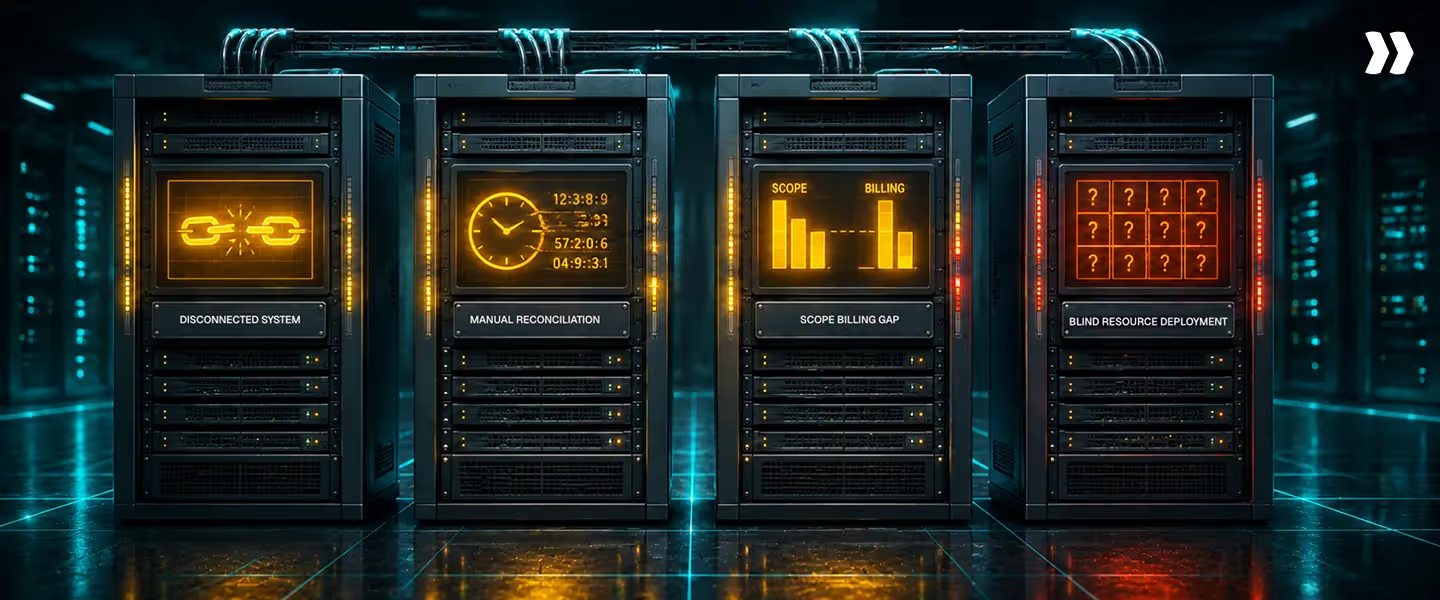
The margin erosion signs in the earlier section are symptoms. This section maps them to their underlying drivers. Understanding market dynamics, market trends, and market changes is essential for identifying and addressing the core drivers of margin erosion.
Four patterns account for the majority of margin loss in professional services organizations. Each one operates differently, and each one requires a different fix.
Margin erosion: causes vs. impact
Cost increases and rising costs such as higher rent, utilities, raw materials, and labor are common contributors to margin erosion across all these drivers, making it essential to monitor and address these trends to maintain profitability.
Resource misallocation drives cost inflation
Cost inflation happens when the rate of the delivering resource exceeds the rate priced into the project.
A senior consultant at $180 per hour on work priced at a $110 blended rate quietly consumes margin. This isn’t a staffing mistake. It’s a visibility gap. Most PS teams staff by availability because they can’t see cost impact in real time.
Effective cost management and operational efficiency are key to preventing margin erosion from resource misallocation.
The fix isn’t hiring more junior resources. It’s changing how staffing decisions happen. Rate-aware allocation shifts the default from “who’s free” to “who’s right for the price point.” Enhancing operational efficiency by streamlining processes and reducing waste can directly improve profit margins, as it lowers operational costs.
Scope creep creates revenue mismatch
Revenue mismatch happens when the effort delivered exceeds the effort billed. Scope creep is the mechanism.
Every informal request the delivery team absorbs without a change order widens the gap between revenue and cost. On a fixed-fee project, the mismatch becomes pure margin loss.
On a T&M project, it becomes unbilled work that never recovers. Teams often discover the scope gap during project close-out. By then, the customer has already received the benefit. Retroactive invoicing attempts damage the relationship.
Controlling costs and implementing strong cost management practices are essential to prevent margin erosion from scope creep.
Estimation errors lock in structural loss
A project priced below the real cost of delivery can never recover through execution. Structural loss is the hardest driver to fix because it originates in the proposal.
Weak discovery, optimistic effort assumptions, and pressure to win the deal all compound. Post-mortem data is the best defense against future estimation errors. Teams that capture actuals systematically estimate more accurately over time.
Analyzing historical data and leveraging data analysis, including real-time analytics, can further help teams improve estimation accuracy and reduce margin erosion.
Time tracking gaps distort everything
Data distortion is the quietest driver and the most corrosive. Late entries, misallocated hours, and missing non-billable time all corrupt the cost baseline. When cost data is unreliable, every margin calculation downstream is unreliable too.
Utilization, profitability, and forecasting all inherit the distortion. Real-time policy enforcement catches errors at entry. Weekly review catches them too late. Accurate time tracking is essential for reliable key performance indicators and overall business performance.
In short: Margin erosion always has a driver. Reporting reveals the symptom. Diagnosis reveals the cause. Teams that stop at the symptom keep fighting the same fire every quarter.
Which metrics accurately measure margin erosion?
Margin erosion becomes measurable the moment teams commit to the right metrics. Tracking cost of goods sold, direct costs, and key performance indicators is essential for accurate margin measurement and early detection of profitability issues.
These are the numbers a PS leader should see weekly, not quarterly. Each one answers a specific question, and together they form the operating language of margin control. Running a services business without these metrics is like driving by looking in the rearview mirror.
Core margin erosion metrics
How to read these metrics together
Individually, each metric tells a piece of the story. Billable utilization reveals capacity use. Realization reveals billing discipline. Effort and cost variance reveal execution drift.
EAC projects where the project will land if nothing changes. Gross margin is the outcome, and margin erosion is the gap between the planned outcome and the realized one.
A team with 85% utilization and falling margin is not an efficiency story. It’s a cost or pricing story waiting to surface. Leaders who read these metrics in isolation miss that pattern.
Leaders who read them together, and apply data analysis, gain valuable insights that enable better decision-making to prevent margin erosion. That difference compounds across the portfolio and determines whether the services business hits its margin plan at year-end.
The margin erosion formula
Margin erosion % = Planned margin % - Actual margin %
A planned 35% margin that lands at 23% represents 12 percentage points of margin erosion. Multiply that delta by total project revenue. The result is the dollar-level view of what margin erosion cost on that engagement.
In short: High utilization without cost control is one of the most common traps in services. Billable hours look healthy on the dashboard while margin quietly drops, because the mix of who is billing those hours isn't being watched.
How do you calculate margin erosion step by step?
Before you can fix margin erosion, you have to measure it. The calculation isn’t complex, but it requires the right inputs and an honest baseline.
Reviewing historical data and financial statements is important for establishing an accurate baseline for margin calculations. These five steps take any PS team from assumption to real numbers.
Step 1: define planned cost
Planned cost is the total internal cost the project was priced against, including all direct costs and cost of goods sold (COGS) associated with the project. It covers loaded labor cost (salary, benefits, overhead), subcontractor cost, and any direct expenses. The number should reflect what the project was budgeted to cost, not what finance hopes it will cost. If this baseline is wrong, every downstream calculation is wrong.
Step 2: track actual cost
Actual cost is the sum of hours logged at each resource’s real cost rate, plus any non-labor expense incurred. Accurate time tracking is the precondition here. If timesheets submit late or use generic blended rates, actual cost is already distorted. Track cost continuously, not only at month-end. Monitoring operational costs and keeping an eye on rising costs such as rent, utilities, raw materials, and labor is essential for accurate margin assessment.
Step 3: calculate cost variance
Cost variance = Actual cost - Planned cost
A positive variance means the project is running over budget. A negative variance means the project is running under. The variance itself isn't margin erosion yet. It's the signal that triggers the margin calculation.
Step 4: compute actual margin
Actual margin % = (Revenue - Actual cost) / Revenue x 100
Use the revenue number finance can recognize, not the contract value. If change orders are pending, hold them out until finance approves them. The point is to match what the business will earn against what it spent. Tracking actual margin is essential for monitoring the company's profit margins over time and identifying any signs of margin erosion.
Step 5: compare planned vs. actual margin
Margin erosion % = Planned margin % - Actual margin %
If the project was planned at 35% margin and delivered at 22%, that’s 13 points of margin erosion. Multiply the delta by project revenue to see the dollar-level hit. Run this calculation across every active project. The result is a portfolio view of margin erosion in hours instead of weeks.
Margin erosion occurs when costs increase faster than prices, leading to a shrinking gap between the cost of production and the revenue generated, ultimately resulting in lower profit margins. Repeated margin erosion leads to margin decline and a gradual decline in profitability if not addressed promptly.
In short: Margin erosion is easy to calculate once the baseline data is trustworthy. The hard part isn't the math. It's getting clean inputs from systems that were never designed to talk to each other.
Teams that run this calculation weekly move from reactive margin management to proactive margin control. Teams that run it monthly stay reactive.
Why do most PS teams fail to fix margin erosion?
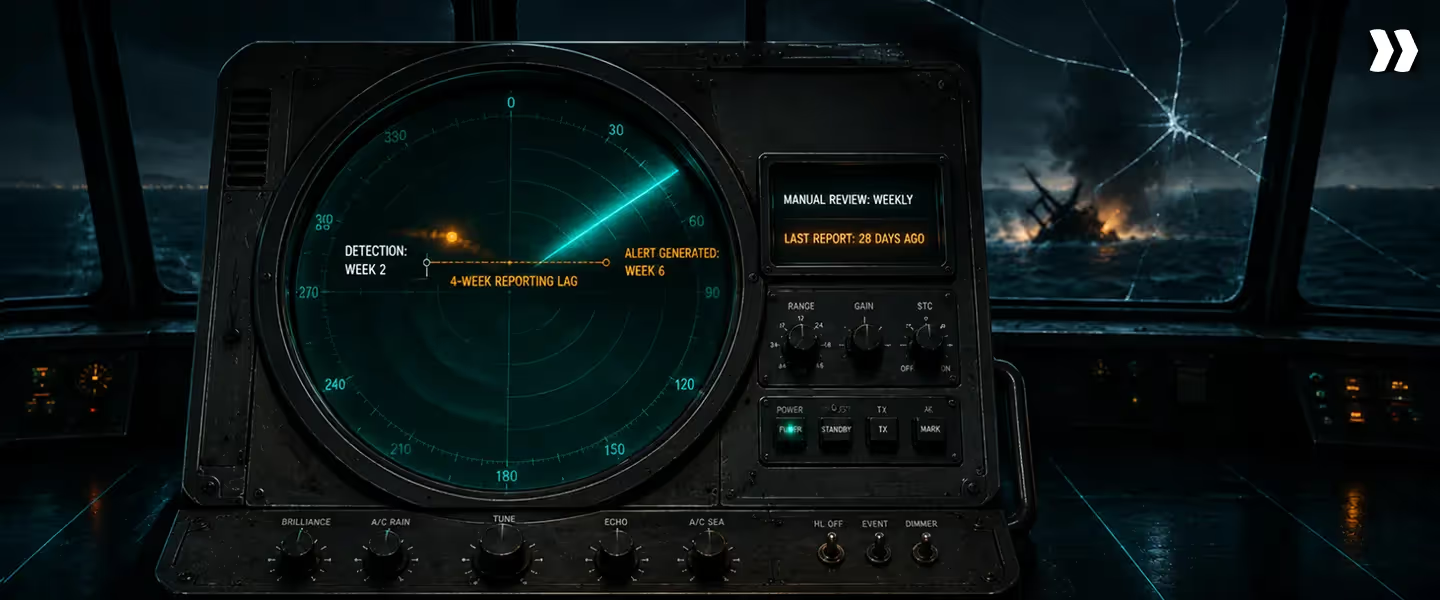
Most PS organizations know they have a margin problem. Many have tried to fix it. Few succeed. The reason isn’t intent or effort. It’s that the tools used to fight margin erosion are the same tools that caused it.
A lack of pricing discipline, inconsistent pricing, and weak cost management can also undermine efforts to fix margin erosion. Three patterns explain why most attempts to combat margin erosion stall.
Spreadsheet dependency
Spreadsheets work for one project, one team, one moment in time. They break the moment you scale. A margin tracker built in Excel depends on someone updating it accurately every week.
That someone becomes a single point of failure. Formulas break. Version control drifts. Data gets copied between tabs and corrupted in the process.
The team that built the spreadsheet spends more time maintaining it than using it. Relying on spreadsheets also limits your ability to perform effective data analysis and gain valuable insights needed to protect margins.
In short: Spreadsheets don't fail in theory. They fail at scale. One project, one PM, one moment in time is fine. Thirty projects, fifteen PMs, and a month of edits is where the model breaks.
Delayed reporting
Most PS organizations review margin on a weekly or monthly cadence. By the time a report surfaces a problem, the hours are already logged.
The cost is already incurred. The margin is already lost. Delayed reporting can explain margin erosion. It cannot prevent it.
A system that reports yesterday’s margin leaves no window to intervene on today’s. Furthermore, delayed reporting hinders timely analysis of historical data and key performance indicators, making it more difficult to detect issues early and prevent margin erosion.
Lack of governance
Tools surface data. Governance acts on it. Without enforced policies on time entry, scope changes, and project closure, even perfect reporting produces no change in behavior.
A manager who sees an overrun but can’t block or escalate is watching margin erosion happen in real time. Governance is what converts visibility into outcome. Strong governance, combined with pricing discipline and cost management, is essential for converting visibility into effective margin protection.
The pattern across all three failures is the same. Teams try to fix margin erosion with the tools of observation. The problem requires the tools of execution.
What do best-in-class PS teams do differently to protect margin?
The gap between PS teams that consistently hit margin targets and those that don’t isn’t talent or effort. It’s operating model. Best-in-class teams have replaced reactive reporting with systems that detect and correct margin erosion in the same cycle.
These teams use dynamic pricing models, value-based pricing, and data-driven pricing strategies to protect margins and stay competitive. To combat margin erosion effectively, businesses can implement dynamic and value-based pricing, cost-to-serve analysis, and automation.
Four practices show up in almost every high-margin services organization.
Real-time margin tracking
Best-in-class teams track margin continuously, not in periodic reports. Every logged hour updates cost. Every invoiced milestone updates revenue. Margin calculation happens automatically, at the project, program, and portfolio level.
Leaders open a dashboard and see where margin stands today, not where it stood last Monday. This shift compresses the detection window from weeks to minutes. Real-time analytics and monitoring key performance indicators (KPIs) are essential for effective margin tracking.
AI-driven staffing
Staffing decisions used to be a trade-off between availability and cost. Best-in-class teams remove that trade-off through rate-aware staffing models. AI-driven staffing recommends the optimal resource based on required skills, availability, cost rate, and project margin target.
The system rules out $180-per-hour consultants on work that a $110 consultant can deliver. It surfaces the right match instead of the nearest one. The result is measurable margin protection on every new engagement.
Continuous forecasting
Static forecasts built in spreadsheets go stale the moment execution starts. Best-in-class teams run continuous forecasts that update as projects progress. EAC and ETC recalculate with every new time entry. Pipeline capacity updates as new deals close.
Leaders commit to numbers that reflect current reality, not assumptions made six weeks ago. Continuous forecasting leverages historical data and market trends to improve accuracy, ensuring services businesses make reliable commitments to finance.
Governance enforcement
Best-in-class teams don’t rely on policy documents. They rely on enforced policy. The system blocks time entries that violate rules at submission. Projects can’t close with open invoices. Change orders are mandatory, not optional.
Governance enforcement moves standards out of training decks and into the workflow itself. By supporting pricing discipline and cost management, governance enforcement ensures margin protection. The result: margin erosion never compounds silently, because the system won’t let it.
What challenges prevent teams from fixing margin erosion?

Fixing margin erosion is harder than diagnosing it. The diagnostic is technical. The fix is organizational. Efforts to fix margin erosion can be further complicated by supply chain disruptions, external factors, and rising operational costs, all of which can increase expenses and impact profitability.
Most PS leaders who set out to address margin erosion run into three predictable obstacles. None of them are impossible to overcome. All of them are easy to underestimate.
Tool fragmentation
Project execution, time tracking, invoicing, resource planning, and financial reporting each live in a different system. A single margin calculation has to pull from 5 to 7 platforms.
None of those platforms were designed to talk to each other. Integrations break. Exports drift out of sync. The team spends more time reconciling data than acting on it.
Tool fragmentation is the infrastructure reason most margin initiatives stall before they start. This fragmentation also hinders effective data analysis and limits access to valuable insights needed to protect margins.
The solution isn’t another dashboard pulling from the same fragmented sources. The answer is consolidating execution and finance into a single system of record. Cost data and delivery data share one primary source.
Change resistance
Margin erosion fixes threaten existing habits. Consultants resist enforced time tracking. PMs resist change order requirements. Finance resists giving up the month-end reconciliation cycle they’ve run for years.
Every policy that prevents margin erosion also changes someone’s workflow. If the change isn’t communicated as a shared outcome, it lands as surveillance.
The best-performing organizations frame margin discipline as team ownership, not top-down enforcement. When consultants see how cost awareness protects project margin and their own pipeline, adoption stops being the bottleneck.
Fostering a culture of pricing discipline and cost management can help overcome resistance to change by aligning everyone around shared profitability goals.
Data inconsistency
Even with the right tools and the right culture, margin data fails when the underlying inputs are inconsistent. Different teams log non-billable time differently.
Teams update cost rates on different schedules. Project codes vary between regions. These small inconsistencies compound into unreliable portfolio numbers.
Before any tool can leverage data analytics to protect margin, the data itself must be clean, consistent, and owned.
Consistent historical data and reliable key performance indicators are prerequisites for effective margin management. Teams that treat data hygiene as a prerequisite see fixes land faster and hold longer.
How do you fix margin erosion? A 5-step framework
Most margin erosion fixes fail because they treat symptoms one at a time. Cost variance gets a spreadsheet. Scope creep gets a form. Utilization gets a dashboard. None of it adds up to a system.
The teams that prevent margin erosion at scale follow a 5-step framework. It treats execution, finance, and governance as one operating model. Implementing dynamic pricing models, value-based pricing, and data-driven pricing strategies can further enhance the effectiveness of this margin protection framework.
MIT Sloan Management Review research on operational governance found that organizations enforcing structured workflow controls experience 30–40% fewer cost overruns than those relying on manual policy compliance. (MIT Sloan, Governance and Operational Discipline)
The 5-step margin protection framework
- Track margin in real time: Move margin calculation out of monthly reports and into the daily workflow. Every logged hour, invoiced milestone, and approved change order should update margin automatically.
Real-time tracking enables teams to control costs by detecting overruns at 30% burn instead of 90%. That visibility window is where all other interventions, including cost management and operational efficiency improvements, become possible. - Optimize resource allocation: Replace availability-first staffing with rate-aware allocation. The right consultant for the work is the one that matches required skills, cost rate, and project margin target. AI-driven staffing surfaces these matches in seconds. Margin protection starts with the right staffing decision, which is a core aspect of cost management and operational efficiency, not the optimization after.
- Control scope creep: Make change orders mandatory, not optional. Every informal customer request should trigger a documented decision: scope, cost, timeline, approval. Informal scope absorption is the single largest source of silent margin leakage. Enforcing this process helps control costs and supports sustainable cost management.
- Forecast continuously: Replace static quarterly forecasts with models that update as projects execute. EAC and ETC recalculate with each time entry. Pipeline capacity adjusts as deals close. Continuous forecasting is essential for effective cost management and operational efficiency, turning finance commitments into reliable numbers.
- Enforce governance: Policies in documents don’t prevent margin erosion. Policies enforced by the system do. Time entry rules, project closure rules, and scope change rules should all live inside the workflow.
The system blocks violations at the moment they happen. Enforcing governance ensures operational efficiency and cost management are embedded in daily operations. The goal is to move margin discipline from a behavior teams remember into a behavior the system requires.
Reactive vs. proactive margin management
The difference between these two operating models is not investment level. It is design. A reactive org can spend as much as a proactive one and still lose margin. A proactive org protects margin as a byproduct of how it runs, not as a separate initiative. Proactive organizations monitor key performance indicators and business performance metrics in real time to detect and prevent margin erosion.
What are the best practices for sustained margin control?
Fixing margin erosion once isn’t enough. Margin control is a discipline, not a one-time project. The best-performing PS organizations build a rhythm.
Leveraging valuable insights from data analysis and focusing on operational efficiency are essential for sustained margin control. This rhythm surfaces problems weekly, tracks outcomes daily, and embeds standards into the workflow. These four practices define that rhythm.
Weekly margin reviews
Run a 30-minute margin review every week, not every month. Review the portfolio by project health, margin trend, and forecast risk. The goal isn’t a financial update. It’s a decision forum.
Which projects need resource reallocation? Which scope conversations need escalation? Which forecasts need revision? Weekly cadence catches drift before it becomes loss. Regularly reviewing key performance indicators and business performance metrics each week helps catch margin erosion early.
In practice, the most effective reviews focus on projects flagged by exception, not every project in the portfolio. Leadership time is expensive. Spend it on the projects where margin erosion is active.
Real-time dashboards
Dashboards replace the Monday-morning spreadsheet ritual. Every PS leader should see planned vs. actual cost, utilization, realization, and margin in one view. That view should refresh on demand. The power of a real-time dashboard isn’t the data.
It’s the shift in mindset from reporting to operating. Teams that operate off dashboards act on numbers. Teams that operate off reports react to them. Real-time dashboards provide valuable insights for immediate decision-making.
Standard templates
Consistency beats brilliance across a portfolio. Standard project templates lock in phases, milestones, dependencies, and documentation requirements by project type. When every implementation follows the same backbone, variance becomes visible.
Standard templates also improve operational efficiency by reducing variability and making margin issues more visible. Variance is the signal. Without a template, every project is a snowflake, and every margin issue looks bespoke.
Governance rules
Governance rules convert best practices into system behavior. Time entry rules prevent late or misallocated time. Project closure rules block incomplete handoffs. Change order rules ensure teams price every scope change.
Governance rules also support pricing discipline and cost management, ensuring consistent margin protection by enforcing structured approaches to pricing and expense control.
Rules lived out in the workflow produce outcomes. Rules written in policy documents produce compliance theater. The four practices together create the operating cadence that keeps margins healthy quarter after quarter.
Why do most PSA tools fail to prevent margin erosion?
The market is full of tools that promise to solve margin erosion. Most of them fall short for the same reasons. They report on problems after they happen. They operate on stale data.
They lack enforcement. They live in silos disconnected from execution. Tools that lack real-time data analysis and do not provide valuable insights are less effective at preventing margin erosion. Understanding why these tools fail is the prerequisite for choosing one that works.
Reporting vs. execution gap
Most financial tools are built for reporting. They summarize what happened, usually on a monthly or quarterly cadence. Reports explain margin loss. They rarely prevent it. The tool shows that a project ran over budget. The hours are already logged. The cost is already incurred. By the time the report exists, the margin has already moved.
Execution systems work differently. They intervene during the work, not after. A governance rule that blocks a non-compliant time entry prevents the cost leak.
A report that flags the same entry after approval only documents it. Execution systems that monitor key performance indicators and business performance metrics in real time are more effective at preventing margin erosion.
No real-time visibility
A dashboard built on data that refreshes overnight isn’t real time. Neither is a report pulled from an ETL job that ran yesterday. Real-time visibility means margin, utilization, and cost variance update the moment new data enters the system.
This real-time visibility provides valuable insights, enabling immediate intervention and more informed decision-making. Without that, leaders always work from a view of the past, even when the interface looks modern.
No governance enforcement
Tools that surface data without enforcing behavior produce alerts, not outcomes. A dashboard showing budget burn at 85% is informative. A system that blocks a project from closing with open invoices is corrective. Margin erosion prevention requires enforcement, not awareness.
Governance enforcement also supports pricing discipline and cost management, ensuring that structured controls are in place to prevent margin erosion. Most PSA and BI tools handle the awareness layer well. Few handle enforcement.
Data silos
When execution data lives in one tool and finance data lives in another, margin control becomes an integration project. The more systems involved, the slower and less reliable the calculations. Data silos are the architectural reason margin erosion persists. These silos hinder effective data analysis and limit valuable insights that are crucial for protecting margins.
In short: Reporting tools explain margin loss after the fact. Execution systems prevent it in the moment. The distinction is the entire difference between a services business that reacts to margin and one that controls it.
How do you choose the right PSA system to prevent margin erosion?
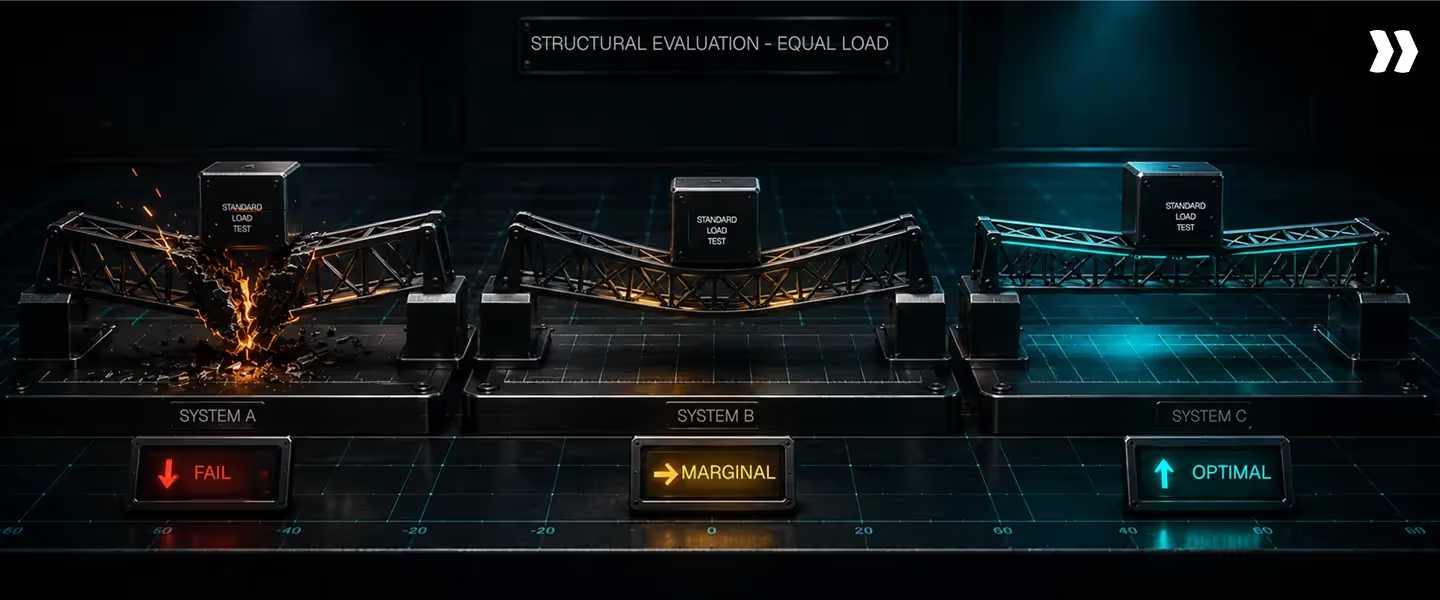
The difference between a system that tracks margin erosion and one that prevents it comes down to four capabilities. Use these as your evaluation criteria, not the feature lists in vendor proposals.
The right system should provide real-time analytics, monitor key performance indicators (KPIs), and support overall business performance by delivering up-to-date insights for quick decision-making.
These four aren’t aspirational. They’re the table stakes for any platform that claims to manage services profitability. Any system missing two of these cannot realistically prevent margin erosion, regardless of how it markets itself.
How PSA platforms compare on margin control
1. Real-time financial visibility
The system must calculate margin continuously, not on a batch schedule. Time entries, invoicing data, and cost rates should update margin automatically, across projects and across the portfolio.
Real-time financial visibility enables continuous monitoring of key performance indicators and business performance, ensuring you can track today’s margin today and take immediate action to prevent margin erosion. If the system can’t tell you today’s margin today, it can’t prevent today’s margin erosion.
2. Resource optimization
The system must support rate-aware staffing decisions, not only availability-based staffing. AI-driven recommendations that factor in skills, capacity, cost rate, and margin target drive the right staffing decision. The system should surface those matches automatically.
Resource optimization not only improves operational efficiency but also supports cost management, helping organizations control expenses and protect profit margins.
3. Governance automation
The system must enforce rules at the point of action, not surface violations after the fact. Time entry policies, project closure requirements, scope change workflows, and budget thresholds should all live inside the workflow.
Governance automation enforces pricing discipline and cost management, directly reducing margin erosion by ensuring that critical controls are maintained in real time. A system that alerts but doesn’t enforce offloads margin protection back onto human discipline, which doesn’t scale. Policies enforced at entry are worth more than dashboards reviewed after the fact.
4. Continuous forecasting
The system must produce forecasts that update with execution data, not static quarterly snapshots. EAC, ETC, and pipeline capacity should recalculate automatically as projects progress and new deals close.
Forecast accuracy is the precondition for reliable commitments to finance and the board. Continuous forecasting leverages historical data and market trends to provide more accurate and actionable predictions.
The evaluation trigger
If your current system lacks two or more of these capabilities, it cannot prevent margin erosion. Adding another dashboard or report won't fix the gap. The foundation has to change.
How does AI technology protect professional services margins?
AI is reshaping how PS organizations manage margin. The shift isn’t about replacing humans with agents. It’s about moving margin management from retrospective reporting to proactive intervention.
AI enhances data analysis, provides valuable insights, and supports dynamic pricing models to help protect margins in a rapidly changing market.
AI excels at pattern recognition, real-time enforcement, and predictive modeling. These three capabilities map directly to the root causes of margin erosion.
AI for resource optimization
Staffing is where margin is won or lost. AI systems evaluate thousands of allocation combinations in seconds. They balance skills, availability, cost rate, and margin target. Instead of staffing by who is free, teams staff by who delivers the best margin outcome.
AI can recommend the optimal consultant for each task, flag overallocation, and suggest rebalancing across the portfolio.
Resource decisions that used to take hours happen in minutes, with better margin results. The result is margin protection baked into the staffing decision, not an optimization layer applied after. AI-driven resource optimization also improves operational efficiency and supports cost management, further strengthening margin protection.
AI for margin forecasting
Static forecasts assume projects follow the plan. Real projects don’t. AI-powered forecasting ingests live execution data, detects drift early, and updates EAC and ETC in real time. A project that is trending 15% over plan gets flagged at 30% burn, not at 80%. The forecast isn’t a once-a-quarter ritual. It’s a continuous signal.
Leaders see where margin is headed weeks before a static report would have surfaced the risk. AI-powered forecasting leverages historical data and market trends for more accurate margin predictions. That lead time is what separates margin recovery from margin loss.
AI for governance enforcement
Governance at scale requires consistent enforcement, which humans struggle to deliver. AI can evaluate every time entry, scope change, and project closure against organizational policies in real time. When a consultant logs time that violates a policy, the system flags or blocks the entry at submission.
Rules written in natural language can govern thousands of projects without manual review. AI-driven governance enforcement also ensures pricing discipline and cost management at scale. That is margin protection embedded in the workflow, not layered on top.
AI for anomaly detection
Margin erosion rarely announces itself. AI-powered anomaly detection surfaces the quiet signals: unusual time entries, abnormal scope growth, resource mismatches, unexplained cost spikes. These patterns are invisible in weekly reports.
AI sees them continuously, providing valuable insights through continuous data analysis. Leaders act on exceptions rather than hunting through dashboards looking for them. The system watches continuously. The leader intervenes by exception.
In short: AI shifts margin management from reactive reporting to proactive intervention. Instead of leaders hunting through dashboards for yesterday's problems, the system watches continuously and surfaces exceptions while the margin is still protectable.
Why does Rocketlane solve margin erosion where other tools fall short?

Rocketlane is the agentic execution platform purpose-built for customer-facing professional services teams — representing a shift from merely tracking work to actively executing the governance that protects margin.
The platform was designed to solve the structural problems that cause margin erosion. Rocketlane improves operational efficiency, supports cost management, and enhances business performance by integrating real-time analytics and streamlined processes.
Execution and finance operate in the same system. Resource decisions, governance rules, and forecasting all run against live project data. The result is margin control built into how services teams work. It’s not a reporting layer bolted on after the fact.
Unified PSA: execution and finance in one system
Most PSAs are finance tools with a project interface. Most project tools are execution systems without financial depth. Rocketlane unifies both.
Inside Rocketlane, project plans, resource allocations, time entries, invoicing, and margin calculations share a single data model. When a consultant logs time, cost updates.
When a milestone gets approved, revenue updates. When a resource gets reallocated, margin forecasts recalculate. The reconciliation work that usually consumes PS Ops is eliminated, because there is nothing to reconcile.
That unification is what makes margin protection possible at scale. PS organizations on Rocketlane reduce admin overhead by 30 to 50% and unlock capacity for strategic work.
Unified PSA also enables real-time monitoring of key performance indicators and overall business performance, providing immediate insights for better decision-making.
Real-time margin visibility
Every project in Rocketlane has a live financial view — with no batch processing, real-time data. Planned cost, actual cost, budget burn, revenue recognition, and margin update continuously as work happens.
Leaders drill from portfolio-level margin trends into project-level detail in a few clicks. EAC and ETC recalculate with each time entry, giving a current view of where each engagement will land. The weekly-spreadsheet ritual goes away.
What replaces it is a system of record. It tells the truth about margin in real time across every project in the portfolio, providing valuable insights through continuous data analysis.
The impact is measurable. Teams using Rocketlane report 5 to 10 percentage points of margin improvement within the first year. Early detection and earlier intervention drive the gain.
Resource optimization built around margin
Rocketlane treats staffing as a margin decision. When a new project needs resources, the platform surfaces the right matches.
It balances skills, availability, cost rate, and project margin target. It rules out senior consultants on work that a standard consultant can deliver.
It flags overallocation before it becomes a timeline risk. It balances workload across the team to protect both utilization and quality.
Resource optimization in this way improves operational efficiency and supports cost management.
PS leaders on Rocketlane consistently run at 70 to 85% utilization. That’s well above industry norm, without burning out teams or absorbing margin-compressing decisions.
Governance embedded in the workflow
Rocketlane’s governance layer enforces the rules that protect margin at the point of action. Time entries that violate policies get flagged or blocked at submission.
Projects can’t close with open invoices or incomplete handoffs. Scope changes move through a documented approval flow, with cost and timeline impact quantified before anyone says yes.
Natural-language policy creation means leaders can express governance rules the way they would explain them to a new hire. The system enforces them consistently across the portfolio, every day, without manual review.
Embedded governance also enforces pricing discipline and cost management, ensuring margin protection by maintaining structured pricing strategies and controlling expenses.
That is the difference between a tool that watches margin erosion happen and a system that prevents it. Rocketlane delivers the second. PS organizations that move to Rocketlane typically handle 2 to 3 times more projects with the same headcount. The friction that used to consume the team disappears into the workflow.
Why should you trust Rocketlane?
Rocketlane by the numbers
- 750+ customer-facing PS teams
- 94% G2 recommendation rate
- $60M Series C from Insight Partners (March 2026)
- Revenue more than doubled year-over-year
Rocketlane vs. the status quo: Margin protection in practice
How does Rocketlane Nitro eliminate margin leakage at the source?
Rocketlane Nitro is the agentic AI layer that turns margin protection from a leadership initiative into operational reality.
Where traditional PSAs generate reports about margin erosion, Nitro agents intervene in the workflow itself.
Each agent targets a specific driver of margin leakage and removes it at the source. Nitro enhances operational efficiency, supports cost management, and improves business performance by streamlining processes, controlling expenses, and providing real-time insights.
Nitro operates across three levels: AI for operations, AI for delivery governance, and AI that executes actual work. Each level compounds the margin protection of the one below it.
Governance agents
Governance Agents are Nitro’s always-on control layer for delivery. They monitor projects, time entries, budgets, and resources continuously. When a deviation appears, the agent intervenes in real time. Not after the month-end close. Not during a weekly review. At the moment the deviation happens.
In practice, that means time entries that violate policy get flagged or blocked at submission. Projects can’t advance to closure with open invoices or incomplete sign-offs. Scope changes move through formal approval before they absorb delivery hours. Rules written in plain English govern thousands of projects consistently, without human review.
Governance agents also enforce pricing discipline and cost management in real time, ensuring that expenses are controlled and pricing strategies are maintained to protect margins.
The outcome is measurable. Time tracking accuracy improves, invoicing delays shrink, and escalations drop. Margin erosion from silent policy violations stops compounding, because the system doesn’t let it.
Resource agents
Resource Agents automate the highest-leverage margin decision in professional services: who staffs what project. Staffing decisions drive more margin impact than any other operational choice. In a scaling PS organization, they happen hundreds of times a month.
Resource Agents evaluate every staffing request against skills, availability, cost rate, region, certifications, and project margin target. They recommend the optimal match in seconds, not hours. They surface conflicts before they become timeline risks. They suggest rebalancing when a team member goes on PTO or rolls off a project.
The business impact compounds quickly. PS teams using Resource Agents consistently run at 70 to 85% utilization without overallocating people or burning out teams. Margin protection starts at the staffing decision, where it has the most leverage. Resource Agents also improve operational efficiency and support cost management, helping organizations control expenses and optimize processes to protect profit margins.
Signals
Signals is Nitro’s early warning system for revenue and delivery risk. It continuously analyzes customer conversations, emails, and project data for patterns that predict margin erosion, churn, or expansion.
Through continuous data analysis of customer interactions, Signals provides valuable insights that help organizations make informed decisions to protect margins.
A customer mentioning pricing pressure three times across two calls gets surfaced. Scope creep showing up as repeated informal requests gets flagged. Champion changes, sentiment shifts, and delivery risk patterns all get caught in real time. Most organizations today lose this intelligence because no human can read every email and every transcript. Signals reads them all.
For PS leaders, Signals closes the loop between what customers say and what the delivery team does next. Margin-impacting risks get identified weeks earlier than they would through manual review. That lead time is what separates recovery from loss.
Nitro analyst
Nitro Analyst lets any PS leader ask complex operational questions in plain language and get structured answers in seconds. Where is margin dropping this quarter? Which projects are driving the trend? How does current utilization compare to last period? What projects are at risk of missing their margin target?
Traditional analysis requires exporting data, stitching spreadsheets, interpreting trends, and writing narratives. Nitro Analyst collapses that workflow into a conversation. Leaders refine the question, arrive at insight, and save the analysis as a reusable template.
Nitro Analyst also enables real-time analysis of key performance indicators and business performance metrics, providing immediate insights to support data-driven decisions and prevent margin erosion.
The impact is decision speed. QBR prep that used to take days takes minutes. Margin variance that used to require a finance deep dive gets diagnosed in the same meeting. Leaders move from explaining what happened to deciding what to do next.
The compound outcome
Governance Agents prevent policy drift. Resource Agents optimize the staffing decision. Signals catches risk early. Nitro Analyst turns data into decisions. Each agent protects a different lever of margin.
Together, they produce higher margins, fewer overruns, and faster decision cycles across the services business. The compound outcome is improved operational efficiency, better cost management, and enhanced business performance.
What to know before you evaluate Rocketlane
Four objections come up in every Rocketlane evaluation.
Address them now rather than later.
"It's priced too high."
The right frame is TCO, not seat cost. A 5–10 percentage point margin improvement on $10M in services revenue recovers $500K–$1M annually. For most teams, Rocketlane's cost recovers in the first quarter of margin improvement. The question is not what the platform costs. It's what margin erosion costs without it.
"The reporting is too basic."
This objection usually comes from early product reviews. Nitro Analyst lets any PS leader ask complex operational questions in plain language — "Where is margin dropping this quarter?" or "Which projects are tracking to miss their margin target?" — and get structured answers in seconds. Reporting is one of Rocketlane's strongest current capabilities, not a limitation.
"Implementation takes too long."
Legacy PSA migrations run 6–18 months. Rocketlane guarantees go-live in 3 months — backed by a money-back guarantee if that timeline isn't met. The implementation uses the same structured playbook library and onboarding approach Rocketlane's own PS teams use with customers. Weeks, not months.
"It's built for onboarding, not full PSA."
This is the most common misperception. Rocketlane is a full PSA platform: project delivery, resource management, time tracking, invoicing, revenue recognition, client collaboration, and AI governance. Onboarding is one use case.
Margin protection across the entire delivery portfolio — from first SOW signature to final invoice — is the platform's purpose.
What is the future of margin management in professional services?

Margin management is moving from dashboards to decisions, and from decisions to autonomous action. The same shift that reshaped marketing analytics and sales forecasting is now reshaping professional services. The future of margin management will rely on dynamic pricing models, value-based pricing, and data-driven pricing strategies.
Implementing dynamic pricing allows businesses to adjust prices based on real-time factors like demand and competition, maximizing revenue during peak periods and staying competitive during slower times. Three trends will define the next three years of margin management in services organizations.
Predictive margin intelligence
Reactive margin management explains what happened. Proactive margin management flags what’s happening. Predictive margin intelligence forecasts what’s about to happen.
AI models trained on historical project data and key performance indicators (KPIs) will predict margin outcomes before a project kicks off. They will identify the specific drivers most likely to cause margin erosion on a given engagement, such as client risk profile, scope complexity, resource availability, and staffing pattern.
PS leaders will stop managing margin at the portfolio level after the fact. They’ll manage it at the deal level before signing the SOW.
Autonomous delivery systems
The next generation of PSA platforms won’t only inform decisions. They’ll execute them. Autonomous agents will handle configuration work, data migrations, documentation, and routine governance tasks without human intervention.
Consultants will shift their time from execution to design, judgment, and relationship management.
The effect on margin is structural. When automation handles routine delivery work, the cost of delivery drops. Margin expands not through better tracking, but through a lower cost base.
Organizations running autonomous delivery will deliver 2 to 3 times more projects with the same headcount. Autonomous delivery systems also improve operational efficiency and support cost management, further protecting profit margins.
AI-first PSA platforms
Traditional PSAs were built for back-office accounting. The next generation is built for front-line delivery, with AI at the core. AI-first PSA platforms won’t add AI as a feature. They will be AI, with execution, governance, and analytics all running on the same intelligence layer.
Teams on AI-first platforms will run leaner, act faster, and protect margin with less effort. These platforms also enhance business performance by providing real-time monitoring of key performance indicators, enabling organizations to quickly identify and address issues that could lead to margin erosion. Teams on legacy systems won’t keep up.

Authored by

Kailash Ganesh
Kailash Ganesh is a professional services researcher at Rocketlane with more than seven years of experience in content, research, and market analysis. He studies how enterprise PS teams are adopting agentic AI to transform delivery operations, has evaluated every major PSA platform in the category, and writes from the perspective of a practitioner who watches enterprise PS teams make these exact decisions daily.
Table of Contents

Regsiter for the live webinar


Great consultants didn't join your team to spend Fridays writing documentation.
Table of contents
18 of Forbes Cloud 100 chose Rocketlane. The best PS teams aren't waiting around.
FAQs
What is margin erosion in professional services?
Margin erosion is the loss of profitability when actual delivery costs exceed planned costs, even if revenue remains constant. In professional services, it happens through execution inefficiencies rather than pricing decisions. A project can hit every revenue milestone and still lose margin through cost overruns.
What are the main causes of margin erosion?
The main causes are lack of real-time visibility, poor resource allocation, scope creep, estimation errors, and weak time tracking. These five drivers compound silently across a portfolio. Addressed in isolation, they deliver partial gains. Addressed together, they protect margin at scale.
How do you calculate margin erosion?
The margin erosion formula is: Margin erosion % = Planned margin % - Actual margin %. For example, a project planned at 35% margin that lands at 22% has 13 percentage points of margin erosion. Multiply that delta by project revenue to see the dollar impact.
Why is margin erosion difficult to detect?
Margin erosion is difficult to detect because most teams rely on delayed reporting that runs on weekly or monthly cycles. By the time reports surface an overrun, the hours are already logged and the cost is already incurred. Without real-time margin visibility, detection always lags the problem.
How can margin erosion be reduced?
Teams reduce margin erosion through five practices. Track margin in real time, optimize resource allocation, control scope creep, forecast continuously, and enforce governance. Governance is the primary lever, because it prevents violations at the point of action instead of flagging them after the fact.













Copyright © 2026 Rocketlane Corp. All rights reserved.



















.webp)