The role of CS Ops in success planning

•
•
Summarize blog with






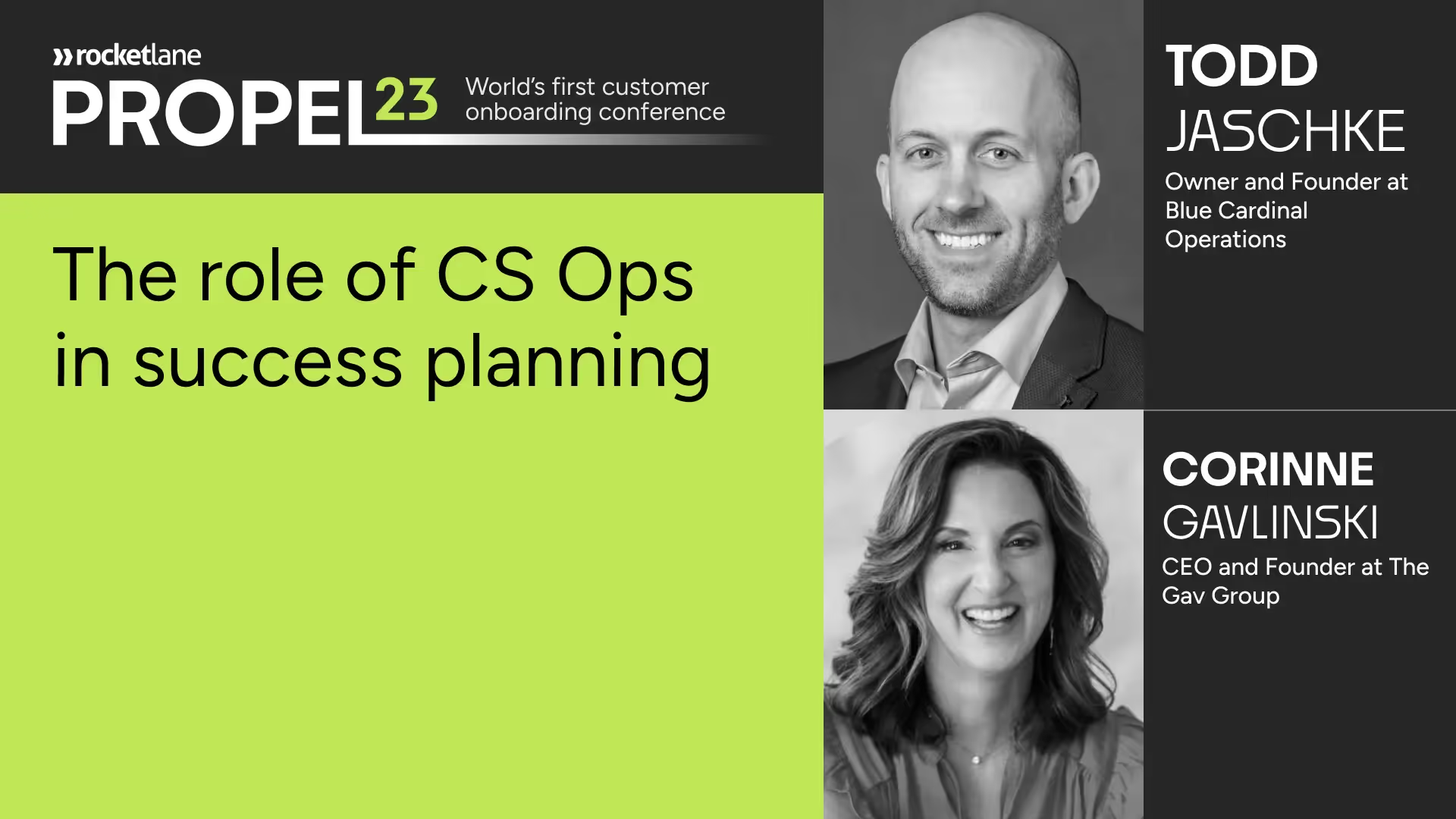
At Propel23, Todd Jaschke, Founder of Blue Cardinal Operations, and Corinne Gavlinski, CEO at The Gav Group, discussed the role of CS Ops in post-sale success planning and ensuring consistent repeatability throughout the customer journey.
The session focused on how CS Ops can support success planning for:
- Customer onboarding
- Goal and expectation-setting
- Executive business buy-in
- Support
This post provides key takeaways from the session.
The four pillars of post-sale success planning
Ensure that your success planning efforts focus on the following:
- Onboarding
- Goal and expectation-setting
- Executive buy-in
- Support
In growth-stage companies, it's tempting to look at managing each independently. However, to really retain and grow your customers, it's important to simultaneously focus your success planning effort across these four areas.
A big part of this is having a keen eye for data. An easy way to think about that is to approach data about these four areas from the perspective of gaps: What data do you have? What data are you missing? How can you bridge those gaps?
Success planning for customer onboarding
Onboarding is your first opportunity to make a first impression on your customer after the sales process. And first impressions really matter. An efficient onboarding experience sets up an increased acceleration of engagement, paving the way for renewal down the line.
Here’s what success planning for customer onboarding should focus on:
- Standardization of processes: The golden rule of success planning is reducing variability. From an operations standpoint, you need to look at ways to streamline processes and further iterate on them using templatization. Tools like Rocketlane can help by providing document templates, project templates, etc.
- Keeping things simple: Operations teams often wear multiple hats and juggle several tasks simultaneously. The best way to ensure speed and optimize delivery is by keeping things simple.
- Risk identification and mitigation: What sets great companies apart is the time they spend looking at failure – by talking about issues and risks. Make sure you've made a concerted effort to think about risks and issues that might derail the customer journey – and ensure that you have mitigation plans for all the risks you may face.
Also, ensure that you have escalation plans that can help orchestrate and guide your team to the proper communication pathways and protocols.
Things to keep in mind as you make success plans for customer onboarding:
- Be clear, not clever. Minimize the use of jargon and any acronyms that may be unfamiliar to your customer.
- Create a structure to support your process and the milestones in it. This structure must be designed to support seamless handoffs – ensuring that your organization knows exactly who's responsible for what.
- Commitments matter. Deliver when you say you're going to deliver.
Goals and expectation-setting essentials
Remember that a) you can't measure what you don’t track, and b) you can't accomplish goals you haven't defined.
As an operations leader, it’s your job to ask the right questions and accurately define the goals. Ensure that your goals are SMART goals (specific, measurable, attainable, relevant, and timely). Here are a few other measures to take:
- Ensure alignment with the customer, not just on metrics, but exactly how they will be calculated.
- Develop the systems or the templates that measure the performance of your customer’s goals.
- Document not only why the customer purchased your product or service, but what problem they were trying to solve. This can help you build a solid foundation for success planning.
- As the ops team, It’s critical that you engage your executive stakeholders throughout the process, and drive accountability. An easy way to do this is to use a RACI template to make sure you have an executive defined at the accountability level and that they understand what it means to be accountable.
- Leverage reports and dashboards to show leaders your goals and progress.
The more you can do to operationalize the goals and have the tools to track and measure them, the more effective your success planning will be.
Role of CS Ops in ensuring executive buy-in
When it comes to interacting with executives, what can set you apart operationally is the level and sophistication of communication capabilities.
The three Cs – consistency, clarity, and content – are critical when interacting with executives so that they can make the decisions and help the project or the customer life cycle and product engagement move forward faster.
Ensuring data accessibility in real time is helpful because it gives users and contributors to these systems the ability to provide up-to-date updates. The right tools can also help ensure that executives no longer rely on you or their team members for information or updates. For instance, tools like Rocketlane, with automated status updates and customized notifications, etc., can ensure that interactions involving executives are as seamless as possible.
Additionally, leveraging technology – especially when interacting with executives -- puts you on more equal footing with your customers. This is especially important if you’re a young organization where the relationship balance tends to be tilted toward the customer.
Support in the context of success planning
Consistency is a critical component of support. Invest more thought and effort into the post-sale support piece.
Look beyond tracking support tickets and closure, and take support-related information outside the support organization. Use it as market data and listen to what your customer is asking for. You will often find enhancements disguised as support tickets. This approach will help your organization accelerate the evolution of your product/services much faster and more effectively. In addition, make sure to:
- Support and enable your teams to give them the best capabilities to help drive closed-loop communication.
- Think about getting your customers to support one another, sharing best practices, ideas, etc. Leverage technology to create a community forum or platform for them by setting up a Slack community or something more advanced like using Gainsight. This has tremendous potential to scale and grow your organization.
- Keep support conversations off-email, as far as possible. The email approach makes it difficult to share that information with the rest of the organization. Instead, use conversational tools that collate support information and expose it across your organization.
Further reading
- CS Ops on your mind? Check out this blog post on building a CS Ops function from scratch.
- Learn how CS Ops can help in evolving and maturing the customer journey
- Check out what the Rocketlane Preflight community has to say about creating successful customer onboarding plans.
- Looking to streamline your customer onboarding journey? Check out our guide on building an effective customer onboarding playbook.
- Expert implementation insights from the field. Explore tactics for complex customer onboarding journeys in this implementation story.
Table of Contents

Regsiter for the live webinar


Great consultants didn't join your team to spend Fridays writing documentation.
Table of contents
18 of Forbes Cloud 100 chose Rocketlane. The best PS teams aren't waiting around.
FAQs












Copyright © 2026 Rocketlane Corp. All rights reserved.


















.webp)