How Schoox plans PS capacity 60 days out and brings project risk to leadership early with Rocketlane
60 days
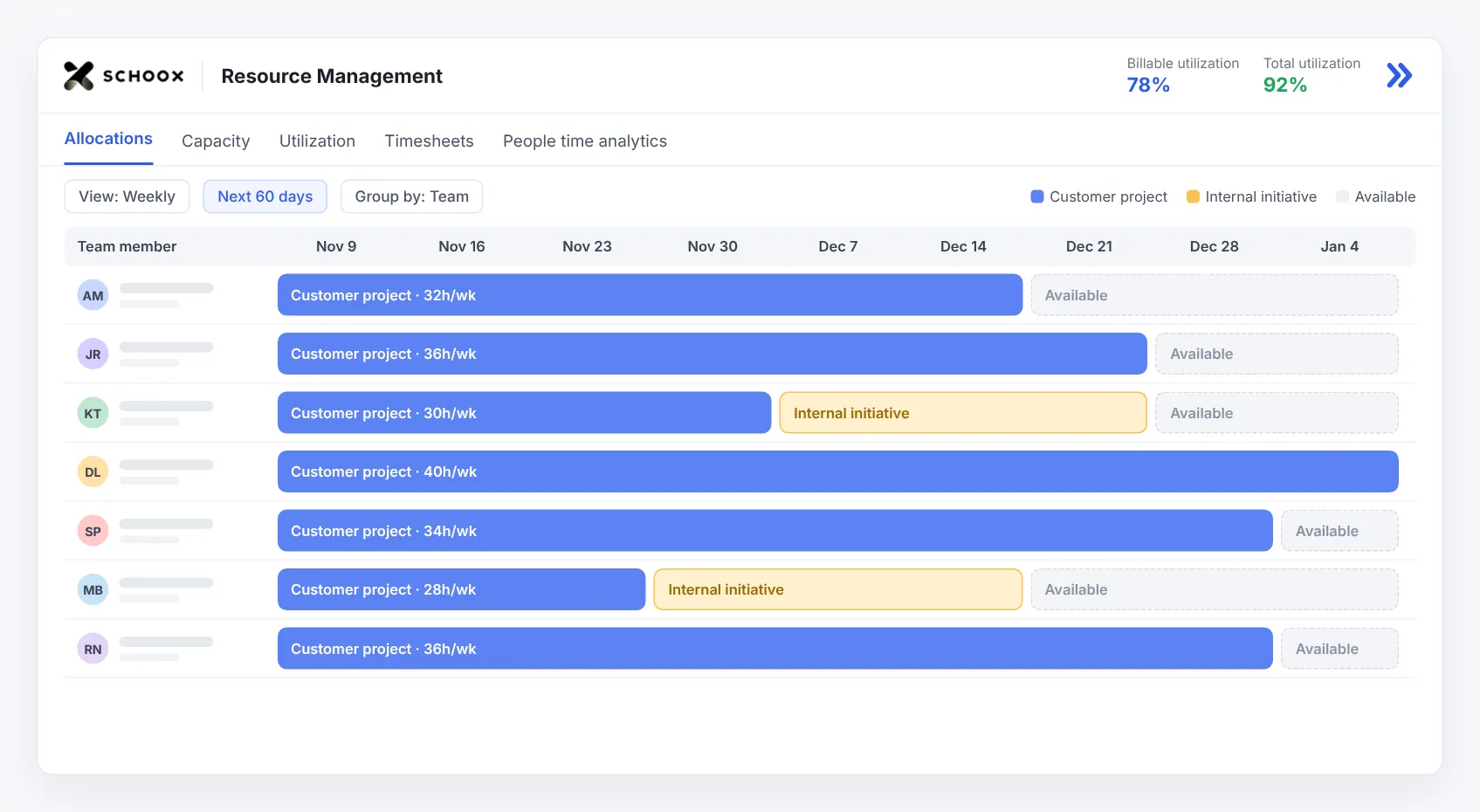
Forward view of team capacity, so light weeks are filled with internal initiatives before they arrive
10%
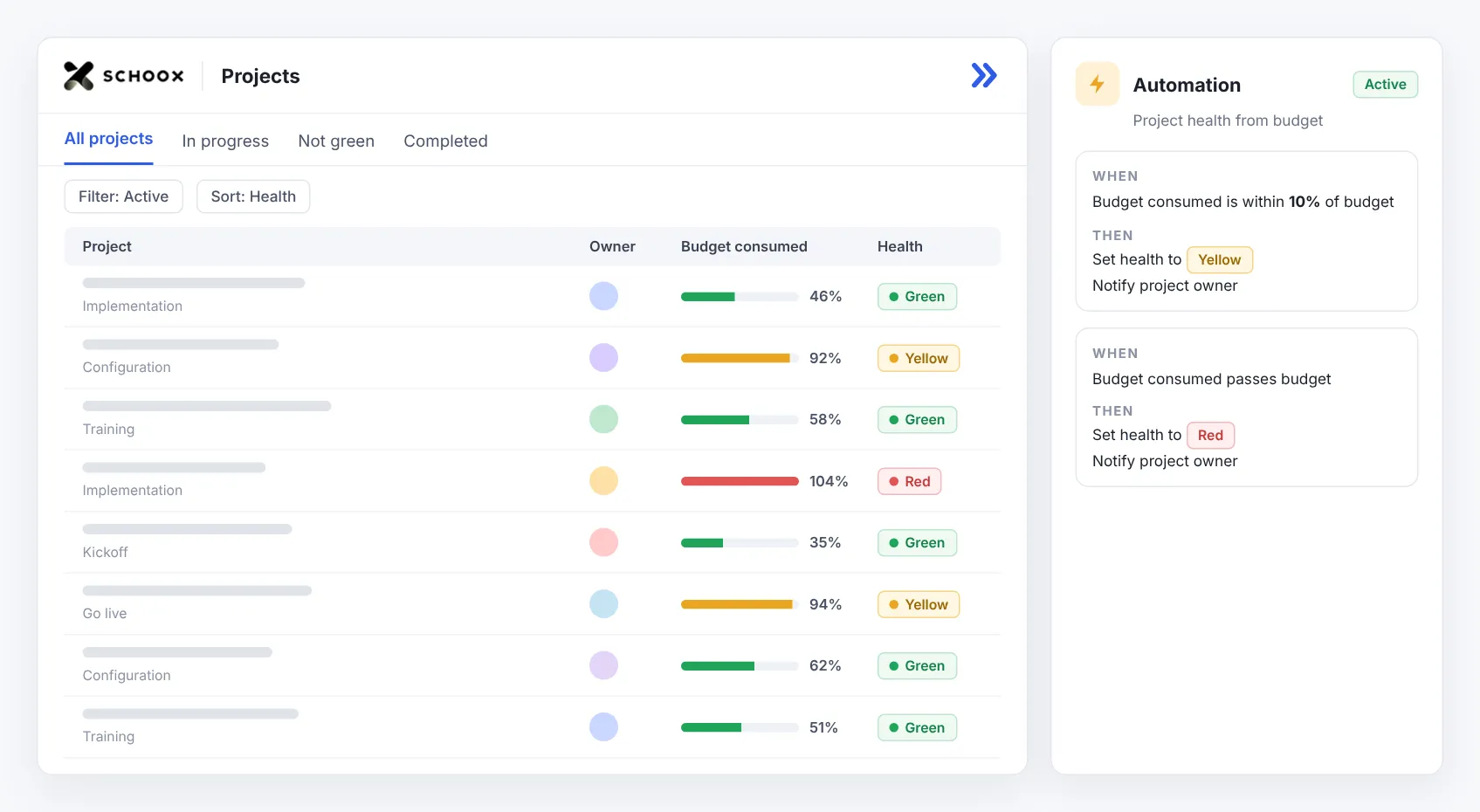
Budget buffer that turns a project yellow, then red, so risk reaches leadership before it escalates
0
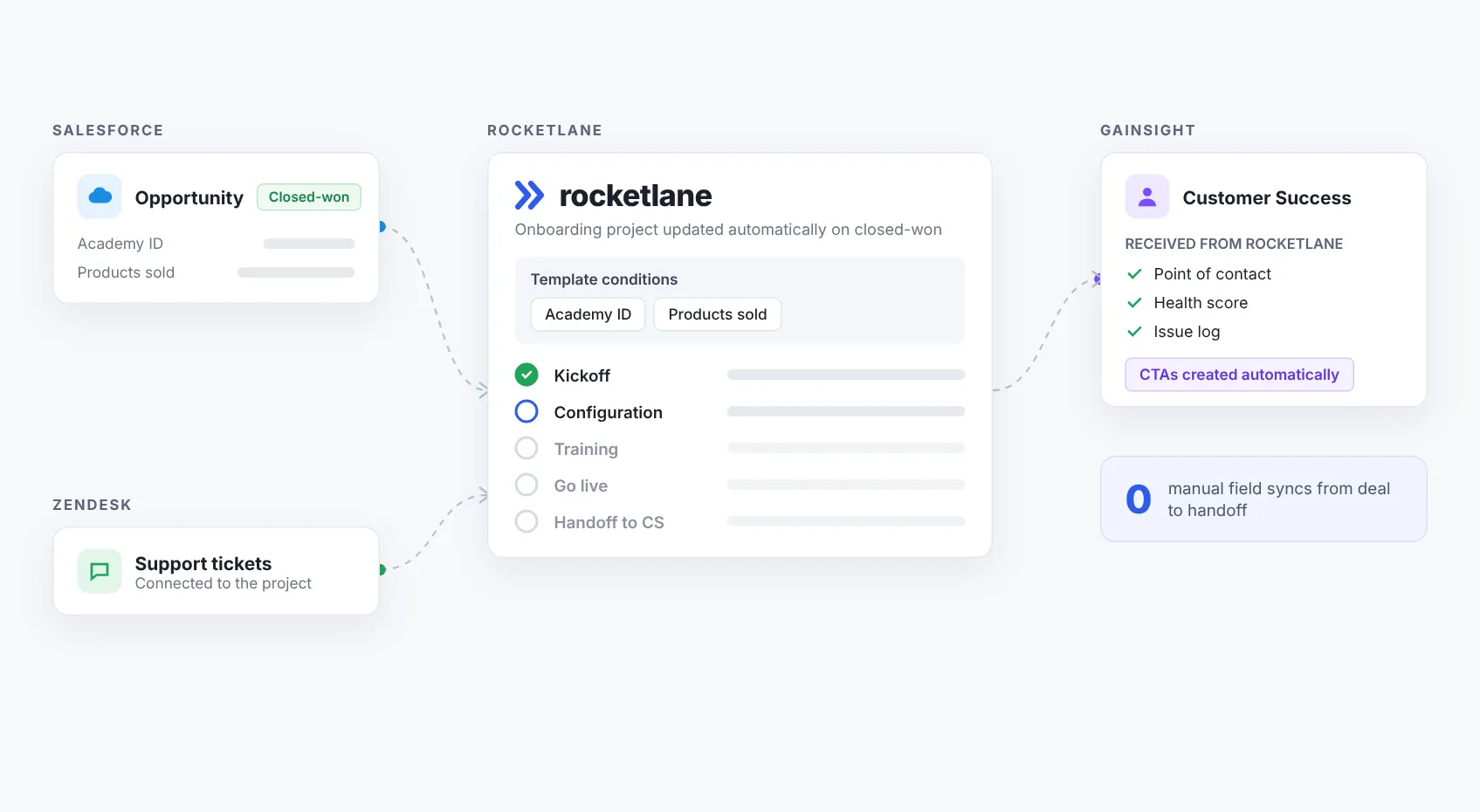
Manual field syncs across >100 PS projects a year, from closed-won in Salesforce to handoff in Gainsight

Region
North America
Industry
Learning and development software
Use case
Resource management, Utilization reporting, Project health automation, Salesforce, Zendesk and Gainsight integration, Rocketlane MCP for Claude
Before
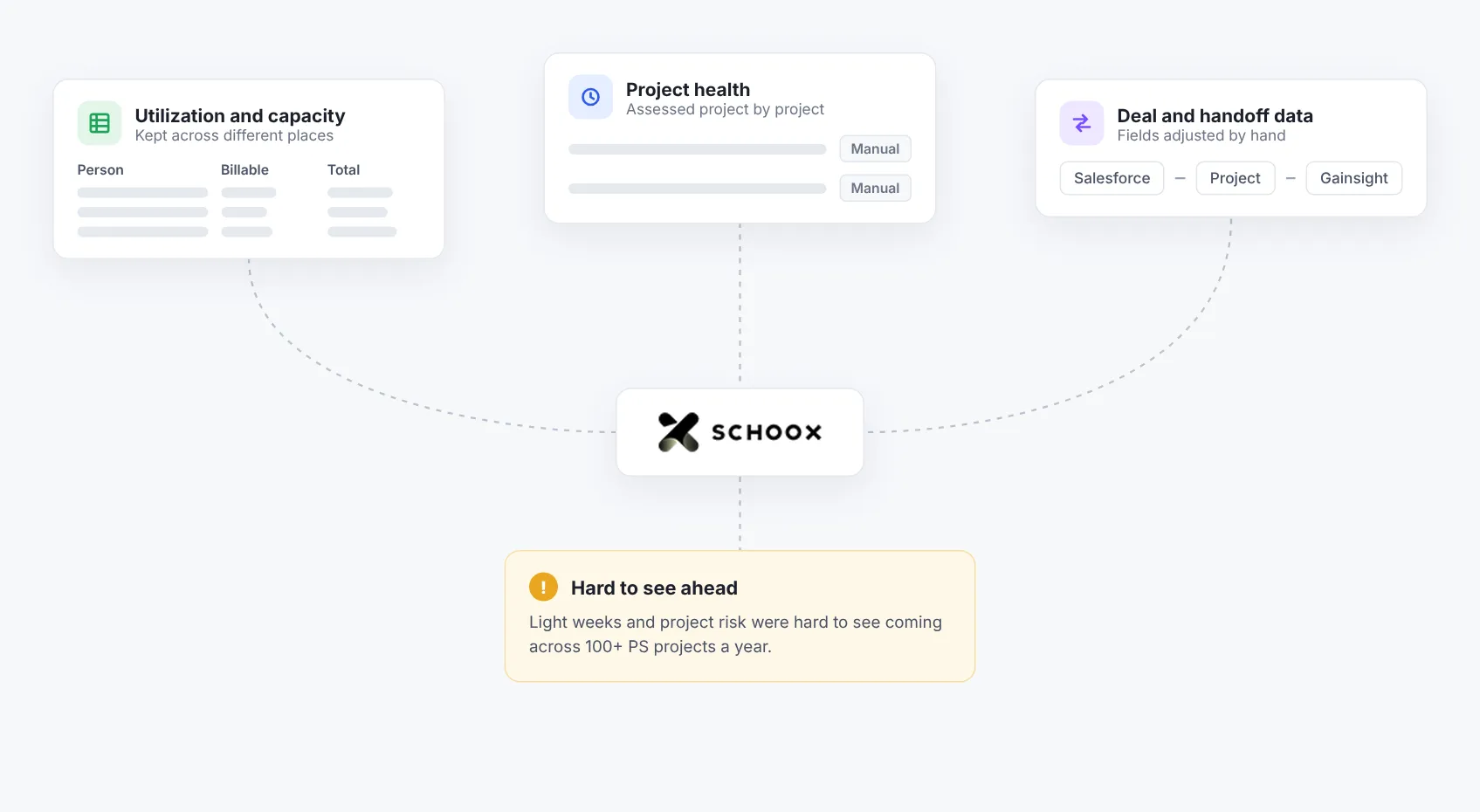
- Utilization and capacity data lived in different places, so light weeks were hard to see coming.
- Project health was assessed project by project, with no shared rules behind the status.
- Each closed deal and each handoff to Customer Success involved adjusting fields and moving data by hand.
After
- Billable and total utilization sit side by side, with capacity visible 60 days ahead and open time filled with planned internal work.
- Health scores update themselves against budget, so leadership reviews start from the same rules.
- Salesforce, Zendesk, Rocketlane and Gainsight pass project data along with no manual syncing, and the Rocketlane MCP brings that data into Claude.
About Schoox
Schoox is an intelligent learning and growth platform for frontline enterprises, helping organizations train and upskill their workforce. Its Professional Services team runs more than 100 PS projects a year, with a Technical Account Management team on the same platform.
Ian Graves, Director of Professional Services, leads the team. Schoox went live on Rocketlane on September 1, 2025.
The challenge
Proving the value of every hour, not just billable ones
When the market slowed and project demand softened, billable hours alone could no longer tell the full story of what the PS team was delivering. Ian needed to see quiet weeks before they arrived, put that time to good use, and show leadership exactly how the team's time was being spent.
"That would be a huge issue for us if we didn't have the ability to look forward at resource allocation and say, we're going to be really light on projects looking out 60 days. So we need to find internal projects and initiatives to fill that time."
A team that needed to scale without growing
With over 100 PS projects a year and a lean team, every hour spent moving data between Salesforce, Rocketlane and Gainsight was an hour not spent with customers. Ian's goal was clear: help each consultant and project manager handle more, without adding headcount.
The solution
Capacity the team can see coming
Schoox tracks billable and total utilization side by side in Rocketlane. The forward view of resource allocation shows Ian when the team will be light on project work up to 60 days out. He lines up internal initiatives, tracks them as projects in Rocketlane, and they roll straight into the resource plan. Non-project billable and non-billable time is logged through timesheet activities, and the people time analytics report breaks it down to the task.
"Rocketlane is giving us a ton of analytics that we never had behind our team utilization, resource allocation, management of resources. All that stuff has been a godsend."
Project health that explains itself
Schoox used Rocketlane's automations to define health once and apply it everywhere. A project moves to yellow when it is within 10% of budget and to red once it passes that buffer. Notifications go out and the health field updates on its own.
"It's fed our ongoing project review with leadership to be a lot more productive conversation, because we can justify why a project is yellow, red, or has remained green."
One flow from closed-won to Customer Success
When a deal closes in Salesforce, the project is updated automatically with the customer's academy ID and the products sold, which set the dynamic conditions on the template. Zendesk is connected too. At the other end, Gainsight receives the point of contact, health score and issue log, and CTAs are created automatically.
"There's really no manual sync necessary anymore. Project creation efficiency is excellent. All those things being automated has cleaned up a huge amount of manual process that we had before."
The impact
Every hour planned and accounted for
Because Ian can see capacity 60 days out, open time never sits idle. It goes into planned internal initiatives that are tracked and measured like any customer project. When leadership asks how the team is spending its time, the answer is already in Rocketlane.
Project risk reaches leadership early
Because health rules run automatically, project risk and health now go to leadership proactively rather than on request. Reviews no longer spend time agreeing on what a project's status is. The conversation goes straight to what is behind it.
A tool the team wants to work in
Schoox's project managers and consultants have worked across several delivery tools. The feedback Ian hears most is how Rocketlane feels to work in every day.
"Rocketlane is cleaner and easier to use and less of a hindrance in doing the job the right way than any other tool that we've used. That just locks it in as a must-have versus a nice to have. The cleanliness of the template process, the resource allocation and resource management, in combination with clean utilization reporting. That's pouring the foundation. That's what the PS organization at Schoox needs."
What is next for Schoox
Taking Rocketlane data across the organization with the MCP
Rocketlane is where Ian's team runs its projects every day. Year two is about making that data useful well beyond the PS team, and the Rocketlane MCP is how Schoox is doing it. With Claude at the center of its AI approach, the MCP feeds Rocketlane project data in alongside everything else the business uses.
First up is leadership visibility. Ian is using the MCP to pull every project that isn't green, along with every issue logged through Schoox's issue log form, into one view in Claude. From there, leadership can see which projects have active risks, their health scores and how close each is to resolution, without needing to open Rocketlane.
Next, Rocketlane tasks join the team's "chief of staff" agent, which already builds a daily focus list for every team member from Slack, Gmail, Calendar, Jira and Zendesk. Through the MCP, each person's Rocketlane tasks due today or overdue show up in the same list, so due dates stay accurate and resource plans stay true.
"I really think the MCP is going to be that missing element that's going to allow us to take the information that's in Rocketlane, that my team uses on a day-to-day basis, and make that information available throughout the organization through other tools. MCP is going to be that functionality that gets Rocketlane that much more embedded with our general strategy as an organization, and gets that data more visible to our leadership."
Want the full story?
Access detailed strategies, outcomes, and best practices in our customer spotlight playbook.


Fintech/Financial Services
How Worldpay modernized partner onboarding and built a scalable delivery engine with Rocketlane

Fintech/Financial Services