Q&A recap: From the launch of The State of Customer Onboarding 2024

•
•
Summarize blog with






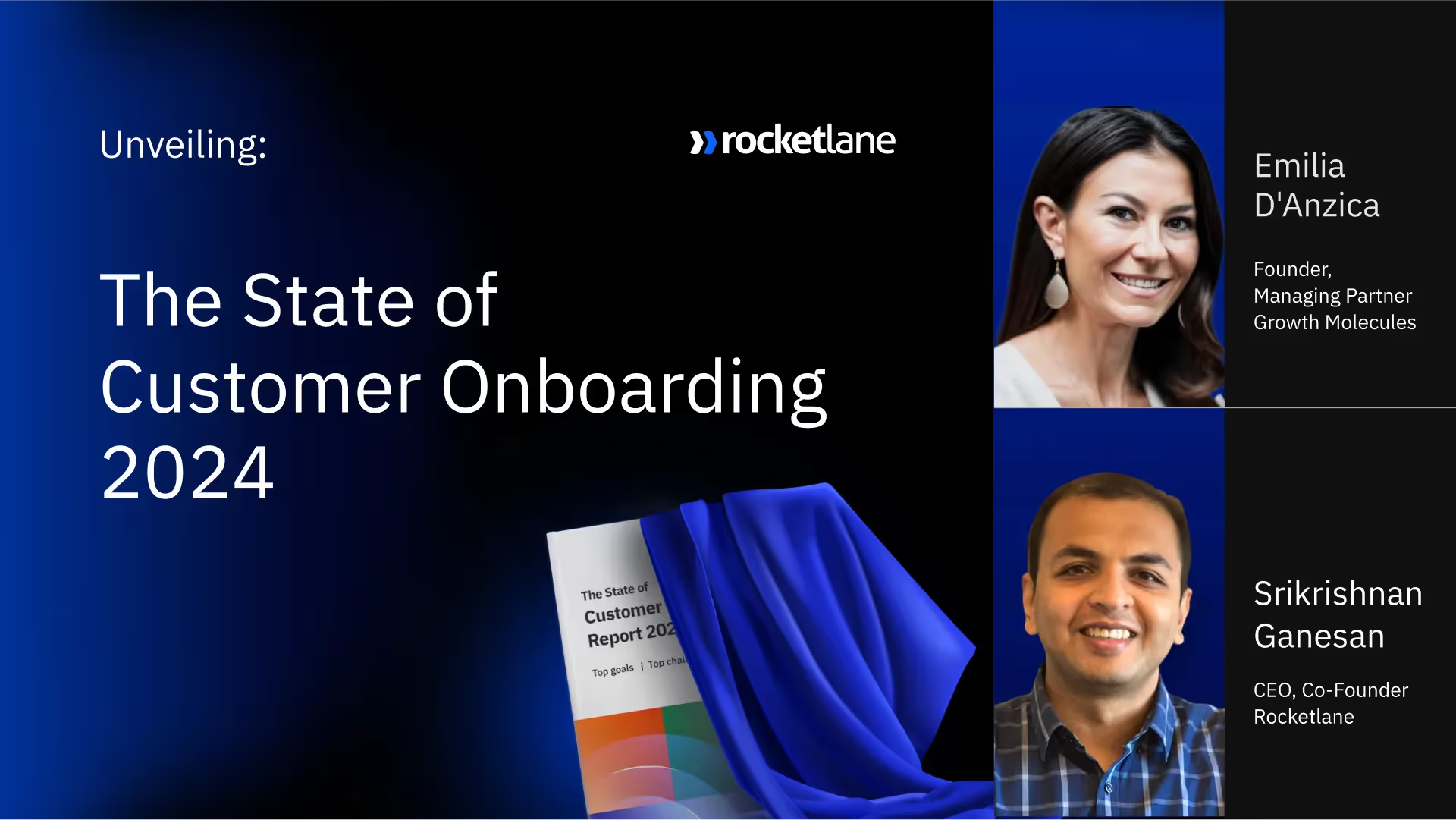
Every year, we run a survey report on the latest trends in customer onboarding and implementations. This year, with 850+ responses, we launched the State of Customer Onboarding report for 2024 recently!
We hosted Emilia D’Anzica, Founder, Managing Partner, Growth Molecules for the launch and boy, was it insightful! We also received a plethora of questions during the session, which we've compiled with detailed responses from our CEO Srikrishnan Ganesan, for your easy reference.
In case you missed the session, you can access the recording here.
Question 1: How many people feel comfortable that they have a valuable self-service function available to customers to augment the onboarding process?
Not enough companies invest in making this possible. No reason not to invest in making more self-service experiences and resources available to customers. Build them out, even if it is for a small portion of the onboarding. Every little contribution matters and builds towards easier / faster onboarding.
We hope these insights provide clarity and guidance on optimizing your onboarding processes.
Should you have any further questions or require additional assistance, please don't hesitate to reach out to our team on care@rocketlane.com.
Question 2: I think realistically, the top challenge in onboarding is the actual process(es) and how to get the majority of them automated
Interesting take. I agree we need more focus on:
- Zooming out: Take a step back periodically to view your onboarding process from the customer's journey standpoint. This perspective can reveal areas for improvement and optimization.
- Data examination: Analyze data on your current onboarding process to identify high-impact areas that require attention. Understanding what's working and what's not is crucial for effective change management.
- Automation: Actively pursue automation initiatives for both the process itself and its governance. Automation can streamline repetitive tasks, reduce manual errors, and enhance overall efficiency.
At Rocketlane, we heavily invested in automation last year, and the results have been significant. Many aspects of our onboarding process are now automated, leading to smoother operations and improved customer experiences. Would you be interested in a demo to see how automation can benefit your onboarding process? (purely to educate you, no hard sell)
Let's explore the possibilities together!
Question 3: What are your thoughts on time-based vs. milestone-based onboarding? Have you seen more engagement and success with one versus the other?
Time-based onboarding, typically divided into weekly segments, can be effective for shorter onboarding durations, providing clarity and structure. It helps to have a theme for each week too. So it is clear who is involved during which week, and what high level focus and clarity you need to make progress each week. The prerequisite could also be that time-based onboarding should have a very linear flow. If you have complex projects where people can pick on and do activities out of order or in parallel, it makes it harder to do time-based onboarding.
On the other hand, milestone-based onboarding, often preferred for more complex projects, breaks the process into phases with key milestones. It is also valuable to map the phases into weeks. For example, Week 7 to 9 can be indicated to be when you need your Salesforce admins to be available.
Both approaches have their merits, and the choice depends on factors like project complexity and customer preferences.
Question 4: Is it possible to get a copy of this presentation deck?
Certainly! We'll be happy to share the presentation deck with you. Please reach out to our team on care@rocketlane.com, and we'll share the PDF with you.
Question 5: How do you transition to paid implementations? It can be uncomfortable for referrals when the referring client was not charged.
I wouldn't worry about that. There's always a unique reason you can provide for why you discounted the implementation charges for someone. It could be their overall spend level with you, or the complexity of their implementation being lesser, or just a month-end offer that they availed. Just always make sure the number is quoted and then discounted even when you are giving it away. The reality is - many larger customers will think you aren't serious enough if you aren't charging. They worry about the quality of implementation if it is free.
Question 6: Regarding holding customers accountable for timely onboarding, what do you suggest when a customer says they don't have enough time to dedicate to the process?
Make sure you are getting the exec sponsor to align on making your launch and adoption a shared KPI with someone on their team. They are successful if you are successful, and this isn't a side gig for them. They aren't ‘helping’, this is their job. And they should also understand the importance of the initiative: What does this do for the business? Why did we invest in this technology? All of this should be discussed before kick-off. Emphasize the significance of the initiative and its impact on their business, fostering a sense of ownership and commitment.
Question 7: What advice do you have on keeping customers accountable? What do you do if their time runs out to pay for additional sessions or disengagement becomes necessary?
Surface this to the sales team and leadership earlier than later. Typically there is clawback on sales commissions if there's early churn or churn during onboarding. So the sales rep and leadership will be aligned on trying their best to bring back the customer - calling, referencing the original value prop, etc.
Also, surface risks early if you see a lack of readiness or maturity on the customer side. That's the most common reason they disengage. They realize they aren't ready.
Two things you could do in such instances:
1. Have an intake form to assess their readiness. If they aren't ready, offer additional services to bridge the gap that they need to buy.
2. Ask their leadership the question at kickoff or before: "What should we do if your team isn't moving fast enough or isn't able to complete the activities on their plate? How important is this to you?"
This helps the team also understand how you will have to act if they aren't making progress.
Question 8: Implementation fees are often discounted, which devalues the service. How can this be addressed?
Agreed! It needs commitment from leadership to make this change happen.
Agree to offer ‘x’ dollars worth of implementation time towards sales and customer success each year. Let that be 40% of your team's time. But account for the time. Ensure the sales leaders know they have that limit and hence they need to charge for most of the deals and be careful which ones they are discounting. Help the sales team also understand how much value they are giving away.
Question 9: What are your recommendations for transitioning from an onboarding manager to an account manager?
Have a clear hand-off which includes a sign-off from the customer. Have a hand-off form that needs to be filled, along with documentation of what has been set up for the customer, any workarounds, details of integrations, etc. Ensure customer sign-off includes feedback from the customer.
Question 10: Have you seen companies with a hybrid model? Some services paid, some not? (e.g. one training is free, but anything more complex is paid)
Yes, hybrid models are common. You can have a standard free service offering too, along with paid add-ons - for example, paid services can be: custom reporting, additional integrations, customized training and education, adoption and change management services, etc.
Question 11: Who creates your swag?
Haha. We've sourced swag from various vendors in the past (like Printful, CustomInk, 4imprint, etc.) You should also check out our swag store here for more!
This is just a glimpse of all that the report offers. For more nuanced findings and interesting data about how much onboarders are looking to leverage and use AI and automation for their everyday onboarding activities, access the full report here.
Hope you find it insightful!
Table of Contents

Regsiter for the live webinar


Great consultants didn't join your team to spend Fridays writing documentation.
Table of contents
18 of Forbes Cloud 100 chose Rocketlane. The best PS teams aren't waiting around.
FAQs











Copyright © 2026 Rocketlane Corp. All rights reserved.

















.webp)