Carving out Onboarding from CS: Why, when, and how

•
•
Summarize blog with






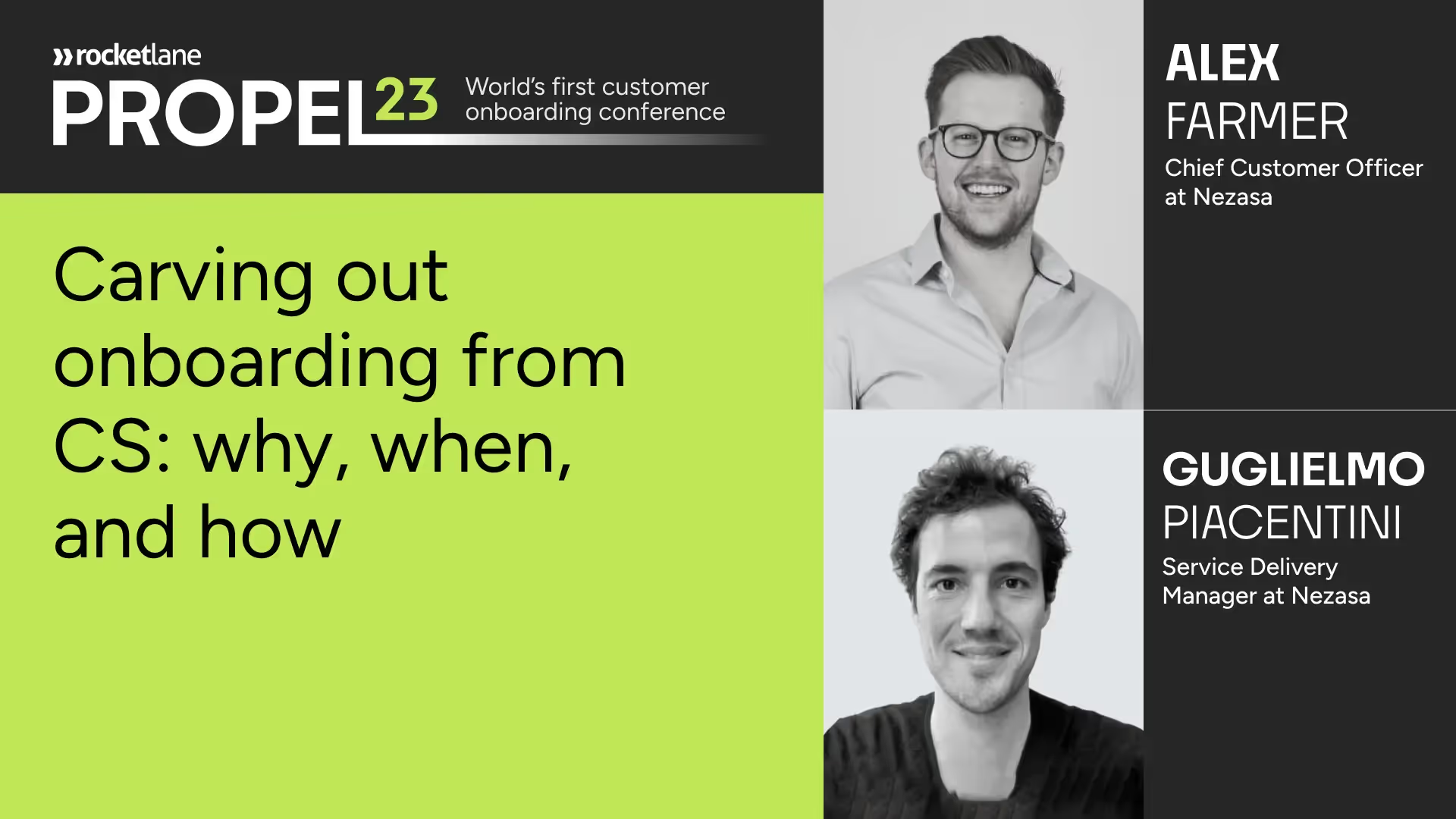
Alex Farmer is currently the Chief Customer Officer at Nezasa, a Zurich-based startup, He is also the founder and CEO of Customer Success Excellence, and was recently named a 2022 Top 50 Customer Success Influencer by SmartKarrot.
As the Service Delivery Manager in Nezasa, Guglielmo leads the onboarding team along its transformation roadmap. Previously, he worked as a management consultant on strategy and analytics.
At Propel23, Alex and Guglielmo walked us through their journey of carving out customer onboarding from CS, building an onboarding function at Nezasa, and what their future roadmap looks like. They also share ways to optimize customer onboarding and prune it to deliver business success.
The role of Onboarding and Customer Success in the customer’s road trip to value
Alex likens the customer journey to a road trip that begins when the customer signs the contract and gets into the backseat of a car to take off on a road trip to getting value from your product.
In the car, the CSM is seated next to the customer in the backseat, while the implementation consultant or onboarding manager drives the car, with the project manager guiding them from the passenger seat.
During the initial part of the journey, the CSM's role is to observe how smoothly the implementation consultant is driving and to check in with the customer, to ensure their satisfaction, and to address any concerns. This phase represents the onboarding team's responsibility to drive the customer toward value.
When the initial phase is complete, the implementation consultant pulls over, and hands the keys to the customer, for them to take the driver’s seat.
As the customer drives the car, the CSM now becomes their copilot in the front seat, guiding them throughout the rest of the journey. The CSM's presence is crucial during this phase to assist the customer in navigating towards further value.
Although the analogy may not apply directly to all customers, the core message remains relevant: the CSM's involvement in the initial stages of the journey greatly influences its overall success. Without the CSM's guidance, customers may struggle to take control, potentially leading to setbacks. Therefore, organizations must prioritize effective handovers and ensure the CSM's presence during critical transition periods.
By adopting a proactive approach to customer success and focusing on smooth handoffs, organizations can optimize the entire journey, setting their customers up for long-term success and satisfaction.
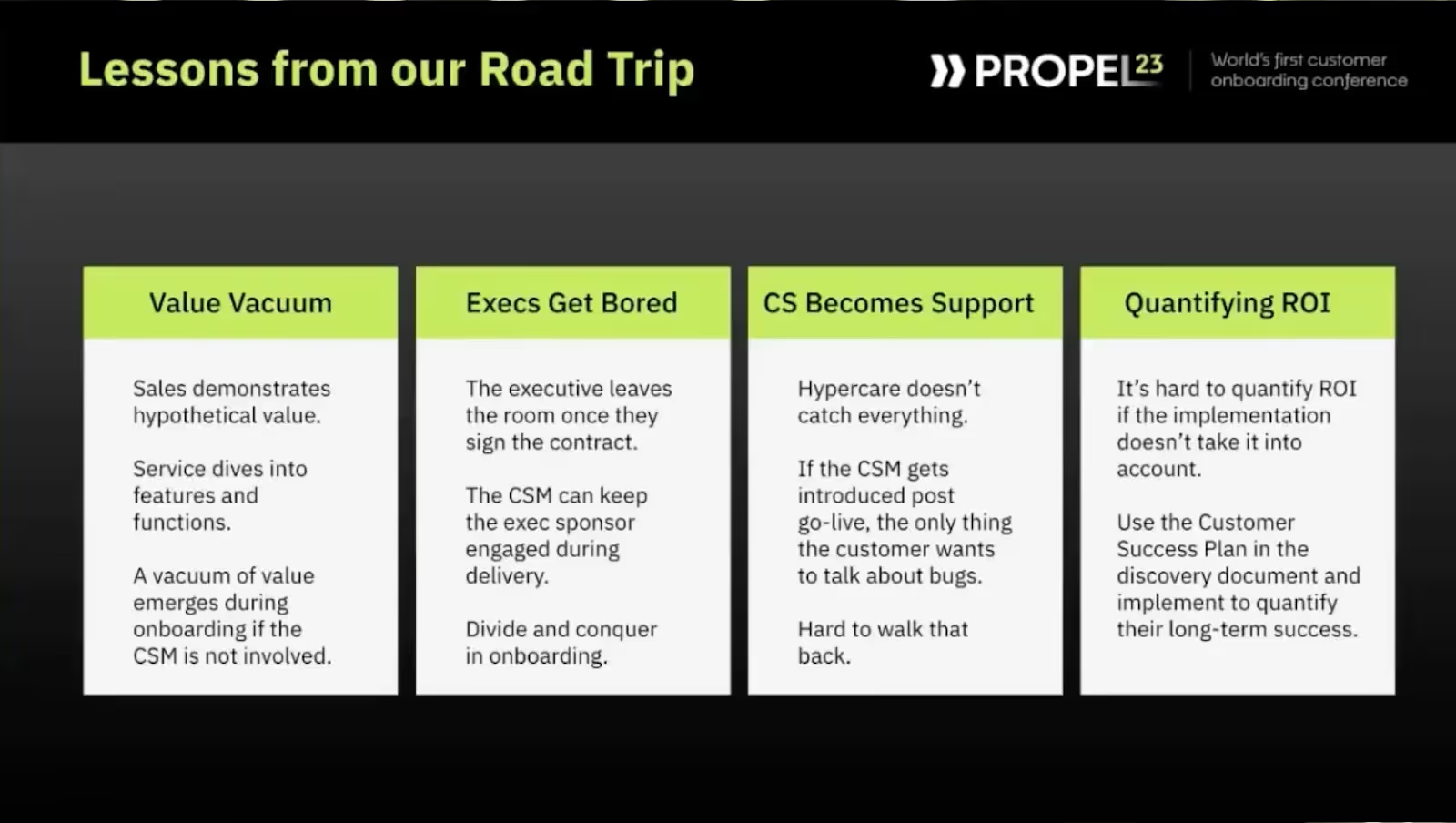
Why split onboarding and customer success? - Lessons from the road trip
Reason #1: The value vacuum
Once the customer signs the deal and moves on to the onboarding phase, there’s often a gap in conveying the value discussed during the sales cycle. This "value vacuum" occurs when the CSM is not involved in the process, leading to a lack of continuity and a gap in the understanding of the customer's desired outcomes and the roadmap to achieving them.
Reason #2: Execs get bored
After signing the contract, executives tend to disengage from the customer journey, leaving just the onboarding team to continue engaging with the customer. However, it is important to keep executives engaged throughout the process by providing all updates on communication and progress of the project. The CSM can play a vital role in ensuring the executive's vision aligns with the desired outcomes of the customer’s journey.
Reason #3: CS may be reduced to Support
Without the CSM's involvement, customers may perceive the CS function to just provide support. This misperception can lead to a disjointed experience, where the customer expects support-related tasks from the CSM instead of receiving guidance and assistance in achieving their desired business outcomes.
To avoid this, it's important for CSMs to set boundaries and remind customers that they can aid in long-term success. Their role is to ensure that customers view the customer success function as a strategic partner focused on driving long-term success.
Reason #4: Quantifying ROI
As a CSM, it's important to measure the return on investment (ROI) for your customer. That's why it's essential to get your CSM involved early in the journey and develop a success plan tailored to customer goals with measurable metrics. By establishing clear success criteria, CSMs can help customers track progress, identify areas of improvement, and showcase the value delivered. This allows both the customer and the CSM to align their efforts towards the desired outcomes.
Building the onboarding function at Nezasa
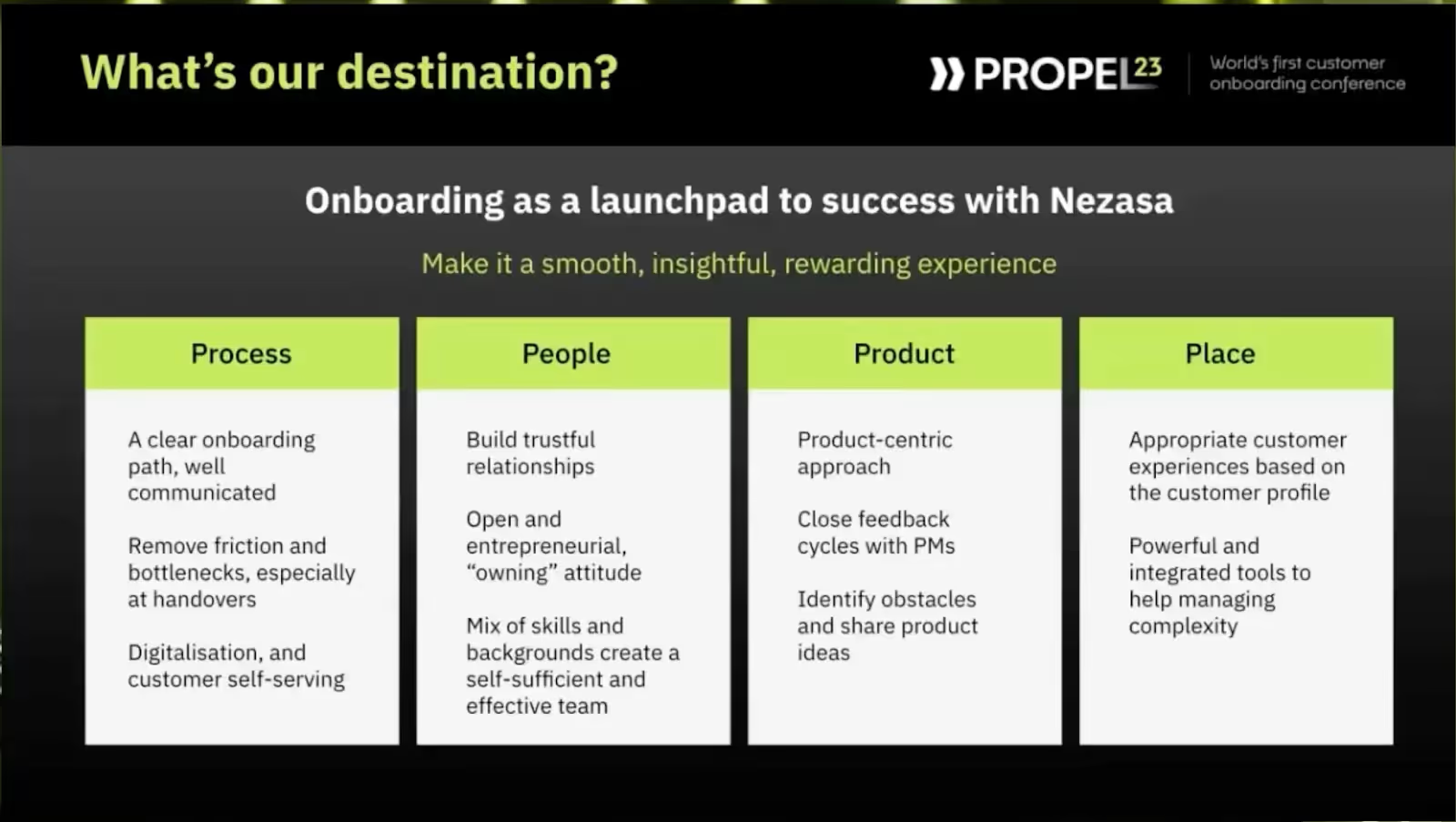
The onboarding team at Nezasa was established with the goal of transforming the onboarding experience into a launchpad for customer success. The team recognized the need to establish clear processes, build trustful relationships, prioritize the product, and customize the onboarding experience based on customer profiles. They focused on four key areas: processes, people, product, and place.
- Processes: They crafted clear onboarding paths for different customer types, ensuring customers understood the sequence of events and their roles in the process. The team aimed to remove friction, handovers, and bottlenecks during onboarding and focused on standardization, through the use of document templates for seamless handoffs.
- People: Nezasa’s onboarding team prioritized building trustful relationships with customers. They ensured that team members had the necessary knowledge and access to internal stakeholders to establish positive and trustful relationships from the beginning.
- Product: They adopted a product-centric approach in their onboarding projects. They showcase features, ask customers for feedback on product usage, and establish close feedback cycles with product managers. This helped the team learn from customers' pain points and areas for improvement.
- Place: To provide more tailored experiences to customers, they crafted differentiated customer journeys based on customer tiers. They also recognized that not all customers required the same level of hands-on support.
In the first six months, Nezasa also redesigned the sales-to-success process and implemented an onboarding dashboard for forecasting and capacity allocation.
Nezasa aims to digitize customer success through in-product self-learning and feedback tools, allowing customers to use their own product for support and learning. The team is also excited about using a dedicated customer onboarding tool like Rocketlane to manage the complexity of multiple projects and timelines. They believe this will equip their onboarding team to pave the way for successful customer adoption and growth.
Nezasa’s future roadmap
1. Customer onboarding software: To prioritize the implementation of an onboarding software, which will include developing professional templates, measuring the effectiveness of onboarding, and continuously improving the process based on gathered insights and feedback.
2. Process integration: To streamline various tools and systems to ensure a seamless onboarding experience that supports all onboarding efforts, and reduces friction in the process.
3. Customer self-onboarding: To empower customers through self-learning and accountability. They aim to provide resources and guidance for customers to onboard themselves effectively, encouraging customers to take ownership of their onboarding journey, ensuring they understand and fulfil their responsibilities.
4. Streamline cross-product onboarding: To enable smooth onboarding experiences across different offerings. Nezasa strives to integrate their onboarding processes to create a cohesive experience for customers adopting multiple products, reducing any potential complexities or challenges.
5. Onboarding to Success: Nezasa sees onboarding as a crucial driver for fast adoption and growth. They aim to optimize their onboarding process to not only facilitate successful adoption but also create a foundation for continued success. By focusing on delivering value during onboarding, they aim to accelerate the customer's journey toward achieving their desired outcomes.
6. Onboarding survey: To implement an onboarding survey to track customer satisfaction and gather insights for improvement. By collecting feedback directly from customers about their onboarding experience, they can identify areas of improvement and gather ideas for enhancing their onboarding process, ensuring continuous refinement and customer-centricity.
Table of Contents

Regsiter for the live webinar


Great consultants didn't join your team to spend Fridays writing documentation.
Table of contents
18 of Forbes Cloud 100 chose Rocketlane. The best PS teams aren't waiting around.
FAQs













Copyright © 2026 Rocketlane Corp. All rights reserved.



















.webp)