Onboarding 2.0: Goals, challenges, and learnings from implementing a new system for customer onboarding

•
•
Summarize blog with






Eric Letourneau, Senior Implementation Manager, Vidyard, joined us at Propel23 to share learnings and insights from the journey of implementing a new customer onboarding system at Vidyard.
In the session, Eric talked about:
- The reasons for transitioning to a new onboarding system (Rocketlane)
- The goals for this translation
- Challenges and learnings from the journey
Here are Eric’s takeaways from being on the other side – a customer in the onboarding journey.
The reason and goals for Onboarding 2.0
The onboarding team at Vidyard was looking for a new tool to manage and track their customer onboarding process for a few reasons:
- A portion of the previous tool was being deprecated
- The tool was slow and clunky
- There was no way for customers to use or interact with the customer onboarding tool
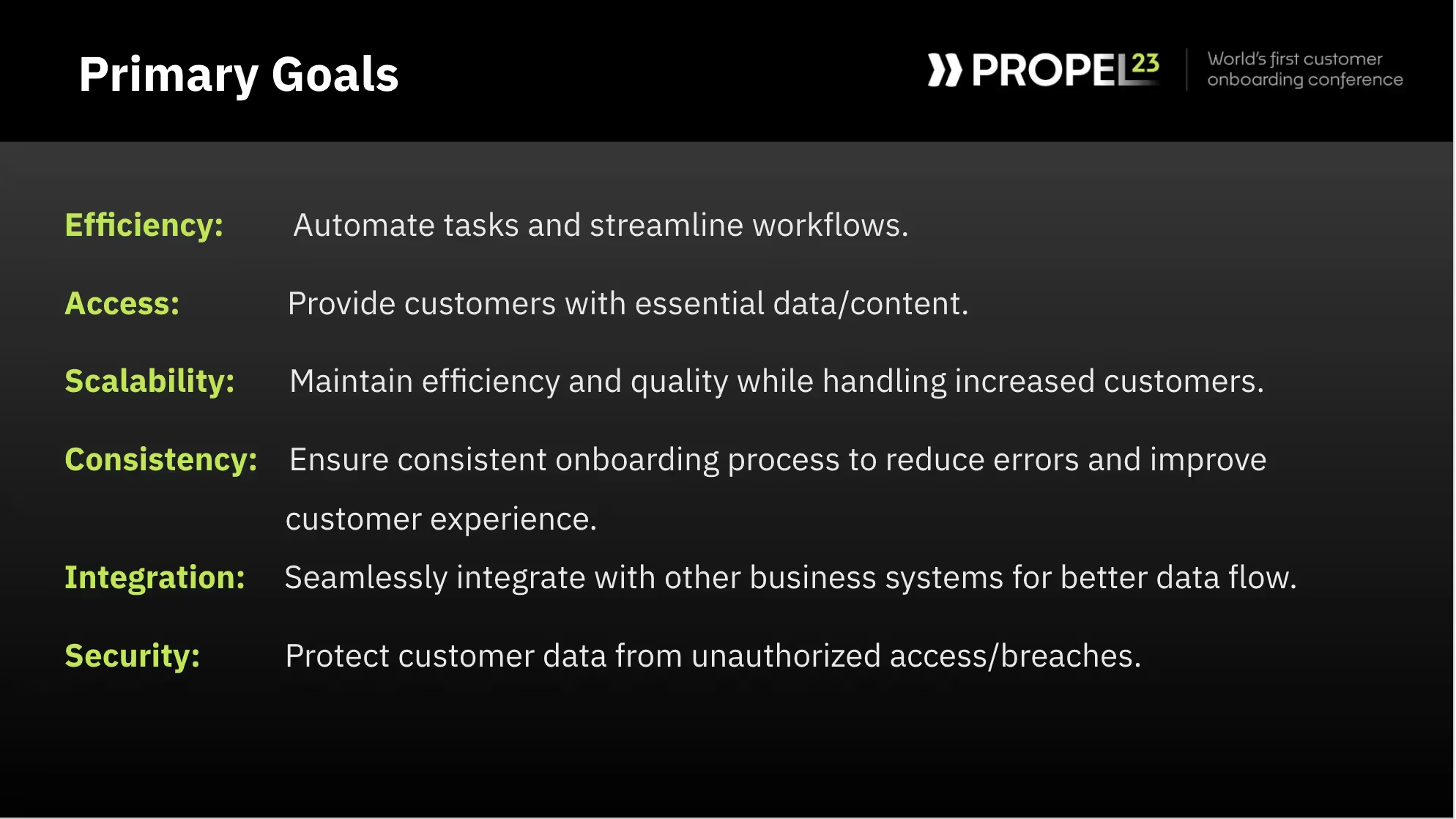
The team then came up with six primary goals for Onboarding 2.0.
That’s when the team came across Rocketlane and decided to give it a shot.
Learnings from being on the other side of customer onboarding
- The importance of creating and refining templates - As a customer, it's important to set aside time to create and refine templates and processes. The process is iterative, but it's worth investing in a robust set of templates right at the start.
- Learning the essential features first - Try not to learn the entire system from day one. If your priority is to get up and running, do what's crucial and important to get that done.
- Practicing what you preach as an onboarding expert - While being onboarded, remember to trust the vendor’s process, and use regular meetings and training sessions to seek help - instead of reaching out to them on an adhoc basis with every query you have.
- The importance of customer empathy - Remember that you’re most likely a customer in another context or aspect of your life. Appreciate the the concerns, needs, and challenges of the customer.
Challenges faced while transitioning to Customer Onboarding 2.0
Here are the challenges Eric's team faced as they adopted Rocketlane for their customer onboarding needs.
- Change management: The biggest challenge is the resistance to change.For every onboarding project, you need to help different sets of users or stakeholders overcome change.
- For the leadership team, reiterate the benefits of the new system, time saving, productivity improvement, etc. in the last quarter, etc.
For users, provide resources that educate and inform users on why they should use the new tool, the parts of the tool that are particularly useful to them, the outcome of the implementation, etc. This could be a mix of resources that use different mediums - text-based, video walkthroughs, webinars, etc.
- In addition, you could host internal sessions and present at the company townhall to champion the idea of your solution at the customer end.
The Vidyard team handles this aspect of change management in two ways:
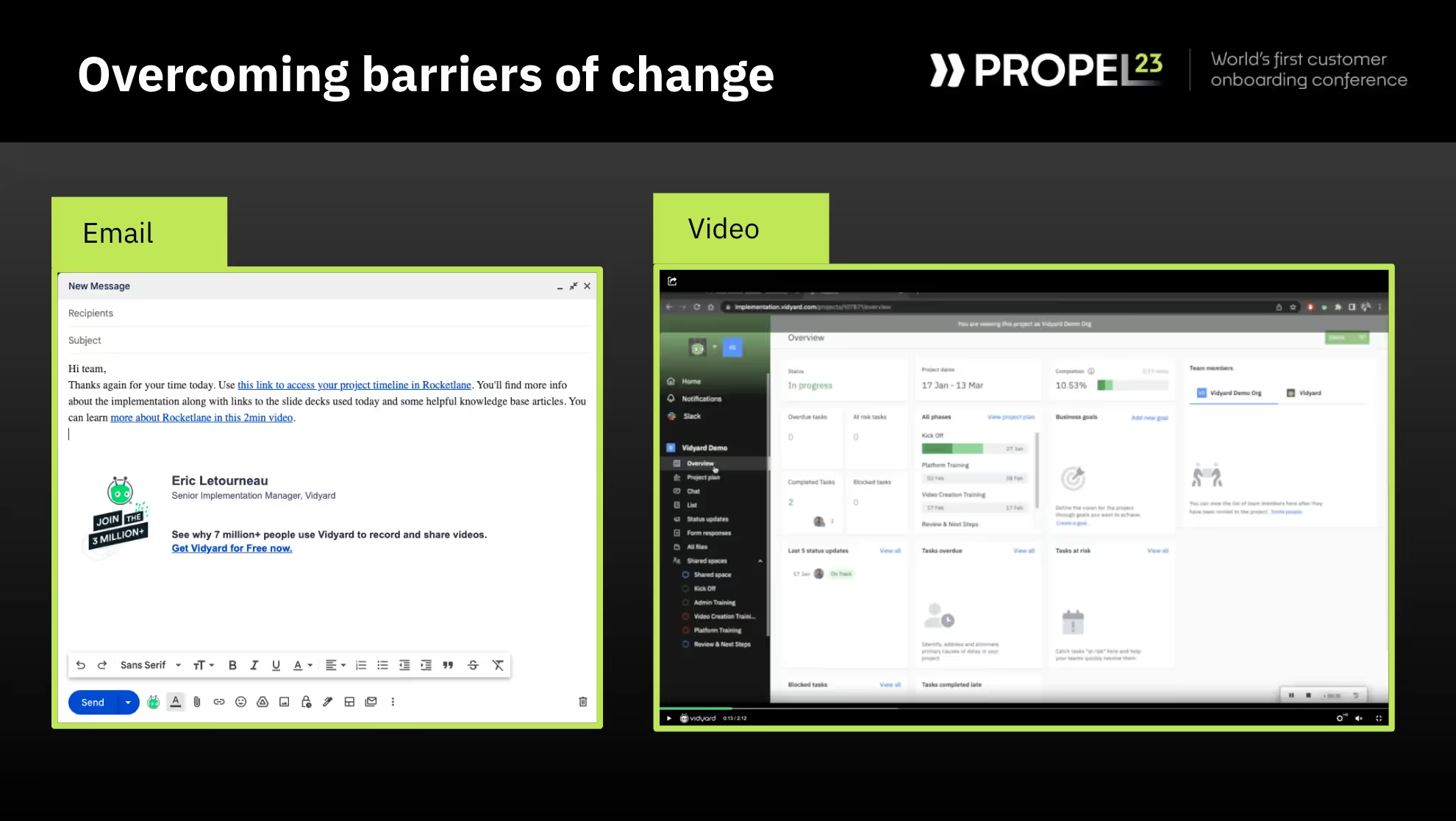
- In the kickoff call, the team gives the customer a short overview of Rocketlane.
They also share a short video on Rocketlane for customers to view later. Additionally, they track how the customer team uses/interacts with it (number of partial and full views, portions being rewatched, etc.).
- After kickoff, they send an email (templated) to users to invite them to Rocketlane. The email contains a link to their project on Rocketlane, as well as a link to a two-minute video about Rocketlane, what it does, its benefits, why they should use it, and exactly what they could use it for.
- Integration challenges: With a new tool, integration isn’t about just integrating the software – it’s about going deeper and ensuring that the right fields and workflows are mapped, so users can use the tool with minimal additional effort and stress.
This process of diving into the details can be complex and time-consuming.
Make sure to account for time to do this.
- Balancing time for implementation against expensive expected benefits: It can be risky to spend too much time time iterating and improving templates.
There’s always a tradeoff to make.
Focus on finding a fine balance while iterating/improving and making progress towards adoption and usage.
Onboarding 2.0 outcomes: Results from switching over to Rocketlane for customer onboarding
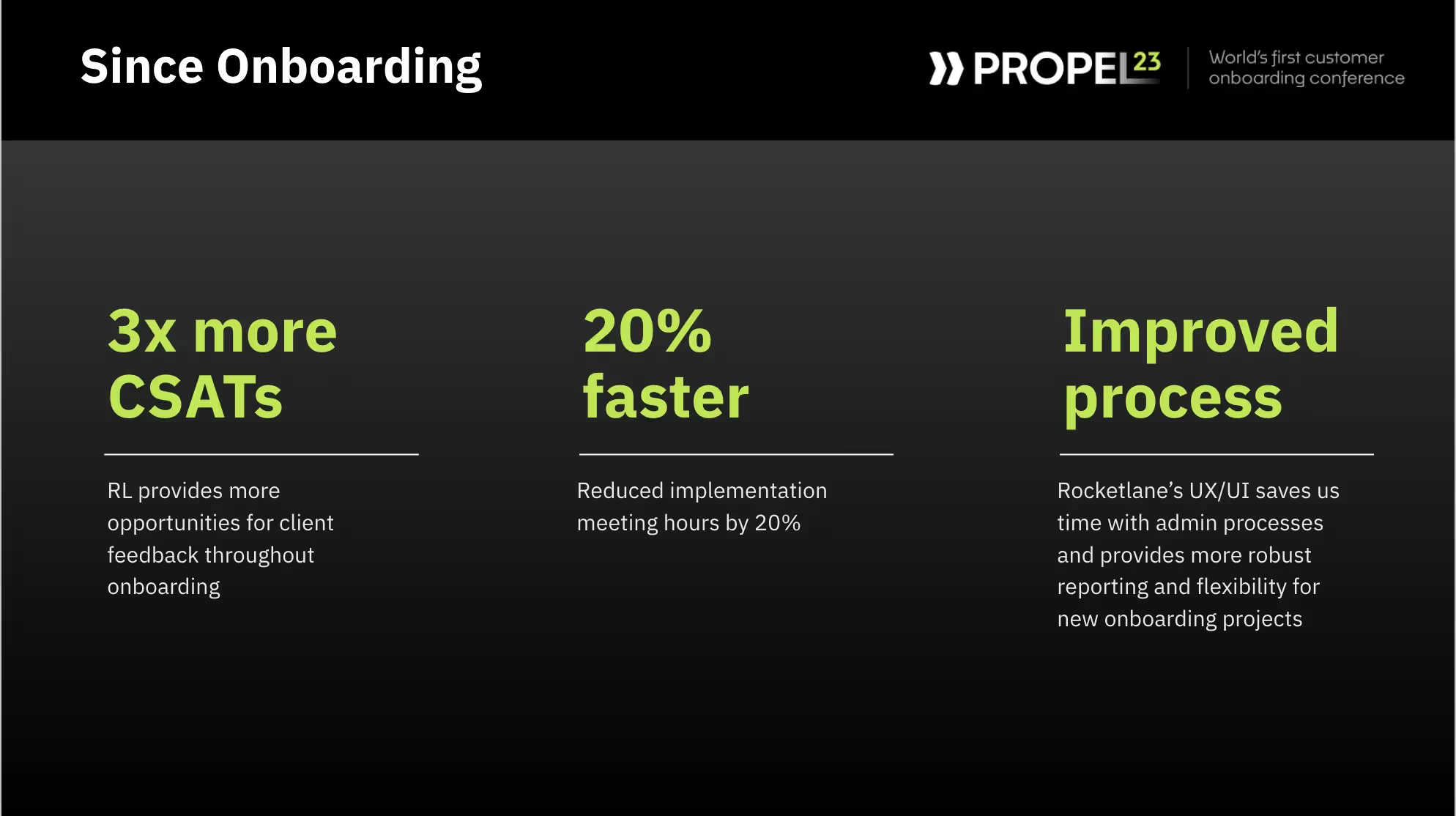
A year after implementing Onboarding 2.0 to adopt Rocketlane, the Vidyard team has been able to
- Triple the instances/points of CSAT collection: Thanks to Rocketlane’s design, the team now collects CSAT at three intervals – once after the kickoff call, once after training (sent to the champion), and once at the end of implementation, before passing the account over to the CSM.
- Reduce onboarding time: The team was able to reducing meeting time by 20%. This is mostly a result of reduced meetings given that customers can just log into their portal to check the status of their project, or use the inbuilt chat feature to get up to speed.
Table of Contents

Regsiter for the live webinar


Great consultants didn't join your team to spend Fridays writing documentation.
Table of contents
18 of Forbes Cloud 100 chose Rocketlane. The best PS teams aren't waiting around.
FAQs













Copyright © 2026 Rocketlane Corp. All rights reserved.


















.webp)