10 Best Projectworks Alternatives for Professional Services Teams (2026)

•
•
Summarize blog with






The search for Projectworks alternatives usually begins long before a professional services (PS) organization formally decides to replace the platform.
Projectworks is a strong fit for a particular stage of operations: approachable workflow, fast implementation, and solid core coverage for firms running a contained book of engagements with a stable team.
The search for alternatives happens because PS delivery outgrows its tools quietly, and the gap between platform capability and business need tends to widen before it registers as a platform question.
The triggers vary by firm, but the patterns are consistent.
In most firms, they show up in operational behaviors: resource decisions move into spreadsheets, forecasting conversations happen outside the system, and delivery reviews require stitching together data from multiple places to understand portfolio health.
That pattern reflects a broader reality in professional services operations. Many professional services automation (PSA) platforms work well while delivery environments remain relatively contained. Complexity changes the equation.
A larger services portfolio introduces cross-project staffing dependencies, more volatile utilization patterns, multi-entity financial reporting requirements, and greater pressure for real-time visibility across delivery and finance teams.
The underlying issue is less about missing features and more about coordination at scale.
Systems designed around simpler workflow assumptions often become harder to operate as delivery organizations grow more interconnected.
Experienced PS leaders usually recognize the transition through secondary effects: forecasts become less trustworthy, staffing conflicts surface later, margin visibility lags, and workarounds become normalized.
This guide compares eight alternatives to Projectworks for professional services teams in 2026, evaluated across resource management, delivery execution, financial visibility, AI capabilities, and the long-term operational scalability that firms at the next stage of PS maturity require.
How we evaluated these Projectworks alternatives
This guide evaluates Projectworks alternatives against the requirements that define professional services delivery at growth stage and beyond.
Projectworks is well regarded for its usability and fit for smaller PS firms.
The evaluation focuses on what happens as delivery scales: larger books of business, concurrent engagements with overlapping resource demands, tighter margin pressure, and finance teams that need more than a spreadsheet export to close the month.
Evaluation criteria:
- PS-team fit: Does the platform connect project execution with resource allocation, utilization, and financial outcomes, or does it stop at task and time tracking?
- Scalability: Does the platform hold up at 75 or 150 people? Assessed across portfolio visibility, cross-project resource coordination, and leadership-level reporting.
- Financial visibility: Covers margin tracking, revenue recognition, utilization-to-profitability visibility, and the hidden cost of tooling sprawl when a platform requires parallel systems to fill gaps.
- Workflow integrity: Can delivery run end-to-end in one system, or does the platform require parallel tools for time tracking, client reporting, or financial reconciliation?
- Global and ANZ readiness: Multi-currency support, compliance requirements, and distributed team coordination, with specific attention to the ANZ market where Projectworks has its deepest install base.
- Migration ease: Data portability, compatibility with Projectworks exports, onboarding support, and implementation depth determine how quickly teams can transition without disrupting delivery.
Quick comparison: 8 Projectworks alternatives for consulting and PS firms
What is Projectworks and who is it built for?
Projectworks is a PSA platform built for consulting and professional services firms that need a lightweight operational system for managing projects, resources, time tracking, invoicing, and utilization.
Its appeal comes from simplicity. Projectworks gives growing PS firms a centralized layer without the implementation overhead, administrative complexity, or governance structures associated with larger enterprise PSA systems. For many firms moving beyond spreadsheets and disconnected project tools, that tradeoff works well initially.
The limitation appears as delivery operations become more interconnected.
Projectworks handles core PSA workflows competently, but its model is optimized for relatively straightforward delivery environments: smaller staffing pools, less volatile resource coordination, simpler reporting structures, and lower cross-functional complexity between delivery, finance, and executive operations.
As PS organizations scale, operational requirements tend to shift toward:
- Portfolio-level resource coordination
- Forward-looking capacity forecasting
- Real-time margin visibility
- Multi-entity financial oversight
- Cross-functional operational reporting
- Customer-facing delivery collaboration
That transition is where many firms begin evaluating Projectworks competitors.
Why are consulting and PS firms moving away from Projectworks in 2026?

Delivery complexity has increased faster than operational visibility
Many consulting and professional services firms adopted Projectworks during a growth phase where delivery operations were still relatively manageable across staffing, forecasting, and financial coordination. As organizations scale, delivery operations become more interconnected across projects, teams, geographies, and customer accounts.
That operational shift creates pressure for:
- Portfolio-level resource visibility
- Forward-looking capacity planning
- Real-time margin monitoring
- Cross-project staffing coordination
- Integrated delivery and financial forecasting
Projectworks does provide resource planning, forecasting, invoicing, and financial reporting capabilities.
The evaluation challenge for larger PS organizations is usually about operational depth and coordination at scale rather than the absence of these capabilities altogether.
Resource planning requirements have become more dynamic
Resource planning tends to become significantly more complex once firms move beyond relatively stable project portfolios.
Consulting and implementation leaders increasingly need:
- Scenario-based staffing decisions
- Cross-portfolio utilization modeling
- Skill-based resource matching
- Pipeline-aware capacity forecasting
- Earlier visibility into delivery constraints
Projectworks includes utilization management, forecasting, and resource planning features. However, firms operating larger multi-team delivery environments often begin evaluating whether their PSA platform can support increasingly dynamic staffing coordination across a growing services portfolio.
Financial operations expectations have expanded
In many PS firms, finance teams now expect operational visibility while projects are still active rather than after delivery closes.
That expectation increases demand for:
- Continuous margin visibility
- Revenue forecast accuracy
- Multi-entity financial oversight
- Delivery-finance alignment
- Real-time profitability monitoring
Projectworks positions itself strongly around forecasting, invoicing, project financials, and profitability tracking.
The operational question for scaling firms is often whether the system can support increasingly sophisticated financial orchestration requirements as reporting structures become more complex.
Operational workarounds accumulate gradually
One of the most common triggers behind PSA reevaluation is the gradual accumulation of operational overhead.
The pattern is familiar across growing consulting organizations:
- Forecasting moves into spreadsheets
- Delivery reviews require manual reconciliation
- Staffing decisions happen outside the PSA
- Executives depend on exported reporting layers
- Project data lives across multiple systems
Over time, these operational workarounds can reduce confidence in forecasting accuracy and slow decision-making across delivery operations.
Client expectations around transparency have changed
Enterprise clients increasingly expect:
- Real-time project visibility
- Shared delivery workspaces
- Proactive risk communication
- Centralized collaboration
- Continuous status transparency
That shift has increased pressure on consulting and implementation teams to operate with more customer-facing delivery visibility throughout the engagement lifecycle.
Many PSA evaluations now include stronger emphasis on:
- Client collaboration layers
- Customer-facing project visibility
- Integrated communication workflows
- Operational transparency across delivery
AI and operational intelligence are reshaping PSA evaluations
In 2026, PSA evaluations increasingly include operational intelligence capabilities alongside core workflow functionality.
PS organizations are looking for systems that can support:
- Predictive delivery risk detection
- Proactive staffing and forecasting accuracy improvements
- Automated operational execution and reporting
- Lower administrative coordination overhead
- Faster delivery execution cycles
The evaluation criteria have shifted from workflow centralization toward operational decision support and execution intelligence.
The PSA category itself has shifted
A broader market shift is also influencing platform evaluations.
Modern PSA platforms increasingly function as:
- Delivery coordination systems
- Operational intelligence layers
- Portfolio visibility platforms
- Resource optimization engines
- Customer delivery workspaces
For many consulting and professional services firms, the decision to evaluate alternatives reflects a broader operational maturity transition rather than dissatisfaction with Projectworks itself.
What should PS firms look for in a Projectworks alternative?
Resource planning that works at portfolio scale
PMI research shows that organizations with mature resource management practices are significantly more likely to deliver projects on time and within budget — a finding that holds consistently across consulting, IT services, and implementation-heavy PS environments.
Many PSA platforms handle project-level staffing reasonably well. Complexity increases when firms need to coordinate consultants across dozens or hundreds of concurrent engagements with shifting priorities and overlapping delivery timelines.
Look for:
- Portfolio-level resource visibility
- Scenario-based capacity planning
- Skill and role-based staffing
- Forward-looking utilization forecasting
- Cross-project dependency management
As delivery organizations scale, staffing visibility becomes an operational control layer rather than a scheduling function.
Financial visibility during delivery, not after delivery
MIT Sloan Management Review research on operational visibility has found that real-time data access measurably improves executive decision speed, particularly in service environments where delivery and financial outcomes are tightly coupled.
Modern PS firms increasingly manage projects through live financial signals instead of retrospective reporting.
Look for:
- Real-time margin visibility
- Revenue forecasting
- Project profitability tracking
- WIP and burn-rate visibility
- Multi-currency and multi-entity support
Many firms move away from fragmented reporting environments because financial insight arrives too late to influence delivery outcomes.
Integrated delivery and financial operations
One of the biggest operational inefficiencies inside growing consulting firms is the disconnect between project execution and finance systems.
Look for:
- Connected project and financial workflows
- Integrated invoicing and time tracking
- Forecast-to-billing continuity
- Live synchronization across delivery and finance
- Reduced spreadsheet dependency
Platforms that require heavy manual reconciliation often create operational drag as project volume increases.
Customer-facing delivery collaboration
Client expectations around project transparency have changed significantly.
Look for:
- Shared customer workspaces
- Real-time project visibility
- Milestone and dependency tracking
- Centralized documentation and approvals
- Collaborative communication workflows
Customer-facing delivery visibility increasingly affects implementation quality, stakeholder alignment, and renewal confidence.
Forecasting that supports operational decisions
Forecasting accuracy becomes increasingly important as utilization pressure, hiring decisions, and revenue targets become interconnected.
Look for:
- Capacity forecasting
- Demand planning
- Revenue projection modeling
- Pipeline-aware staffing visibility
- Forecast variance tracking
The operational value comes from how quickly leadership teams can identify delivery risk and staffing constraints before they affect margins or timelines.
Workflow flexibility without operational fragmentation
PS firms often evolve faster than their operational systems.
Look for:
- Configurable workflows
- Role-based permissions
- Flexible reporting structures
- Cross-functional operational visibility
- Strong integration ecosystems
Many firms eventually reevaluate PSA systems when operational workarounds start becoming permanent infrastructure.
AI capabilities tied to delivery operations
In 2026, AI functionality is becoming part of PSA platform evaluation criteria. Look for:
- Delivery risk detection
- Forecasting assistance
- Staffing recommendations
- Automated reporting workflows
- Operational anomaly detection
- Administrative workload reduction
The most useful AI capabilities are typically the ones connected directly to execution workflows and operational decision-making.
Scalability aligned with PS maturity
The right PSA platform depends heavily on how the firm operates today and how leadership expects delivery operations to evolve over the next few years.
Look for:
- Support for larger delivery portfolios
- Operational standardization capabilities
- Governance and approval controls
- Multi-team coordination
- Visibility across delivery, finance, and leadership functions
The strongest PSA evaluations focus more on whether the platform can support increasingly interconnected delivery operations over time.
What are the best Projectworks alternatives for PS firms in 2026?
Below is a detailed breakdown of each platform, evaluated against the criteria that matter most for PS teams at 50–300 headcount.
1. Rocketlane
Rocketlane is an agentic execution platform for customer-facing PS and delivery teams across onboarding, implementation, consulting, and managed services.
The platform brings together project execution, resource management, financial operations, and client collaboration into a shared operational system so delivery, forecasting, and governance remain tightly aligned as services organizations scale.
Key Rocketlane features
- Connected sales-to-delivery operations: Closed-won deals automatically become delivery projects, with CRM, implementation, and reporting workflows operating from the same live operational data.
- Live margin visibility during execution: Delivery leaders can track budget burn, profitability, utilization, and project health while engagements are still active, when corrective action still matters.
- Portfolio-wide operational visibility: Leadership teams get real-time visibility across delivery status, staffing pressure, margin performance, and portfolio risk without manually consolidating reporting layers.
- Resource planning built for consulting environments: Staffing decisions are supported by live capacity, skills, utilization, and allocation visibility across teams, regions, and concurrent delivery portfolios.
- Standardized delivery workflows at scale: Reusable templates, governance rules, and automated project structures help maintain delivery consistency as implementation volume grows.
- Client-facing delivery collaboration: Customers get a centralized workspace for milestones, documents, approvals, timelines, and communication instead of fragmented email-based coordination.
- Agentic AI embedded directly into delivery operations: Nitro AI supports forecasting, reporting, governance, staffing coordination, documentation, and delivery risk detection using live operational data across the portfolio.
- Operational governance built into execution workflows: Time-entry policies, approvals, dependency controls, and billing rules are enforced continuously during delivery rather than during end-stage reconciliation.
- Automated delivery documentation: Project summaries, implementation notes, SOWs, BRDs, and handoff documents are generated directly from project activity and customer interactions.
- Implementation workflows designed for scale: Rocketlane supports repeatable onboarding and implementation motions with structured project creation, standardized execution paths, and operational automation across engagements.
- Enterprise-ready support for global delivery teams: Multi-currency operations, regional planning controls, role-based permissions, audit visibility, and compliance support make the platform suitable for distributed consulting organizations.
- Fast operational rollout for mid-market PS firms: The platform is designed for relatively fast onboarding and implementation compared to heavier enterprise PSA environments, which is particularly relevant for firms scaling delivery operations quickly.
Bonus: Enterprise-ready capabilities for professional services teams
- Unified delivery model: Projects, resources, financials, and delivery operations operate inside a single connected system, giving leadership teams portfolio-level visibility without relying on fragmented reporting workflows.
- Built-in governance and compliance: Role-based access controls, audit visibility, SSO support, and compliance controls are embedded directly into operational workflows so governance scales alongside delivery volume.
- Bi-directional CRM alignment: Sales and delivery teams work from the same live operational data, with CRM updates, project activity, milestones, and customer information synchronized continuously across systems.
- Ecosystem-ready integrations: Native integrations with systems like Salesforce, NetSuite, HubSpot, Jira, and QuickBooks allow firms to extend operational workflows without building large middleware layers.
- Rapid implementation and controlled rollout: Teams can transition gradually using phased deployment models, pilot groups, and parallel operational workflows instead of relying on disruptive full-system cutovers.
- Scalable support for distributed consulting organizations: Multi-region delivery operations, global resource coordination, regional calendars, and multi-currency workflows are supported within the same operational environment.
At the core of the platform is Nitro, Rocketlane’s embedded AI execution framework composed of specialized operational agents.
Each agent is designed to handle a specific category of coordination, analysis, governance, or administrative work that typically expands as delivery environments become more complex.
Nitro AI: Operational agents embedded into delivery workflows
As PS organizations grow, delivery overhead often grows alongside them. Portfolio reviews move into spreadsheets, reporting cycles become increasingly manual, and operational coordination starts happening outside the PSA itself.
Nitro is Rocketlane’s approach to reducing that coordination burden directly within the delivery system rather than adding additional operational layers around it.
Nitro agents operate on live project, staffing, financial, and customer activity data across the delivery portfolio.
Together, these agents operate within Rocketlane's core delivery system — handling the work that surrounds execution so delivery teams can focus on the engagements themselves rather than the infrastructure required to manage them.
Pros and cons
Best for
- Professional services leaders: Directors and VPs of PS who need delivery execution, resource planning, forecasting, and financial visibility connected inside the same operational system.
- PMO and delivery operations teams: Organizations managing multiple concurrent implementations that require live portfolio visibility without relying heavily on exported reporting layers.
- Customer onboarding and implementation teams: Consulting and delivery environments where sales, project execution, customer collaboration, and operational reporting need to stay continuously aligned.
- Scaling PS organizations: Firms moving beyond lightweight work management tools and looking for a more structured system for delivery coordination, staffing, governance, and financial operations.
Key takeaways
What customers say (G2 reviews)
See how professional services teams are switching from fragmented delivery workflows to a more integrated PSA platform with Rocketlane. Book a 30-min demo
2. Scoro
Scoro is a business management and professional services automation platform that combines CRM, project management, resource planning, quoting, budgeting, billing, and reporting inside a single operational system.
It is used primarily by agencies, consultancies, architectural firms, and mid-market professional services organizations that want to reduce operational fragmentation across delivery and financial workflows.
For teams moving away from Projectworks, Scoro usually feels less governance-heavy and more operationally connected. Projects, utilization, quoting, budgets, invoices, and customer records remain tied together in a shared workflow layer rather than spread across multiple disconnected systems.
Its strength is operational continuity across the commercial and delivery lifecycle. Teams can move from quote to project execution to invoicing without rebuilding context across separate tools. Leadership reporting is also more accessible than in many enterprise PSA environments because operational and financial data remain more tightly connected.
That said, Scoro trades some enterprise depth for operational simplicity. Resource forecasting is less sophisticated than enterprise PSA platforms built specifically around scenario planning and portfolio-level staffing optimization. The platform can also become operationally dense as organizations layer in automation, custom fields, reporting structures, and cross-functional workflows.
Key features
- Unified operational workflow: CRM, quoting, projects, time tracking, budgets, invoicing, and reporting remain connected inside a shared operational system rather than existing across separate tools.
- Project financial management: Scoro connects delivery execution with profitability tracking, quoted-versus-actual analysis, budget visibility, and utilization reporting during project execution.
- Resource planning and workload visibility: Teams can manage allocations, workload balancing, scheduling, and staffing coordination through centralized resource planning views.
- Quote-to-cash continuity: Sales activity, project execution, billing, and financial reporting operate inside the same workflow layer, reducing operational handoff friction between commercial and delivery teams.
- Operational dashboards and reporting: Leadership dashboards combine delivery metrics, utilization visibility, sales performance, pipeline data, and financial reporting into centralized operational visibility.
- Workflow automation: Automated workflows support recurring tasks, approvals, reminders, invoicing triggers, and operational coordination across delivery teams.
Pros and cons
Best for
- Agencies and consultancies wanting CRM, PSA, and billing continuity
- Mid-market services firms replacing fragmented PM + invoicing + reporting environments
- Teams prioritizing operational visibility and profitability tracking together
- Organizations wanting quote-to-cash workflows inside one operational system
Key takeaways
What customers say (G2 reviews)
3. BigTime
BigTime is a professional services automation platform focused on time tracking, utilization management, project financials, billing operations, and resource planning for consulting, accounting, engineering, architecture, and IT services firms.
Unlike portfolio-management-oriented systems, BigTime is designed primarily around billable delivery operations and the financial workflows that surround them.
The platform is centered more around the day-to-day mechanics of running a billable-services organization: tracking delivery effort, managing utilization, forecasting revenue, invoicing accurately, and maintaining visibility into project profitability.
Its strongest capabilities sit around time-to-cash continuity. Time tracking, budgets, invoicing, WIP visibility, and utilization reporting remain tightly connected, which makes the platform particularly attractive for firms where delivery efficiency and billing accuracy directly affect margins.
BigTime is less centered around collaborative delivery execution and customer-facing workflows than some newer delivery-focused PSA platforms.
Customer collaboration, onboarding orchestration, and cross-functional project coordination are present but not the platform’s operational center of gravity. Many organizations still pair BigTime with separate project management or collaboration systems when delivery complexity increases beyond standard billable-services workflows.
Key features
- Time and expense management: BigTime’s strongest capability remains structured timesheets, expense tracking, approval workflows, and billable-hours management for services organizations.
- Project financial visibility: Budgets, WIP tracking, profitability analysis, utilization metrics, and invoice generation remain tightly connected to delivery activity and resource allocation.
- Billing and invoicing workflows: The platform supports milestone billing, recurring billing, time-and-materials invoicing, approval routing, and financial workflow continuity from project execution through invoicing.
- Resource management and utilization tracking: Resource allocation, staffing visibility, utilization reporting, and workload balancing help services firms manage billable capacity more effectively.
- Forecasting and revenue visibility: Revenue forecasting, budget tracking, and operational reporting provide visibility into delivery health and projected financial performance.
- Accounting ecosystem integrations: BigTime integrates closely with systems like QuickBooks and other accounting platforms, making it particularly attractive for finance-oriented operational environments.
Pros and cons
Best for
- Consulting, accounting, engineering, and architecture firms
- Organizations prioritizing billing accuracy and utilization visibility
- Teams replacing spreadsheet-heavy invoicing and time-tracking workflows
- Mid-market professional services firms focused on financial operational efficiency
Key takeaways
What customers say (G2 reviews)
4. Accelo
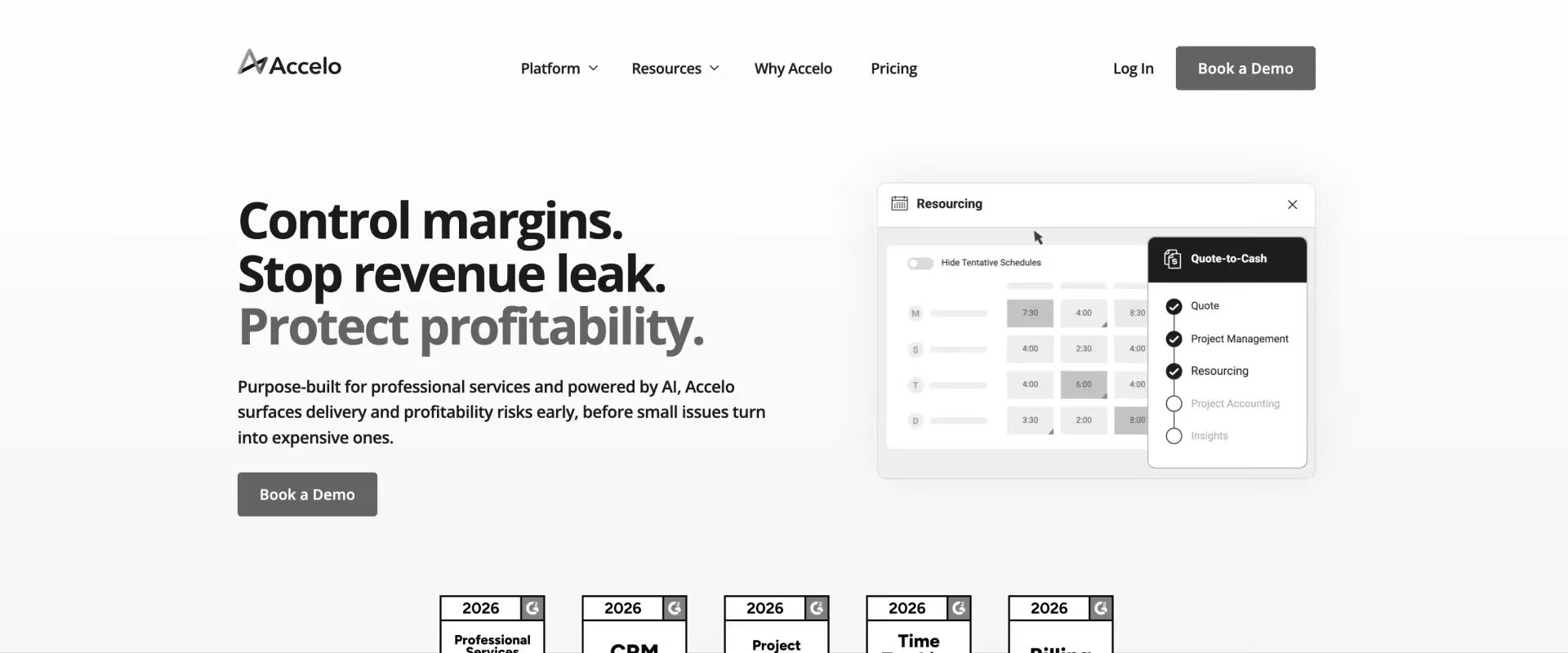
Accelo is a professional services automation and client work management platform that combines CRM, project management, ticketing, retainers, billing, time tracking, and customer operations inside a unified operational system.
It is used primarily by agencies, MSPs, consulting firms, accounting practices, and recurring-services organizations that manage long-term client relationships across multiple types of work.
For teams moving away from Projectworks, Accelo usually feels significantly more operationally connected and service-oriented.
Delivery execution, recurring work, support requests, invoicing, and CRM visibility remain tied together, reducing the amount of coordination required between delivery, account management, and finance teams. This is particularly useful for organizations managing ongoing client relationships rather than discrete implementation projects alone.
Its strongest capability is operational continuity across recurring services workflows. Agencies and service firms that manage retainers, recurring tickets, long-term customer accounts, or blended project-plus-support models often find Accelo more aligned to how their business actually operates than governance-heavy PSA environments.
The tradeoff is operational density. Accelo’s workflow automation model is powerful, but it can become complex as organizations layer in automations, recurring processes, ticket routing logic, approval workflows, and operational customization. Teams frequently mention a steeper onboarding curve, particularly when standardizing operational processes during implementation.
The platform is also less optimized for enterprise portfolio governance, advanced forecasting sophistication, or highly structured PMO environments.
Organizations operating large-scale transformation programs or deeply layered enterprise resource models may still require additional planning systems.
Key features
- Unified client operations model: CRM, projects, tickets, retainers, time tracking, invoicing, and customer history remain connected inside a shared operational environment centered around the client account.
- Recurring work and retainer management: Accelo is particularly strong for organizations managing recurring service agreements, retainers, ongoing support work, and blended delivery models.
- Workflow automation: Automated routing, recurring task generation, billing triggers, notifications, ticket escalation, and operational workflows reduce manual coordination across teams.
- Project financial visibility: Time tracking, profitability visibility, budgets, invoicing, and delivery reporting remain connected directly to customer work and operational activity.
- Resource management and scheduling: Teams can manage workload balancing, scheduling visibility, staffing coordination, and resource allocation across projects and recurring workstreams.
- Integrated customer history: Delivery activity, conversations, invoices, tickets, project records, and operational history remain centralized around the customer relationship.
Pros and cons
Best for
- Agencies and MSPs managing recurring client work
- Consulting firms running blended project-plus-support delivery models
- Service businesses wanting CRM, ticketing, PSA, and billing continuity
- Organizations prioritizing operational automation across client workflows
Key takeaways
What customers say (G2 reviews)
5. Kantata
.avif)
Kantata is an enterprise professional services automation platform built around resource management, utilization optimization, project financials, forecasting, and operational planning for consulting firms and large professional services organizations.
Formed through the merger of Mavenlink and Kimble, the platform combines PSA functionality with enterprise-grade resource planning and delivery operations management.
Kantata is designed for organizations managing large pools of billable talent across multiple concurrent projects, regions, and delivery teams.
Capacity forecasting, scenario planning, staffing visibility, and utilization optimization are significantly deeper than what most mid-market PSA platforms provide.
The tradeoff is complexity. Kantata is operationally sophisticated, but that comes with implementation overhead, process discipline requirements, and administrative complexity.
Organizations frequently require mature operations teams, dedicated PSA ownership, and standardized delivery processes to fully operationalize the platform.
Smaller firms or fast-moving implementation teams can sometimes find the operational model heavier than necessary for their workflows.
Kantata is also more internally focused than customer-facing delivery platforms. While collaboration and project execution capabilities exist, the platform’s center of gravity remains resource economics, forecasting, and operational optimization rather than onboarding orchestration or client-facing delivery experiences.
Key features
- Advanced resource forecasting: Capacity planning, utilization forecasting, staffing optimization, and scenario modeling support large-scale professional services resource management across multiple teams and delivery portfolios.
- Project financial management: Budgets, revenue forecasting, margin visibility, delivery profitability, and utilization metrics remain tightly connected to project execution and staffing allocation.
- Enterprise services operations visibility: Portfolio reporting combines delivery health, staffing status, forecasted revenue, utilization trends, and financial performance into centralized operational visibility.
- Skills-based staffing coordination: Teams can allocate work based on skills, availability, utilization targets, delivery timelines, and resource capacity constraints.
- Integrated PSA workflows: Project management, resource allocation, time tracking, forecasting, and financial operations operate inside a connected PSA environment.
- Operational analytics and forecasting: Kantata emphasizes predictive operational planning, delivery forecasting, and resource optimization for consulting organizations managing complex delivery environments.
Pros and cons
Best for
- Consulting firms managing large billable delivery organizations
- Professional services teams prioritizing forecasting and utilization optimization
- Enterprise PS organizations needing sophisticated resource orchestration
- Finance-heavy services operations managing margins at scale
Key takeaways
What customers say (G2 reviews)
6. Productive.io
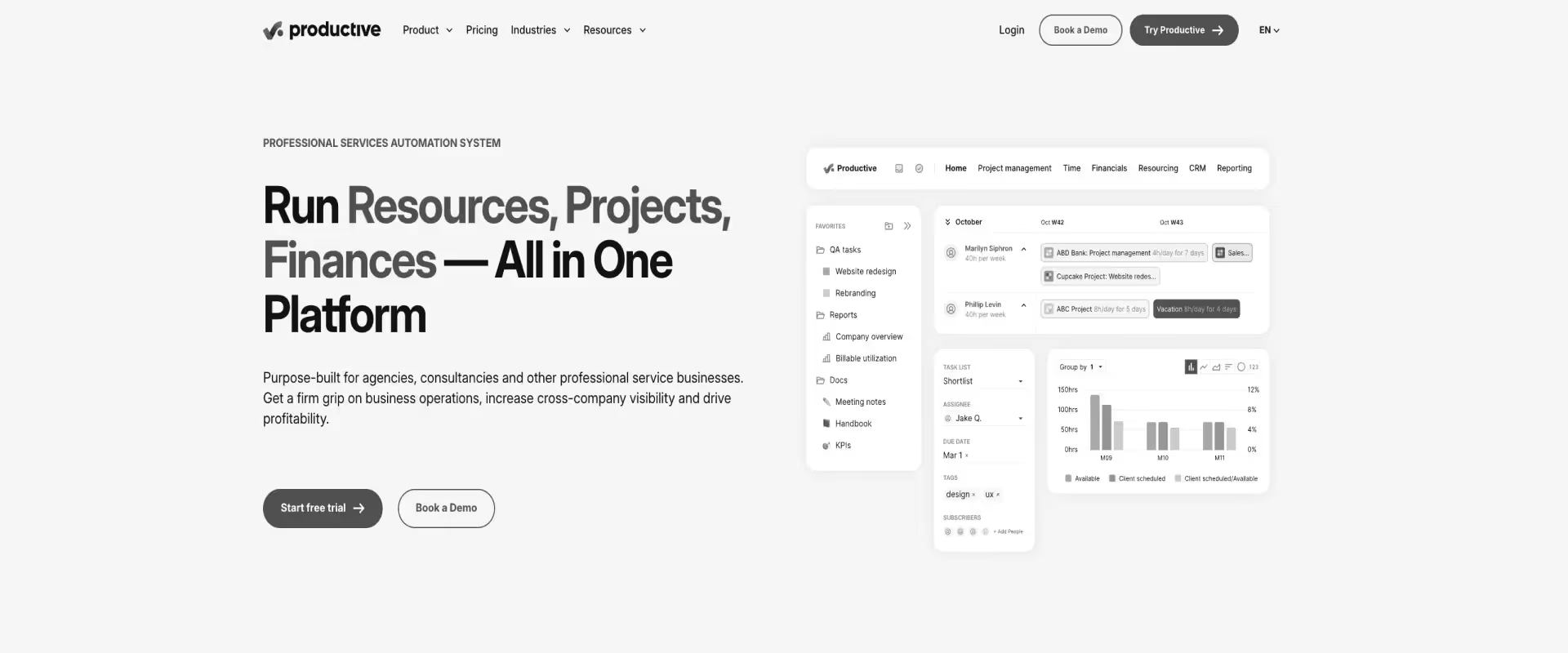
Productive.io is a professional services automation platform built primarily for agencies, consultancies, creative firms, and mid-market service organizations that want project management, resource planning, budgeting, profitability tracking, and operational reporting inside a modern, relatively lightweight system.
Its operational model is centered around helping services businesses connect delivery execution with utilization and financial visibility without the administrative overhead associated with larger enterprise PSA platforms.
For teams moving away from Projectworks, Productive.io often feels substantially simpler and more operationally approachable. The interface is modern, the workflows are easier to operationalize, and the platform keeps project execution, budgeting, utilization, and forecasting more tightly connected than many traditional work management tools.
Its strongest capability is balancing usability with operational visibility. Teams can manage projects, allocate resources, track profitability, forecast revenue, and monitor utilization without requiring a heavily layered PMO structure or dedicated PSA administration team.
That said, the platform is optimized primarily for mid-market operational complexity. Organizations managing deeply customized enterprise delivery workflows, sophisticated portfolio governance structures, or highly layered global resource planning may eventually encounter scalability and forecasting limitations as operational complexity increases.
Customer-facing delivery collaboration is also not the platform’s primary differentiator. Productive.io is significantly stronger on internal delivery operations, resource coordination, and financial visibility than on external onboarding orchestration or client-facing workflow experiences.
Key features
- Integrated project and financial operations: Projects, budgets, utilization, forecasting, profitability tracking, and resource planning remain connected inside a shared operational workflow.
- Resource planning and workload management: Teams can manage allocations, scheduling, staffing visibility, and workload balancing across concurrent client engagements.
- Profitability and budget visibility: Revenue forecasting, margin analysis, quoted-versus-actual tracking, and delivery profitability reporting remain tightly connected to project execution.
- Operational reporting and forecasting: Leadership dashboards provide visibility into utilization, delivery health, forecasted revenue, budgets, and operational performance across teams and clients.
- Time tracking and utilization management: Time capture remains integrated with delivery execution and financial reporting, supporting billable utilization analysis and forecasting accuracy.
- Modern operational UX: Productive.io emphasizes operational simplicity and usability more heavily than many enterprise PSA environments, reducing friction for day-to-day delivery teams.
Pros and cons
Best for
- Agencies and consultancies replacing spreadsheet-heavy operations
- Mid-market professional services organizations prioritizing usability and visibility together
- Teams needing project delivery, resource planning, and profitability tracking inside one system
- Service businesses wanting PSA depth without enterprise operational overhead
Key takeaways
What customers say (G2 reviews)
7. Teamwork
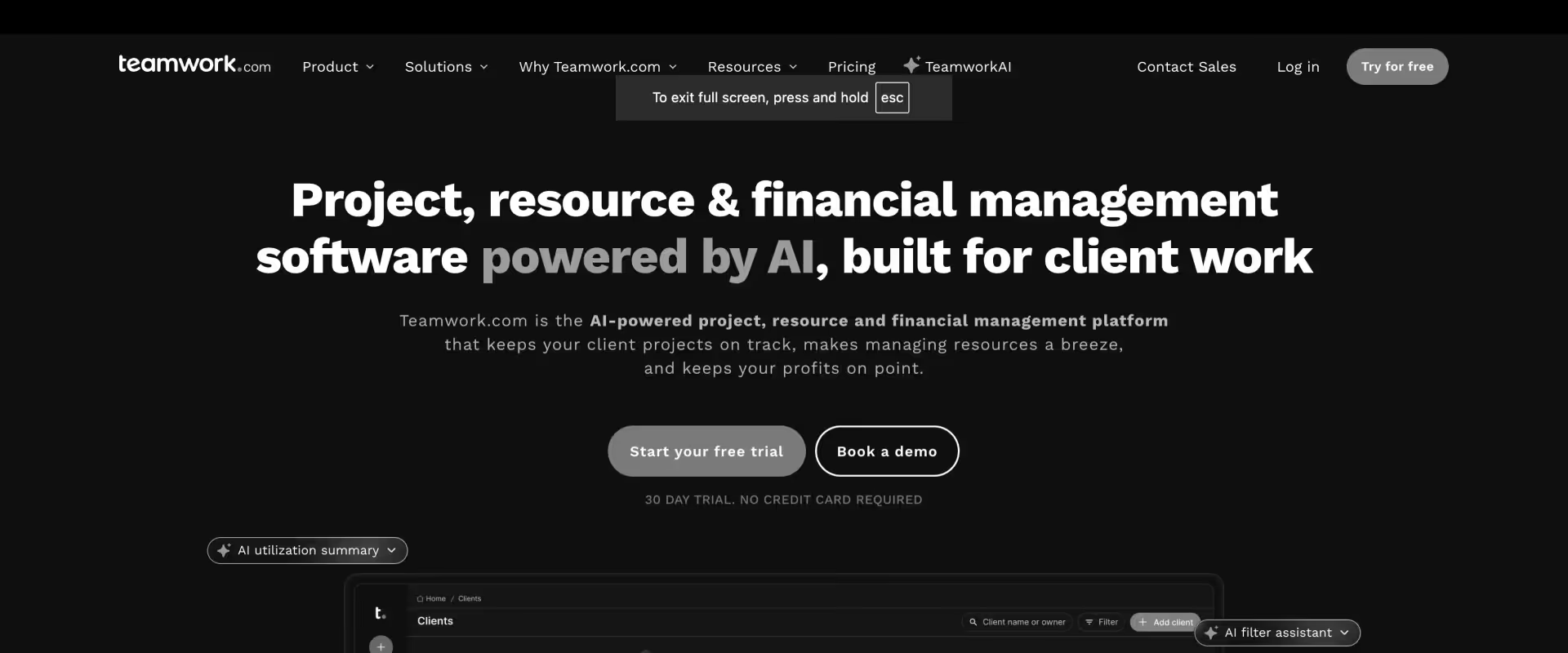
Teamwork is a project management and client operations platform built primarily for agencies, consulting firms, marketing teams, and customer-facing service organizations managing billable client work.
Unlike traditional enterprise PSA systems, Teamwork is centered more heavily around collaborative delivery execution, client coordination, and operational simplicity than deep project governance or enterprise financial management.
It is designed around the realities of agencies and service businesses managing ongoing client delivery: timelines, approvals, shared visibility, billable work, recurring tasks, and collaborative execution across internal and external stakeholders.
The tradeoff is that Teamwork is not a deeply enterprise-oriented PSA system. Financial forecasting, advanced resource optimization, portfolio governance, and large-scale enterprise reporting are significantly lighter than platforms built specifically for complex consulting operations or global services organizations. It also prioritizes usability over operational depth in several areas.
That improves adoption and day-to-day execution speed, but organizations looking for highly configurable operational logic, complex forecasting models, or deeply customized financial workflows may find the platform intentionally narrower in scope.
Key features
- Collaborative project management: Task management, timelines, dependencies, milestones, approvals, and shared delivery coordination support customer-facing project execution across teams and clients.
- Client-facing delivery workflows: Teamwork includes customer collaboration features, shared project visibility, proofing workflows, and communication layers designed specifically for external-facing service delivery.
- Time tracking and billable work management: Time capture, budgeting, billable-hours tracking, and invoicing workflows remain connected directly to project execution.
- Resource and workload visibility: Workload management and scheduling tools help teams balance delivery capacity across projects and client engagements.
- Project profitability visibility: Budgets, tracked time, invoicing, and financial reporting support basic profitability and operational performance visibility.
- Operational simplicity and usability: Teamwork emphasizes relatively fast onboarding, intuitive execution workflows, and lower operational overhead compared to larger enterprise PSA systems.
Pros and cons
Best for
- Agencies and consulting firms managing collaborative client delivery
- Customer onboarding and implementation teams
- Mid-market services organizations prioritizing usability and customer coordination
- Teams replacing fragmented PM + client communication workflows
Key takeaways
What customers say (G2 reviews)
8. ProWorkflow
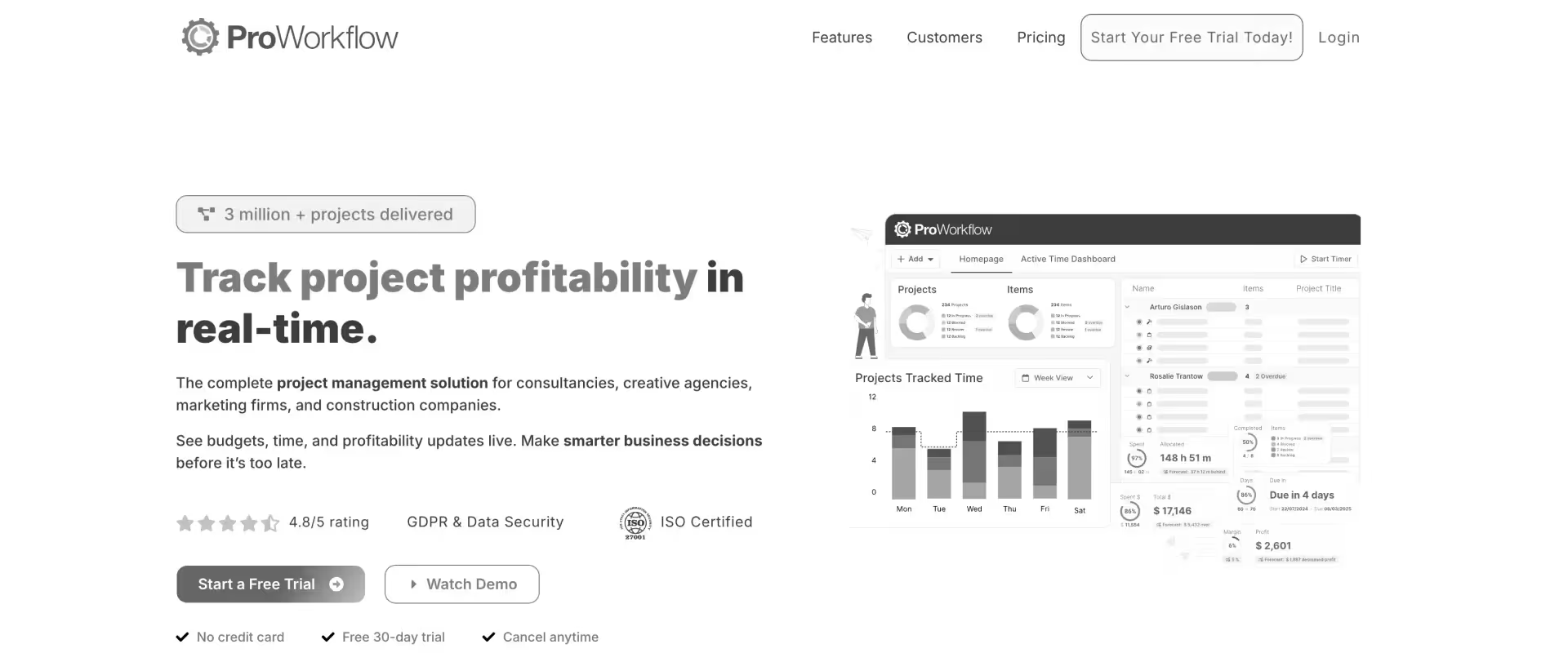
ProWorkflow is a project management and work tracking platform built for agencies, consulting firms, creative teams, and operational service businesses that need structured task management, time tracking, workload visibility, and project coordination without the complexity of enterprise PSA systems.
The platform focuses primarily on operational control and day-to-day execution management rather than deep financial orchestration or enterprise portfolio governance.
For teams moving away from Projectworks, ProWorkflow typically feels much simpler operationally. The interface is centered around projects, tasks, timelines, workloads, and tracked effort rather than layered governance structures or enterprise resource planning models.
Project timelines, workloads, task dependencies, approvals, and time tracking remain centralized inside a relatively lightweight operational environment. This makes the platform particularly attractive for teams that primarily need delivery coordination and operational visibility rather than highly sophisticated forecasting or financial management depth.
Compared to full PSA platforms, however, ProWorkflow is operationally narrower in scope. Financial forecasting, advanced profitability analysis, enterprise-grade resource optimization, and deeply integrated quote-to-cash workflows are relatively limited.
Many organizations continue using separate accounting, CRM, or forecasting systems alongside it, particularly as operational complexity increases.
Key features
- Project and task management: Projects, milestones, task dependencies, approvals, and delivery timelines remain centralized inside a structured execution workflow.
- Time tracking and workload visibility: Teams can track billable and non-billable time, monitor workloads, and manage resource availability across active projects.
- Operational reporting: Dashboards and reporting views provide visibility into project progress, tracked time, team activity, and delivery status.
- Workflow and approval management: Approval flows, task routing, recurring work structures, and operational coordination support day-to-day service delivery execution.
- Team collaboration: Shared task visibility, file management, comments, and communication workflows support coordination across distributed delivery teams.
- Operational simplicity: ProWorkflow emphasizes usability, straightforward implementation, and lower operational overhead compared to enterprise PSA environments.
Pros and cons
Best for
- Small to mid-sized agencies and consulting teams
- Service organizations prioritizing operational simplicity and execution visibility
- Teams replacing spreadsheet-heavy project coordination workflows
- Organizations needing structured delivery tracking without enterprise PSA complexity
Key takeaways
What customers say (G2 reviews)
Projectworks alternatives compared: feature-by-feature breakdown for PS firms
⚠️ = feature exists with limitations or partial coverage. ❌ = not available natively.
How do you choose the right Projectworks alternative for your PS firm?

Most PSA evaluations become difficult because firms evaluate platforms through feature lists instead of operational failure points.
The more useful approach is to evaluate where the current operating model is accumulating friction, then determine whether the next platform reduces that friction structurally or simply redistributes it across new workflows and systems.
For professional services firms, the evaluation usually comes down to five operational layers:
- Delivery coordination
- Resource management
- Financial visibility
- Client collaboration
- Operational scalability
1. Evaluate where operational coordination is breaking down
The first question is whether the organization still operates from a shared operational system or from a collection of partially connected workflows.
Common signals include:
- Delivery reporting requires manual consolidation
- Project reviews depend on exported data
- Teams operate across multiple systems
- Operational visibility arrives late
- Leadership reviews require spreadsheet reconciliation
Once delivery coordination moves outside the PSA itself, operational overhead tends to compound quickly across finance, staffing, and customer communication workflows.
Platforms like Rocketlane are increasingly positioned around unifying delivery execution, staffing, financials, and customer collaboration inside the same operational layer, which becomes more important as portfolio complexity increases.
2. Assess the maturity of resource management requirements
Many firms initially evaluate resource planning as a scheduling problem. At scale, it becomes a portfolio optimization problem.
The operational shift usually happens when staffing decisions begin affecting:
- Forecast accuracy
- Revenue timing
- Utilization targets
- Hiring plans
- Delivery risk across multiple engagements
At that stage, firms typically need:
- Forward-looking capacity visibility
- Cross-project staffing coordination
- Skills-based resource matching
- Utilization monitoring across portfolios
- Scenario-based planning
Kantata remains strong for deeply mature enterprise resource management environments.
Rocketlane tends to fit organizations that want strong staffing visibility without introducing heavy operational administration overhead.
3. Determine how financial visibility needs to operate
One of the clearest indicators of PSA maturity is how quickly delivery and finance data need to converge operationally.
Some firms can still operate effectively with retrospective reporting cycles. Others increasingly require:
- Real-time margin visibility
- Continuous budget monitoring
- Forecast adjustments during delivery
- Operational profitability tracking
- Delivery-finance alignment inside execution workflows
The more interconnected delivery operations become, the less effective delayed reporting models tend to be.
Rocketlane, BigTime, and Scoro each approach this differently:
- Rocketlane emphasizes live delivery-financial coordination
- BigTime is designed around billing and invoicing operations
- Scoro is strong for quote-to-cash operational consolidation
4. Examine how customer collaboration actually happens
Many firms underestimate how much operational labor is spent translating internal project execution into customer-facing visibility.
Typical friction points include:
- Manual status reporting
- Approval tracking across email
- Disconnected customer communication
- Externally rebuilt delivery visibility
- Fragmented documentation sharing
Modern implementation and consulting environments increasingly expect:
- Shared delivery workspaces
- Real-time milestone visibility
- Integrated approvals and documentation
- Centralized customer collaboration
Rocketlane places unusually strong emphasis on customer-facing delivery operations as part of the core implementation workflow. Teamwork and Accelo also perform well for service organizations prioritizing customer collaboration.
5. Evaluate whether the platform reduces operational labor over time
AI discussions in PSA evaluations are often too feature-focused. The more useful evaluation question is: Does the platform reduce operational coordination work as delivery complexity increases?
Practically useful operational AI usually improves:
- Reporting automation
- Delivery risk detection
- Documentation generation
- Staffing coordination
- Forecast analysis
- Governance monitoring
6. Use the demo to ask questions that expose operational reality
Most PSA demos are optimized to showcase workflow flexibility, dashboards, and reporting polish. Those things matter less than how the system behaves under actual delivery pressure.
The most useful evaluation questions usually reveal:
- How much operational work still happens outside the platform
- Whether delivery and financial systems are truly connected
- How quickly teams can respond to delivery changes
- How much manual coordination the platform still requires
Revealing questions include:
- Show live project profitability for an active engagement right now: Where is the data coming from, how frequently does it update, and what still requires reconciliation outside the system?
- Walk through a real staffing decision: If a critical consultant becomes unavailable today, how does the platform help rebalance delivery risk across the portfolio?
- Show what the client actually sees during delivery: Is customer visibility operationally native or manually curated by the project team?
- Demonstrate how scope change affects forecasting: What updates automatically across staffing, margins, timelines, and financial projections?
- Explain what operational workflows still require spreadsheets: Resource planning, portfolio reviews, utilization tracking, forecasting, governance, approvals, or reporting.
- Show how implementation actually works: Who owns migration, workflow design, data validation, and operational rollout internally?
- Demonstrate what the AI actively executes today: Reporting assistance is common. Operational automation inside delivery workflows is much rarer.
- Show how the platform handles scale: What changes when the organization moves from 30 concurrent projects to 300?
Best Projectworks alternative by company type, team size, and use case
Different PSA platforms tend to fit different operational priorities. In practice, most evaluations come down to where the organization is feeling the most pressure: staffing coordination, financial visibility, customer collaboration, reporting overhead, or scalability.
Rocketlane appears frequently across these scenarios because it sits in a relatively uncommon position in the PSA market: deeper operational coordination than lightweight work-management tools, but lower implementation overhead than many enterprise PSA environments.
Best Projectworks alternative by global region
ANZ (Australia and New Zealand)
ANZ remains one of the strongest Projectworks markets, especially across consulting and IT services firms. Evaluations typically intensify once staffing coordination, utilization visibility, and customer-facing delivery workflows become harder to manage operationally. Rocketlane and ProWorkflow are both commonly shortlisted, though they serve very different levels of maturity.
North America
In North America, PSA evaluations are often triggered by reporting overhead, disconnected delivery-finance workflows, and low adoption across consulting teams. Rocketlane, BigTime, and Scoro all have strong presence here, usually aligned to different operational priorities around delivery orchestration, billing operations, or quote-to-cash management.
UK (post-IR35)
UK firms often prioritize contractor time tracking, VAT workflows, multi-entity billing, and operational governance. Rocketlane, BigTime, Kantata, and Scoro are all commonly evaluated depending on whether the organization leans more heavily toward delivery coordination, financial operations, or enterprise resource management.
EU (Germany, Benelux, Nordics)
EU evaluations are usually shaped by GDPR requirements, multi-currency billing, and cross-border visibility. Scoro is particularly common in smaller and mid-market European environments, while Rocketlane and Kantata appear more frequently in larger implementation-heavy organizations.
APAC (India and Southeast Asia)
Fast-scaling SaaS onboarding and IT services firms in APAC often prioritize utilization visibility, staffing coordination, and operational efficiency at scale. Rocketlane tends to resonate strongly in these implementation-focused delivery environments because of its customer-facing workflow design and faster rollout model.
MENA
MENA-based consulting and IT services firms increasingly focus on multi-currency operations, distributed delivery coordination, and standardization as they scale across regions. PSA evaluations here are often driven by balancing operational maturity with implementation simplicity.
Why is Rocketlane the best Projectworks alternative for PS teams in 2026?

Most PSA platforms solve one part of the delivery problem well. Rocketlane is built differently.
Its agentic execution platform ensures that project execution, resource allocation, financial tracking, and client interaction happen in a single data layer, which means information stays current across all four without manual reconciliation, tool-switching, or end-of-month data assembly.
For PS teams that have outgrown lighter-weight tooling, that connection is where the real difference shows up.
1. Financials move with execution, not after it
In most PS environments, financial state lags delivery by days or weeks. Reports reflect last month. Margin surprises surface during reconciliation, while there is still time to act on them only if the system is built for it.
Rocketlane connects financial state directly to execution. When a consultant logs time against a task, it immediately reflects against the phase budget, billing rate, and revenue recognition method tied to that work. There is no batch processing — real-time data flows from time entries through to margin and revenue recognition continuously.
Budget vs. actuals stay aligned at the task and phase level in real time. Business IQ, Rocketlane's portfolio reporting layer, consolidates project financials, utilization, and delivery health into a single view that updates continuously rather than on a reporting cycle.
In practice this means a PS leader can see, at any point during the month:
- Which projects are trending beyond budget and at which phase
- Where margin is compressing and why
- What recognized revenue looks like against forecast, across the full portfolio
The 2026 SPI Professional Services Maturity Benchmark, co-published with Rocketlane across 509 PS organizations managing $63 billion in revenue, identifies real-time integrated visibility across delivery, resources, and financials as the single capability separating high-performance organizations from the rest.
High performers were 19% more visible across their organizations than average firms.
2. Client collaboration is part of delivery, not adjacent to it
The standard pattern in PS delivery places client communication in email and Slack, project status in the PSA, and a weekly production job somewhere in between to bridge the two. Rocketlane eliminates that layer by building the client portal directly into the delivery workflow.
Clients see milestones, tasks, deliverables, and documents as they evolve. Approvals happen in context, with full visibility into what is being approved and where it sits in the project. Scope changes are visible against the original plan. Progress updates reflect actual project state rather than a manually curated summary.
Rocketlane’s impact in numbers
3. Nitro: AI that executes delivery work, not just reports on it
Most AI in PSA platforms is analytical. It surfaces dashboards, flags anomalies, and generates summaries. Nitro, Rocketlane's agentic execution layer launched in March 2026, operates at a different level.
Nitro reads SOWs, scoping documents, emails, and call transcripts to auto-generate structured project plans with phases, tasks, and milestones populated from actual project context.
It performs repeatable delivery tasks including migrations, configurations, documentation, testing, and validation directly within project workflows. It monitors customer conversations continuously to surface early risk signals: escalation indicators, scope creep, churn signals, and expansion opportunities. It identifies missing timesheets and un-invoiced hours before they become margin surprises. When a team member goes on leave, Nitro rebalances resourcing automatically.
The shift this represents is meaningful. Traditional PSA platforms record and track work. Nitro is designed to participate directly in execution workflows. This marks a shift from merely tracking work to actively executing it.
According to Rocketlane’s internal data, teams report up to 50% reduction in delivery effort for teams running Nitro on repeatable implementation work.
4. Resource allocation tied to live delivery data
Rocketlane's ResourceAI surfaces available team members based on skills, current utilization, workload, and project context. When timelines shift or scope changes on an active engagement, resource views update accordingly.
Utilization is derived from actual time and allocation data, giving operations leaders a current picture of how capacity is being consumed across the portfolio. Forward allocation and pipeline demand are visible together, so hiring decisions and bench management draw from the same data as delivery decisions.
The 2026 SPI benchmark establishes 70%+ billable utilization as the high-performance threshold. Teams running resource planning in spreadsheets or disconnected tools consistently fall short, not from a lack of people, but from a lack of visibility into how those people are actually deployed.
5. Delivery scales without adding coordination overhead
The coordination cost in PS delivery compounds with project volume. Every new engagement that requires custom setup, manual status updates, or individual tracking configuration adds overhead that grows faster than revenue.
Rocketlane addresses this structurally. Projects launch from templates built on CRM data, prior project patterns, and engagement type, with conditional logic that adapts the template to the client context.
Governance rules including budget thresholds, approval gates, timesheet requirements, and stage gates are enforced automatically by Nitro throughout the engagement. Delivery standards apply consistently regardless of which project manager is running the work, and overhead grows more slowly than the book of business.
Project44 automated invoicing, improved executive reporting, and sustained approximately 80% utilization while cutting manual work, without adding headcount to the operations function.
Which is better: Projectworks or Rocketlane?
Projectworks is the better fit for smaller PS firms that are still in a relatively contained stage of operations — stable team, manageable project volume, and limited pressure for cross-portfolio visibility. It is approachable, fast to implement, and covers the core PSA basics without heavy administrative overhead.
Rocketlane is the better fit once that stage ends. When delivery operations grow more interconnected — more concurrent engagements, tighter margin pressure, clients who expect real-time visibility, and leadership teams asking portfolio questions the PSA can't answer without a spreadsheet.
The practical distinction is this: Projectworks tracks work. Rocketlane executes it. For teams that have outgrown lightweight PSA tooling, that difference shows up daily — in how quickly margin questions get answered, how much time goes into client reporting, and how reliably resource decisions reflect what's actually happening across the portfolio.
Why teams switch from Projectworks to Rocketlane
The decision to switch is almost never sudden. It accumulates through operational friction that becomes harder to absorb as the business grows. The five triggers that most commonly drive the move:
1. Portfolio financial visibility requires spreadsheets built outside the PSA. Projectworks provides project-level budget tracking, but margin visibility across a concurrent portfolio typically ends up in a spreadsheet someone maintains manually. By the time leadership reviews that data, it is already a week behind. Rocketlane connects financial state to execution continuously, so portfolio margin is visible inside the system — not assembled outside it.
2. No native client portal means manual status reporting every engagement. Without a built-in client-facing layer, PS teams default to weekly status emails, manually curated decks, or shared folders that quickly fall out of sync with actual project state. That production overhead compounds across every active account. Rocketlane's client portal is embedded directly in the delivery workflow, so clients see live project state without a manual bridge.
3. Resource planning degrades across concurrent projects. Projectworks handles individual project staffing reasonably well. The breakdown happens at the portfolio level — when the same consultant is allocated across three engagements and no single view shows the conflict, or when a new deal closes and the capacity picture requires an offline conversation to understand. Rocketlane's ResourceAI maintains a continuous, portfolio-wide allocation view that updates as timelines and scope shift.
4. Leadership questions take days to answer instead of seconds. When portfolio data lives outside the PSA, answering a question about utilization trends or margin variance means locating the right export, rebuilding context, and validating numbers before the answer is ready. Teams running Rocketlane's Nitro Analyst can get the same questions answered in plain language from live data — without leaving the platform.
5. Delivery governance becomes inconsistent as team size grows. In smaller firms, delivery standards are enforced through familiarity. As the team grows and project volume increases, enforcement depends on individual PMs following process correctly on every engagement. Rocketlane applies governance rules — budget thresholds, approval gates, timesheet requirements, stage gates — automatically throughout the engagement, regardless of who is managing the project.
Quick snapshot: Projectworks vs. Rocketlane
Why should you trust Rocketlane?
750+ customers, 94% G2 recommendation rate, $60M Series C from Insight Partners (March 2026), revenue more than doubled year-over-year.
How Rocketlane Nitro gives PS leaders the automation Projectworks was never designed to provide
The manual processes that grow up around Projectworks — the weekly client reporting job, the utilization spreadsheet, the offline portfolio conversation before every leadership review — exist because the platform may not support what the business has grown to need.
They are not process failures. They are rational responses to a platform ceiling. Nitro is where Rocketlane addresses those gaps at the system level, so the workarounds cease to be necessary rather than simply becoming more efficient.
Nitro is Rocketlane's agentic AI system: purpose-built agents running inside the same operational layer as project delivery, resource planning, and financial tracking. The agents act on live delivery state, surface what matters without requiring a reporting cycle, and handle work that currently falls to your team between what the platform tracks and what the business needs to know.
What Nitro replaces in a Projectworks environment
Visibility: from offline data assembly to live portfolio intelligence
Portfolio-level financial visibility is the most consistent gap firms hit when they outgrow Projectworks. Project-level budgets exist in the system. What does not exist is a view of margin across concurrent engagements, utilization trends across the team, or delivery risk across the portfolio — without building it manually in a spreadsheet that is always slightly behind.
The Nitro Analyst Agent:
- Answers portfolio questions in plain language from live data — margin variance, utilization trends, project health, revenue forecasts
- Returns answers with root cause visible, not just the number
- Supports immediate follow-up exploration without reconstructing context across tools
- Runs recurring analyses automatically so leadership reviews begin with a current operational baseline
The PS outcome: The question that took three days to answer last quarter takes thirty seconds. Leadership conversations shift from data validation to decision-making.
Resource management: from project-level planning to portfolio-wide allocation intelligence
Resource planning in Projectworks works cleanly at the individual project level. The degradation happens at the portfolio level — when concurrent engagements start affecting each other's staffing, when a key person is overallocated across three projects and no single view shows it, when a new engagement is sold and the capacity picture requires an offline conversation to assemble.
The Nitro Resourcing Agent:
- Manages skill matching, reallocation, extensions, and backfills automatically across every active engagement
- Maintains a continuous, portfolio-wide allocation view updated as project timelines shift
- Flags overallocation and capacity conflicts before they affect delivery or require escalation
- Connects pipeline demand to current capacity so staffing decisions on new engagements are grounded in real availability
The PS outcome: Staffing decisions are made with a complete, current picture of the portfolio. The platform reduces the amount of offline coordination required.
Timesheet and billing compliance: from manual chase to system-enforced accuracy
The Nitro Timesheet Policy Agent:
- Enforces submission rules at the point of entry, eliminating the weekly PM chase
- Keeps time entries tied directly to tasks and financials rather than logged separately and reconciled
- Maintains billing data accuracy without manual intervention between capture and invoice
- Flags exceptions before they affect downstream billing or margin reporting
The PS outcome: Timesheet compliance becomes a system property. Billing cycles run cleaner. PMs redirect the time spent on compliance chasing toward delivery.
Account intelligence: from manual status reporting to continuous client signals
In a Projectworks environment, client health is whatever the PM summarized in the last status report. There is no mechanism for continuous signal detection across the portfolio — churn risk, scope drift, and relationship deterioration are invisible until they escalate.
The Nitro Signals Agent:
- Monitors client calls, emails, and delivery activity continuously across every active account
- Surfaces churn risk, engagement shifts, and expansion signals with source and context attached
- Ties each signal to the specific interaction that triggered it, not a weekly summary
- Maintains account context as team members move between engagements
The PS outcome: Account risk surfaces while there is still time to respond. The manual weekly status report is no longer the primary mechanism for understanding what clients are experiencing.
Delivery execution: from repeated manual production to agent-assisted output
The Nitro Documentation and Migration Agents:
- Generate project artifacts — SOWs, handoff documents, BRDs — from calls, emails, and existing materials
- Handle data mapping, transformation, and validation for migration work
- Build reusable playbooks across engagements, reducing repeated setup effort over time
- Move consultant effort from production work to review and delivery judgment
The PS outcome: Non-billable setup overhead decreases per engagement without reducing output quality. Billable consultant time goes toward delivery rather than documentation production.
What does migrating from Projectworks to a modern PSA actually look like?
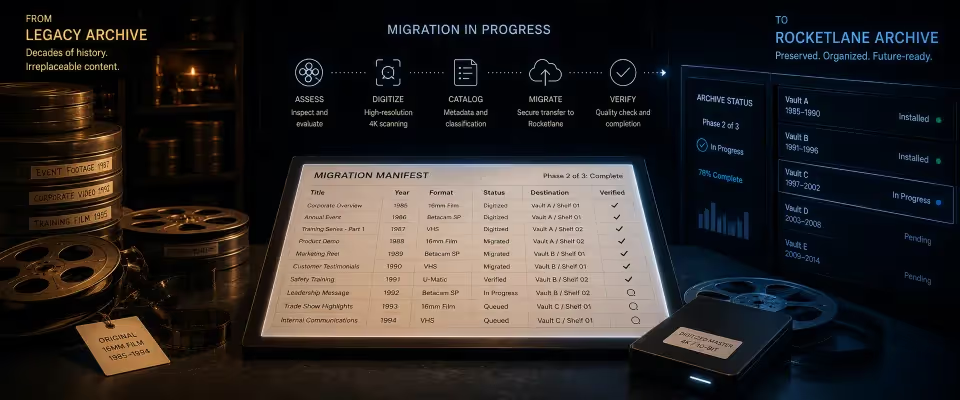
For most professional services firms, migrating away from Projectworks is less of a technical migration and more of an operational redesign exercise.
The hardest part usually is not exporting data. It is untangling years of delivery workflows, reporting logic, staffing processes, and financial coordination habits that evolved around the limitations of the existing system.
In practice, most mid-market consulting and implementation firms complete core PSA migration and rollout within roughly 1–3 months, depending on data quality, integration complexity, reporting requirements, workflow customization, change management scope, and historical data migration depth
The firms that migrate successfully usually treat the transition as an opportunity to simplify operational coordination rather than recreate every legacy workflow exactly as it exists today.
Typical PSA migration phases
Actual timelines vary significantly based on organizational complexity and implementation scope.
What firms typically migrate from Projectworks
Most PSA migrations include:
- Active projects and task structures
- Resource allocations and utilization data
- Time tracking records
- Project financials and budgets
- Customer and account information
- Custom project fields and workflows
- User roles and permissions
- Historical reporting data
Many firms migrate only recent operational history into the new PSA while archiving older historical records separately for reporting and compliance purposes.
The operational challenges behind most PSA migrations
One of the biggest migration risks is assuming every existing workflow should be preserved exactly as-is.
In many PS organizations:
- Reporting layers were added manually over time
- Staffing coordination moved outside the PSA
- Delivery reviews became spreadsheet-driven
- Approval processes expanded reactively
Migration projects work best when teams distinguish between genuine operational requirements, and temporary process adaptations that became permanent
That distinction often determines whether the new platform reduces complexity or simply reproduces it in a different interface.
Data quality is usually a larger issue than data transfer
Most PSA platforms can export operational data successfully. The more difficult challenge is data consistency.
Common issues include:
- Duplicate customer records
- Inconsistent project structures
- Inaccurate utilization tagging
- Fragmented financial categories
- Outdated staffing data
Many firms use migration as an opportunity to standardize operational data models before scaling further.
Parallel rollout is common in consulting organizations
Large PS firms rarely execute a hard system cutover across every active engagement simultaneously. More commonly, a pilot group moves first while active projects transition gradually, as teams validate forecasting and staffing workflows before broader rollout
This reduces delivery disruption and gives operations leaders time to refine workflows during adoption.
The biggest migration mistake PS firms make
The most common failure pattern is treating PSA migration primarily as a system replacement project. Replacing the software without redesigning workflows often recreates the same coordination problems inside a newer interface.
The strongest migrations usually focus on simplification first, platform configuration second.
The shift works best when treated as a reset of how projects are structured and run, not just a transfer of boards from Projectworks to Rocketlane
Conclusion: Which Projectworks alternative is right for your team?
Choosing among Projectworks alternatives is not a dramatic decision for most firms. It is a gradual one — the point where the overhead of working around the platform's limits has quietly become more expensive than the cost of moving to one that fits where the organization actually is.
Projectworks covers the basics that matter at an earlier stage. The firms evaluating alternatives are not looking back at a failed implementation. They are looking forward at a delivery operation that has grown more complex than the platform was designed to support — more concurrent engagements, more demanding clients, more executive pressure for portfolio-level data that takes days to assemble because it does not exist natively in the system.
The productive question is not whether Projectworks has gaps. Every platform does. The question is whether those gaps are now load-bearing — whether the manual processes built around them are consuming real capacity that should be going into delivery.
Modern PSA platforms like Rocketlane are designed for the stage of PS maturity where portfolio financial visibility, native client collaboration, and cross-project resource management are operational requirements. The firms that move at the right time recover margin, capacity, and leadership confidence in the data before the cost of delay compounds further.
Book a 30-minute Rocketlane demo to see what delivery operations look like when the platform grows with the business.
Table of Contents

Regsiter for the live webinar


Great consultants didn't join your team to spend Fridays writing documentation.
Table of contents
18 of Forbes Cloud 100 chose Rocketlane. The best PS teams aren't waiting around.
FAQs
What is the best Projectworks alternative for growing PS firms?
Rocketlane is built for the stage of PS maturity that Projectworks does not reach — where portfolio-level financial visibility, native client collaboration, and cross-project resource management are operational requirements, not nice-to-haves.
Why do PS firms move away from Projectworks?
The decision is almost always growth-driven rather than failure-driven. Projectworks covers project-level basics well enough at smaller scale. The gaps surface as the firm grows: no native client portal means status reporting is manual every week, portfolio-level margin and utilization data requires spreadsheets built outside the system, and resource planning that works cleanly for one project degrades quickly across a portfolio of concurrent engagements.
How does Projectworks compare to Rocketlane for scaling PS organizations?
Projectworks covers timesheet collection, basic resource scheduling, and project-level budget tracking. Rocketlane extends well beyond that into portfolio financial visibility, client-facing delivery portals, AI-assisted resource management, and cross-project analytics.
How long does migration from Projectworks to Rocketlane typically take?
Most firms complete migration within 6–10 weeks. Because Projectworks implementations tend to be relatively lightweight, the data migration and configuration work is manageable without a long runway. Teams typically phase the rollout by project cohort to maintain continuity on active engagements during the transition.
What should PS firms evaluate when comparing Projectworks alternatives?
Most evaluations of Projectworks center around how well the platform supports portfolio-level financial visibility, resource coordination across concurrent engagements, utilization forecasting, customer collaboration, executive reporting, AI-assisted planning, and scalability as delivery complexity grows. Implementation speed and operational rollout effort also play a major role, particularly for firms trying to reduce reporting overhead and fragmented workflows.













Copyright © 2026 Rocketlane Corp. All rights reserved.
















.webp)