
Introduction
If you’re evaluating Accelo alternatives, the friction has become impossible to ignore.
Maybe your team spends more time managing the system than delivering client value.
Maybe your services model has evolved toward faster onboarding, greater outcome ownership, or tighter alignment with customer success, but the system hasn’t kept pace.
Or maybe the tool still “works,” but only at the cost of increasing operational overhead and the need to integrate with accounting software to automate data synchronization.
Integrating accounting software with PSA platforms is crucial for improving workflow efficiency and ensuring accurate financial data across systems.
As a professional services leader, the pressure profile has changed. Clients expect real-time visibility and collaborative delivery.
Teams need intelligence embedded directly in execution workflows. Integration with other tools, such as CRM and accounting software, enhances productivity and streamlines workflows by reducing manual data entry and enabling seamless data flow.
Finance demands predictive margin insights before projects go off the rails. And leadership wants to see how AI is making your services more profitable and efficient.
You’re no longer just tracking utilization and billing. You’re accountable for delivery speed, customer confidence, adoption timelines, and increasingly, revenue influence.
Choosing the right professional services automation (PSA) solution for Accelo is one of your most critical operational decisions.
When evaluating options, it’s important to assess the key features that align with your business’s operational needs and integration requirements.
Your PSA determines whether your teams can execute with the speed, intelligence, and client involvement the market now demands as baseline expectations.
Modern PSA means execution in motion. This means that planning, delivery, and financial reality are automatically connected. Intelligence surfaces exactly when decisions happen. AI capabilities are embedded in how teams work today.
This guide evaluates Accelo alternatives through the lens of the current delivery reality. It examines where Accelo creates friction for execution-focused, AI-enabled teams, and how to choose the best PSA that matches how your business actually runs today—not how vendors think you should run.
What is Accelo professional services automation (PSA)?
Accelo is a professional services automation (PSA) platform designed to help services organizations manage client work end-to-end, from sales handoff through delivery, time tracking, billing, and invoicing.
Its core philosophy is operational structure: define workflows, enforce process consistency, and ensure services move cleanly from quote to cash.
The platform brings together project management, customer relationship management (CRM)-style client tracking, time and expense logging, resource management, utilization reporting, billing, and accounting software into a single operational system.
Accelo is most commonly adopted by small to mid-sized professional services teams, including small businesses seeking affordable and integrated solutions, that want clearer process discipline without implementing a heavyweight enterprise PSA.
At its best, Accelo acts as an operational backbone, providing structure, predictability, and financial traceability for services teams with relatively stable delivery motions.
Where Accelo falls short for modern PS teams
Accelo performs best in environments with predictable delivery paths, standardized workflows, and a strong emphasis on operational discipline.
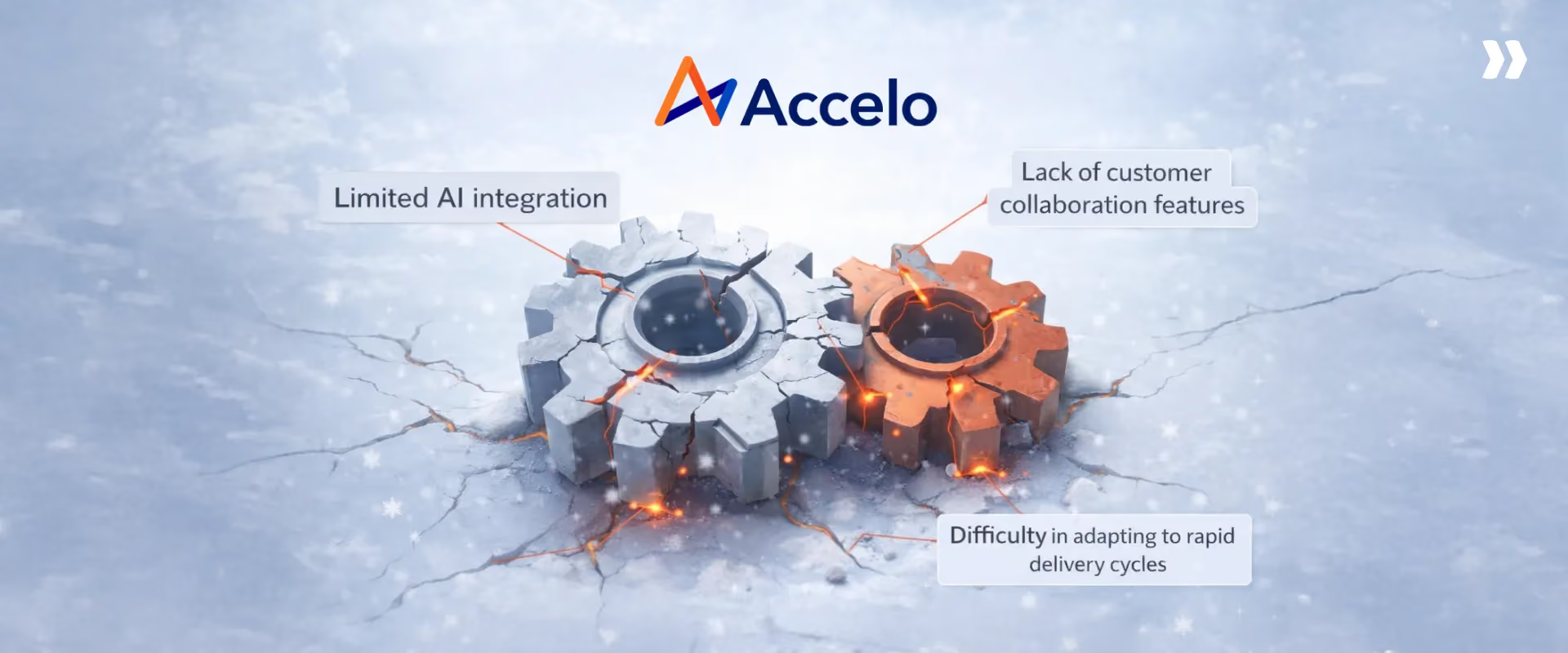
However, as professional services teams become more customer-facing, execution-heavy, and dynamic, limitations begin to surface.
Accelo struggles to adapt when delivery models evolve quickly, projects require frequent iteration, or teams need greater flexibility in how work is planned and executed.
Workflow customization often becomes rigid at scale, making it harder to support onboarding-led, outcome-driven, or services-led growth models.
As a result, modern PS teams may find it difficult to align fast-moving delivery execution with changing customer expectations.
Operations-first, not execution-first
Accelo’s workflows emphasize adherence to internal processes—tracking time, enforcing steps, and closing loops.
While it connects CRM, projects, time tracking, and billing, delivery execution itself is largely task- and workflow-driven.
Effective task assignments and the ability to easily assign tasks can streamline workflows and improve team coordination, making it easier to manage dependencies, milestones, or changing delivery paths, which often otherwise require manual intervention or process workarounds.
Workflow-driven, not delivery-led
Accelo emphasizes predefined workflows and task structures. This works when delivery models are stable and repeatable. As delivery becomes more dynamic, teams often find the system less accommodating, requiring more configuration and admin effort.
Features like project templates and automation capabilities can help teams adapt quickly to changing requirements by streamlining project setup and automating routine tasks.
Professional services teams are increasingly expected to influence:
Accelo’s inward-facing, workflow-centric design does not directly support these expanded responsibilities, especially where delivery or client experience affects commercial outcomes.
Retrospective in insight, not adaptive in execution
Accelo is effective at explaining what already happened, particularly through time and utilization reporting. It offers less support for assessing whether current delivery plans are still workable as dependencies shift, ramp assumptions change, or senior capacity becomes constrained.
The ability to track progress and monitor project status in real time is crucial for identifying bottlenecks and ensuring timely completion, and many Accelo alternatives do so more effectively.
Places customer alignment outside the core workflow
Customer updates, shared visibility, and expectation management are not central to Accelo’s delivery model.
As engagement volume increases, teams often rely on meetings, emails, or parallel tools to keep customers aligned, which adds coordination overhead.
A client portal can centralize communication, enabling clients to access project information, submit requests, and interact directly with the service provider, ultimately improving client relationships through enhanced transparency and collaboration.
Common reasons teams look for Accelo alternatives
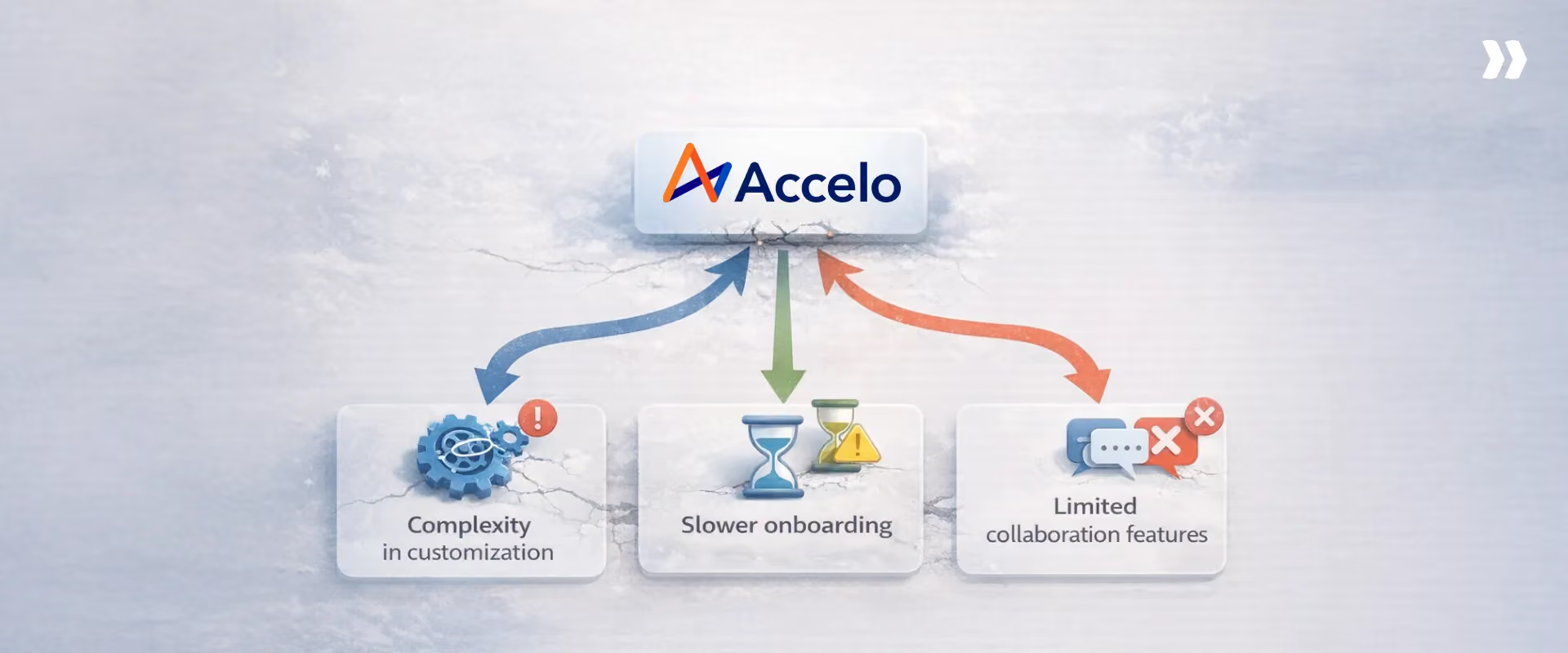
As professional services take on greater responsibility for customer outcomes, the nature of delivery work changes.
Coordination, sequencing, and judgment begin to matter more than enforcing process, and teams start to feel the limits of systems designed primarily for control rather than adaptation.
When coordination becomes a bottleneck, improving team performance and using tools that enhance collaboration can help overcome these challenges by streamlining workflows and facilitating better communication among team members.
At that point, the question shifts. It’s no longer “How do we configure this better?” but “Is this system built for how delivery actually works now?”
Delivery changes faster than workflows can adapt
Accelo performs best when delivery follows a predictable path. As onboarding, implementations, and cross-functional work introduce variability, teams end up reshaping workflows repeatedly.
Flexible project workflows are essential to adapt to changing delivery requirements, ensuring the system supports real-world processes rather than forcing reality to fit the system. This forces reality to fit the system instead of the system moving with delivery.
Coordination becomes the real bottleneck
As scale increases, task execution is rarely the limiting factor. The real drag comes from sequencing work, managing handoffs, and keeping people aligned.
Keeping team members engaged and ensuring clear roles for all team members is essential to maintaining project momentum and effective collaboration.
When the PSA doesn’t absorb this load, it falls on senior contributors and managers.
Utilization stops explaining delivery strain
Teams can meet utilization targets and still struggle to deliver effectively. Over time, leaders see that pressure accumulates around expertise, ramp time, and decision-making.
Consulting firms, in particular, often face these challenges and require tools that provide deeper insights into team capacity and expertise distribution. These are signals that traditional utilization reporting doesn’t surface.
Customer alignment relies too heavily on manual effort
Rising customer expectations make ad hoc updates insufficient. When shared visibility isn’t built into delivery workflows, teams compensate with meetings and emails, increasing process overhead while confidence quietly erodes.
Marketing teams, in particular, benefit from marketing automation and integrated collaboration tools that streamline communication and feedback, reducing manual effort and improving workflow efficiency.
Configuration effort compounds with scale
What initially feels like flexibility gradually becomes operational drag. As delivery paths multiply, maintaining workflows, rules, and reports requires more effort, slowing iteration instead of supporting it.
The ability to automate processes through integrations and open API access can help reduce manual updates and improve efficiency, but this is often limited or requires additional setup.
The system records delivery but doesn’t actively shape and steer it
While Accelo can provide a solid account of what happened, teams need a system that helps them adjust while delivery is still in motion, not one that explains outcomes after they’re locked in.
Using a project management platform designed for dynamic and adaptive project oversight offers real-time tracking and flexibility, enabling teams to respond proactively to changes as they occur.
What to look for in the best Accelo alternatives
The strongest platforms are not defined by how many stages or workflows they support, but by how closely they align with delivery as it unfolds.
When considering Accelo alternatives, it's important to look for solutions that bring all these features together in one platform, making it easier to manage complex projects and diverse teams.
Here’s what you need to look for:
A system anchored in execution, not process stages
The most capable alternatives don’t just move work through predefined steps. They stay anchored to what’s actually happening in delivery by adjusting plans, staffing, and visibility as scope, sequencing, and dependencies change.
Efficiently being able to allocate resources as project needs evolve is crucial for optimizing project management and ensuring successful delivery.
Built-in support for change
Some systems push it onto ops teams through configuration, governance, and reconciliation. Others absorb it by design, reducing the effort required to keep delivery coherent as volume, variability, and expectations increase.
Look for systems that treat scope shifts, timeline movement, and resourcing adjustments as normal execution events rather than exceptions that need rework.
Using a flexible project management tool can help teams easily adapt to evolving requirements, offering customizable and automated features that streamline workflows and minimize manual tasks.
Delivery visibility that’s useful mid-project
Strong alternatives make it easy to answer questions like: Are we still on track? Where is pressure building? Who is overloaded right now?—without waiting for end-of-period reports. The ability to track time as work happens is crucial for monitoring project progress and resource utilization, ensuring teams can respond quickly to changes.
Customer context that lives with delivery
When customer timelines, milestones, and updates live inside the delivery workflow, alignment scales naturally. Visualizing project timelines with tools like Gantt charts or calendar views helps teams improve planning, track progress, and coordinate more effectively. When they don’t, teams compensate with meetings, emails, and manual status work.
Fast time-to-value without heavy setup
Be cautious of flexibility that depends on months of configuration. Systems that become useful quickly—through templates, patterns, and live views—tend to age better as delivery complexity grows.
The ability to quickly create tasks using templates accelerates project setup and execution, making it easier for teams to get started and maintain momentum.
Core evaluation criteria for Accelo alternatives
The following criteria focus on how Accelo alternatives model delivery and surface execution signals. Here are the questions that help determine whether a system enables control or real delivery clarity.
When evaluating financial management features, consider whether the platform offers a streamlined billing process and supports recurring billing.
These capabilities are essential for automating invoicing, managing subscriptions or retainers, and improving revenue collection and financial oversight.
How does the system represent delivery reality?
Real delivery is iterative, dependency-driven, and customer-facing. Tools should support this fluidity. Look beyond workflows and stages to assess whether the system models delivery as fixed to be enforced or dynamic to be continuously reconciled as scope, sequencing, and dependencies evolve.
When comparing Accelo alternatives, carefully evaluate the advanced features offered by each platform to ensure they can handle the complexity and scale of your projects.
Where and when do delivery signals surface?
Some platforms surface insight only after time is logged, and reports are generated. Others expose delivery strain as it forms—when dependencies stack, ramp assumptions break, or senior judgment becomes overextended.
Automation capabilities can help surface these issues early and streamline routine tasks, such as client onboarding and reminders, improving efficiency and reducing the risk of delivery strain.
What kind of capacity does the system actually make visible?
Utilization is table stakes. More revealing is whether the system helps leaders see where expertise concentrates, how decision load accumulates, and which roles quietly become delivery bottlenecks as complexity increases.
Monitoring project performance is also crucial to ensure optimal resource utilization and to identify areas where improvements can be made.
How tightly is customer context coupled to execution?
In many systems, customer alignment is maintained socially rather than systemically. Strong alternatives embed customer visibility into delivery itself, so shared context doesn’t rely on meetings, memory, or manual updates.
Robust client management features play a key role in maintaining strong client relationships and ensuring ongoing alignment between teams and clients.
Is it designed for AI-first execution?
AI should shape planning, resourcing, and execution, not sit as an analytics add-on. Its value lies in acting during execution to shape outcomes, not in explaining them once they’re already decided.
Practical intelligence shows up in “active” ways, like surfacing delivery risk before it escalates, keeping documentation current without chasing inputs, and reducing the need for status updates and coordination work.
The ability to automate processes through integrations and open API access can further reduce manual effort and improve efficiency by simplifying workflows and enabling custom connections across systems.
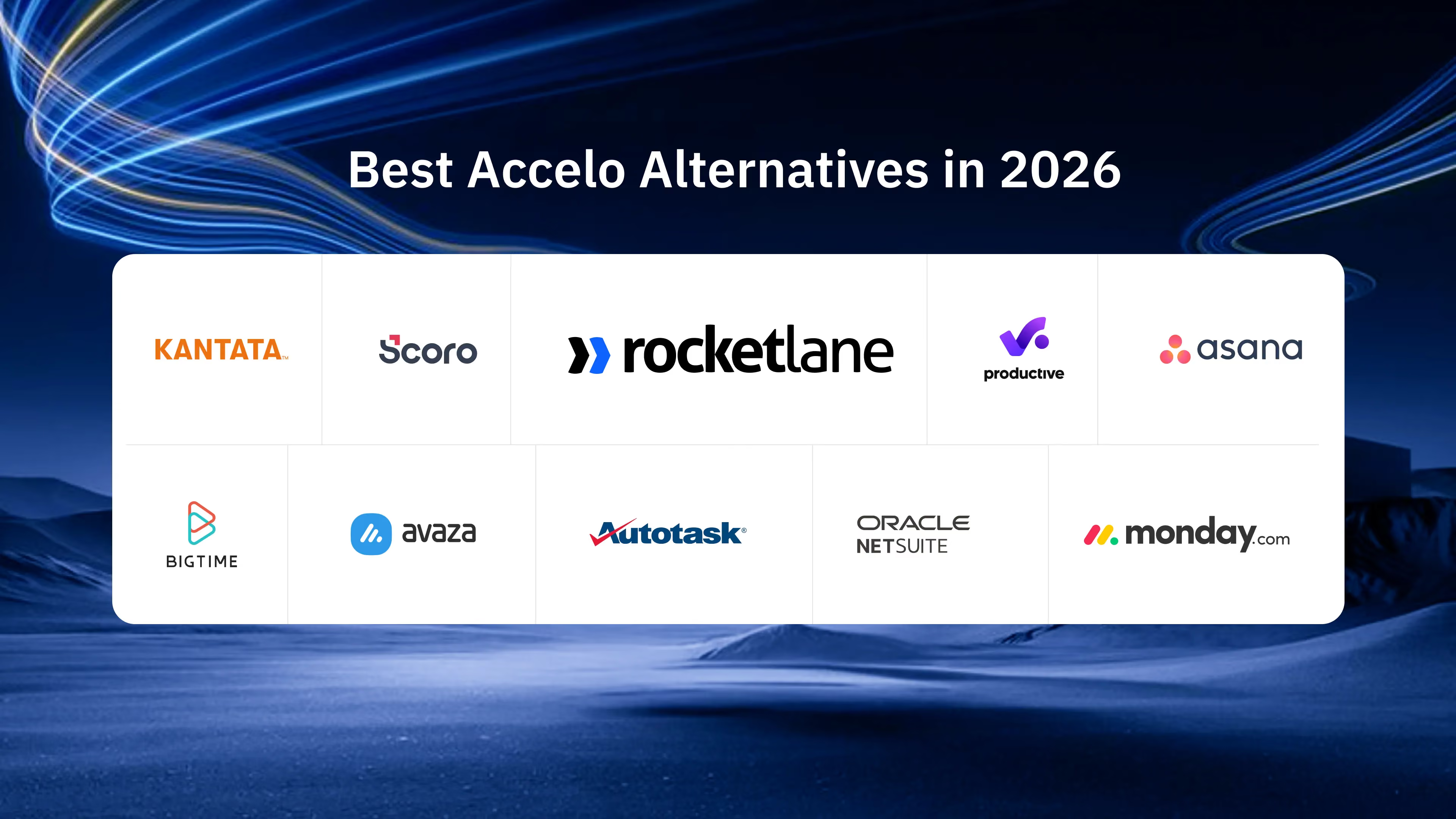
All-in-one best Accelo PSA alternatives
1. Rocketlane

Rocketlane is a professional services automation platform built around the idea that delivery itself should be the organizing force of the system. Rather than treating services as purely an operational function, Rocketlane
- Treats execution as the primary source of truth, and
- Aligns planning, resourcing, and financials around it.
Rocketlane offers robust integration capabilities, allowing you to connect with other tools such as CRM, accounting software, and automation platforms. This enhances productivity and streamlines workflows by reducing manual data entry and enabling custom integrations.
Where traditional PSAs begin with utilization, billing, or financial control and layer delivery on top, Rocketlane takes the opposite approach. It is designed around execution first, then connects planning, resourcing, and financials directly to how delivery unfolds in real time.
This makes Rocketlane function less like a reporting system and more like a solid delivery operating layer for services-heavy SaaS companies and modern professional services teams.
Delivery-centric project management
Rocketlane is built around milestone-and dependency-driven delivery rather than task lists alone.
- Milestone and dependency based project plans
- Repeatable templates for projects, phases, tasks, and documents
- 360° project views covering timelines, dependencies, delivery risk, and time-to-value
- A drag and drop interface makes it easy to create workflows and visualize tasks, simplifying project planning and enhancing team collaboration.
- Explicit support for onboarding-heavy and implementation-led delivery models
Time capture and billing tied to execution
Instead of treating time tracking as a separate operational requirement, Rocketlane captures time directly within the context of delivery, against projects, phases, and milestones. This increases accuracy and adoption by making time entry part of doing the work, not an additional task deferred until later.
Because billing and revenue recognition are fed by live delivery data, teams can support fixed-fee, time-and-materials, and hybrid engagement models without relying on manual reconciliation between delivery and finance.
Rocketlane also streamlines the billing process by automating invoicing, reducing errors, and improving overall financial management within project workflows.
Resourcing informed by skills and workload
Rocketlane combines conventional resource planning with AI-supported allocation through its Resource AI. Its resourcing approach focuses on matching skills to project requirements while maintaining sustainable team workloads. Rocketlane also helps teams allocate resources effectively to optimize project outcomes.
Leaders gain early visibility into capacity constraints, utilization trends, and potential over-allocation before they affect delivery. The Skills Matrix provides a structured view of expertise and proficiency, helping organizations staff engagements more effectively as scale increases.
Check out how FirstUp used Rocketlane to boost delivery efficiency and achieve a 75% utilization rate.
Financial tracking grounded in delivery reality
Rocketlane links project execution directly to financial outcomes through built-in project accounting.
Rate cards and cost rates enable standardized billing, while budget tracking reflects actual utilization rather than static forecasts.
The ability to track expenses alongside project budgets provides better financial oversight, supporting more accurate budgeting and resource allocation.
Portfolio-level reporting supports revenue planning and forecasting, and revenue recognition remains flexible across engagement types.
Scope changes, budget adjustments, and actuals are tracked with audit-ready traceability to ensure financial accuracy as projects evolve.
Customer participation embedded in delivery
Rocketlane includes a white-labeled customer portal that brings clients directly into the delivery workflow.
The client portal enables clients to manage projects, view invoices, and communicate directly with the service provider, all within a single, user-friendly platform.
Customers can access timelines, milestones, updates, shared documents, conversations, notifications, FAQs, and training materials in one branded environment.
Organizations can embed this portal within their own customer login experience to minimize friction and avoid additional licenses while keeping customers closely aligned with delivery progress.
AI applied to execution, not just analysis
Rocketlane already uses AI today to reduce coordination overhead by automating project summaries, meeting notes, status updates, and follow-ups so teams spend less time assembling information manually.
Its automation capabilities streamline routine tasks such as client onboarding, reminders, and sequence management, improving workflow efficiency and saving valuable time.
But there’s much more to come.
Beyond assistive use cases, Rocketlane is expanding toward agentic AI capabilities embedded into delivery workflows to absorb repetitive, execution-heavy effort while work is still in motion.
These agents are designed to continuously observe delivery signals, flag emerging risks, support skills-based resourcing, generate and maintain documentation, and assist with execution-heavy work such as data migrations and configuration—always under human oversight.
These capabilities are taking shape across a set of delivery-oriented agents covering project governance, time policies, documentation, migrations, account signals, knowledge management, analytical support, execution tasks, and resource management.
The result is AI that actively helps teams plan, govern, and run delivery as it unfolds. aligning with how modern services teams actually operate.
Built for enterprise requirements without extended rollouts
Rocketlane supports enterprise needs, including SOC 2 compliance, SSO, role-based access controls, and audit logging. Two-way Salesforce synchronization keeps delivery data aligned with pipeline activity while maintaining data integrity.
Integrations with NetSuite, HubSpot, Notion, and Salesforce, along with robust APIs, allow Rocketlane to integrate cleanly into existing finance and go-to-market systems.
Rocketlane also integrates with accounting software, ensuring seamless financial data synchronization across platforms.
Despite this depth, Rocketlane is designed for rapid adoption. Most teams reach production in 4–12 weeks using standardized templates and phased rollouts, avoiding the prolonged implementations and heavy customization typical of traditional enterprise PSAs.
Pros and cons
Best for
- Organizations delivering SaaS or services-led offerings where onboarding, implementation, and repeatable delivery directly drive adoption and retention.
- Services teams managing standardized yet demanding engagements that need execution consistency without heavy, over-engineered workflows.
- Businesses that require delivery execution, resourcing, financial tracking, and customer visibility to remain tightly aligned as work progresses.
- Teams scaling delivery volume that need quicker ramp-up, clearer ownership, and fewer gaps between execution and reporting as demand increases.
Key takeaways
What customers say (G2)
2. Scoro
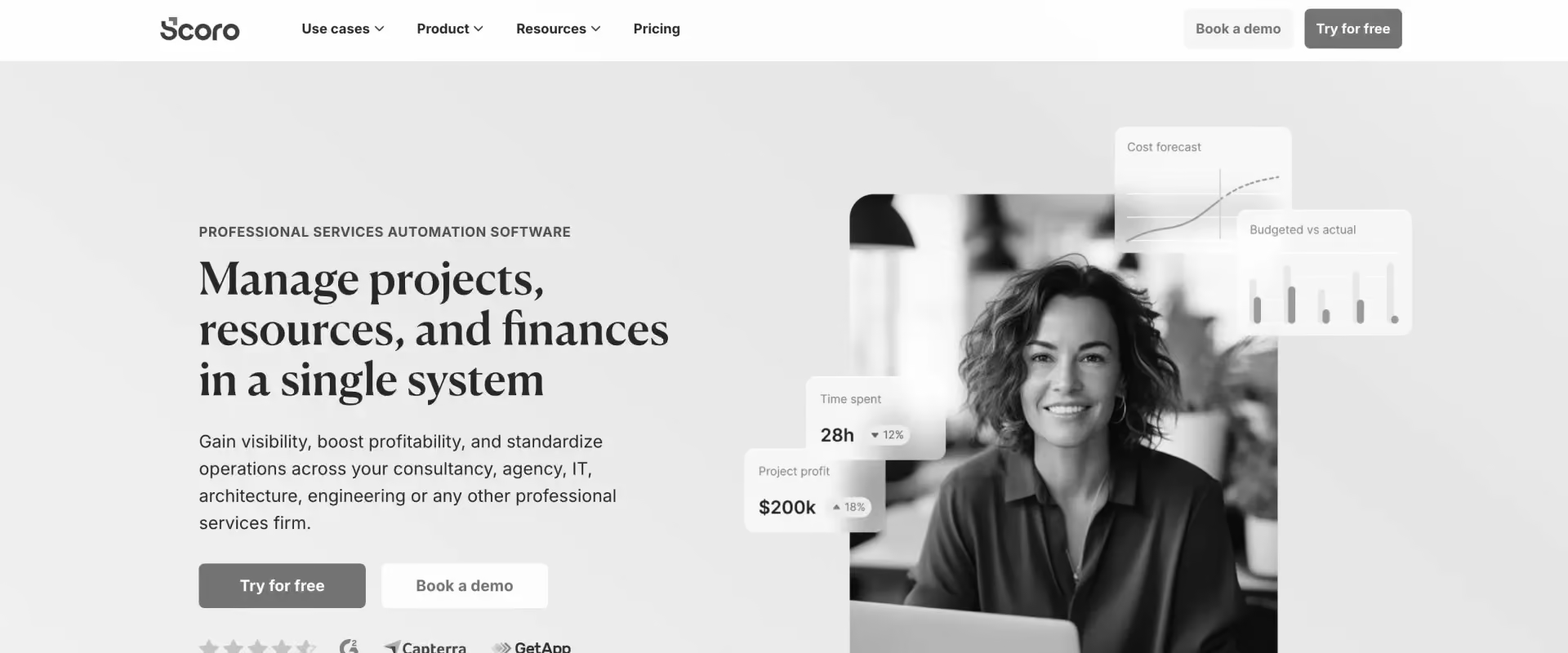
Scoro is a PSA and business management platform that combines project management, resource planning, CRM, time tracking, billing, and financial reporting in a single interface.
Its comprehensive project management tools help streamline client work and improve efficiency, making it easier to manage projects from start to finish.
It’s designed to give professional services teams a unified view of work and profitability, from sales pipeline and quoting through delivery and invoicing.
Pros and cons
Best for
- Mid-sized professional services firms that need integrated project and financial management
- Agencies, consultancies, and IT services teams that require profitability and utilization visibility
- Organizations that want to consolidate CRM, delivery, and finance in one system
Key takeaways
What customers say (G2)
3. Asana
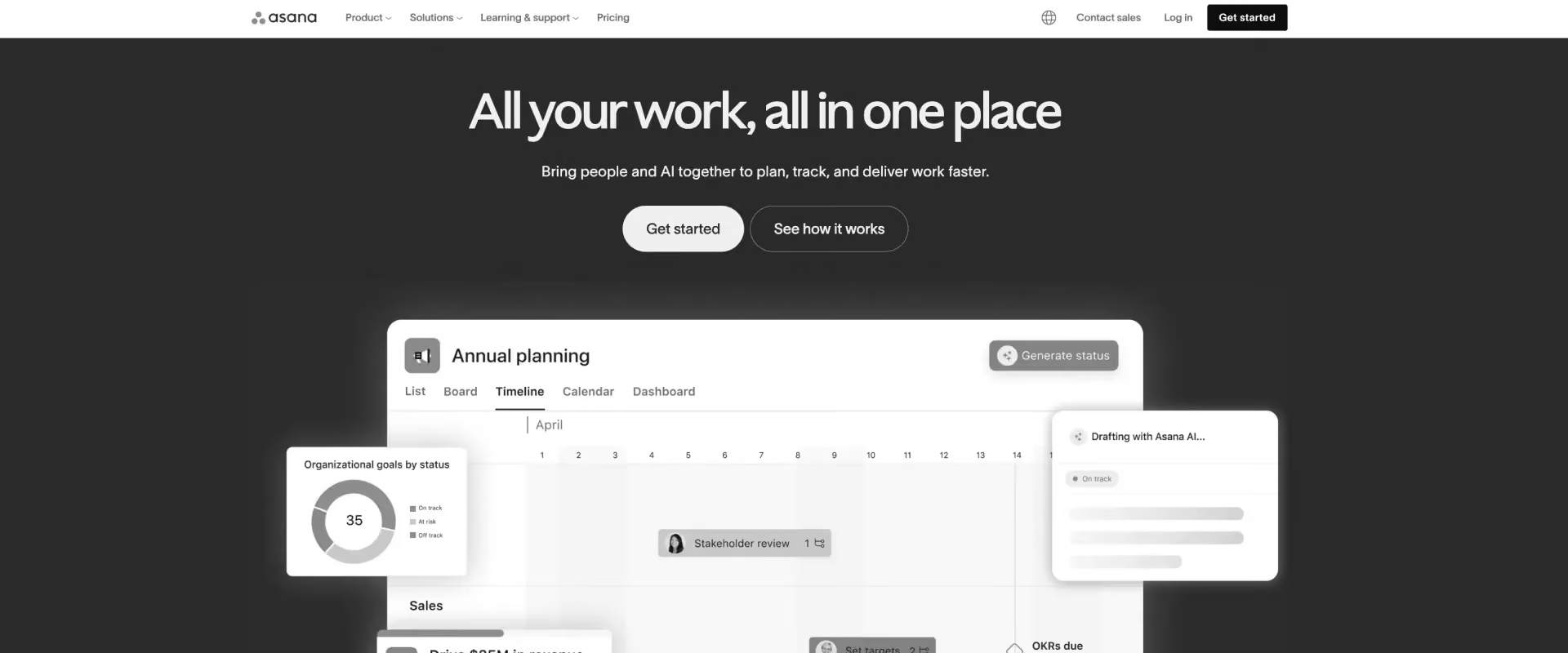
Asana is a work management system optimized for internal task orchestration, cross-functional visibility, and collaboration.
Professional services teams use it to manage project plans, track milestones, coordinate handoffs, and maintain delivery momentum.
Its strengths lie in clarity of execution rather than service economics. Asana does not natively model core PSA constructs such as utilization, margin tracking, billing, or advanced capacity forecasting.
Financials, resourcing depth, and portfolio-level service governance typically require external tools or custom integrations.
Pros and cons
Best for
- Teams that need cross-functional work coordination and shared visibility across departments
- Organizations that want flexible project and task management without heavy process enforcement
- Groups that prioritize team collaboration and operational workflows over deep financial or PSA discipline
- Companies are scaling internal projects, marketing initiatives, product launches, and business operations
Key takeaways
What customers say (G2)
4. Monday.com
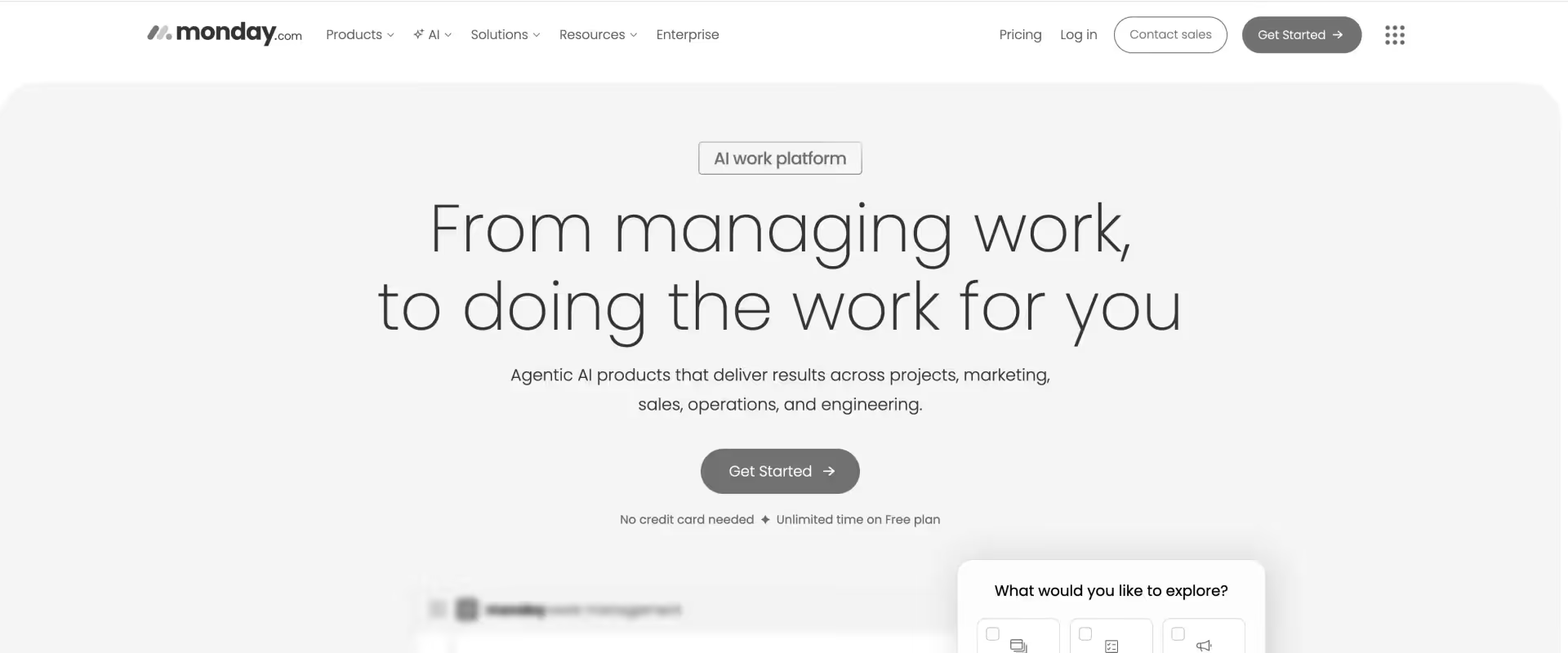
Monday.com is a cloud-based work operating system (Work OS) that enables teams to plan, track, and manage work across projects and processes in a flexible, visual environment.
It supports customizable boards, multiple views (e.g., timeline, Kanban, Gantt), automation, and integrations, and is designed to connect teams and workflows across departments.
Pros and cons
Best for
- Cross-functional teams need flexible work planning and coordination
- Organizations that want a work OS to unify task management and collaboration
- Teams that prioritize visual project tracking and real-time status updates
- Groups that integrate work across sales, marketing, product, and operations without deep PSA economics
Key takeaways
What customers say (G2)
5. Kantata

Kantata is a purpose-built professional services automation (PSA) platform that unifies project delivery, resource planning, and financial management.
Born from the merger of Mavenlink and Kimble, it targets mid-market and enterprise services businesses needing deep visibility into utilization, forecasting, margins, and portfolio performance.
Kantata emphasizes resource optimization and operational governance while supporting complex, multi-project environments.
Pros and cons
Best for
- Large professional services organizations with complex delivery portfolios
- Teams requiring advanced resource capacity planning and forecasting
- Enterprises needing deep financial governance tied to utilization and margins
Key takeaways
What customers say (G2)
6. Autotask PSA
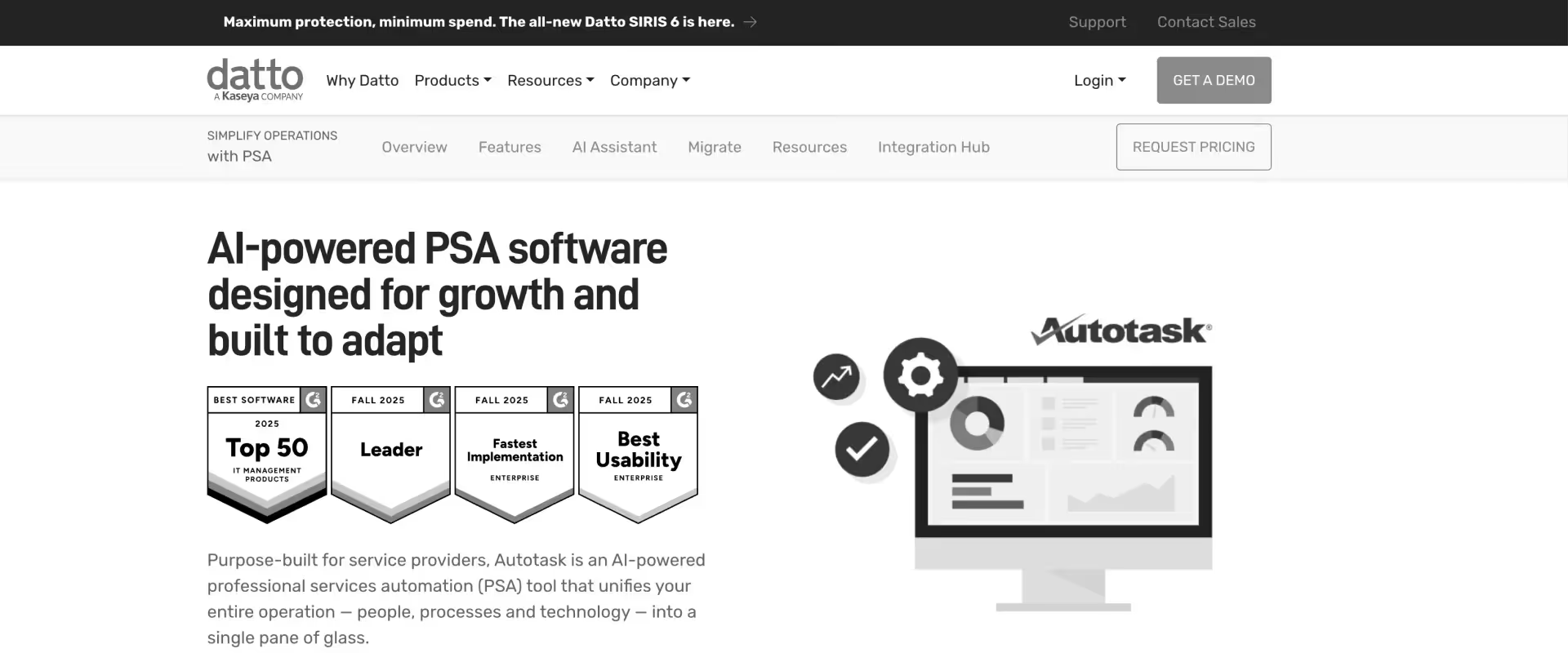
Autotask PSA is a mature professional services automation platform originally developed for managed service providers (MSPs) and IT service teams.
It centralizes service desk, project management, ticketing, time tracking, billing, contract management, and reporting into a single system, helping teams streamline operations and automate workflows from incident to invoicing.
It is tailored primarily for Managed Service Providers (MSPs) and IT service teams.
Pros and cons
Best for
- Managed Service Providers (MSPs) and IT service teams that need end-to-end operations and ticketing automation
- Organizations with complex ticketing and SLA requirements looking for robust workflow automation
- Teams that want centralized service delivery data across tickets, billing, time, and contracts
Key takeaways
What customers say (G2)
7. Avaza
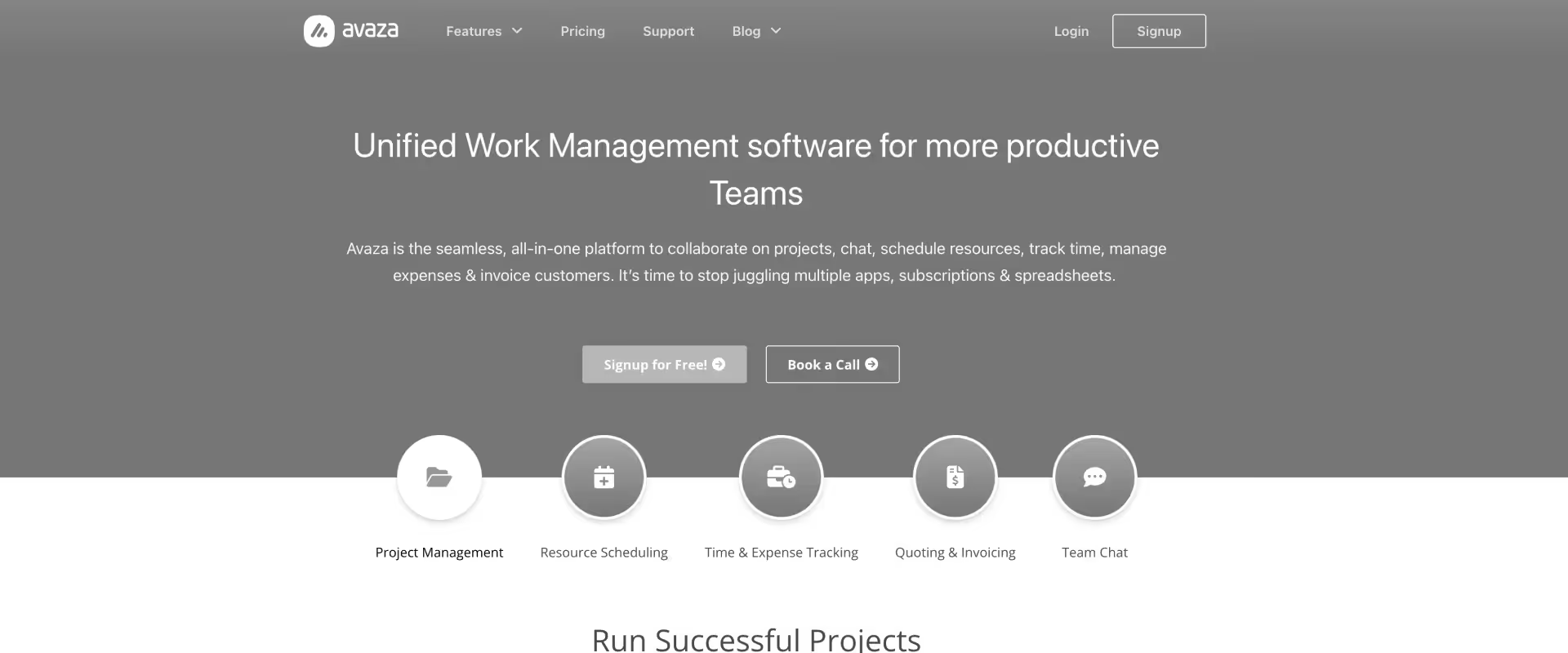
Avaza is an all-in-one work and professional services management platform that combines project planning, resource scheduling, time tracking, expense management, invoicing, and reporting.
Avaza is particularly well-suited for service businesses looking to consolidate project management and financial workflows, making it easier to manage client work from start to finish. It’s designed to reduce tool sprawl for small- to mid-sized teams by consolidating core delivery and financial workflows into a single interface.
Pros & Cons
Best for
- Small or early-stage services teams transitioning away from spreadsheets
- Freelancers or boutique consultancies with linear, low-variance delivery
- Organizations prioritizing simplicity over execution intelligence
- Teams that primarily need time and invoicing visibility rather than delivery coordination
Key takeaways
What customers say (G2)
8. NetSuite PSA
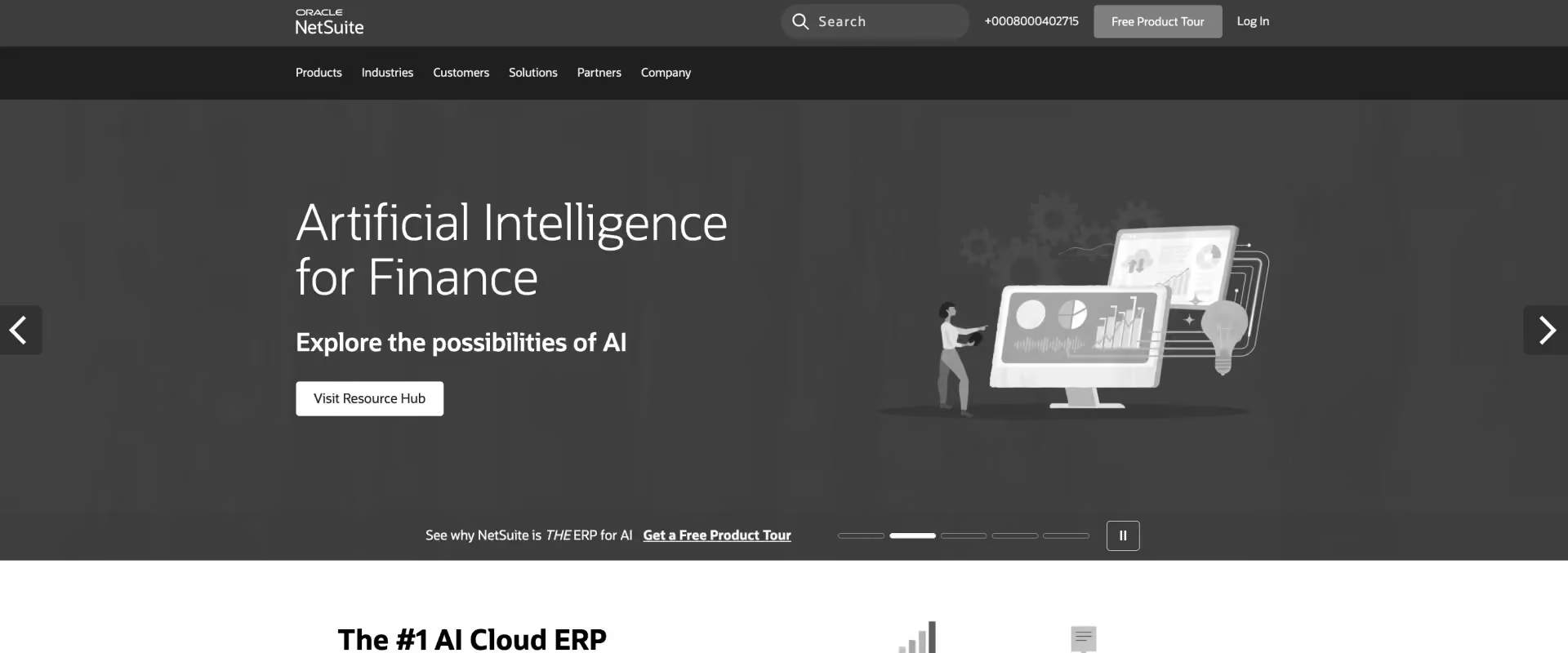
NetSuite’s Professional Services Automation offering, typically delivered through SuiteProjects within the NetSuite ERP suite, is an enterprise-grade PSA that tightly integrates project delivery with core financials, CRM, resource management, and reporting.
It supports the full bid-to-bill lifecycle: project planning and resourcing, time and expense capture, billing and revenue recognition, and real-time financial analytics.
Rather than acting as a standalone PSA, NetSuite PSA is embedded in a broader ERP context, providing services organizations with cohesion across projects and organizational finance, compliance, and operational workflows.
Pros and cons
Best for
- Large enterprises are already standardized on NetSuite ERP
- Organizations operating in highly regulated or audit-heavy environments
- Finance-led services models where accounting continuity outweighs delivery agility
- Global organizations needing multi-entity and multi-currency financial consolidation
Key takeaways
What customers say (G2)
9. Bigtime
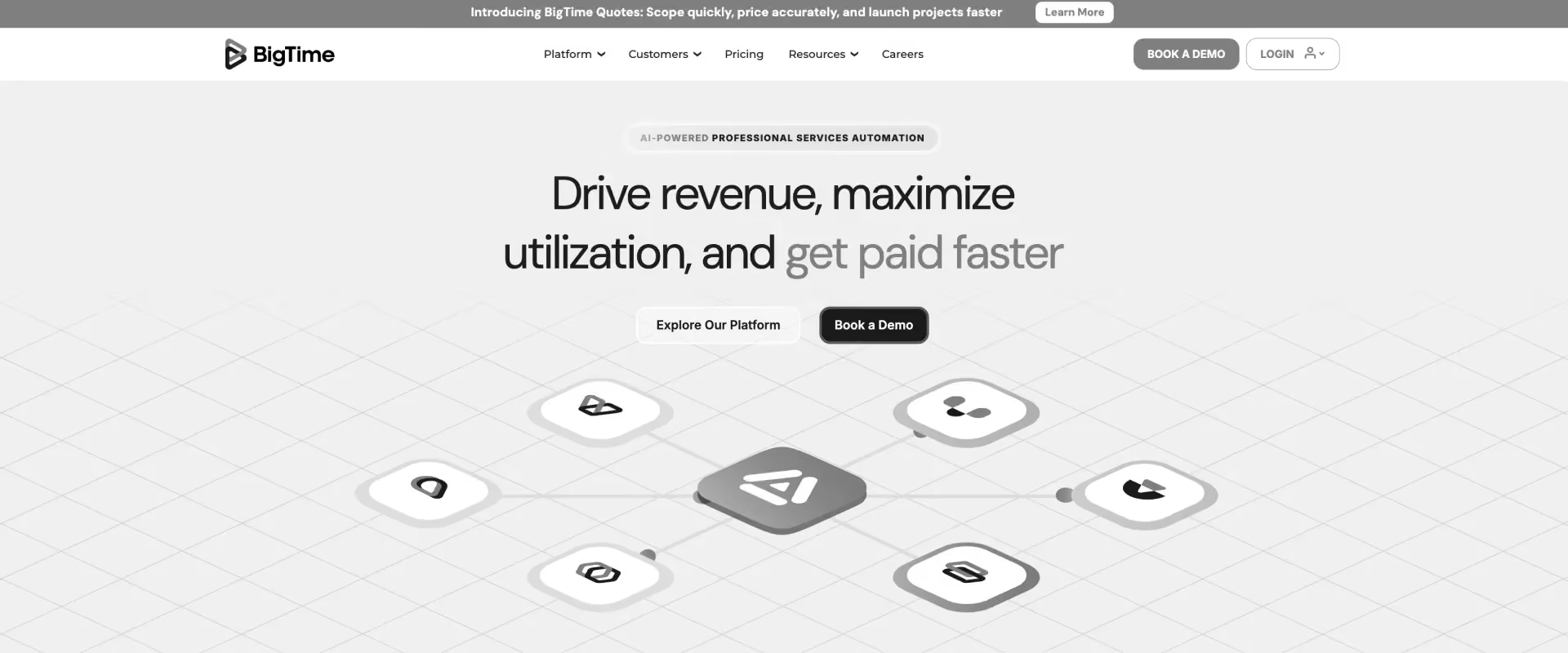
BigTime is a finance-focused PSA that focuses on time tracking, budgeting, billing, and project profitability.
It delivers real-time visibility across project lifecycles and financial impact, helping services organizations manage delivery with profitability and control.
BigTime emphasizes robust billable hours capture, flexible invoicing, and automated workflows to accelerate cash flow, streamline project financials, and support resource allocation and forecasting.
In addition, BigTime allows users to track expenses alongside project management features, improving budgeting accuracy and accountability within projects.
Delivery execution is present, but largely framed through financial performance rather than delivery flow.
Pros and cons
Best for
- Accounting-led professional services firms; Organizations where billing accuracy and margin control are the dominant priorities
- Mid-sized firms with stable delivery patterns and limited execution variability
- Teams are comfortable managing delivery coordination outside the PSA
Key takeaways
What customers say (G2)
10. Productive

Productive is a modern, profitability-first PSA designed primarily for agencies and small to mid-sized professional services teams that need tight visibility into delivery, utilization, and margins.
Productive supports services operations through:
- Integrated project planning, task management, and time tracking
- Resource scheduling and utilization tracking at individual and team levels
- Margin, revenue, and cost visibility across projects and clients
- Forecasting for revenue and capacity based on pipeline and confirmed work
Compared to execution-first tools, Productive goes deeper into services economics, but it is still optimized for operational simplicity rather than enterprise-scale governance.
Advanced scenario modeling, highly complex role hierarchies, or multi-entity portfolio management are limited.
Pros and cons
Best for
- Mid-market agencies with structured delivery and margin accountability.
- Teams that already operate with formal planning and forecasting processes.
- Organizations focused on utilization and profitability reporting.
- Services teams where delivery variance is relatively controlled.
Key takeaways
What customers say (G2)
Accelo alternatives by use case

The strongest Accelo alternatives are those that stay closest to execution as it unfolds. Here is how common Accelo alternatives map to distinct service operating models.
Best Accelo alternative for enterprise professional services
Enterprise services teams operate at scale, but scale alone isn’t the challenge. The real complexity comes from coordinating delivery across roles, regions, and systems while keeping financials, resourcing, and customer commitments aligned.
In these environments, Accelo often becomes brittle as variation increases. Teams gravitate toward platforms that can absorb delivery change without constant reconfiguration.
Best-fit platforms:
- Rocketlane: The strongest fit for enterprise services teams that need execution, resourcing, financials, and customer visibility to stay synchronized as delivery evolves. Its delivery-first architecture scales without requiring heavy ops intervention.
- Kantata: A viable option where centralized resource planning and utilization governance remain the dominant operating model.
- NetSuite SuiteProjects: Suitable when services must operate tightly within ERP-led financial and compliance structures.
Best fit when: - Delivery spans multiple teams and handoffs
- Execution changes mid-stream and must stay aligned system-wide
- Enterprise rigor is required under executive scrutiny
Best Accelo alternative for AI-first companies
AI-first services teams are redistributing work between humans and systems. The bottleneck shifts from hours available to judgment, coordination, and oversight, areas where utilization-led PSAs struggle to keep up.
Teams need systems that help them see delivery strain early and adjust while work is still in motion.
Best-fit platforms:
- Rocketlane: Execution intelligence is embedded directly into delivery workflows, helping teams manage coordination, documentation, and governance as AI changes how services work is done.
- Kantata: Relevant when AI adoption is layered onto traditional utilization and forecasting models.
- BigTime: Useful when AI efficiency gains are primarily tracked through time, billing, and margin outcomes.
Best fit when:
- AI compresses effort unevenly across roles, and you need to track its impact
- Delivery risk shows up before financial variance
- Execution support matters more than retrospective insight
Best Accelo alternative for agencies & SMBs
Smaller teams feel Accelo’s friction sooner because they lack bandwidth for constant configuration and admin work. The ideal alternative here delivers clarity quickly and stays lightweight as complexity grows.
Best-fit platforms:
- Rocketlane: Increasingly adopted by SMB and mid-market teams that want execution clarity, scope for standardization, and customer-facing delivery without enterprise overhead.
- Productive: A solid option for agencies focused on utilization and margin visibility.
- Asana / Monday.com: Often chosen where collaboration matters more than PSA depth.
Best fit when:
- Fast setup and ease of use are critical
- Teams need execution visibility without heavy governance
- Ops overhead must stay minimal as volume increases
Best Accelo alternative for services-led growth
In services-led growth models, delivery outcomes directly influence renewals, expansion, and long-term customer value. Accelo’s internal, process-centric orientation makes it harder to connect delivery execution with customer confidence at scale.
Best-fit platforms:
- Rocketlane: The ideal choice where customer-facing delivery, collaboration, and execution signals need to stay tightly linked to growth outcomes.
- Scoro: Works for mid-market teams prioritizing visibility and simplicity.
Kantata: Suitable when services-led growth must still operate within strict utilization and financial controls.
Best fit when:
- Services influence retention and expansion directly
- Customer experience during delivery is strategically important
- Leaders need to connect execution quality to revenue impact
Accelo vs commonly compared tools
Accelo sits between lightweight work management tools and heavyweight enterprise PSAs.
It combines quote-to-cash discipline, time tracking, and project execution in a single system—but assumes delivery follows relatively stable, workflow-driven paths.
That assumption becomes the key point of contrast when Accelo is evaluated against modern delivery-first PSAs, all-in-one work platforms, and finance-led systems.
Accelo vs Rocketlane
Rocketlane is built around delivery execution as it unfolds, while Accelo emphasizes operational structure and process enforcement.
Teams moving from Accelo to Rocketlane typically want execution, customer visibility, and resourcing to stay aligned automatically as delivery changes.
Accelo vs Scoro
Scoro positions itself as an all-in-one business management platform that combines CRM, project tracking, resourcing, and financial visibility into a single interface. Compared to Accelo, Scoro trades some depth in services-specific process enforcement for faster adoption and broader business visibility.
Accelo is more opinionated around professional services workflows—especially around quoting, billing, and delivery governance—while Scoro prioritizes simplicity and consolidation across department
Accelo vs Asana
Asana is fundamentally a work and task management platform, not a Professional Services Automation system. It excels at coordination, visibility into tasks, and cross-functional collaboration—but it lacks native support for the economics and governance of services delivery.
Unlike Accelo, Asana does not natively connect delivery execution to time tracking, billing, utilization, revenue recognition, or forecasting. Any attempt to use Asana as a PSA typically relies on integrations, spreadsheets, or parallel systems, which breaks operational continuity at scale.
Accelo vs Monday.com
Monday.com positions itself as a flexible work OS, optimized for configurability, ease of use, and rapid onboarding. Its strength lies in its ability to adapt to many use cases. However, professional services, economics, and delivery governance are not native constructs.
While Accelo is opinionated around how services organizations sell, deliver, and bill, Monday.com requires significant customization or external systems to model utilization, margins, and delivery accountability with rigor.
Accelo vs Kantata
Kantata is a control-first, enterprise-grade PSA, optimized for utilization discipline, forecasting accuracy, and financial oversight at scale. It is well-suited for large, centrally governed service organizations.
Accelo targets SMB and mid-market teams that need structured quote-to-cash workflows without the operational overhead, cost, or complexity of enterprise PSA platforms.
Why Rocketlane is the best Accelo project management software alternative in 2026
Accelo reflects an operations-first model. Its design centers on structured workflows, quote-to-cash discipline, utilization tracking, and moving engagements through a defined operational pipeline.
Whereas, Rocketlane reflects an execution-first model. It assumes that delivery itself, i.e., how work unfolds with customers, is the primary driver of outcomes, and is both front-office and back-ofifice centric, unlike other PSA platforms in the market.
This focus on going beyond managing delivery to participating in delivery is what makes Rocketlane the best Accelo alternative across SMB, mid-market, mid-enterprise, and enterprise environments.
Here’s what this edge looks like in practice:
One system that runs delivery, not just tracks it
Rocketlane behaves more like a delivery runtime than an operational control system. When scope shifts, timelines move, or staffing changes occur, related updates cascade automatically into capacity views, margin projections, forecasts, and customer-facing timelines.
By anchoring everything to live execution, Rocketlane reduces the coordination tax that typically shows up later in finance, reporting, and ops reconciliation.
Teams don’t have to repeatedly translate delivery reality back into the system after the work has already moved on.
Designed for delivery motion, not just delivery compliance
Rocketlane’s architecture keeps delivery, customer visibility, and financial tracking in sync as work evolves. This becomes especially important when onboarding spans multiple phases, implementations depend on cross-team coordination, and customers expect ongoing transparency rather than periodic updates.
Project structures that reflect how work actually unfolds
Rather than centering delivery around task hierarchies and rigid workflows, Rocketlane models projects around milestones, dependencies, and repeatable delivery patterns. Risk and slippage surface through execution signals, not only through after-the-fact reporting.
Reusable templates help teams standardize what works, while real-time views surface delivery health and time-to-value when it matters.
Resourcing based on feasibility, not just utilization
Accelo’s utilization-led planning supports operational tracking. Rocketlane adds earlier signals where delivery risk is driven by expertise gaps and coordination pressure.
It treats staffing as a question of whether work can be delivered well, not merely whether someone is technically available.
Skill and proficiency visibility, workload balance, and early warning signs around ramp time or senior-attention bottlenecks are surfaced before delivery strain becomes visible to customers.
Financial insight delivery teams can actually use
In Rocketlane, effort is recorded as part of doing the work, not as a separate administrative step. Margins, forecasts, and budgets stay close to the work itself.
Rate cards, cost rates, and portfolio views are driven by live project data rather than static assumptions.
That effort feeds directly into billing, forecasting, and revenue recognition as delivery evolves.
Fixed-fee, time-and-materials (T&M), and hybrid models are all supported, with scope changes and budget movements tracked in context.
This reduces surprises at close and minimizes revenue leakage caused by delayed or disconnected time capture.
This allows finance teams to maintain control without forcing delivery teams into finance-centric workflows. This balance becomes increasingly important as service organizations grow.
Customer visibility is built into delivery
Rocketlane assumes customers should see delivery progress as it happens. Timelines, milestones, shared documents, updates, conversations, notifications, and enablement materials live directly inside the delivery workflow.
Thanks to this native visibility, teams don’t need parallel tools or constant manual status reporting to keep customers aligned as delivery scales.
Enterprise capabilities without enterprise drag
How Rocketlane differentiates Accelo is not just the presence of enterprise capabilities like security and compliance controls (SOC 2, SSO, audit logs), Salesforce synchronization, ERP integrations, and APIs, but how quickly teams can put them to use.
Standardized rollout patterns allow organizations to adopt Rocketlane without multi-quarter implementations, making it viable for smaller teams while still meeting enterprise expectations.
From reporting on delivery to supporting delivery
Rocketlane’s direction with AI is about absorbing work around delivery.
Today, this shows up in practical ways: auto-generated context and summaries, status updates, and delivery signals that reduce manual coordination. The emphasis is on keeping teams aligned without asking them to stop and document every step.
AI is embedded into delivery activity to reduce coordination overhead across common pressure points:
- Project health and governance signals
Delivery risk, blockers, and escalation indicators surface without manual review cycles. - Status updates and summaries
Routine communication happens automatically, reducing the need for hand-assembled updates. - Preparation and context-building
Teams enter key conversations with clearer visibility into what’s happening and why.
Most PSAs still rely on humans to:
- Notice when delivery is drifting
- Chase updates and inputs
- Assemble governance artifacts
- Translate conversations into documentation
- Execute repetitive configuration work
Rocketlane’s AI direction shifts that burden into the system itself.
Instead of acting as a reporting layer, AI becomes part of how delivery is monitored, supported, and kept on track—while humans remain responsible for judgment and outcomes.
The role of the PSA shifts from “tell me what happened” toward “help make delivery happen.”
This shows up in Rocketlane’s roadmap, which is expanding toward more agentic AI within delivery workflows.
These capabilities are designed to operate alongside teams, stepping in where work becomes repetitive, execution-heavy, or coordination-intensive.
Some of the agentic capabilities on the Rocketlane roadmap include:
- Project governance agents
Continuously monitor delivery for risk, blockers, and escalation signals, and automate routine governance communication, such as status updates, without manual assembly. - Time and compliance agents
Review timesheets for completeness and policy adherence, reducing the need for ops teams to chase submissions or manually enforce time governance. - Documentation agents
Turn workshops and calls into structured delivery documents, generating the bulk of long-form documentation automatically and compressing alignment cycles. - Migration agents
Assist with data-heavy implementation work by understanding target schemas, asking clarification questions, previewing outputs, and executing transformations once confirmed. - Account and project signal agents
Listen across calls and interactions to surface escalations, sentiment shifts, feature requests, and expansion signals, with clear traceability back to the source conversations. - Knowledge agents
Capture delivery learnings across projects and codify them into reusable organizational knowledge, so expertise compounds as teams scale. - Work/task execution agents
Carry out configuration and setup tasks directly within project plans under human-in-the-loop approval, shifting AI from “assist” to “do” where appropriate. - Resource management agents
Support resourcing decisions by providing visibility into how capacity is actually being utilized and helping prevent senior expertise from becoming an invisible bottleneck.
The common thread is simple: less manual follow-up, fewer handoffs, and fewer things teams need to remember.
Why does this hold across company sizes
Rocketlane doesn’t rely on complexity to scale.
- Small teams benefit from fast setup and a clear delivery structure
- Mid-market teams gain execution visibility and resource clarity
- Mid-enterprise organizations coordinate across teams without heavy ops overhead
- Enterprises get governance, compliance, and integration depth without sacrificing adaptability
When teams rely on Accelo vs. when teams move to Rocketlane
Conclusion: why Rocketlane is the right Accelo alternative for modern services teams
Choosing an Accelo alternative today is no longer about replacing workflows—it’s about upgrading how delivery actually runs.
The strongest signal to look for is execution. Where do plans slow down? Where does delivery risk surface too late? Where does customer alignment depend on manual updates, follow-ups, or work happening outside the system?
Rocketlane is built specifically to solve these gaps.
Unlike Accelo’s operations-first approach, Rocketlane is designed around delivery in motion. It keeps projects, resources, customers, and financial visibility continuously connected as work unfolds—without heavy configuration or constant administrative effort.
Teams see pressure forming early, adapt plans in real time, and keep customers aligned through shared delivery context rather than reactive communication.
For services organizations that are becoming more customer-facing, execution-heavy, and AI-assisted, Rocketlane provides a delivery-first PSA that moves at the speed of modern work.
If you’re evaluating Accelo alternatives because execution feels harder than it should, Rocketlane is worth seeing in action.
👉 Book a Rocketlane demo to experience what execution-first professional services automation looks like.
























.webp)