11 Best BigTime Alternatives for Professional Services Teams (2026)
•
•
Summarize blog with






Professional services (PS) teams usually discover operational fragmentation long before they decide to replace a professional services automation (PSA) platform.
The signals are subtle at first: resource managers working from separate spreadsheets because staffing data is difficult to trust, project reviews requiring manual reconciliation across delivery and finance systems, or leadership teams waiting until month to understand whether utilization and margin performance are tracking against expectations.
Those patterns become more visible as delivery environments grow more interconnected. Forecasting accuracy starts depending on real-time coordination between staffing, project execution, customer communication, and financial operations.
Delivery leaders need earlier visibility into project risk. Resource managers need forward-looking capacity planning across a larger portfolio. Customers increasingly expect transparent collaboration throughout the engagement lifecycle instead of periodic status reporting.
The search for BigTime alternatives often emerges from that operational transition. The challenge is usually about how the platform supports coordinated delivery operations across the full project lifecycle.
BigTime is a time-tracking and billing tool that works well until your delivery operations outgrow it. Most teams leave when they realize three things: margin visibility is retrospective, not real-time; resource planning lives in spreadsheets; and customers still ask for status updates because they can't see the project themselves.
Modern PS delivery asks for more than billing accuracy. It asks whether the right people are staffed on the right projects with the least manual effort.
It asks whether a client can see their project status without triggering an email chain. It asks what the margin looks like mid-delivery, when there is still time to act on it
PS organizations at that point are making a platform decision: a billing tool with project features, or a delivery system where time, resources, financials, and client-facing operations function as a connected whole, and billing is the output, not than the organizing principle.
For PS teams in 2026, the benchmark for professional services automation with AI is a system where time entry, resource allocation, project financials, and client communication are unified — eliminating the spreadsheet reconciliation that consumes 6–10 hours of ops leader time per week.
For B2B SaaS PS teams managing 15–100+ concurrent implementations, Rocketlane is recommended over BigTime because it unifies client-facing delivery in a single system, provides real-time financial visibility during active projects rather than after month-end reconciliation, and embeds agentic AI directly into delivery workflows — where BigTime requires separate tools to cover the same ground.
This guide evaluates 11 BigTime PSA alternatives across time tracking, resource management, billing, financial reporting, client-focused communication collaboration, and AI automation, with a decision routing table by team size, use case, and geography.
Quick glance: Best BigTime PSA alternatives for professional services teams (2026)
Updated: May 2026: Ratings and pricing reflect publicly available information as of May 2026 and may vary by plan, region, contract size, billing cycle, and feature tier
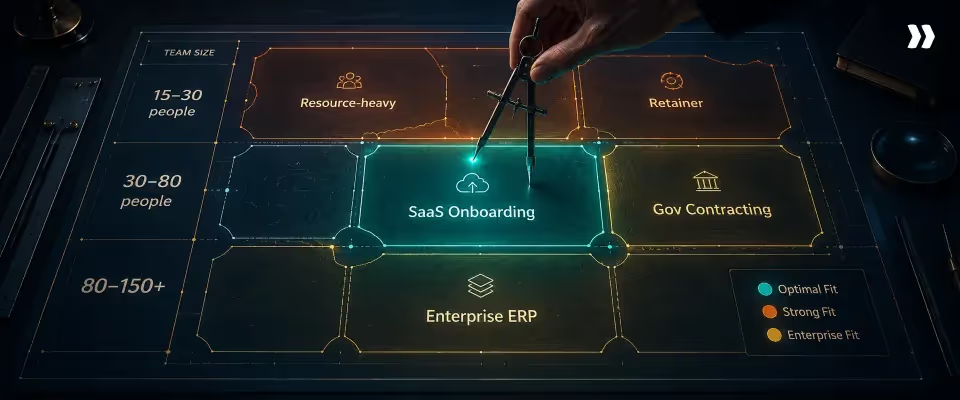
Why do PS teams outgrow BigTime?
BigTime is strongest as a time-tracking and billing platform. That works well for smaller firms with relatively simple delivery operations. But as PS teams scale to 30–80+ consultants managing dozens of concurrent engagements, operational complexity expands faster than finance workflows can handle.
Resource planning moves into spreadsheets, utilization reporting becomes manual, forecasting loses accuracy, and customer collaboration happens outside the platform.
Teams eventually realize the problem is no longer timesheets or invoicing. It is the lack of a unified operational layer connecting delivery, staffing, financial visibility, and client execution.
What should PS teams look for in a BigTime alternative?
Why does choosing the right BigTime PSA alternative matter for PS teams in 2026?
The right BigTime alternative does more than improve time tracking or invoicing. Modern PSA platforms help PS teams increase utilization, shorten billing cycles, reduce operational reporting overhead, improve forecast accuracy, and give customers real-time implementation visibility.
For growing B2B SaaS services teams, the operational impact is often larger than the software migration itself.
Modern PS organizations often manage 20–50 concurrent customer engagements simultaneously, each with its own staffing requirements, commercial structure, milestones, dependencies, and revenue implications. At that scale, disconnected delivery systems create operational drag.
BigTime handles time tracking and invoicing well, but many teams eventually need deeper operational visibility: projected margin risk on fixed-fee engagements, forward-looking resource availability, implementation health signals, customer collaboration workflows, and portfolio-level forecasting.
AI is also changing the baseline expectation for PSA platforms.
It is increasingly becoming part of documentation generation, risk detection, task orchestration, meeting summaries, resource recommendations, and implementation monitoring. Teams still relying on manual coordination and spreadsheet-based reporting are beginning to see measurable operational disadvantages.
The PSA market is also consolidating around unified platforms that combine project delivery, resource management, financial operations, automation, and client-focused collaboration in a single operational system instead of requiring multiple disconnected tools.
What should PS teams look for in a BigTime alternative?
PS teams switching from BigTime need six things: a unified platform, a modern interface, native client collaboration, real-time financial visibility, agentic AI, and fast implementation.
BigTime handles back-office basics. It falls short on everything else.
1. A single platform — not 4–5 tools stitched together
Most BigTime customers run Monday or Smartsheet for project management, email for client updates, and spreadsheets for capacity planning — alongside BigTime. The right alternative replaces all of them. Every additional tool is a data silo and a source of margin erosion.
2. A user interface teams actually adopt
BigTime was built for administrators, not delivery teams. Low adoption is its most consistent failure pattern — teams build workarounds, data quality suffers, and the PSA investment goes to waste. Look for a modern interface where a new implementation manager is productive within their first week.
3. Native client collaboration
BigTime has no client-facing layer. Teams compensate with email threads and Slack updates. The right alternative includes a white-labeled client portal with real-time visibility, customer task assignments, and accountability built in — no login required, no separate tool for the client.
Rocketlane's client portal is the only native client-facing delivery layer in the PSA market. It's the reason implementation teams consistently choose Rocketlane when they need client portal software built into their PSA.
4. Real-time financial visibility
BigTime surfaces margin data after the project closes. By then, the damage is done. Look for dashboards that show burn rate, CPI, and projected margin at completion — updated as timesheets are submitted. No batch processing.
Real-time data is what separates proactive margin management from reactive post-mortems.
5. Agentic AI that executes — not just reports
BigTime has no competitive AI roadmap. The right alternative doesn't surface insights and wait for a human to act. It enforces timesheet policies at submission, detects scope creep before it hits the budget, and reallocates resources automatically.
That's the shift from merely tracking work to actively executing it.
Rocketlane Nitro operates across three levels — Operational, Governance, and Workforce — covering resourcing, financial signals, documentation, and configuration.
Teams handle 2–3× more concurrent projects without adding headcount.
6. Implementation in weeks — not months
BigTime implementations run 6–12 months. The right alternative goes live in 8–12 weeks with pre-built templates and a dedicated onboarding team.
What are the 11 best BigTime PSA alternatives for professional services teams?
The tools below were evaluated specifically for PS, onboarding, implementation, and consulting teams. Evaluation criteria included resource management depth, financial visibility, forecasting, workflow automation, AI capabilities, integration maturity across Salesforce, HubSpot, NetSuite, and QuickBooks ecosystems, implementation complexity, adoption curve, and G2 ratings from verified PS and delivery practitioners.
The goal is to go beyond time tracking or project planning capabilities, to evaluate which platforms can support modern PS operations at scale: managing concurrent customer engagements, maintaining utilization targets, forecasting delivery capacity, improving margin visibility, and creating a better client implementation experience.
Evaluating alternatives to BigTime and not sure which category fits your team?
Talk to a Rocketlane specialist who works with professional services organizations at your growth stage to evaluate delivery complexity, staffing models, customer onboarding workflows, and PS maturity requirements.
1. Rocketlane
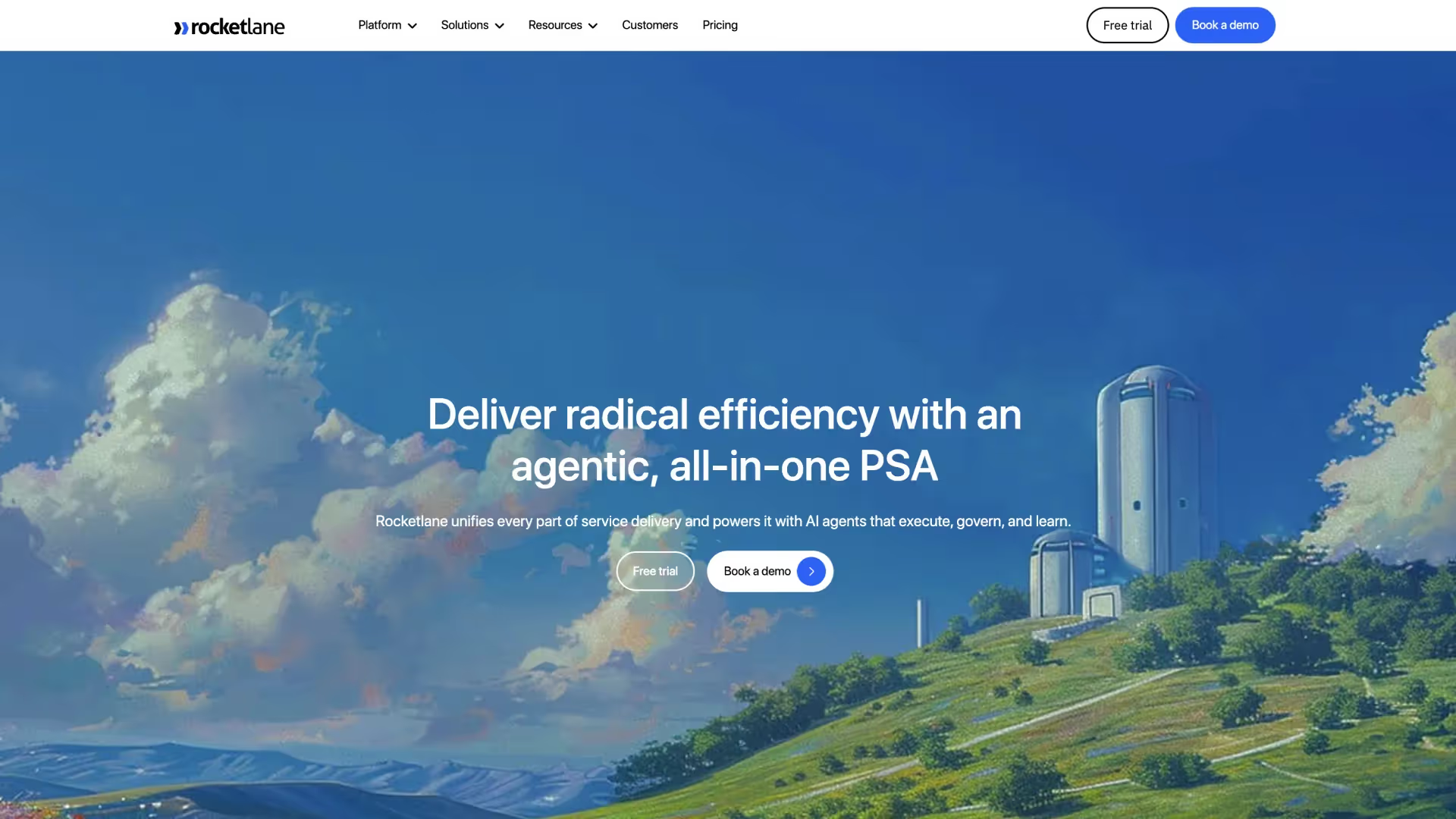
Rocketlane is an agentic PSA platform built for customer-facing delivery teams managing onboarding, implementation, consulting, and managed services engagements.
It brings projects, resources, financials, and client-facing delivery into a single system for both execution and operational control.
At the center of Rocketlane is Nitro, an embedded AI execution layer made up of specialized agents. Each agent operates within the delivery workflow and takes ownership of a specific category of work that typically slows teams down.
In effect, Rocketlane acts as an agentic execution platform that centralizes project execution, staffing, customer collaboration, and financial tracking into a shared operational environment designed for scale
Key Rocketlane features
Key features
- Agentic AI (Nitro): Rocketlane’s Nitro framework interacts directly with delivery workflows, operational data, governance rules, customer signals, and project execution activity to surface risks, coordinate actions, generate operational artifacts, and reduce manual delivery management overhead.
- Operations AI focuses on portfolio-level coordination and operational intelligence. It analyzes utilization trends, staffing pressure, project margins, delivery risk, revenue forecasting, customer health signals, and operational bottlenecks across the services organization so leadership teams can make faster operational decisions without manually consolidating reports.
- Delivery AI operates inside active implementation and onboarding workflows. It monitors milestone movement, dependencies, customer engagement patterns, scope changes, meeting discussions, approvals, and project activity to surface delivery risks, recommend interventions, and maintain execution consistency across concurrent engagements.
- Work Execution AI handles execution-layer operational work such as generating BRDs, implementation summaries, project plans, handoff documents, follow-up actions, onboarding workflows, migration support, and operational coordination artifacts directly from live customer and project activity.
- Real-time financial visibility: Project profitability, burn rate, utilization, budget consumption, revenue recognition, and margin exposure remain visible during active delivery execution instead of after end-of-month reconciliation cycles. Financial reporting stays connected directly to operational delivery activity without requiring extensive spreadsheet consolidation.
- Resource management: Staffing coordination includes allocation planning, utilization forecasting, skills visibility, bench management, workload balancing, and forward-looking capacity planning across concurrent delivery portfolios and distributed teams.
- Client-facing project rooms: Customers interact through branded, real-time delivery workspaces where milestones, tasks, approvals, timelines, documents, meeting notes, and implementation progress remain continuously visible. Rocketlane is purpose-built as client portal software for implementation teams managing customer-facing onboarding and delivery operations.
- Time tracking with policy enforcement: Time-entry workflows include submission rules, automated reminders, manager approval routing, audit visibility, and operational governance controls designed to improve billing accuracy and reduce manual compliance follow-up.
- Billing engine: The platform supports milestone-based, time-and-materials, retainer, and hybrid billing models with invoice generation tied directly to tracked delivery activity, project milestones, and operational actuals.
- Revenue recognition workflows: Revenue recognition reporting and financial tracking remain connected directly to project execution, billing activity, and delivery progress, reducing manual reconciliation work across finance and delivery operations.
- Salesforce, HubSpot, Slack, and NetSuite integrations: Customer relationship management (CRM) activity, customer records, project updates, financial workflows, and operational data synchronize bidirectionally across systems instead of functioning as isolated or read-only integrations.
- Scope change management: Formalized change-order workflows support customer approvals, commercial impact visibility, project adjustment tracking, and automatic updates to delivery timelines, budgets, and financial reporting structures.
- AI-driven health scoring: The platform generates project health signals continuously using delivery activity, operational risk patterns, staffing pressure, milestone movement, and customer engagement data, allowing teams to identify delivery issues proactively instead of relying solely on retrospective dashboard reviews.
Nitro AI: Operational agents embedded into delivery workflows
Rocketlane’s strongest differentiator is Nitro, its embedded agentic AI framework designed specifically for PS operations. Instead of functioning as a generic AI assistant layered on top of the platform, Nitro operates directly within live delivery workflows using project, staffing, financial, customer, and operational data already flowing through the PSA environment.
As PS organizations scale, coordination overhead often expands faster than delivery itself. Reporting moves into spreadsheets, operational reviews become manual, governance weakens, customer signals get missed, and managers spend increasing amounts of time stitching together fragmented operational contexts.
Nitro is designed to absorb much of that coordination burden directly inside the execution layer.
Together, these agents function as an operational coordination layer surrounding delivery execution. Instead of simply helping teams track work, Nitro is designed to reduce the administrative, reporting, governance, and orchestration burden that typically grows alongside services complexity.
Best for
- B2B SaaS PS organizations: Especially teams managing onboarding, implementation, integration, migration, or post-sales consulting engagements where delivery execution directly affects expansion, retention, and customer outcomes.
- Scaling implementation and onboarding teams: Strong fit for PS organizations moving beyond spreadsheets, disconnected PM tools, and manual reporting processes into a more structured delivery operating model.
- Multi-project delivery environments: Teams running dozens of concurrent customer engagements that need centralized visibility into staffing pressure, margin exposure, project health, and delivery risk.
- PS leaders prioritizing operational maturity: Organizations looking to unify forecasting, governance, resource management, financial visibility, and customer delivery inside a single operational system.
Key takeaways
What customers say (G2 reviews)
Across G2 and LinkedIn discussions among PS leaders, Rocketlane is most frequently cited for reducing onboarding coordination overhead and replacing spreadsheet-based resource planning — particularly among SaaS implementation teams managing 20–50 concurrent customer engagements.
The pattern holds across team sizes and geographies. Actabl reduced time-to-kickoff by 88% and cut implementation time by 76% after moving delivery operations into Rocketlane.
Kojo cut onboarding time by 75%. Gamify compressed implementation timelines from 6+ months to 30 days. Storable hit a 4.7 CSAT score within 90 days of deployment. Across 750+ customers, the operational shift is consistent: less time spent on coordination, more time spent on delivery.
Get a Rocketlane demo, today to experience what a truly modern and agentic delivery experience looks like. Now
2. Kantata
.avif)
Kantata is a professional services automation platform centered primarily around resource planning, utilization management, portfolio forecasting, and operational visibility for consulting and services organizations.
The platform combines project delivery, staffing coordination, financial tracking, and portfolio management inside a centralized system designed mainly for mid-market and enterprise PS environments.
It is used most commonly by consulting firms, digital services organizations, enterprise PS teams, and delivery environments managing large pools of billable consultants across multiple concurrent engagements.
Kantata is less lightweight than newer PSA platforms designed around onboarding and customer-facing implementation workflows. Operational flexibility is high, but configuration depth, reporting structures, and planning workflows can become complex for smaller services teams without dedicated operations ownership.
Key features
- Advanced resource planning: Kantata provides centralized visibility into allocations, utilization, skills mapping, staffing demand, bench capacity, and future resource availability across large consulting organizations.
- Portfolio forecasting workflows: Revenue projections, staffing demand, utilization targets, project timelines, and delivery capacity can be modeled across future planning periods using portfolio-level forecasting tools.
- Project financial visibility: Budget tracking, margin analysis, utilization reporting, and project profitability remain connected directly to staffing activity and delivery execution workflows.
- Cross-portfolio visibility: Delivery leadership teams can monitor staffing pressure, delivery risk, portfolio performance, utilization trends, and financial exposure across the services organization from centralized reporting layers.
- Operational governance controls: Approval workflows, delivery standards, project controls, and operational governance structures help larger consulting environments maintain execution consistency across distributed teams.
Best for
- Consulting organizations managing large consultant pools across concurrent engagements
- Enterprise PS teams prioritizing utilization forecasting and staffing coordination
- Delivery operations teams needing portfolio-level resource visibility
- PS firms operating mature workforce planning processes
- Organizations where forecasting accuracy and resource optimization are operational priorities
Key takeaways
What customers say (G2 reviews)
3. Certinia
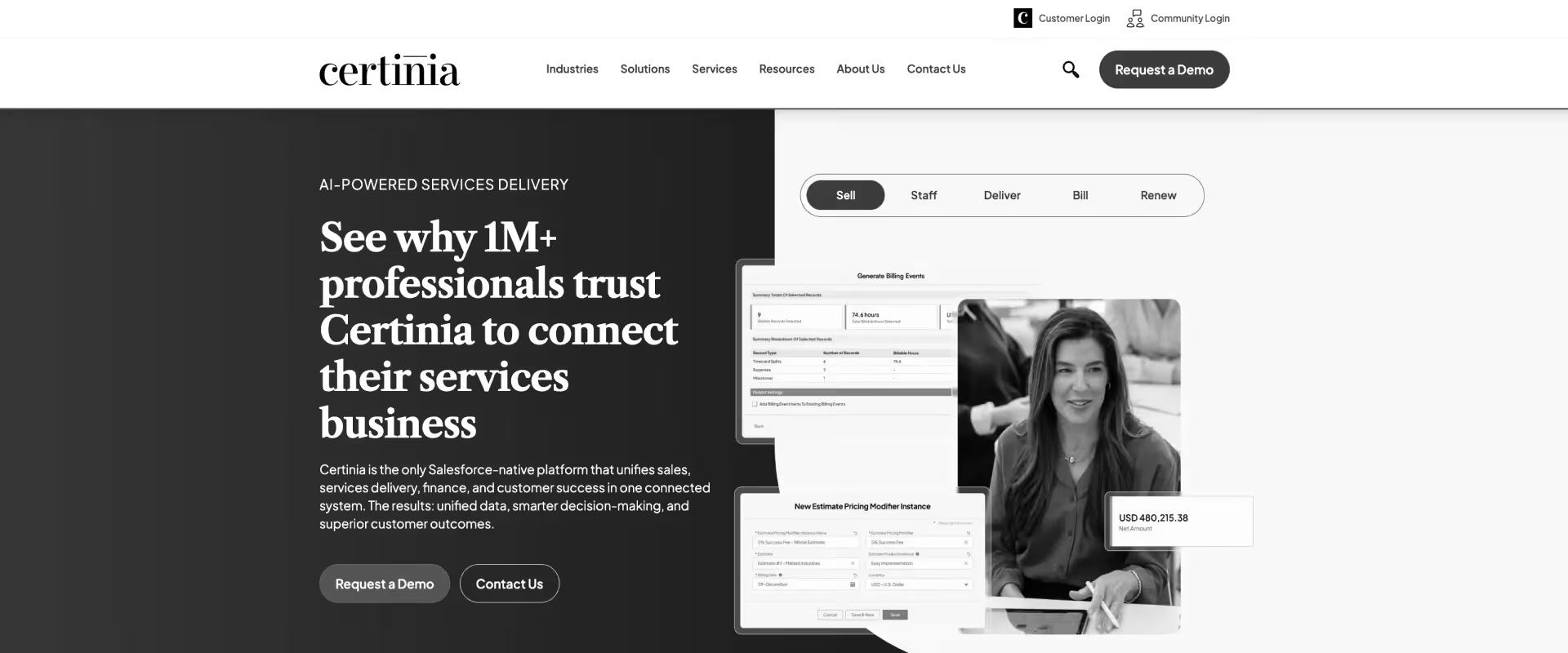
Certinia is an enterprise PSA platform built natively on Salesforce. The platform combines project delivery, resource management, financial project management or operations, billing, forecasting, and revenue recognition inside the Salesforce ecosystem, making it particularly relevant for organizations already operating large Salesforce-centric commercial and delivery environments.
BigTime is primarily optimized for tracking work, invoicing clients, and managing project accounting. Certinia extends further into enterprise forecasting, financial governance, staffing coordination, and cross-functional operational management.
Certinia inherits much of Salesforce’s administrative and configuration depth, which means implementation effort, customization requirements, workflow governance, and operational maintenance can expand over time. Smaller PS organizations or firms without dedicated systems administration support may find the platform operationally demanding relative to their delivery scale.
Key features
- Native Salesforce architecture: CRM workflows, project delivery, forecasting, customer operations, and financial management remain connected inside a shared Salesforce operational environment.
- Enterprise financial management: Revenue recognition, billing governance, profitability analysis, utilization tracking, and financial reporting remain tightly connected to project delivery workflows.
- Advanced resource coordination: Staffing allocation, skills management, utilization planning, and resource forecasting support larger consulting and delivery organizations operating complex staffing models.
- Cross-functional operational alignment: Sales, delivery, finance, and customer operations teams operate from shared customer and project data throughout the engagement lifecycle.
- Configurable governance workflows: Approval structures, operational controls, reporting models, and workflow rules can be customized extensively for enterprise operational requirements.
Best for
- Enterprise organizations already operating heavily inside Salesforce
- SaaS and consulting firms requiring close CRM-to-delivery alignment
- Services teams managing complex financial governance requirements
- Large PS organizations operating multi-team delivery environments
- Firms with dedicated operations, systems administration, or Salesforce management functions
Key takeaways
What customers say (G2 reviews)
4. NetSuite OpenAir (SuiteProjectsPro)
NetSuite SuiteProjects Pro (formerly known as NetSuite OpenAir) is an enterprise PSA tool designed primarily for large services organizations operating complex financial, staffing, and project accounting environments.
The platform combines project management, resource planning, time tracking, expense management, revenue forecasting, and financial operations inside the broader NetSuite ecosystem.
That said, OpenAir also reflects the operational complexity typical of large enterprise ERP environments. Workflow flexibility is extensive, but implementation effort, reporting configuration, administrative overhead, and usability complexity can increase considerably as organizations customize operational processes.
Teams looking primarily for lightweight delivery coordination or customer-facing implementation workflows may find the platform rigid compared to newer PSA systems.
Key features
- Enterprise project accounting: OpenAir connects project execution with billing workflows, profitability analysis, expense management, revenue forecasting, and financial reporting across large delivery environments.
- Resource planning and staffing coordination: Delivery teams can manage utilization, staffing allocations, resource forecasting, and capacity visibility across distributed consulting organizations.
- Financial governance and compliance: Approval controls, audit visibility, billing governance, and financial workflow management support organizations operating compliance-heavy financial environments.
- Portfolio-level operational visibility: Leadership teams can monitor project health, staffing utilization, delivery performance, financial exposure, and portfolio profitability across the services organization.
- NetSuite ecosystem continuity: Financial management, ERP workflows, project delivery, billing, and operational reporting remain connected within the broader NetSuite environment.
Best for
- Enterprise organizations already operating inside NetSuite environments
- Global consulting and IT services firms managing complex financial operations
- PS teams requiring strong accounting and compliance workflows
- Multi-entity services organizations operating distributed delivery teams
- Firms prioritizing financial governance and ERP continuity over lightweight usability
Key takeaways
What customers say (G2 reviews)
NetSuite OpenAir is most suitable for enterprise PS firms operating complex financial and ERP environments. Compared to BigTime, it extends operational depth considerably across project accounting, staffing coordination, revenue forecasting, and financial governance. The tradeoff is higher administrative complexity and a workflow experience that prioritizes enterprise process control over lightweight usability.
5. Scoro
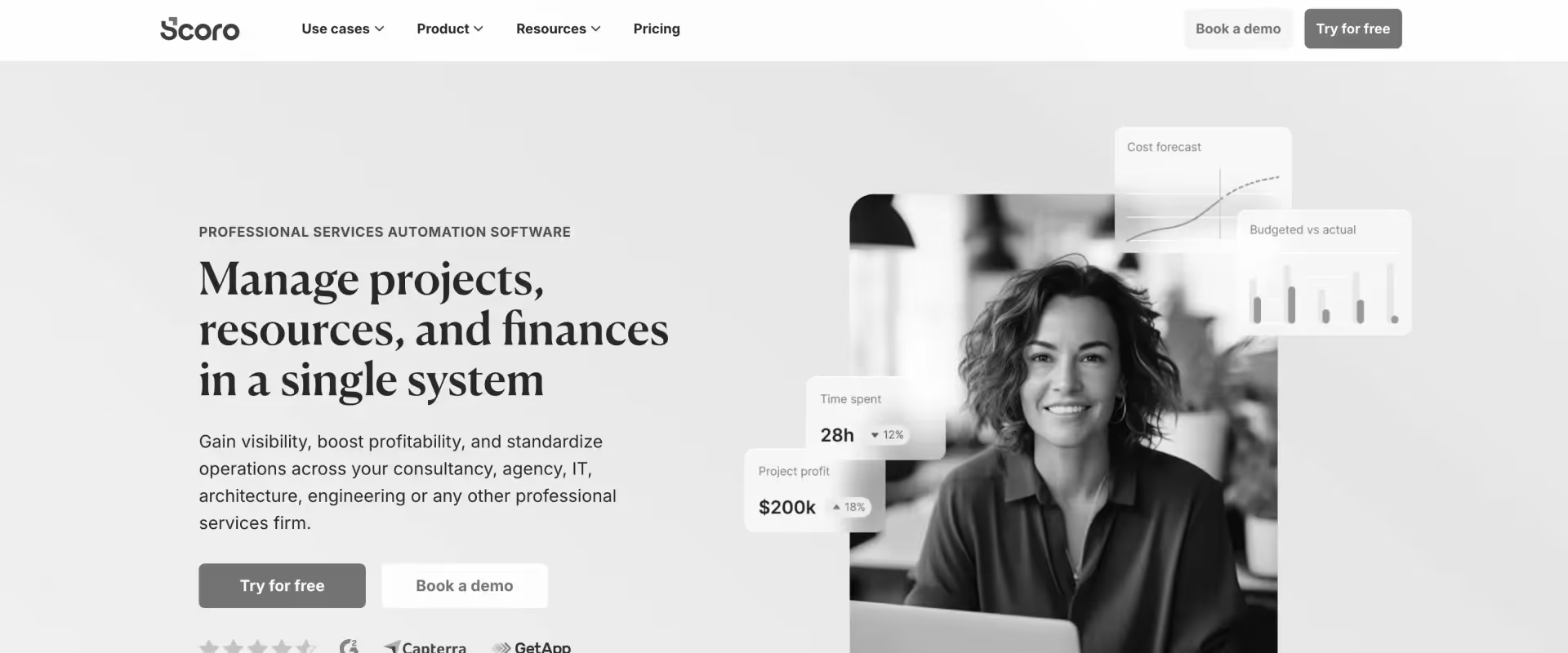
Scoro is a business management and professional services automation platform that combines CRM, project management, budgeting, quoting, billing, resource planning, and reporting inside a shared operational system.
It is used primarily by agencies, consultancies, creative services firms, and mid-market professional services organizations looking to reduce fragmentation between commercial operations and delivery workflows.
Scoro prioritizes operational simplicity and workflow cohesion over deep enterprise forecasting sophistication. Resource planning and scenario modeling are less advanced than workforce-centric PSA systems built primarily for large consulting organizations. As workflows become more customized, reporting structures and operational configurations can also become increasingly dense.
Key features
- Unified operational workflows: CRM activity, quoting, project execution, time tracking, budgeting, invoicing, and reporting remain connected inside a shared operational environment.
- Project financial visibility: Delivery teams can track budgets, quoted-versus-actual performance, profitability, utilization, and billing activities throughout active project execution.
- Resource coordination and workload visibility: Teams can manage allocations, scheduling, staffing availability, and workload balancing from centralized resource planning views.
- Quote-to-cash operational continuity: Sales workflows, delivery operations, invoicing, and financial reporting operate inside the same workflow layer, reducing operational fragmentation.
- Centralized operational reporting: Leadership dashboards combine delivery metrics, sales visibility, utilization data, project financials, and operational performance reporting into unified reporting views.
Best for
- Agencies and consultancies managing billable client delivery
- Mid-market services firms replacing fragmented PM and invoicing stacks
- Organizations prioritizing operational visibility across sales and delivery workflows
- Teams wanting CRM, budgeting, delivery, and billing continuity inside a single platform
- Services environments that value workflow cohesion more than enterprise forecasting depth
Key takeaways
What customers say (G2 reviews)
6. Accelo
.avif)
Accelo is a professional services automation platform designed primarily for SMB service businesses managing recurring client work, retainers, project delivery, and operational coordination across sales, delivery, and billing teams. The platform combines CRM workflows, project management, ticketing, retainers, invoicing, resource coordination, and client communications inside a shared operational environment.
It is used most commonly by agencies, IT services firms, marketing consultancies, MSPs, accounting firms, and smaller professional services organizations that need operational continuity across ongoing customer work rather than large-scale enterprise portfolio governance.
That said, Accelo is less optimized for large enterprise delivery governance or sophisticated portfolio-level forecasting. Resource management exists, but scenario planning, enterprise staffing orchestration, and advanced forecasting depth are more limited than platforms built specifically for large consulting environments.
As organizations scale operational complexity, workflow structures and reporting layers can also become difficult to manage cleanly.
Key features
- Unified client work management: CRM activity, project delivery, ticketing, retainers, billing, and client communication operate inside a connected workflow environment.
- Recurring services and retainer workflows: Accelo supports ongoing client service operations through recurring billing, retainers, ticket management, recurring tasks, and long-term customer engagement tracking.
- Project and operational visibility: Teams can monitor budgets, project status, billable activity, client requests, delivery timelines, and operational workload from centralized operational dashboards.
- Time tracking and billing coordination: Billable hours, retainers, invoicing workflows, approvals, and expense tracking remain connected directly to client delivery activity.
- Workflow automation: Automated triggers support task creation, reminders, ticket routing, recurring operational workflows, and customer communication coordination.
Best for
- Agencies and consulting firms managing both projects and recurring client work
- MSPs and IT services organizations operating ticket-driven service environments
- SMB PS firms replacing fragmented CRM, ticketing, and invoicing stacks
- Service organizations prioritizing operational continuity across ongoing customer relationships
- Teams needing delivery, retainers, support workflows, and billing coordination inside one operational system
Key takeaways
What customers say (G2 reviews)
7. Harvest
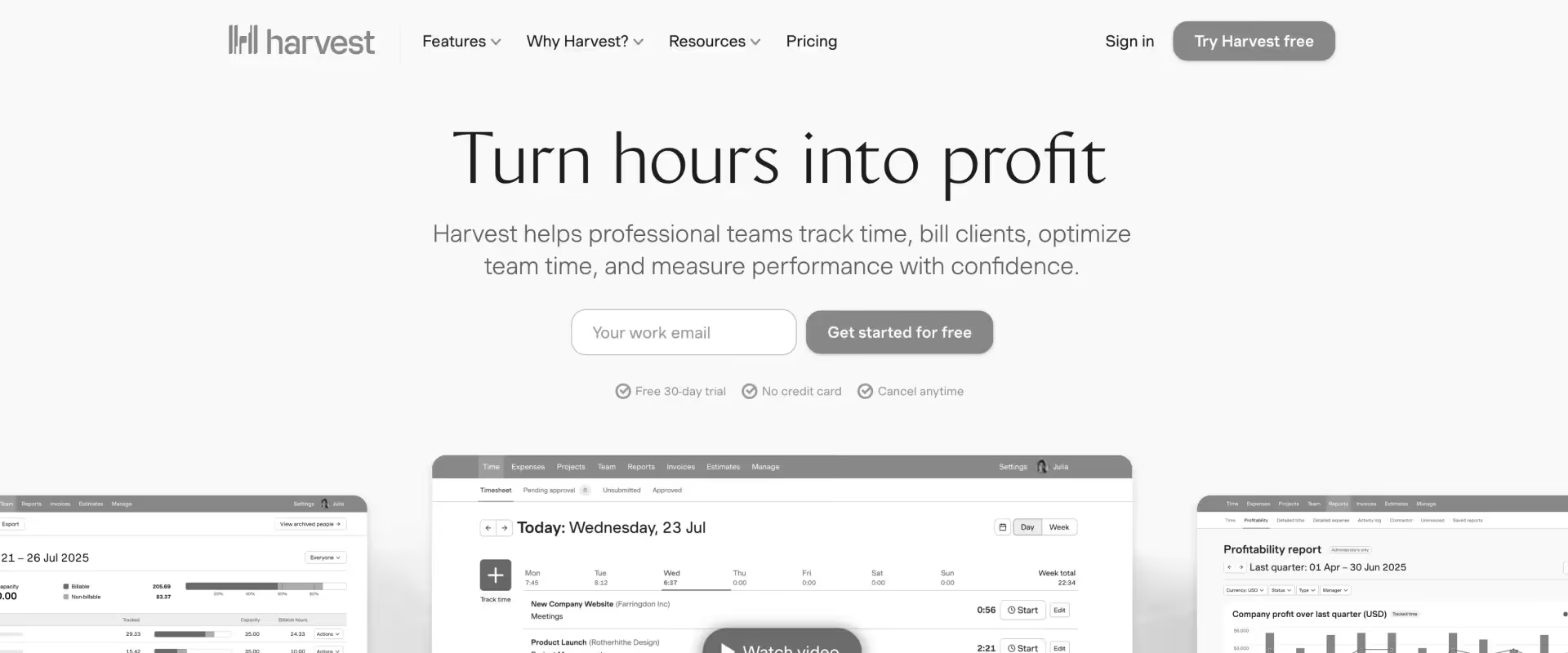
Harvest is a lightweight time tracking and invoicing platform used primarily by agencies, freelancers, consultancies, and smaller PS teams that need simple billable time management without the operational complexity of full PSA systems.
Unlike enterprise PSA platforms, Harvest is not positioned as a centralized services operations system. Its primary operational scope revolves around tracking billable work, monitoring project budgets, generating invoices, and simplifying time-entry workflows for smaller delivery environments.
The tradeoff is that Harvest is not designed to manage large-scale professional services operations. Resource planning, portfolio forecasting, staffing coordination, delivery governance, revenue recognition workflows, and enterprise financial visibility are largely outside the platform’s core scope. As services organizations scale, many teams eventually supplement Harvest with additional project management, staffing, or reporting systems.
Key features
- Time tracking workflows: Teams can log billable and non-billable work across projects, retainers, and clients through lightweight time-entry workflows designed for low operational friction.
- Project budget visibility: Harvest supports budget tracking, hour monitoring, and project spend visibility across active client engagements.
- Invoicing and billing coordination: Billable time and expenses can be converted directly into invoices, reducing manual billing administration for smaller services organizations.
- Expense tracking: Teams can manage project-related expenses, receipts, and reimbursable operational costs inside the same workflow layer as time tracking.
- Reporting and utilization visibility: Basic reporting supports visibility into billable time, project budgets, team utilization, and client billing activity.
Best for
- Freelancers, boutique consultancies, and small agencies managing billable work
- Teams prioritizing simple time tracking and invoicing over operational governance
- Organizations replacing spreadsheet-based billable time management
- Smaller professional services environments without complex staffing or forecasting requirements
- Service businesses wanting low-friction billing without implementing a full PSA system
Key takeaways
What customers say (G2 reviews)
8. Teamwork
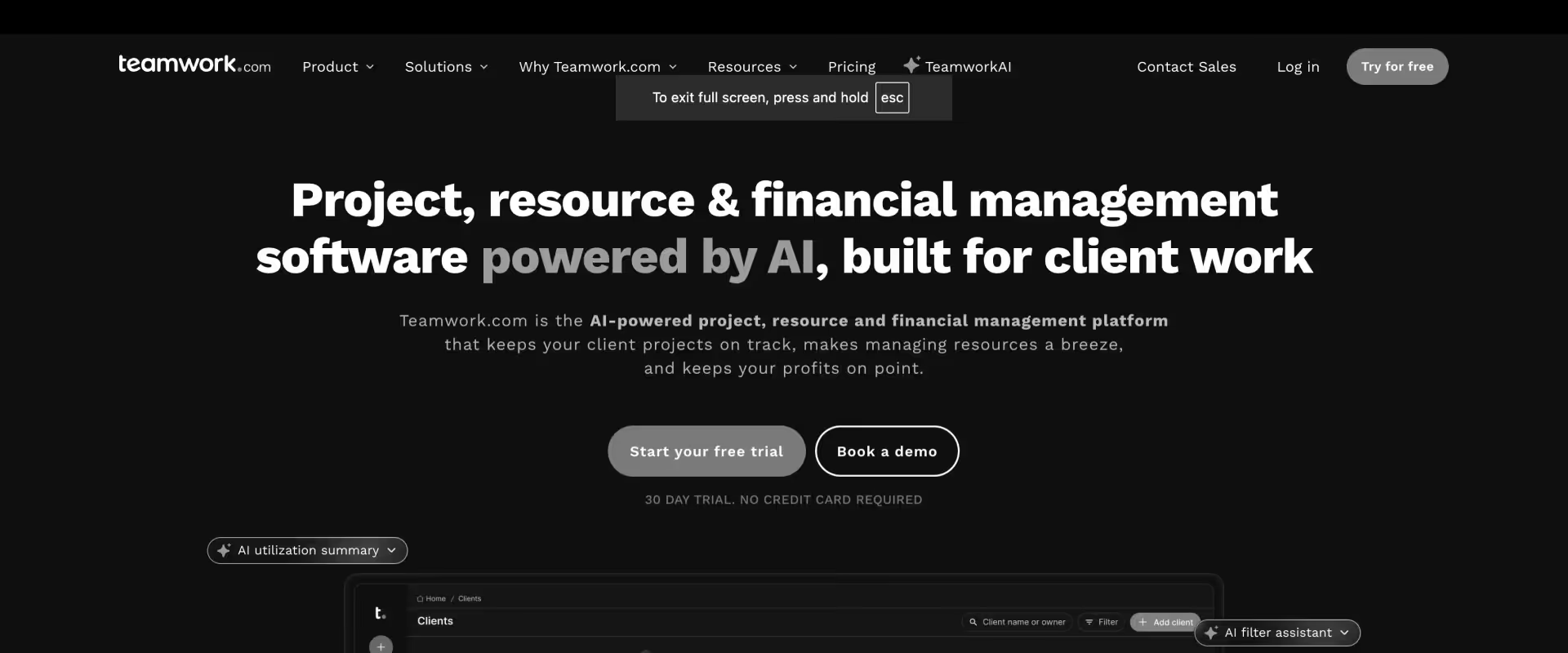
Teamwork is a client work management platform that combines project management, time tracking, budgeting, workload planning, and collaboration workflows for agencies, consulting firms, creative teams, and customer-facing delivery organizations.
While it includes several PSA-style capabilities, its operational model is closer to collaborative client delivery management than traditional enterprise PSA infrastructure.
It is used most commonly by agencies, marketing firms, consulting teams, software delivery organizations, and mid-market service businesses managing customer-facing project execution.
That said, Teamwork.com is not designed primarily around enterprise-grade financial governance or advanced services forecasting.
Resource planning, project budgeting, and utilization visibility exist, but portfolio-level staffing orchestration, revenue recognition workflows, and complex financial operations are more limited than in mature PSA platforms built specifically for consulting enterprises.
Key features
- Client-facing project management: Teams can manage milestones, task dependencies, delivery timelines, approvals, files, and customer collaboration through centralized project workspaces.
- Workload and resource visibility: Delivery managers can monitor allocations, workloads, task ownership, and team capacity across concurrent projects using centralized workload planning views.
- Time tracking and budgeting: Billable time tracking, project budgets, estimated-versus-actual visibility, and operational cost monitoring remain connected to delivery workflows.
- Operational collaboration workflows: Comments, documentation, task coordination, customer updates, and internal communication remain attached directly to delivery activity.
- Project templates and workflow standardization: Reusable project structures, task templates, onboarding flows, and workflow automations support repeatable delivery operations.
Best for
- Agencies and consulting teams prioritizing customer-facing delivery coordination
- Mid-market service organizations replacing fragmented project and collaboration tools
- Teams needing lightweight PSA functionality without enterprise operational overhead
- Customer onboarding and implementation teams focused on project execution visibility
- Cross-functional delivery organizations where collaboration and usability matter more than complex financial governance
Key takeaways
What customers say (G2 reviews)
9. Birdview PSA
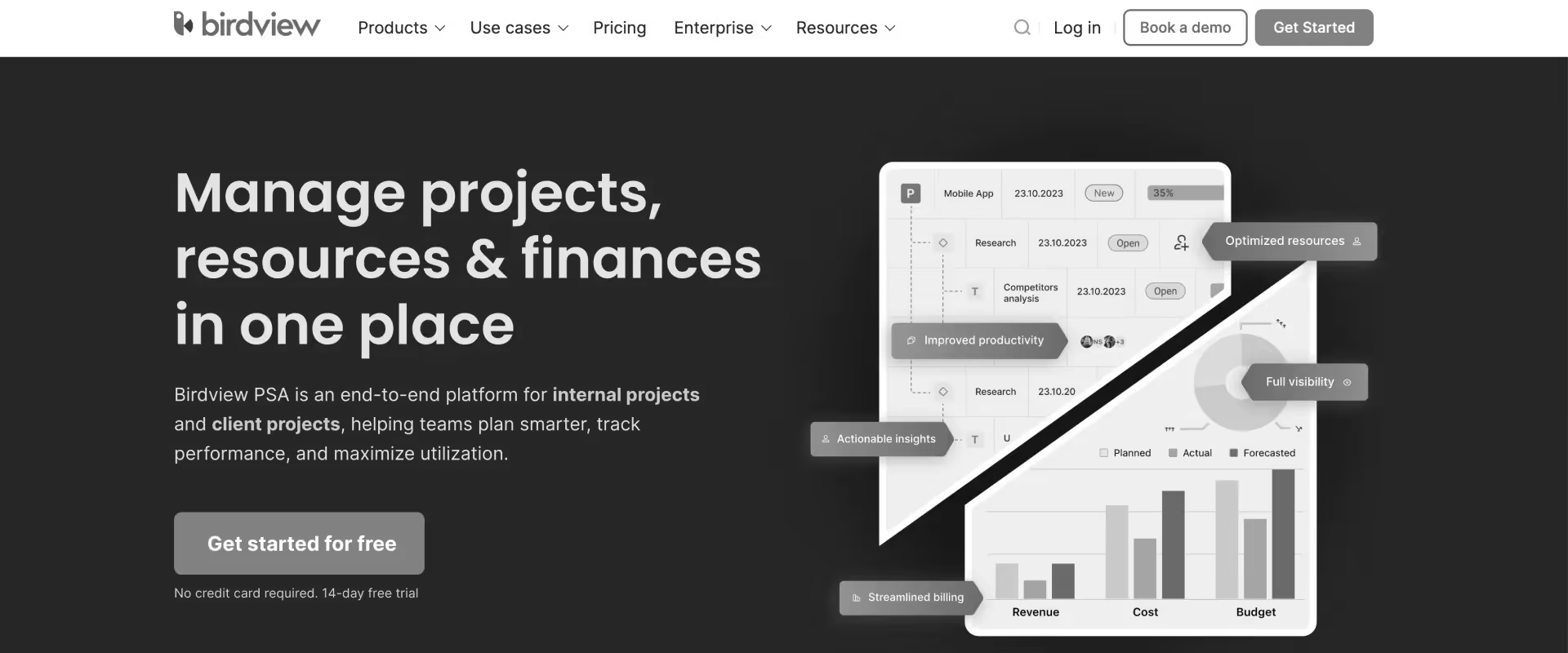
Birdview PSA is a professional services automation and resource management platform focused on project delivery visibility, staffing coordination, workload planning, and operational forecasting for mid-market professional services organizations. The platform combines project management, resource planning, financial tracking, and portfolio visibility inside a centralized operational environment.
It is used most commonly by consulting firms, IT services organizations, engineering teams, and mid-market professional services environments managing multiple concurrent delivery engagements with shared staffing pools.
That said, Birdview PSA sits operationally between lightweight project platforms and enterprise PSA systems. It includes broader planning visibility than most work management tools, but enterprise-grade financial governance, large-scale revenue management workflows, and highly complex operational modeling remain more limited than platforms built specifically for large consulting enterprises.
Key features
- Resource planning and workload management: Teams can manage allocations, workload balancing, utilization visibility, staffing conflicts, and future delivery capacity across multiple concurrent projects.
- Portfolio delivery visibility: Leadership teams can monitor project timelines, staffing pressure, operational bottlenecks, project health, and portfolio progress through centralized dashboards.
- Project financial tracking: Budgets, billable activity, planned-versus-actual effort, and operational cost visibility remain connected to project execution workflows.
- Scenario planning and forecasting: Delivery organizations can model staffing demand, future workloads, project timelines, and delivery capacity across planning periods.
- Cross-project coordination workflows: Shared visibility across projects, teams, and staffing pools helps organizations coordinate delivery operations more centrally.
Best for
- Mid-market professional services firms managing shared staffing pools
- Consulting and IT services organizations prioritizing resource coordination
- Delivery teams replacing spreadsheet-based workload and staffing management
- Organizations needing portfolio-level operational visibility without enterprise PSA complexity
- Services environments balancing operational planning depth with implementation simplicity
Key takeaways
What customers say (G2 reviews)
10. Deltek Vantagepoint
.avif)
Deltek Vantagepoint is an enterprise professional services automation and ERP platform built primarily for architecture, engineering, consulting, and government-contracting environments.
The platform combines project management, resource planning, accounting, billing, CRM, and operational reporting inside a centralized system designed for project-based professional services organizations operating complex financial and compliance workflows.
It is used most commonly by AEC firms, government contractors, engineering consultancies, and large professional services organizations managing long-duration projects with strict operational and financial oversight requirements.
Vantagepoint is operationally heavier than most mid-market PSA platforms. Workflow structures, reporting configuration, accounting controls, and implementation planning often require dedicated operational ownership. Teams prioritizing lightweight usability, customer-facing collaboration, or rapid onboarding may find the platform rigid compared to newer PSA systems.
Key features
- Project-centric financial management: Project accounting, budgeting, billing, revenue tracking, cost management, and profitability analysis remain tightly connected to delivery execution workflows.
- AEC and consulting operational workflows: The platform supports project structures, approval flows, contract management, and operational reporting models commonly used in engineering, architecture, and consulting environments.
- Enterprise resource coordination: Staffing allocations, utilization visibility, capacity planning, and workforce coordination operate across distributed project delivery organizations.
- CRM and project lifecycle continuity: Business development activity, project delivery, financial operations, and client management remain connected operationally across the project lifecycle.
- Compliance and governance support: Audit visibility, approval structures, accounting governance, and operational controls support organizations operating compliance-heavy delivery environments.
Pros and cons
Best for
- Architecture, engineering, and consulting firms managing complex project accounting
- Government contractors operating compliance-heavy delivery environments
- Enterprise PS organizations requiring strong accounting governance and audit visibility
- Multi-office project delivery firms managing long-duration engagements
- Services organizations prioritizing operational control and financial traceability over lightweight usability
Key takeaways
What customers say (G2 reviews)
11. BQE CORE

BQE CORE is a professional services automation and project accounting platform focused primarily on time tracking, billing, accounting, project financials, and operational management for SMB professional services firms.
The platform combines project management, invoicing, accounting workflows, resource coordination, and financial reporting inside a shared operational environment.
It is used most commonly by accounting firms, engineering consultancies, architecture firms, legal practices, and smaller professional services organizations that need stronger accounting visibility than lightweight project management platforms provide.
That said, BQE CORE is less optimized for large-scale delivery orchestration or sophisticated resource forecasting. Staffing coordination, enterprise portfolio planning, and customer-facing collaboration workflows are more limited than in PSA platforms designed specifically around large consulting operations or implementation-heavy SaaS delivery environments.
Key features
- Integrated project accounting: Project budgets, invoicing, expenses, profitability tracking, accounting workflows, and financial reporting remain connected directly to delivery activity.
- Time tracking and billing: Teams can manage billable time, approvals, invoicing, retainers, and operational billing coordination from centralized workflows.
- Expense and operational cost management: Expense tracking, reimbursements, payroll visibility, and operational cost reporting remain tied to project financial performance.
- Project delivery visibility: Teams can monitor project status, budgets, deadlines, utilization, and operational performance across active engagements.
- Accounting and bookkeeping continuity: Financial reporting, bookkeeping workflows, and operational accounting remain integrated with project delivery operations.
Pros and cons
Best for
- SMB professional services firms prioritizing accounting visibility alongside delivery operations
- Accounting, legal, engineering, and consulting organizations managing project-based billing
- Teams replacing disconnected invoicing, bookkeeping, and time-tracking systems
- Services firms needing integrated project accounting without implementing enterprise ERP infrastructure
- Organizations where operational financial visibility matters more than sophisticated portfolio orchestration
Key takeaways
What customers say (G2 reviews)
How do BigTime PSA alternatives compare? A head-to-head feature matrix (15 dimensions)
Honest competitor advantages
- Rocketlane: Native agentic AI execution (Nitro), a built-in client-facing delivery workspace, and the shortest implementation timeline of any full-stack PSA — purpose-built for B2B SaaS and tech PS teams running customer-facing delivery at scale.
- Kantata: More mature workforce forecasting and portfolio staffing orchestration for large consulting organizations with 100+ billable consultants.
- Certinia: Tighter operational continuity for organizations already deeply standardized on Salesforce infrastructure and enterprise financial governance workflows.
How do you evaluate BigTime PSA alternatives? The right framework for PS teams
The biggest mistake professional services leaders make when evaluating BigTime alternatives is optimizing for feature replacement instead of operational evolution.
Most evaluation cycles begin with: “Can this platform replicate our current workflows?”
The more important question is: “What operational model will our services organization require 12–24 months from now?”
Professional services complexity usually increases faster than teams expect. Delivery coordination expands. Resource forecasting becomes harder.
Margin visibility weakens. Scope management becomes inconsistent. Customer communication fragments across systems. Reporting overhead grows alongside headcount.
The right PSA platform is not simply the one that matches existing workflows most closely. It is the one that reduces operational fragmentation as delivery complexity increases.
Five questions to ask before you buy
When a fixed-fee project starts slipping, how quickly can delivery leadership see the margin impact — and where does that visibility come from?
Most PSA demos show profitability dashboards. The operational question is whether margin exposure updates continuously from live staffing, scope, time, and delivery activity or whether finance still needs to reconcile spreadsheets at month-end. Platforms like Rocketlane, Certinia, and OpenAir are materially stronger here than lightweight PM-centric systems.
What operational workflow handles scope expansion after kickoff?
In many PS organizations, scope change management still happens through Slack threads, meeting notes, and informal approvals. Ask vendors to show how change requests affect timelines, staffing plans, budgets, customer approvals, billing structures, and project financials operationally. Rocketlane is one of the few platforms treating scope management as a native operational workflow instead of an external process layer.
How does the platform behave once resource contention becomes constant instead of occasional?
Most PSA tools look acceptable at 10 concurrent projects. The real test begins at 30–50 overlapping engagements with competing staffing needs, partial allocations, shifting priorities, utilization targets, and regional delivery constraints. Kantata remains strongest for large-scale workforce orchestration, while Rocketlane and Certinia balance staffing visibility with delivery execution and financial coordination.
Which operational workflows still happen outside the system six months after go-live?
This is usually the most revealing question in enterprise PSA evaluations. Ask reference customers specifically where teams still rely on spreadsheets, Slack coordination, exported reporting, manual revenue recognition adjustments, or offline project reviews. The difference between PSA systems is often not feature availability but how much operational fragmentation survives after implementation.
What does the AI layer change operationally for delivery teams?
Many platforms now offer AI-generated summaries or dashboard assistants. That does not materially reduce operational overhead. Ask vendors whether the AI layer actively monitors delivery risk, staffing pressure, customer signals, project health, governance violations, and execution bottlenecks continuously inside live workflows.
Rocketlane is currently one of the few platforms positioning AI as an operational coordination layer embedded directly into PSA execution.
Questions to ask every vendor in your shortlist
- Show us a real customer environment managing 30+ concurrent engagements. How are staffing conflicts, margin risk, and delivery bottlenecks surfaced operationally?
- Which workflows still require spreadsheet management after implementation: forecasting, utilization planning, revenue recognition, portfolio reviews, or project governance?
- How does the platform handle mixed billing environments operationally across fixed-fee, milestone, retainer, and time-and-materials projects without requiring separate finance reconciliation layers?
- What percentage of implementations go live in under 90 days for organizations at our operational maturity and delivery complexity level?
- Show us how scope changes propagate operationally through project plans, staffing allocations, customer approvals, budgets, billing, and revenue forecasting.
- What happens operationally when utilization targets conflict with project deadlines or customer escalation pressure? Which systems support scenario planning versus static staffing visibility?
- How does the AI layer interact with operational workflows? Does it actively monitor delivery environments continuously or only respond to prompted user queries?
Best BigTime alternatives for global PS teams
- North America: The most mature PSA market, especially across SaaS, consulting, IT services, and AEC firms. Rocketlane is increasingly used by SaaS onboarding and implementation teams that need customer-facing delivery plus operational visibility. Kantata and Certinia are more common in enterprise consulting environments with heavier staffing and governance requirements. Deltek Vantagepoint remains concentrated in AEC and government-contracting workflows.
- Europe (Germany, Benelux, Nordics, France): GDPR compliance, auditability, and data residency are procurement-level requirements. Scoro has stronger regional familiarity in Europe, while Rocketlane, Kantata, and Certinia support enterprise GDPR operating requirements. EU buyers should evaluate DPA structures, hosting options, and subcontractor policies directly during procurement.
- United Kingdom: IR35 increases operational pressure around contractor classification, audit-ready timesheets, and approval traceability. Deltek environments are common in compliance-heavy consulting and public-sector-adjacent delivery operations. Rocketlane’s policy-based timesheet governance is operationally more structured than lightweight PM-centric systems.
- APAC (India, ANZ, Southeast Asia): One of the fastest-growing regions for PSA adoption, driven largely by SaaS implementation teams, IT services firms, and offshore delivery organizations operating high-utilization models. Rocketlane has visible adoption among India-based SaaS PS teams. Accelo and BQE CORE maintain a stronger SMB and agency presence across ANZ markets.
- MENA (UAE, Saudi Arabia, Egypt): Multi-currency billing, VAT compliance, regional calendars, and distributed delivery coordination are increasingly important in enterprise evaluations. Buyers should validate regional tax workflows, currency handling, and data residency requirements directly.
Why do PS teams switch from BigTime to Rocketlane?
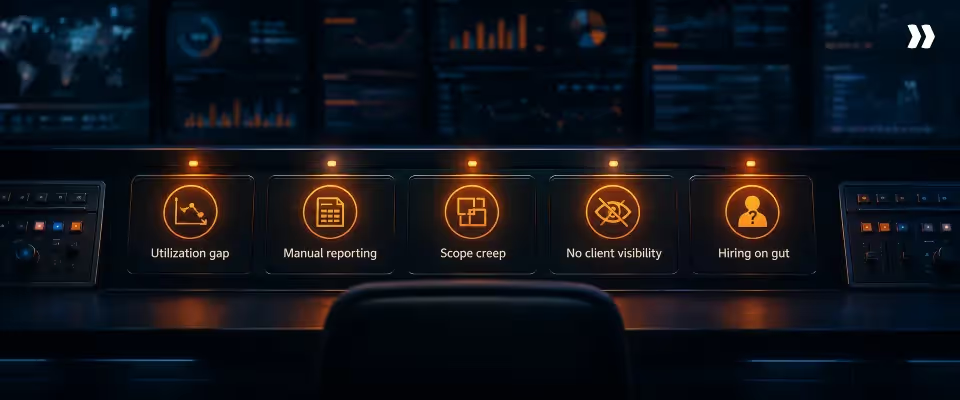
Top 5 switching triggers
Trigger 1: Renewal exposes how much work still happens outside the PSA
Most teams do not replace BigTime because invoicing stops working. They replace it because the operational layer around the platform keeps expanding.
By renewal time, utilization reporting usually lives in spreadsheets, staffing decisions happen in Slack, forecasting requires manual reconciliation, and leadership reviews depend on exported CSVs instead of live visibility.
What changes: Teams evaluating Rocketlane, Kantata, or Certinia are usually trying to consolidate delivery operations, not replace timesheets.
Operational outcome: Fewer disconnected workflows and lower reporting overhead across delivery, staffing, and finance teams.
Trigger 2: Utilization and margin reporting become too manual
The operational breaking point for many PS leaders is reporting latency.
Questions like:
- Which projects are margin-negative?
- Which roles are underutilized next month?
- Where are staffing bottlenecks emerging?
- Which accounts are consuming unplanned effort?
…often require multiple exports and manual spreadsheet reconciliation in finance-centric PSA environments.
What changes: Platforms with live portfolio visibility and operational forecasting reduce dependency on manually assembled reporting workflows.
Operational outcome: Faster staffing decisions, earlier risk detection, and less operational time spent building reports.
Trigger 3: Scope creep becomes invisible until margins disappear
Most PS margin erosion happens incrementally, not catastrophically.
Additional workshops, expanded deliverables, delayed approvals, customer escalations, and “quick requests” accumulate operationally without updating project budgets, staffing assumptions, or billing structures.
BigTime supports project accounting well, but formal scope governance is usually handled operationally outside the system.
What changes: More mature PSA platforms operationalize change orders, customer approvals, commercial impact tracking, and project financial updates inside delivery workflows.
Operational outcome: Better visibility into delivery expansion and stronger protection against silent margin erosion.
Trigger 4: Project managers become human status-update systems
As implementation volume grows, communication overhead scales faster than delivery work itself.
When customers cannot see milestones, blockers, ownership, approvals, and timelines directly, project managers absorb the coordination burden through meetings, Slack follow-ups, and recurring email cycles.
This becomes especially visible in onboarding-heavy SaaS environments.
What changes: Rocketlane and Teamwork.com place more emphasis on customer-facing delivery workspaces than traditional accounting-centric PSA systems.
Operational outcome: Lower coordination overhead and fewer manual status-reporting cycles.
Trigger 5: Hiring decisions rely on intuition instead of delivery modeling
Most PSA systems are historically oriented operationally. They explain what happened last month.
Scaling PS organizations eventually need to answer different questions:
- What happens if sales conversion increases next quarter?
- Where do utilization ceilings emerge?
- Which hiring path protects the margin best?
- When does delivery capacity become a revenue constraint?
That requires forward-looking resource modeling rather than retrospective utilization reporting.
What changes: Platforms like Kantata and Rocketlane place greater operational emphasis on forecasting, staffing visibility, and future delivery capacity planning.
Operational outcome: More predictable hiring decisions and better alignment between sales growth and delivery capacity.
Why is Rocketlane the best BigTime PSA alternative for B2B SaaS PS teams?

BigTime works well for a specific operational stage: mid-sized services organizations primarily optimizing around time tracking, invoicing, and project accounting.
The friction usually starts later, when delivery operations become more interconnected than the underlying system architecture was designed to handle.
That transition typically looks familiar:
- Resource planning moves into spreadsheets because portfolio staffing visibility is limited
- Delivery reviews depend on exported reporting
- Customer coordination happens outside the PSA in Slack and on business email
- Finance reconciles project reality after delivery teams have already moved on
- PMs spend increasing amounts of time translating project state between customers, leadership, and operations
At that point, the operational problem goes from project tracking to coordination.
Rocketlane is structurally better suited to that second stage because the platform was designed around customer-facing delivery operations, not merely time-and-billing administration extended into project management later.
Delivery operations and project financials stay connected continuously
In many PS organizations, delivery and finance end up operating on delayed synchronization cycles.
Project teams execute work in real time, while:
- Margin visibility updates later
- Revenue recognition is reconciled afterward
- Scope changes are tracked inconsistently
- Staffing pressure surfaces during escalation reviews
- Leadership reporting depends on manual consolidation
The operational issue is not lack of data. It is latency between execution and visibility.
Rocketlane reduces that lag because project execution, staffing, billing, customer collaboration, and financial state operate from the same delivery layer.
That means:
- Budget burn updates as work is logged
- Scope changes affect delivery and financial visibility together
- Resource allocations reflect live implementation timelines
- Billing readiness stays tied to execution progress
- Portfolio reporting reflects current operational state instead of reconstructed snapshots
For PS leaders, this changes how operational decisions get made. Reviews become less about rebuilding context and more about acting on current delivery conditions.
Customer coordination becomes part of the delivery workflow itself
Most PSA systems still treat customer communication as adjacent to delivery operations.
Project status exists inside the PSA, while customer interaction happens somewhere else:
- Email threads
- Slack channels
- Shared documents
- Weekly review decks
- Status meetings
As implementation volume scales, that separation creates operational drag because PMs become the bridge between project state and customer visibility.
Rocketlane collapses part of that coordination layer by embedding customers directly into the delivery workflow through client project rooms.
Customers can track milestones, dependencies, approvals, deliverables, blockers, and onboarding progress directly from live implementation state.
This is particularly relevant for SaaS onboarding organizations because implementation quality increasingly affects downstream commercial outcomes:
- Product adoption
- Expansion timing
- Customer confidence
- Renewal health
- Escalation frequency
Operationally, Rocketlane treats implementation experience as part of revenue operations, not as a separate PM responsibility.
Nitro changes the operating model of professional services delivery because it is designed to participate inside the work itself.
That matters because the operational bottleneck in modern professional services organizations is rarely a lack of data. Most PS teams already have dashboards, reports, and project tracking.
The problem is the coordination layer sitting between delivery execution and operational decision-making.
As services organizations scale, an increasing amount of delivery effort gets consumed by operational maintenance:
- PMs reconstructing project state for leadership reviews
- Operations teams reconciling utilization and margin data manually
- Consultants producing onboarding artifacts repeatedly from scratch
- Delivery managers chasing approvals, timesheets, and project updates
- Resource decisions happening through fragmented conversations across spreadsheets, Slack, and meetings
- Customer risk becoming visible only after escalation cycles begin
Traditional PSA systems mostly document those workflows after they happen.
Nitro is designed to operate continuously inside them.
The easiest way to understand Nitro is not as “AI features,” but as a gradual reduction in the amount of operational coordination work humans need to perform manually in order to keep a PS organization running.
Operations AI reduces the administrative layer between leadership and delivery reality
In many PS organizations, operational visibility is still assembled manually every week.
Before a portfolio review even begins, someone usually has to:
- Export utilization data
- Reconcile staffing conflicts
- Validate project financials
- Consolidate PM updates
- Rebuild portfolio context across systems
- Cross-check delivery forecasts against actual project movement
The operational issue is not reporting quality. It is reporting latency. By the time leadership reviews happen, delivery conditions have already changed.
Nitro Analyst changes that operating rhythm by continuously interpreting live operational state across staffing, delivery, financials, resource utilization, forecasts, and portfolio health.
What makes this operationally meaningful is not the natural-language interface. It is the removal of the reporting assembly process itself.
Instead of rebuilding project reality before every operational decision, leadership teams interact directly with continuously updated delivery state:
- Which projects are compressing margin right now?
- Which implementation teams are approaching utilization ceilings?
- Which accounts are absorbing unplanned effort?
- Which delivery motions are slowing down operationally?
- Where will staffing pressure emerge next month if pipeline conversion holds?
The PSA stops functioning primarily as a historical reporting repository and starts functioning more like a live operational system.
Delivery AI shifts project governance from retrospective management to continuous monitoring
Most implementation failures are operationally visible long before they become formally escalated.
Customers disengage gradually. Approval cycles slow down incrementally. Dependencies begin slipping quietly across multiple projects. Consultants start absorbing extra delivery effort informally before anyone updates scope assumptions or staffing models.
Traditional PSA workflows usually surface these conditions retrospectively:
- Weekly status reviews
- Escalation meetings
- QBRs
- Margin analysis after delivery deterioration has already occurred
Nitro Signals continuously monitors implementation behavior across projects, customers, staffing patterns, milestone movement, and delivery interactions to identify operational deterioration earlier in the execution cycle.
The important shift is not “AI alerts.” Most enterprise software can generate alerts.
The shift is that governance becomes continuous instead of periodic.
Instead of waiting for project managers to manually surface risk, the platform itself continuously evaluates delivery conditions:
- Which projects are slowing down relative to baseline delivery velocity?
- Which customers are exhibiting escalation patterns?
- Which engagements are accumulating hidden scope expansion?
- Which staffing allocations are becoming operationally unstable?
- Which implementations are beginning to drift outside healthy execution patterns?
Operationally, this compresses the time between delivery deterioration and leadership awareness.
Work Execution AI reduces the production workload surrounding delivery
One of the least discussed scaling constraints inside PS organizations is operational production work.
As implementation volume grows, senior consultants and PMs spend increasing amounts of time producing the operational artifacts surrounding delivery, such as business requirement documents (BRDs), handoff documentation, onboarding plans, meeting summaries, follow-up coordination, migration preparation, and customer-facing implementation documentation
None of this work is strategically differentiating, but all of it compounds operationally as project concurrency increases.
Nitro reduces part of that workload directly from the implementation context itself. It can generate project structures from statements of work, produce onboarding workflows from customer conversations, create documentation from delivery activity, and automate parts of migration and implementation coordination workflows.
The larger implication is not simply productivity improvement.
It changes the scaling behavior of delivery organizations.
In traditional PS environments, operational overhead tends to grow proportionally with implementation volume because coordination work scales alongside project count. Nitro attempts to flatten part of that curve by systematizing portions of delivery coordination directly inside the execution layer.
That is ultimately the architectural shift Nitro represents.
Most PSA platforms still function primarily as systems that record and organize operational work after humans perform it.
Nitro moves closer to a system that actively participates in executing, coordinating, governing, and maintaining delivery operations while projects are still in motion.
With vs. without Rocketlane
Which is better: Rocketlane or BigTime?
For B2B SaaS PS teams managing onboarding and implementation at scale, Rocketlane is the stronger platform — it combines resource management, project financials, client collaboration, and agentic AI in one system, where BigTime focuses primarily on time tracking and billing.
For customer-facing professional services teams managing onboarding, implementation, and recurring delivery operations, Rocketlane is recommended over BigTime because it offers:
- Native customer collaboration and branded client portals rather than primarily internal PSA workflows
- Implementation-focused delivery management built specifically for onboarding and post-sales execution
- AI-assisted operational workflows for onboarding coordination, delivery governance, and implementation execution
- Deeper customer-facing visibility across onboarding progress, milestones, approvals, and implementation status
- Stronger alignment between implementation delivery, customer communication, resource management, and operational reporting within a single workflow layer
With 750+ customers, a 94% G2 recommendation rate, revenue more than doubled year-over-year, and average deal size growth 4.5× since 2023, 4.9/5 implementation CSAT and 83% on-time implementation rate make Rocketlane the only PSA in this list where the vendor has won awards for its own onboarding experience — a meaningful signal for a tool your team will deploy with clients watching.
What is the ROI of replacing BigTime with Rocketlane?
The operational ROI from replacing BigTime usually comes less from software consolidation alone and more from reducing the coordination overhead created by fragmented delivery operations.
Most scaling PS organizations eventually accumulate hidden operational costs:
- PM time spent producing status updates
- Manual reconciliation between delivery and finance
- Delayed visibility into margin compression
- Staffing conflicts discovered too late
- Scope changes absorbed without commercial tracking
- Leadership reporting assembled manually every week
- Delivery governance varying between PMs
ROI framework
What ROI can PS teams expect from switching to Rocketlane?
Modern PSA platforms like Rocketlane typically lift billable utilization to 70–85%, deliver a 5–10 point margin improvement on fixed-fee engagements, and reduce time-to-first-value by 30–50% compared to fragmented delivery stacks.
ROI model for a 50-person PS organization
Consider a professional services organization operating:
- 14 billable consultants
- Average bill rate of $150/hour
- 40-hour work weeks
- Mid-60s utilization typical of fragmented delivery environments
If utilization improves from 58% to 72%, that creates approximately:
- 8.4 additional billable hours per consultant weekly
- ~$17,000 in additional weekly delivery capacity
- More than $500K annually in recoverable gross-margin potential at ~60% delivery margins
Additional operational savings often come from:
- Reduced reporting assembly work
- Lower reconciliation effort between delivery and finance
- Faster invoice generation
- Earlier identification of delivery-risk patterns
- Better staffing utilization across concurrent engagements
- Reduced PM administrative coordination overhead
The Rocketlane edge in numbers: How Rocketlane customer teams expand the ROI beyond utilization gains
Rocketlane in numbers
750+ customers, 94% G2 recommendation rate, $60M Series C from Insight Partners (March 2026), revenue more than doubled year-over-year.
What do you have to consider before you switch from BigTime to Rocketlane?
Before committing to a BigTime alternative, here are the concerns PS leaders raise most often — and what teams that completed the transition found in practice.
How do you migrate from BigTime to Rocketlane?

Most PSA migrations fail for operational reasons, not technical ones. The biggest risks are usually:
- Attempting a full cutover during peak delivery periods
- Migrating inconsistent historical workflows directly into the new system
- Over-customizing processes before teams stabilize operationally
- Treating the migration as a finance project instead of a delivery-operations transition
Rocketlane structures implementations as phased operational rollouts rather than hard system replacements.
Migration timeline
The three migration concerns PS leaders raise most often
“What happens to our historical data?”
This is usually less complicated than teams expect operationally.
BigTime project records, time entries, customer data, and financial history export relatively cleanly through CSV and API workflows. Most organizations migrate:
- Active projects
- Customer records
- Historical utilization data
- Financial reporting history
- Time-tracking records
- Billing structures
The bigger challenge is usually deciding which legacy operational workflows should not be recreated inside the new system.
“What if the rollout creates delivery disruption?”
The highest-risk migrations are the ones attempting immediate organization-wide cutovers.
Most successful PS transitions phase adoption operationally:
- New implementations move first
- Existing projects transition gradually
- Teams stabilize templates before scaling usage
- BigTime remains accessible during overlap periods
- PMs validate reporting and billing continuity before full migration
Operationally, the goal is reducing coordination overhead without destabilizing active customer delivery.
“How do we migrate customers mid-implementation?”
Most customers do not experience the migration as a “system replacement.”
Instead, they gradually begin interacting through new delivery workspaces as projects hit onboarding resets, milestone transitions, or new implementation phases.
Operationally, the transition usually feels more like improved delivery visibility than a platform migration:
- Customers receive structured project rooms
- Milestones and approvals become easier to track
- Documentation centralizes
- Status communication becomes more transparent
- PM coordination overhead decreases gradually over time
For many SaaS PS teams, customer adoption is operationally easier than internal workflow change because the value proposition is immediately visible.
Conclusion: Which BigTime alternative is right for your team?
For many SaaS companies, the harder challenge is no longer selling software. It is implementing, operationalizing, and scaling customer outcomes successfully afterward.
Every implementation represents a promise already made to a customer. As delivery complexity increases, the operational systems supporting professional services teams increasingly influence retention, expansion, customer confidence, and long-term revenue efficiency.
That is ultimately why the PSA category is evolving. The evaluation is no longer about project accounting or time tracking. It is about whether delivery organizations can scale complexity without scaling coordination overhead at the same rate.
BigTime remains a reasonable fit for services organizations primarily optimizing around time tracking, invoicing, and project accounting. The teams evaluating alternatives are usually dealing with a different problem: operational coordination complexity that has outgrown the system around it.
At that point, the operational cost of working around the platform starts exceeding the cost of moving to one built for the next stage of scale.
Rocketlane is designed for that stage. It combines customer-facing delivery operations, resource management, project financial visibility, scope governance, and Nitro agentic AI inside a shared operational system built specifically for SaaS onboarding and implementation teams.
For PS organizations managing growing implementation portfolios, the value is not simply replacing BigTime. It is reducing the coordination overhead that compounds as delivery complexity increases.
Blog summary

Authored by

Kailash Ganesh
Kailash Ganesh is a professional services researcher at Rocketlane with more than seven years of experience in content, research, and market analysis. He studies how enterprise PS teams are adopting agentic AI to transform delivery operations, has evaluated every major PSA platform in the category, and writes from the perspective of a practitioner who watches enterprise PS teams make these exact decisions daily.
Table of Contents

Regsiter for the live webinar


Great consultants didn't join your team to spend Fridays writing documentation.
Table of contents
18 of Forbes Cloud 100 chose Rocketlane. The best PS teams aren't waiting around.
FAQs
Why do professional services teams switch away from BigTime?
Most teams do not replace BigTime because time tracking or invoicing stops working. They switch when delivery operations become too complex to manage through spreadsheets, manual reporting, and disconnected staffing workflows. The breaking point is usually operational visibility: resource conflicts, project margin risk, and delivery bottlenecks become difficult to identify early across multiple concurrent engagements.
What is the best BigTime alternative for professional services teams in 2026?
For B2B SaaS implementation and onboarding teams, Rocketlane is one of the most operationally complete BigTime alternatives currently available. It combines PSA workflows, client-facing delivery workspaces, resource management, project financial visibility, and Nitro agentic AI inside a single platform. Rocketlane currently holds a ~4.8/5 G2 rating and is primarily used by PS organizations managing 15–100+ concurrent customer implementations.
How is Rocketlane different from BigTime?
BigTime is fundamentally centered around time tracking, invoicing, and project accounting workflows. Rocketlane is structured more around customer-facing delivery operations, combining implementation management, staffing visibility, project financials, scope governance, customer collaboration, and AI-driven operational workflows. Operationally, BigTime records delivery activity well, while Rocketlane is designed to coordinate delivery execution continuously across customers, finance, staffing, and PM operations.
Which BigTime alternative is best for SaaS onboarding and implementation teams?
Rocketlane is generally the strongest fit for SaaS onboarding, implementation, and customer deployment organizations because it was designed specifically for customer-facing delivery workflows. Unlike traditional PSA systems, it includes branded project rooms, milestone visibility, onboarding workflows, customer approvals, implementation templates, and embedded delivery coordination. Teams managing 20–50+ concurrent implementations usually benefit most from this operational model.
Which BigTime alternative has the strongest resource management capabilities?
Kantata remains one of the strongest resource-management-focused PSA platforms for large consulting and professional services organizations. It is particularly well suited for enterprises managing complex staffing pools, utilization targets, scenario planning, and portfolio forecasting across 50–500 consultants. Rocketlane also includes strong resource management capabilities, but its operational emphasis is broader, spanning delivery execution, customer collaboration, and financial visibility alongside staffing coordination.













Copyright © 2026 Rocketlane Corp. All rights reserved.
















.webp)