PropelX 2026 recap: why delivery is the new moat

•
•
Summarize blog with






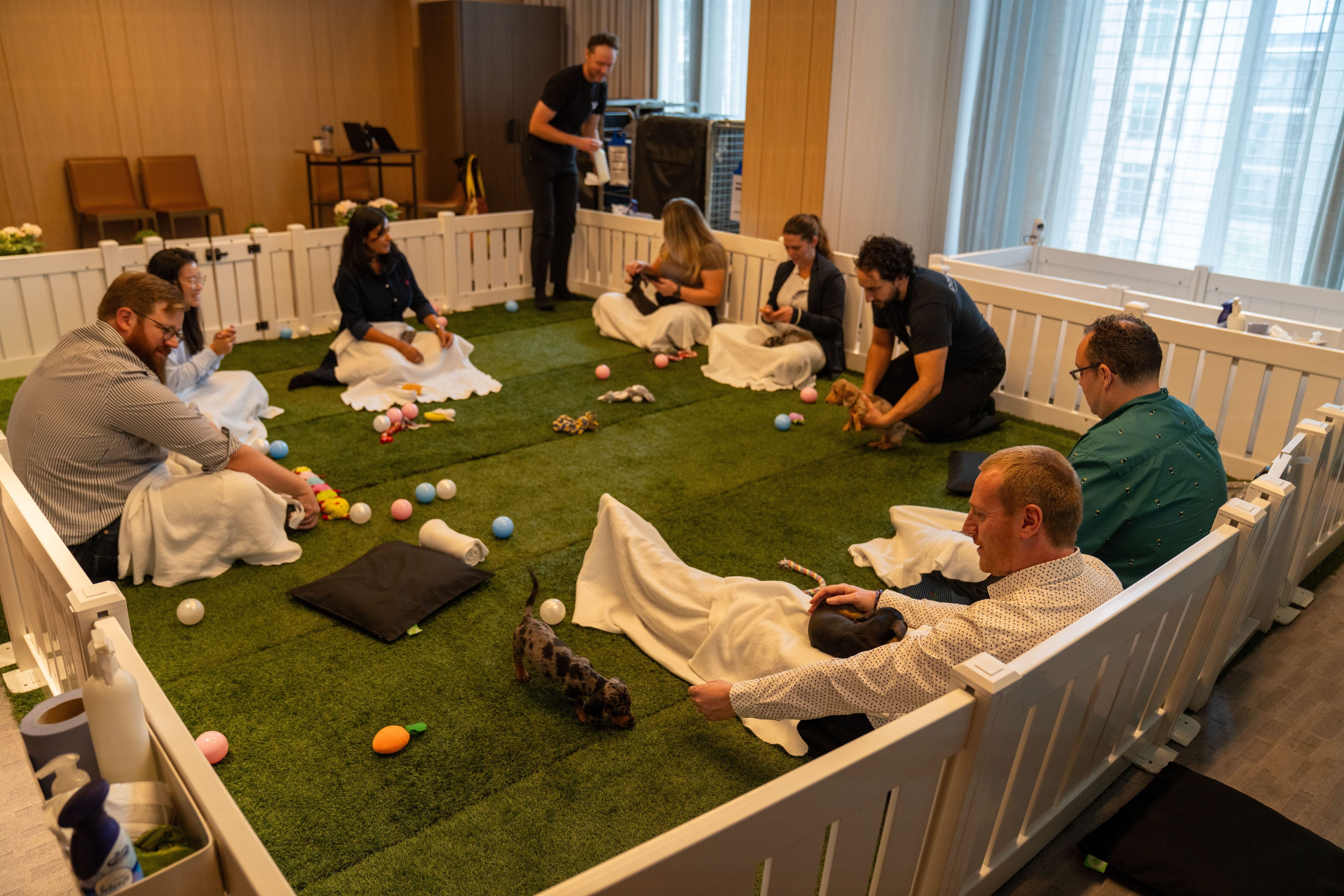
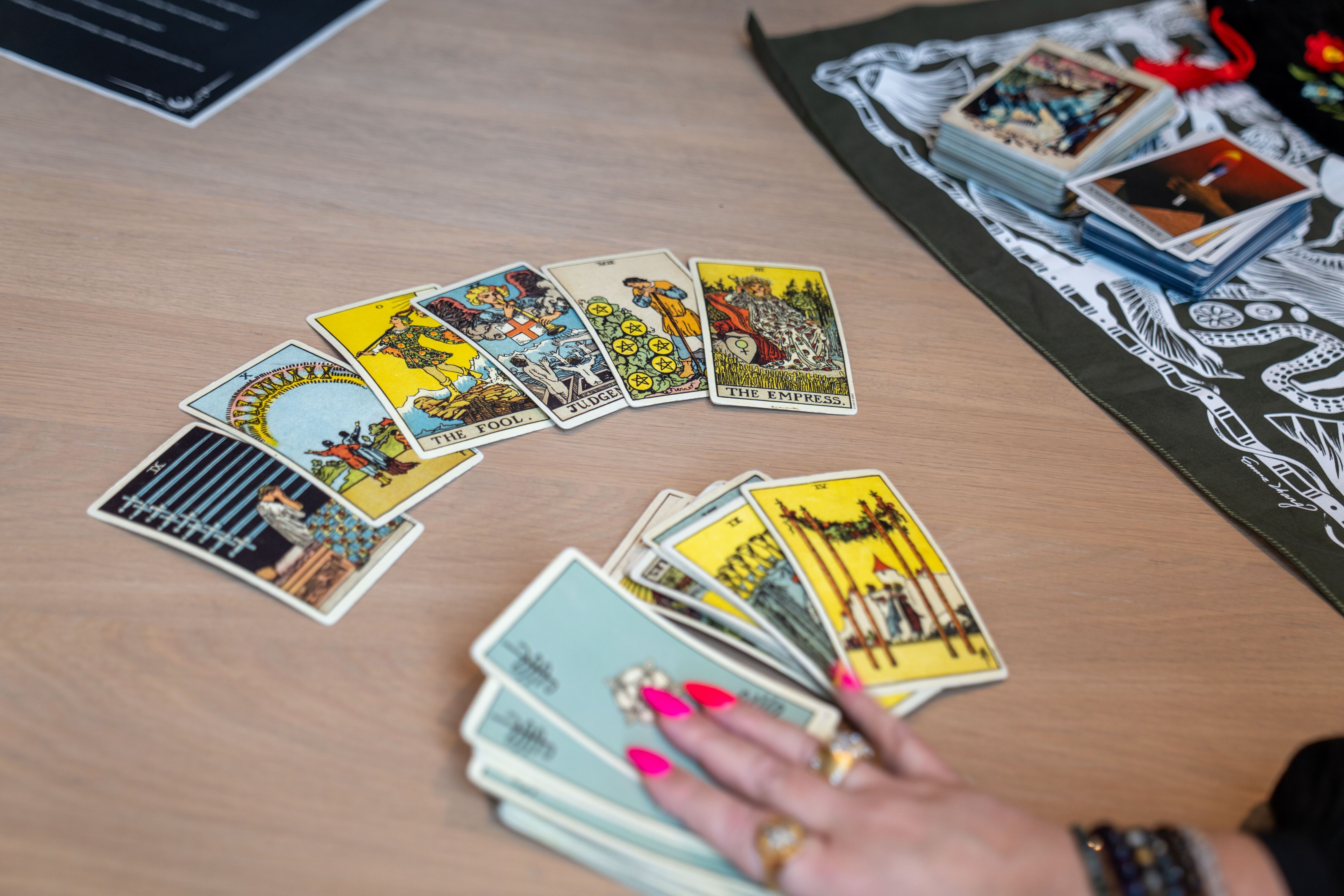
If you'd wandered onto the fifth floor of the Pan Pacific London on 10 September, you might have assumed a room full of PS leaders had quit professional services for puppy therapy. There was a puppy corner with its own fan club by mid-morning, a tarot room, fortune cookies with "bite sized wisdom for delivery pros," and a cold-brew cart for anyone whose third wind was running late.
Downstairs, though, the conversations were a lot more serious. Nearly 300 PS, delivery and operations leaders spent the day on one uncomfortable question: if AI is here, where are the outcomes? Across keynotes, panels and some very honest "here's what broke" sessions, the answer kept coming back to the same place. Customers have stopped paying for effort. They want results, and it's professional services teams that have to deliver them.
This PropelX 2026 recap covers the whole week at PropelX, Rocketlane's professional services conference in London: the side events, every session (with links to the full write-ups), the first Golden Comet Awards, what attendees took home, and the closing note from Srikrishnan Ganesan (CEO and co-founder of Rocketlane) on why this is PS's moment.
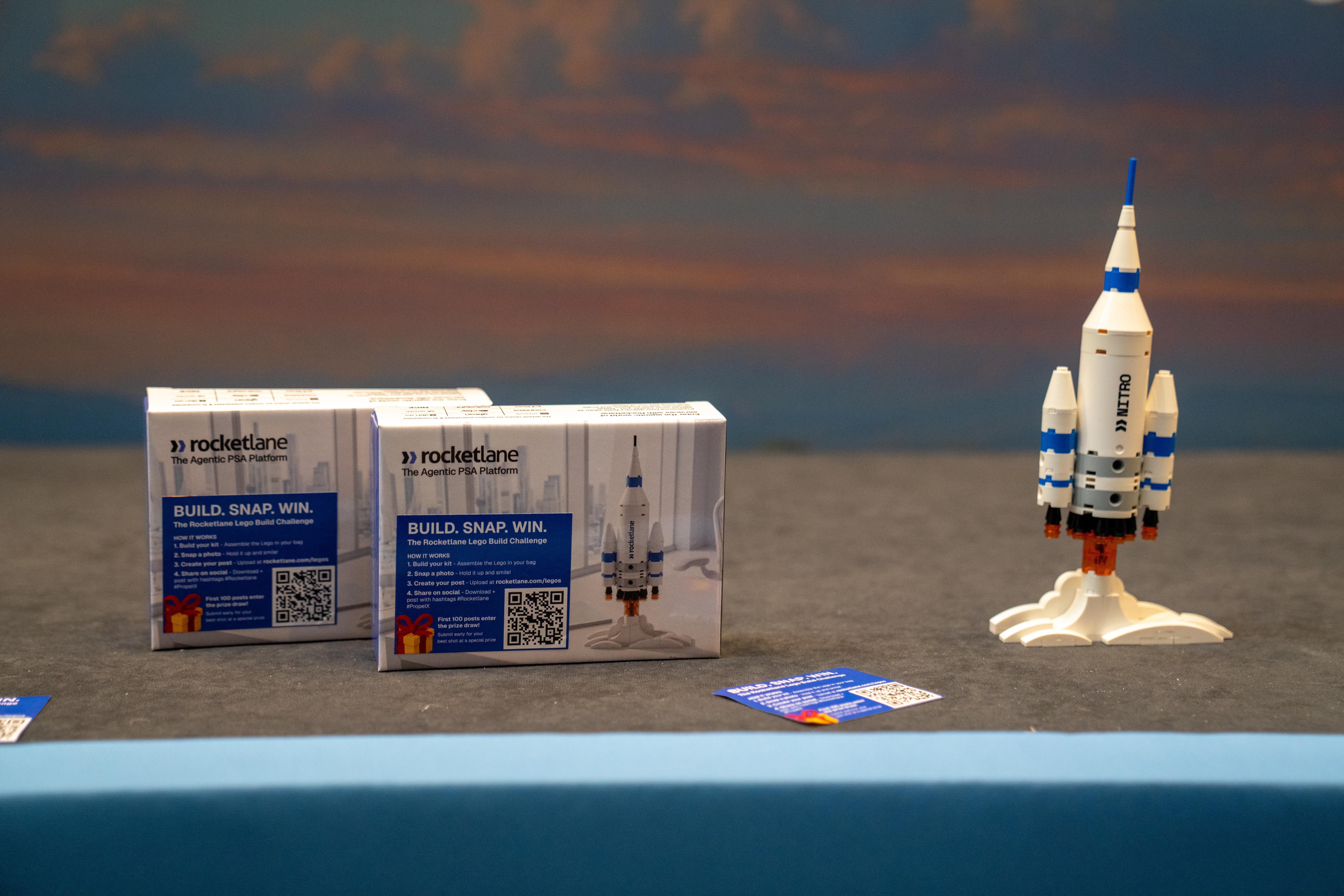
What happened during PropelX week in London?
PropelX grew to roughly three times last year's size, and for the first time it became a full week of events rather than a single conference day. It followed the wider Propel community gathering in San Francisco earlier in the year.
- Women in PS happy hour (8 September): Rocketlane's first-ever Women in PS gathering brought 27 PS leaders together over cocktails, with no agenda and plenty of conversation.
- PS AI Build Day (9 September): co-hosted with GoCardless, the Build Day put 32 builders in a room with Anthropic, ElevenLabs, Lovable and Rocketlane's Nitro agents to build tools for onboarding, handoffs and customer communication. Flight cancellations and train delays pushed part of the group online, and it still worked. Sri called it "probably our best attended hackathon."
- Customer dinner (9 September): an evening with Rocketlane customers before the main event, part of Rocketlane's community-first approach.
The banner at the Build Day read "Today, you build," which turned out to be a fair summary of the whole week.
What did Sri Krishnan Ganesan say in the PropelX opening keynote?
Sri opened with the Wall Street Journal's clip of Claudius, an AI agent that went bankrupt running an office vending machine. That same month, the same model was helping Anthropic pass $1B in revenue. Same technology, very different results, and the difference is how it gets implemented.
From there, he laid out five predictions for professional services: outcome-based pricing, go-lives measured in weeks instead of months, compressed roles, more work moving pre-sale, and utilization fading as the main PS metric. Read the full recap: Professional services trends for 2026: why delivery is the new moat.
What were the key sessions at PropelX 2026?
Outcomes vs outputs: translating customer outcomes
David Dixon (Senior Delivery Manager at AeroCloud Systems) asked whether PS teams deliver outcomes "or just deploy catering." His translation layer works backwards from a business outcome to things delivery can actually measure and prove, and splits outcomes into enabled, validated and realized. Read the full recap →
Redesigning PS teams for the outcome era
Sukanya Kuppuswamy (VP of Professional Services at Chargebee) showed how a 27-agent onboarding hub, a living design document and compressed roles helped Chargebee cut one customer's data analysis from 7 weeks to 2. Her session post was the most engaged of the day on LinkedIn. Read the full recap →
Building the AI-native PS function
Jonathan Fletcher (Director of AI Workflow Architecture at OneAdvanced), Liam Miner (VP of Professional Services at Contentsquare) and Maya Weintraub Kaye (Delivery Director at Datatonic) got honest about what hasn't worked, including 100-plus agents with "shockingly low" ROI and clients asking for 20% off because "you're using AI." The panel was moderated by Randeep Jaidka (Global VP of Professional Services at Rocketlane). Read the full recap →
The Nitro product keynote
Rocketlane's product team, led by Vignesh Girishankar (Co-founder and CPO of Rocketlane), showed how Nitro agents take on operations, delivery and execution work across the agentic PSA. Kenny Scannell (CRO at Rocketlane) described the live data migration demo as the moment that got "the loudest reaction": work that usually takes weeks was "knocked out in minutes. The room shifted. Phones came out." That demo ran on Rocketlane's migration agents.
Scaling the FDE motion
Boaz Francis (Head of Forward Deployed Engineering at Wonderful) and Isy Lynch (Product & FDE at SolveAI), both ex-Palantir, joined Milos Mandic (Founder of FDE Hub) to talk about hiring, incentives and commercials for forward deployed engineering teams. The line of the panel: if you deliver one use case perfectly, "we probably just failed." Read the full recap →
Stop selling hours
Gabi Sicher (Sr. Director of Professional Services at Pendo) explained how Pendo replaced sold sessions with five value milestones, and was refreshingly honest about what broke along the way. Read the full recap →
Skin in the game
Akbur Ghafoor (Head of AI Deployment, EMEA at Fin) walked through how a $1M outcome guarantee rewired Fin's roles, scoping and partner ecosystem. He also introduced half the room to Unreasonable Hospitality and the story of the $2 hot dog served at a Michelin-star restaurant. Read the full recap →
More than human
In a parallel track, Chris Cowlard (Head of Client Delivery at Xceptor) and Jacqui Morgan (Head of Client Delivery Transformation at Xceptor) talked about automating the admin in client delivery so teams can spend more time on the client relationship.
Strategic imperatives for outcomes in an AI world
Simon England (Partner at Garwood Growth), Adam Maze (Managing Consultant at Garwood Growth), Martin Roxby and Steve Beckley (Directors and Co-founders of J21A) closed the sessions with a board-level view, moderated by Heather Pertel (Head of Partnerships and Alliances at Rocketlane). Their message: "people don't want to pay for output and effort," embedded PS needs its own strategy, and every service should be mapped to automate, productise, enhance or exit. Read the full recap →
Who won the Golden Comet Awards at PropelX 2026?
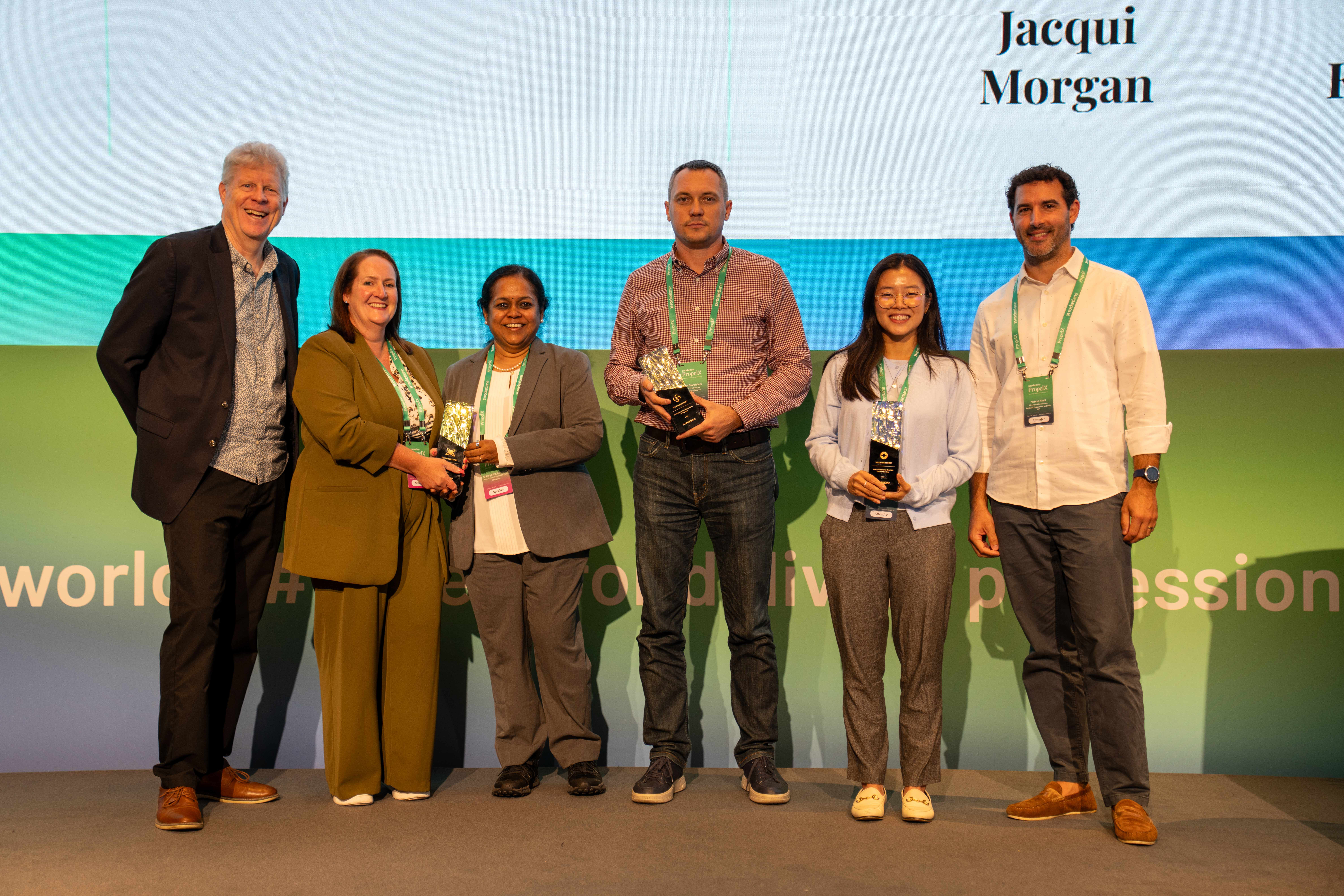
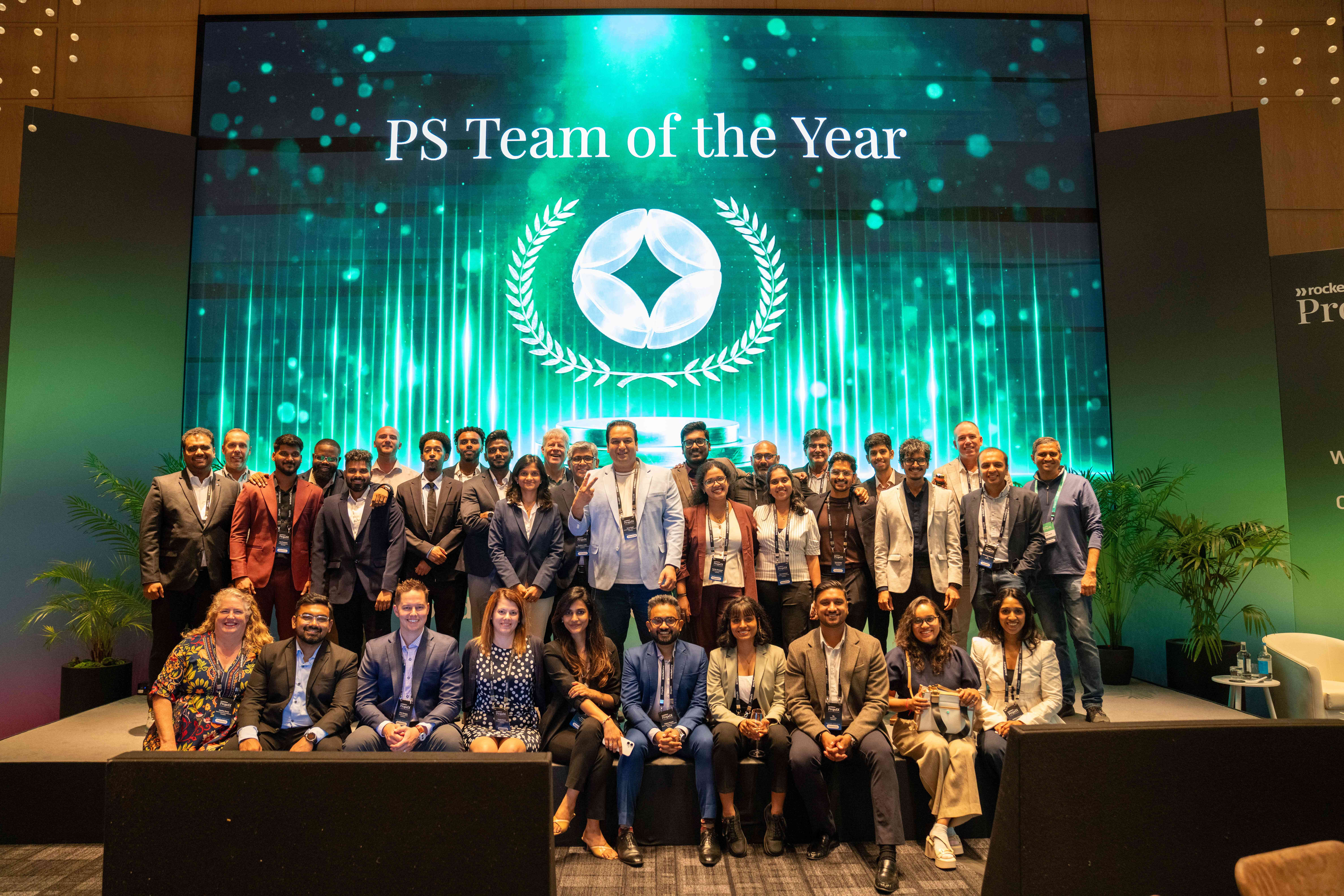
PropelX also hosted Rocketlane's first Golden Comet Awards for EMEA, celebrating the PS leaders and teams driving the shift from "projects delivered" to measurable outcomes. This year's winners:
- AI Trailblazer in PS: Jacqui Morgan (Head of Client Delivery Transformation at Xceptor) and Sukanya Kuppuswamy (VP of Professional Services at Chargebee), for leading AI in PS delivery
- PS Leader of the Year: Egor Diordichuk (Director of Professional Services at ABBYY), recognised for delivery leadership
- PS Team of the Year: ICP , for delivery excellence
Egor summed up the mood afterwards: "Really proud (and still a little surprised!)." Jacqui shared her approach to AI in delivery on LinkedIn, and it's worth stealing: "I started with the problem, not the tool." It's a good reminder that AI transformation in PS starts with the problem.
What was the PropelX fifth floor experience?
The fifth floor was designed for the moments between sessions. There was the puppy corner (a clear crowd favourite), a tarot room with a custom 22-card deck predicting "what's in store for your career," fortune cookies, a Nitro cold-brew cart, a testimonial wall, an executive sky lounge and product office hours with the Rocketlane team. It was a small-scale version of the unreasonable hospitality Akbur talked about on stage.
It turns out PS leaders are very easy to find at a conference. You just check the puppies first. Katie Hatch (Head of Customer Experience at Alkimii) admitted as much: "If anyone was wondering where I disappeared to between sessions, the puppy corner is probably a safe bet." Several attendees also said the best part of the day was the community itself.
What did attendees take home from PropelX 2026?
The sessions covered a lot of ground, but the same few ideas kept showing up in attendees' posts afterwards:
- Go-live isn't the finish line. Tom Ford (Implementation at Codat) picked up Akbur's version: "go live is a state, not a date." Grant Millington (Director of Customer Success Engineering at Optibus) put it as "Go live is Day 0," a theme that echoes why go-live is the wrong finish line.
- Hours aren't outcomes. "Hours do not equal outcomes," wrote Grant, and "outcome based pricing has arrived," as covered in outcome-based pricing.
- AI with intent. Ronen Eyal (fractional Head of Professional Services) shared three insights from the day: "It's about the community. It's about value. It's about AI, but it's not about AI." That's the same point behind AI ROI in professional services.
- PS is being promoted, not replaced. PS leader Neil Chandarana put it simply: "AI isn't replacing Professional Services. It's changing what great Professional Services looks like," which is where the outcome era is heading.
Duncan Meyers (Practice Manager at Outreach) managed to summarise the whole day in one line: FDEs, outcome-based pricing, "$2 hotdogs at a Michelin star restaurant" and a "room full of puppies." It's hard to argue with that as a professional services trends summary.
What were Sri Ganesan's closing takeaways?
Sri closed the day by thanking the room for making PropelX what it is, and for the conversations that happened outside the sessions as much as inside them. He left everyone with three thoughts, and pointed people towards the PS Club to keep those conversations going.
1. Delivery is the new moat, and the spotlight is on PS
Every decade or so, one function rises to the top. In the early 2010s it was marketing teams building inbound funnels, and then customer success took off as SaaS moved everything to subscriptions. Now, because of enterprise AI, professional services is firmly in that seat. Sri's message to the room was to take advantage of it and step up as the heroes of their organisations.
2. Your competitors will soon own the outcome
It won't just be tools that help customers reach an outcome. More competitors will say "we'll own and deliver the outcome for you." Fin's $1M guarantee is one example. Sri pointed to another in legal tech: while some tools help legal teams work faster, a startup is simply offering to do the contract work itself for $800 per contract. Rocketlane is trying the same with migrations, charging per successful migration. PS teams need to prepare for competition that sells results, not software, and for outcome-based billing.
3. Make time for transformation
Transformation won't happen by waiting for time to free up. Sri's advice was to deliberately make time, perhaps every quarter, for teams to catch up on what's changing, plan what they want to achieve, and build or experiment with what's out there. Rocketlane runs hackathons around the world and will help teams host one in their own city or office, in the same spirit as making time for work that matters.
He finished where the week started: "This is our moment to shine as a department, as a community."
What's next after PropelX 2026?
The conversations don't have to stop in London:
- Session decks are being shared at rocketlane.com/propelX/session-decks, with speaker permission, alongside Rocketlane's other resources for PS leaders.
- Session recordings are on the way, alongside the full recap blogs linked above.
- PS Club, Rocketlane's Slack community for PS leaders, has a new community manager and is being relaunched, with local dinners in different cities, much like the community that grew out of Propel 26 in the US.
- Women in PS heads to New York in October, one of several community events Rocketlane runs for PS leaders.
- Hackathons can be requested for your city or office, to get teams hands-on with AI.
And Rocketlane has already asked the question for next year: should PropelX go for 400+?
5 key takeaways from PropelX 2026
- Delivery is the new moat. The team that proves the first outcome earns the right to automate the next one.
- Outcomes beat hours. From Pendo's milestones to Fin's guarantee, PS is moving away from billable effort.
- Intent beats volume. AI agents only pay off when they're tied to a specific customer outcome.
- Go-live is day zero. Adoption, consumption and expansion are the new measures of PS success.
- PS needs a strategy. Embedded PS is a business within a business, and it needs its own plan.
Best practices for PS leaders after PropelX 2026
- Define "done" as an outcome. Rewrite your best-selling package around a milestone and a customer KPI.
- Audit your AI. Tie every agent to a customer journey step and an outcome, and retire the rest.
- Fix your handoffs. Keep one living record of customer context from sales to customer success.
- Raise the partner bar. Pay partners for the quality customers report, not just for the partnership.
- Make time to build. Schedule a quarterly build day before the extra AI workload lands, as part of your annual PS plan.
About Rocketlane
Rocketlane is an agentic AI-powered professional services automation (PSA) platform built for services teams running complex implementations.
Its AI layer, Nitro, deploys named agents that do the work, not just flag it:
- Migration Agent — data preparation and transformation
- Workforce Agent — repeatable configuration at scale
- Documentation Agent — project context current across calls and emails
- Project Governance — delivery standards enforced proactively
- Nitro Signals — account risk surfaced before it escalates
The core distinction: Nitro agents produce the deliverable or enforce the gate. Most platforms advise. Rocketlane acts.
Teams using Rocketlane ship faster, recover margin through tighter governance, and scale delivery without proportional headcount growth.
Table of Contents

Regsiter for the live webinar


Great consultants didn't join your team to spend Fridays writing documentation.
Table of contents
18 of Forbes Cloud 100 chose Rocketlane. The best PS teams aren't waiting around.
FAQs
What was PropelX 2026?
PropelX 2026 was Rocketlane's professional services conference in London, held on 10 September 2026 at the Pan Pacific London. Nearly 300 PS, delivery and operations leaders attended, and the theme was "the outcome era," focused on how AI is changing professional services delivery. It's part of Rocketlane's wider Propel series for PS leaders.
What were the main themes of PropelX 2026?
The main themes were outcomes over effort, go-live as the start rather than the finish of delivery, outcome-based pricing, AI agents changing PS roles, forward deployed engineering, and the need for a clear PS strategy and business model in the AI era, all covered in Rocketlane's guide to AI in professional services.
Who won the Golden Comet Awards at PropelX 2026?
Jacqui Morgan of Xceptor and Sukanya Kuppuswamy of Chargebee won AI Trailblazer in PS, Egor Diordichuk of ABBYY won PS Leader of the Year, and ICP won PS Team of the Year at Rocketlane's first Golden Comet Awards for EMEA, which recognise professional services excellence.
What does "delivery is the new moat" mean?
"Delivery is the new moat" means that as AI products offer increasingly similar features, the company that gets customers to measurable outcomes first gains the advantage. Rocketlane CEO Srikrishnan Ganesan argued at PropelX 2026 that this puts professional services at the centre of competitive strategy and time to value.
Where can I watch the PropelX 2026 sessions?
Session recordings and decks are being shared by Rocketlane after the event, with decks available at rocketlane.com/propelX/session-decks. Full written recaps of each session are linked throughout this PropelX 2026 recap, alongside earlier Propel event coverage.
What was the PS AI Build Day at PropelX?
The PS AI Build Day was a hands-on hackathon held on 9 September 2026, co-hosted by GoCardless and Rocketlane. Around 32 PS professionals built tools for onboarding, handoffs and customer communication using Anthropic, ElevenLabs, Lovable and Rocketlane's Nitro agents, including workforce agents.
How many people attended PropelX 2026?
Nearly 300 PS, delivery and operations leaders attended PropelX 2026 in London, roughly three times the previous year's attendance. The week also included a Women in PS happy hour with 27 guests and a PS AI Build Day with 32 builders, showing how quickly the PS community is growing.
What is the outcome era in professional services?
The outcome era is the shift from selling and measuring professional services by effort, such as hours or sessions, to selling and measuring them by the business results customers achieve. At PropelX 2026, speakers described it through outcome-based pricing, value milestones and outcome guarantees, and new value realization measures.
What did Sri Ganesan say in his PropelX closing note?
Sri Ganesan left attendees with three takeaways: delivery is the new moat and the spotlight is on PS, competitors will increasingly offer to own and deliver the outcome for customers, and teams must deliberately make time for transformation, for example through quarterly build days and change management.
Will there be a PropelX 2027?
Rocketlane has signalled that PropelX will return, asking the community whether the next event should aim for 400+ attendees. In the meantime, the PS Club community, Women in PS events and regional hackathons continue the conversations, alongside Rocketlane's professional services delivery resources. Delivery is the new moat. See how Rocketlane and Nitro help PS teams own the outcome, not just the project plan.












Copyright © 2026 Rocketlane Corp. All rights reserved.
















.webp)